

Three Gates Cambridge alumni with expertise in heritage and imperialism, the impact of public engagement and flu pandemic preparedness will talk about their different career paths at an alumni career symposium next week.
Gates Cambridge alumni with expertise in heritage and imperialism, the impact of public engagement and flu pandemic preparedness will talk about their different career paths at an alumni career symposium next week.
The three alumni from the arts, social science and science will give their insights into and take questions on the challenges and opportunities they have encountered after finishing their PhDs at Cambridge.
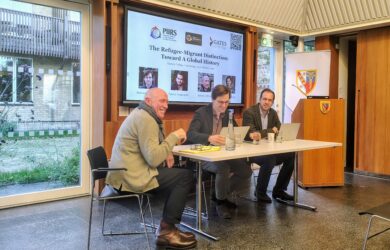
The symposium takes place on February 3rd at 7pm in the Gates Cambridge Scholars Common Room.
“We decided to focus on research – across science, social science, and the humanities – because there are particular hopes and concerns with a career within academia that scholars are interested in exploring,” said symposium organiser and Alumni Officer, Victor Roy. “We also hope to touch on themes – like interdisciplinary collaborations and working from within the academy to influence other cultural, social, and scientific fields – that are relevant to all scholars, no matter which direction they hope to take.”
The three alumni are:
– Astrid Swenson [2001], who did her PhD in History at the University of Cambridge, which focused on the conceptualisation of ‘cultural heritage’ in 19th century France, Germany and Britain and its role in national identity and intercultural relations. It won the Prize of the German Historical Institute, London. After a Junior Fellowship at the Institute for Human Sciences in Vienna, she became a Research Fellow at the University of Cambridge in the interdisciplinary Cambridge Victorian Studies Group’s five-year project ‘Past versus Progress in Victorian Britain’, and was a temporary University Lecturer in Modern European History. She joined Brunel University in 2010 as Lecturer in European History. She has recently written a book on the rise of heritage in France, Germany and England, 1789-1914, which examines exchange within Europe and the impact of increasing internationalisation during the 19th century
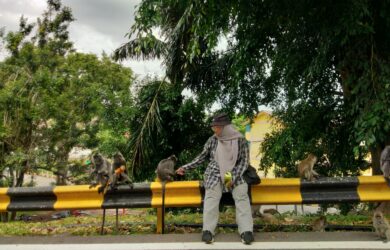
– Eric Jensen, who did a PhD in Social & Political Science at the University of Cambridge [2003], is Associate Professor in Sociology at the University of Warwick. He has two main research specialisms: public engagement and media. His research on the impacts of public engagement cuts across a wide range of settings, from zoos to conservation training programmes to museums to festivals. Recent projects have also investigated the impacts of online public engagement with research and the role of digital technology in evaluating arts and culture experience.
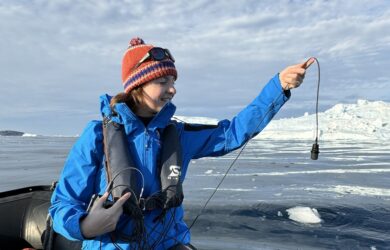
– Colin Russell, who did his PhD in Zoology at the University of Cambridge [2002], is currently a Royal Society University Research Fellow and holds a senior research post in the Department of Veterinary Medicine. He was also a Junior Research Fellow at Clare College and a Research Fellow at the US National Institutes of Health. Colin’s research focuses on understanding how evolution and epidemiology come together to generate the population dynamics of infectious diseases. Colin has worked extensively on the global epidemiology of influenza viruses and has close ties with groups around the world. He routinely advises the World Health Organization on influenza vaccine strain selection and pandemic preparedness. He is also a founding member and one of the chief scientists of the Cambridge WHO Collaborating Centre for Modelling, Evolution and Control of Emerging Infectious Diseases.
The event is open to Scholars and their guests.