

Scholars from around the world and across cohorts came together this weekend to celebrate Gates Cambridge
Scores of Gates Cambridge Scholars from across 25 cohorts and from countries around the world came together for the Gates Cambridge Weekend from Friday to Sunday.
The weekend of events and activities – from a lunch at Corpus Christi College and a dinner at St Catharine’s College to punting on the Cam, a visit to the Cambridge University Botanic Garden and a garden party at Sidney Sussex College – was a chance for old friends to reconnect and for new connections to be forged as well as an opportunity to share memories at an oral history session and to hear from Trustee Dr Jonathan Holloway about his views on leadership.
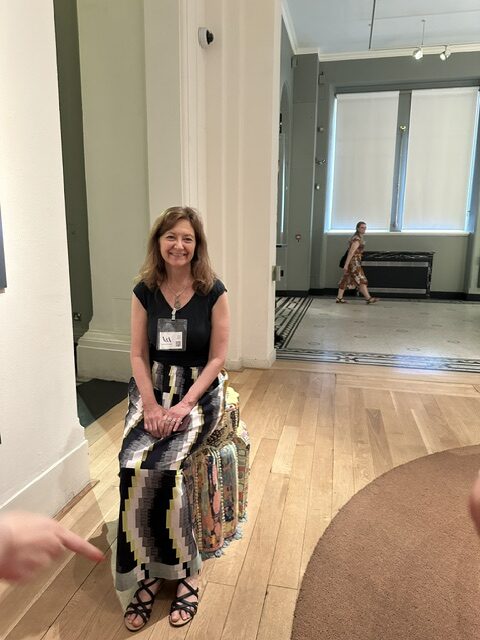
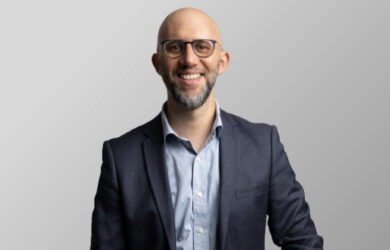
Vice Chancellor and Chair of the Board of Trustees Professor Deborah Prentice at the V&A
The weekend kicked off with a gathering in the courtyard in front of Bill Gates Sr. House on Friday night, with Scholars reuniting and enjoying pizza and ice cream. This followed on from a Trustees’ meeting and visit to the V&A.
On Saturday, Gates Cambridge Provost Eilís Ferran welcomed everyone to Bill Gates Sr. House and spoke about the 25th anniversary celebrations, the focus this year on professional development through the Gates Cambridge Leading with Purpose programme, the new GatesConnect platform which facilitates the idea of a lifelong scholarship, the welcome events for new Scholars [in 29 locations so far this year], the re-launch of the Day of Service where Scholars volunteer in local community groups and the establishment of the Gates Cambridge values.
Professor Ferran also spoke about some of the challenges facing scholarship programmes and said this was a reason to celebrate the uniqueness of the Gates Cambridge programme in terms of its focus on community, on improving the lives of others and on amplifying Scholars’ impact in the world. It was a chance for Scholars to ask questions about the programme, about community, diversity and about their own role in building community.
Oral history
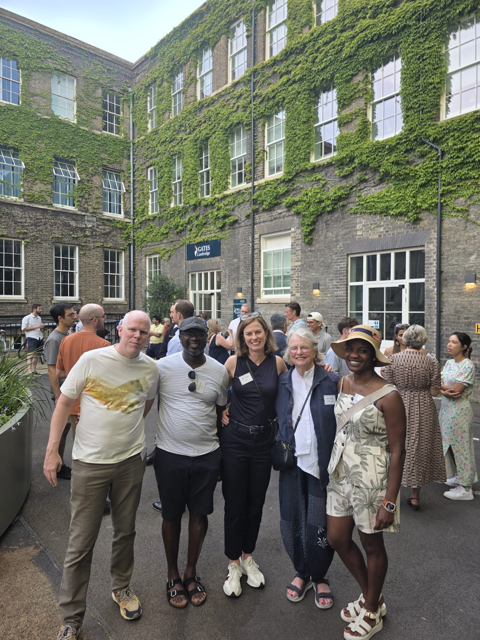
Friday night in the Mill Lane courtyard
This was followed by an oral history session led by 2001 Scholar Rob Perrons. After the showing of a film on the Gates Cambridge orientation programme, Rob recounted his memories of setting up the programme with other Scholars to provide “the connective tissue” that linked Scholars from the offset, making Gates Cambridge their first friendship group at Cambridge. He spoke about renting a bus to the Lake District to scout out options and buying lots of food from a supermarket for which he still has the invoices. He is proud that what his cohort began has become a cornerstone of the Gates Cambridge community and has had a ripple effect in terms of Scholar friendships and even marriages. “We were just solving a problem and it happened by accident. To see how Scholars have taken it forward and made it the beautiful thing it has become is amazing,” he states.
Other Scholars spoke of their own memories of orientation and how it has evolved to embrace different activities, including visits to historical venues, and about other community staples such as the Gates Cambridge Gala and other events, including symposia and other opportunities for Scholars to share their research with each other. Mohammad Usman [2013] spoke of how he keeps in touch with his orientation committee who meet up every few years in different parts of the world. “Orientation helped us form lifelong bonds and created some of the most delightful and meaningful experiences of my life,” he said. “It was a joy and honour to be part of it. It was a truly magical experience.”
On Leadership
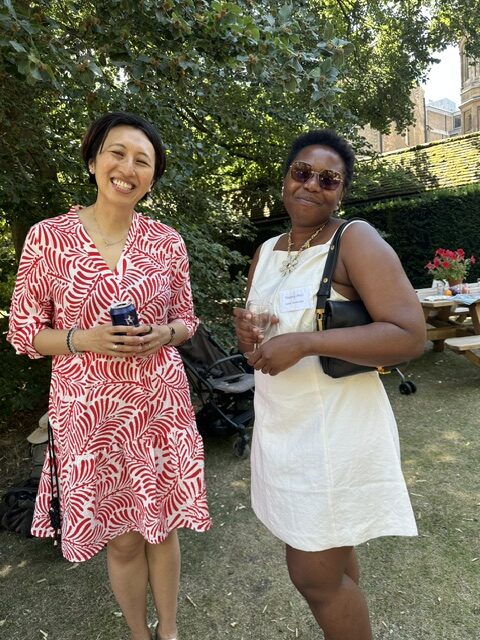
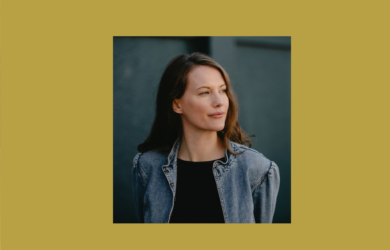
Julia Fan Li and Tili Phiri at the garden party
The afternoon was devoted to the last of the Gates Cambridge On Leadership series of talks which began last autumn and have run throughout the academic year. It was between Gates Cambridge Trustee Dr Jonathan Holloway, President and CEO of the Henry Luce Foundation, and Scholar Dr Ola Osman [2019], now an Assistant Professor of African Politics at the University of Cambridge where she is the first Black female Assistant Professor appointed in the Department of Politics and International Studies, the youngest Black female lecturer hired by the university and therefore an important role model for other Black women.
Dr Holloway began by outlining three stories which have contributed to his view of leadership. He spoke about his time as President of Rutgers University, which saw the University negotiate, among other things, Covid, a faculty strike, the student protests after 7th October and his appearance before the United States House of Representatives Committee on Education and the Workforce which was investigating anti-semitism on campus. It made him question his ambition and his ideas about leadership and underlined the importance of keeping an open mind.
He spoke too of his time at a mentoring programme for deans aspiring to senior university leadership. He asked the deans to be honest about their motivations. If they were material, he said the sheen would wear off and the responsibility and risks of the office would soon outweigh them. Ambition alone, he said, was not enough. Core values and the integrity not to compromise them are vital. For him that is about seeing the university as a vehicle for change. “When ambition and values align something exciting happens,” he said.
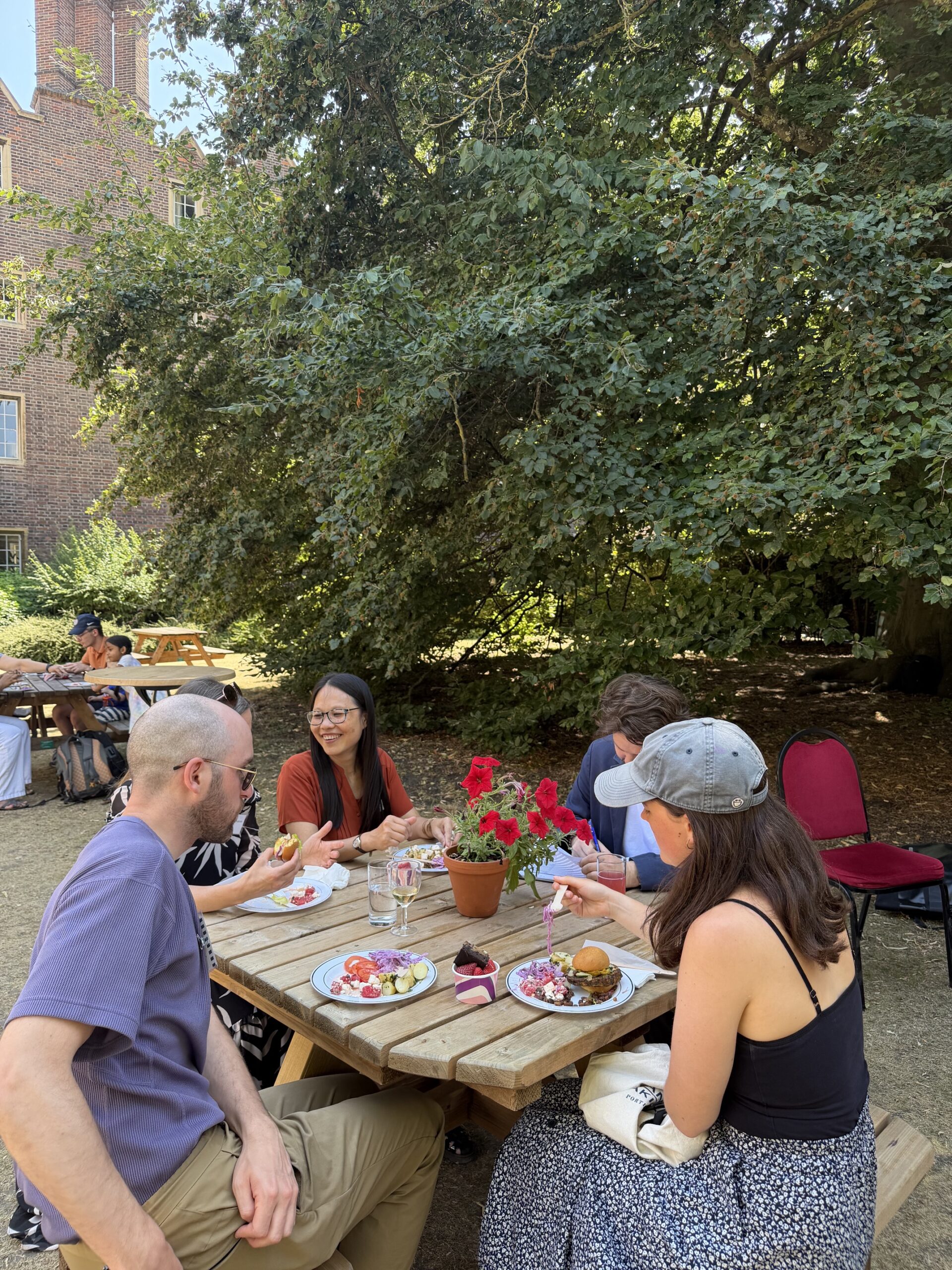
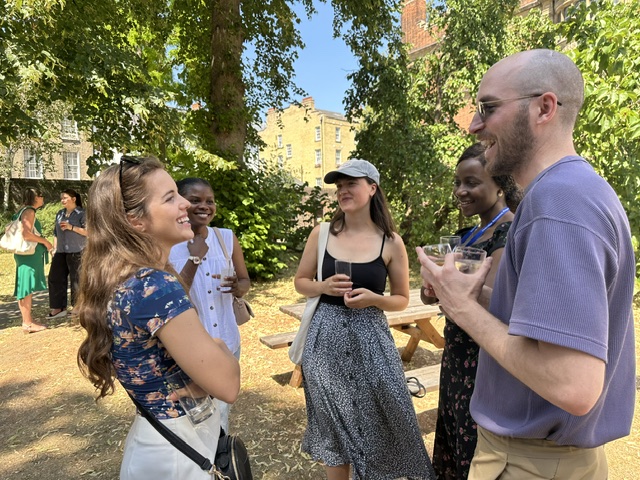
At the garden party
Dr Holloway also spoke about a conversation he had with a facilities worker who had been an undergraduate at Rutgers and had not been able to get promoted to a managerial role. He said things had changed since Dr Holloway had arrived on campus. Before that he had never got an interview for promotion. He put the change down to the fact that Dr Holloway talked about the fact that everyone should be valued and that excellence could be found everywhere. The facilities worker told Dr Holloway to stick to his values. Six months later, Dr Holloway spoke to the man again. He said: “I was getting out of my car and someone called my name. It was the facilities workers and he was wearing a tie and was now a manager.”
Dr Holloway said that, as a historian, it is his job to write about people who have been excluded from history. He had not thought about moving into administration, but someone saw something in him and he found joy in helping people to achieve their goals and in being of service to people who had been forgotten or not acknowledged.
He said having “the full complexity of humanity in the room” was not about being woke. It led to better decisions. He spoke of being the first in many of his jobs, for instance, the first African-American President of Rutgers and about the excitement as well as the sometimes unfair expectations that brought.
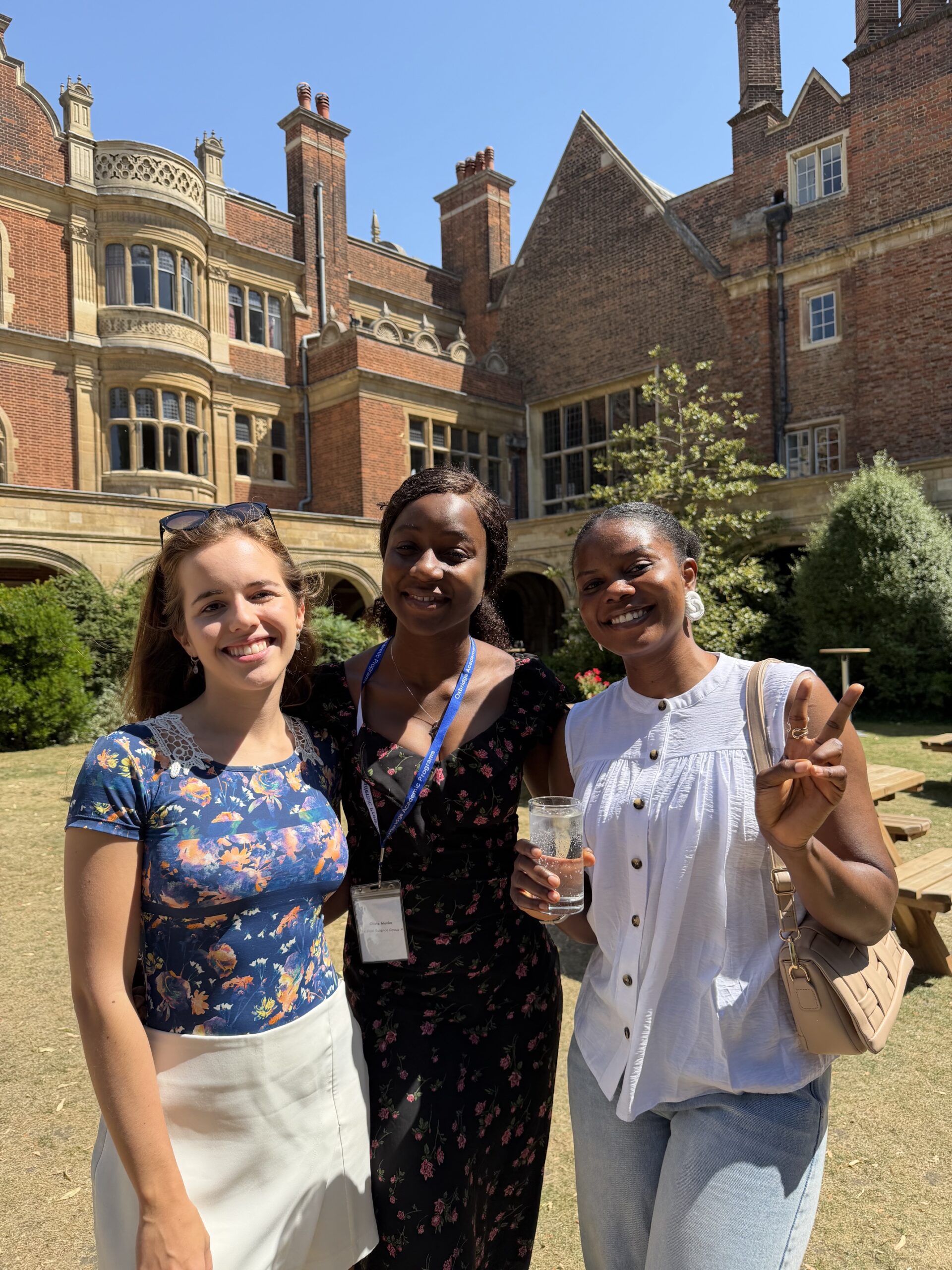
Sarah Borges, Kamsi Muoka and Blessing Abodunrin at the garden party
He added that he was well aware that, although he was the first, he was not the first Black person who was qualified to be the president. He emphasised too that identity is complex and that he “does not wake up thinking Black thoughts”. “At some point during my tenure I knew I would not be Black enough,” he stated, citing a long emotional meeting with Black students when he was at Yale. But being there and listening to people matter, he said.
He also spoke about his parents and how they had influenced him, about the role of neighbourliness, about ‘cut and paste’ activism, about freedom of speech on campus, about social media [“we are social creatures, not socially mediated creatures,” he said] and about the importance of hope. “Hope is a decision,” he said, even in circumstances where democracy is collapsing and the silencing of democracy looks just that bit different to previous times to convince some people that it is not happening.
He said that, as a historian, he saw how people had had hope that things would get better at many points in history. “How dare I not do the work; how dare I not imagine that things could get better in the future?” he asked.