





Scholar-Elect Mitali Chowdhury talks about her PhD in Sensor Technologies and Applications and how it will help her in her quest to create affordable, high quality public health products, such as diagnostic tests, that are accessible across the world.
I will be exposed to different ideas about sensor technologies and will also focus on the non-technical aspects of the work, such as how you translate the research into a real product and how you communicate the research better. That aligns really well with my goal of making diagnostic technology which reaches as many people as possible.
Mitali Chowdhury
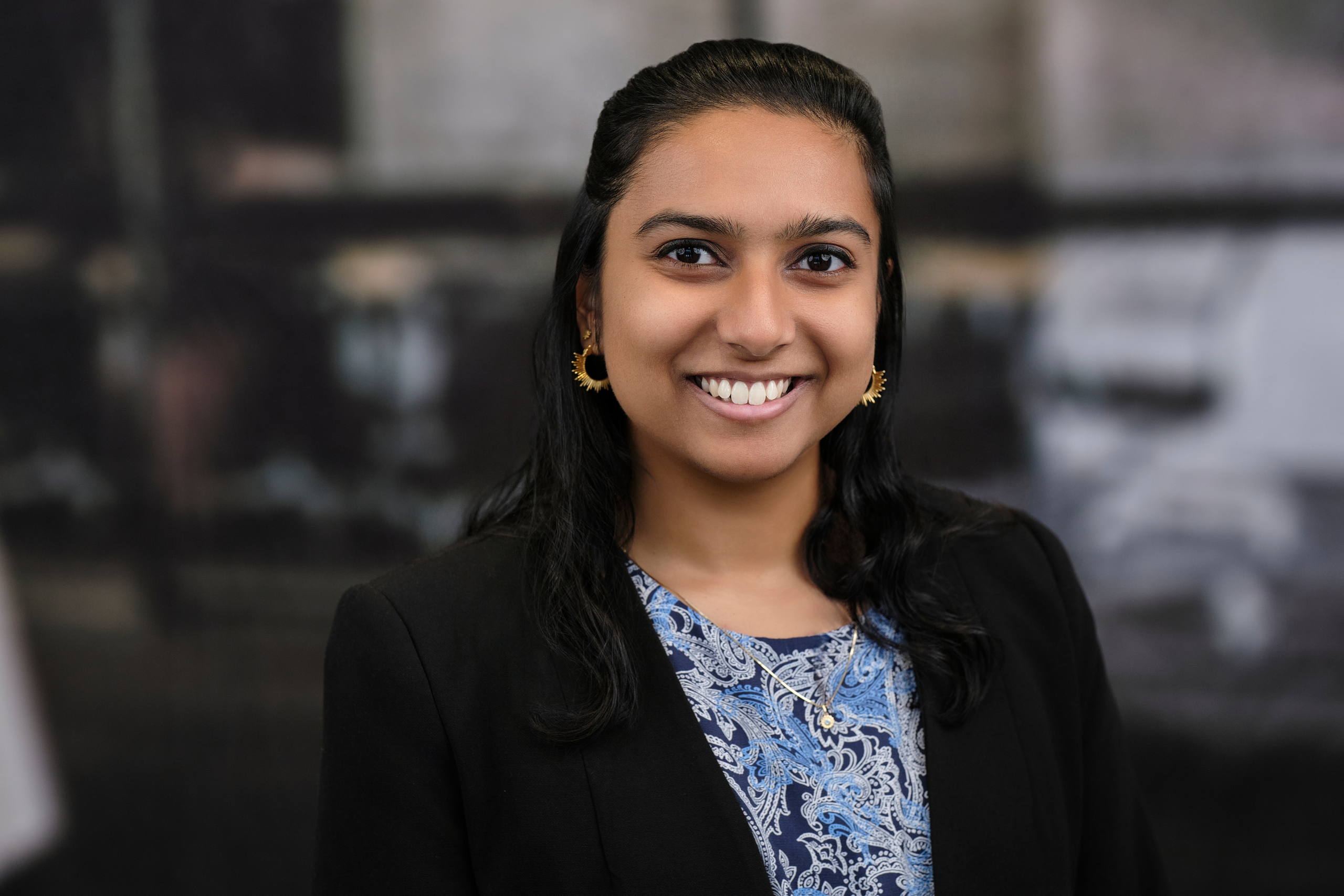
Mitali Chowdhury [2026] discovered her passion for biotechnology early in her undergraduate studies and is dedicated to using it to create affordable, high quality public health products, such as diagnostic tests, that are accessible across the world.
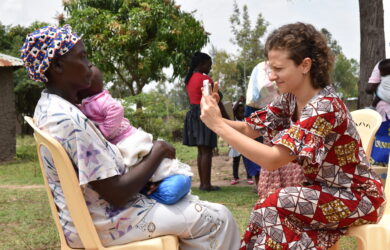
At MIT, Mitali became involved in a project for testing for E. coli, which involved fieldwork in Nepal. She was already aware of bottlenecks in water testing in poorer areas, especially those involving E. coli. Her family is from India and, having visited the country throughout her childhood, she knew of the disparity in water quality across the country and how people struggled to find clean water in many places globally.
She knew the importance of developing a cheaper diagnostic test and that knowledge has driven her subsequent studies and her PhD, which she will begin in the autumn.
Mitali will do a PhD in Sensor Technologies and Applications, under the supervision of Dr Jenny Molloy.
Dr Molloy has been working on local biomanufacturing in the Global South to overcome supply chain issues for molecular biology reagents, CRISPR-based molecular diagnostics for infectious diseases and protein engineering for enzyme-based carbon capture and upcycling. She leads the Open Bioeconomy Lab, an interdisciplinary research group based in the Department of Biochemistry at Cambridge.
Mitali says: “I will be exposed to different ideas about sensor technologies and will also focus on the non-technical aspects of the work, such as how you translate the research into a real product and how you communicate the research better. That aligns really well with my goal of making diagnostic technology which reaches as many people as possible.”
Childhood
 STEM runs deep in Mitali’s family. Born in New Jersey, both her parents work in the STEM field. Her father is a chemical engineer who is currently involved in meteorology and her mother works in IT. She says they are central to her interest in STEM and technology. Her younger sister is also in the STEM field, studying mechanical engineering. Even her grandparents worked in the STEM area. Nevertheless, she says her parents were very open to whatever she was interested in studying and encouraged her to explore different areas of STEM.
Science was always her favourite subject at school, but she felt it was important to be well rounded and to view the world from different perspectives. She played bassoon, piano and flute at school and also sang western and Indian classical music. Study-wise, she was drawn to Biology, enjoying anatomy in particular, and she was involved with Science Olympiad and Robotics during high school in New Jersey and in California [her family moved when she was 15].
By the time Mitali finished high school she knew she wanted to study biotechnology for global health. She took a course in bioengineering on starting her undergraduate studies at MIT and by the end of the first year she became more and more convinced of the direction she wanted to go in – biotechnology. She thrived in the innovative environment of MIT and was inspired by the focus on turning innovation into real-life application. To broaden her perspective, she also took minors in environment, sustainability and urban planning.
MIT
Mitali began her degree in 2020. She says the fact that classes were online for a semester gave her time to think about what she wanted to do. She became fascinated by the at-home Covid tests that people had to take before meeting during the pandemic and about affordable healthcare options. “I found it amazing that you could do these tests for a few dollars at home when it was so much more expensive to process them in the lab,” she says. Having more time on her hands also meant she accelerated the process of becoming involved in research.
Her first research project was on a microfluidic device. It was her first introduction to instrumentation work in the lab. She then became interested in the genetic basis of disease and between her second and third year she did an internship at a start-up company, working on gene sequencing. The following year she worked for Illumina, a larger company and a leader in the sequencing space. She learned a lot technically, but she was also interested in how what she learned could be applied in lower cost settings in order to help a lot of people. “I wanted to do something that could work outside a facility with expensive lab equipment,” she says.
 That brought her to the lab she spent the last two years of her undergraduate studies in which is based in the Department of Civil and Environmental Engineering. Mitali worked on two projects there. The first involved developing a bacteria-based phosphate fertiliser, bringing together biology and agriculture.
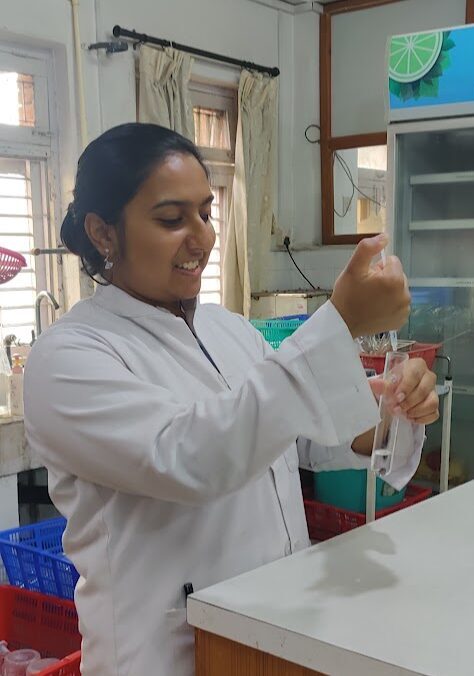
The second project involved developing a low-cost test for drinking water, working with the Environment and Public Health Organisation, an NGO in Nepal.
Mitali found out about a project at MIT which had been developing ECC Vial, a user-friendly, colorimetric test for detecting E. coli and other coliforms in drinking water. The process involves incubating a water sample for 24 hours, either in an oven or, if electricity is unavailable, using body heat. If the water is contaminated, it changes colour, showing it is unsafe to drink.
Mitali could only find information on the project before 2020 so she reached out in 2023 and found out that the project had stopped during Covid. She worked with the professor who had been in charge of it and helped to revive it to move it towards production. Mitali says that, during her time at MIT, she helped make some protocol improvements to reduce false positives. After she graduated, she conducted tests in Nepal showing 100% expected results.
Post graduation
Since returning to the US in 2025, Mitali has been mentoring MIT students working on refining the testing process with the MIT D-Lab, which is focused on lower resource settings. She hopes that production can start soon.
Mitali has also been working as a System Engineer at XGenomes, the start-up she originally interned with during her undergraduate studies. There she is trying to develop genomic diagnostic technology that can diagnose diseases at lower cost and with higher accuracy. Because the company is small, she says she has been able to learn a lot about all aspects of the business, helping her towards her goal of being a bridge between technology and public health policy.
At Cambridge, Mitali will once again focus on water-borne diseases, working on technology that detects anti-microbial resistance to typhoid treatment. She says the CRISPR-dx tools she will be working with can be used anywhere in the world. She adds: “I am very excited as the technology is really interesting and brings together everything I am interested in with a global focus on ensuring my work will be accessible to everyone.”