


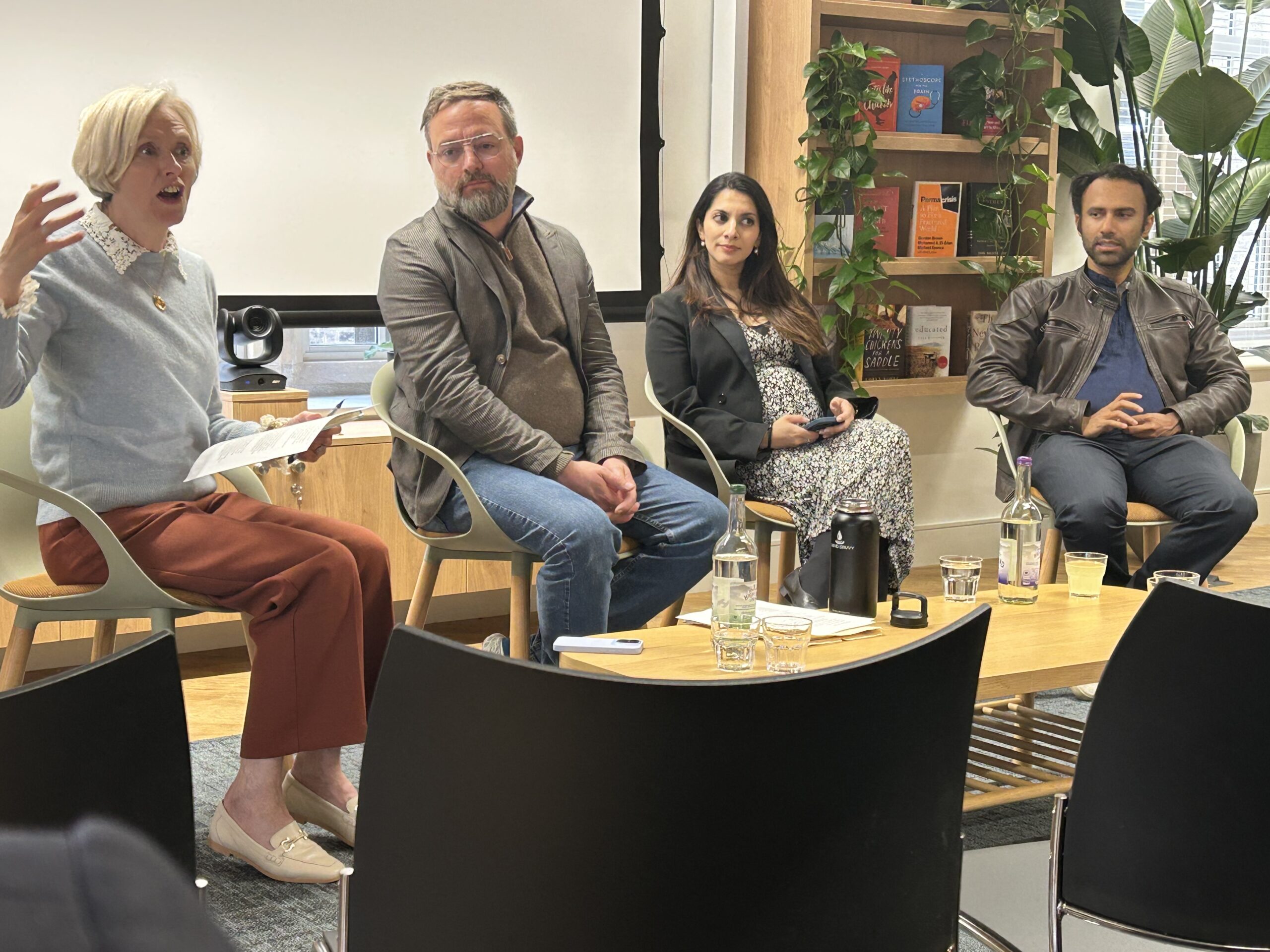
Three leading economic thinkers spoke about how to do economic policy in today's disrupted world at a panel event last night
Three leading thinkers involved in the cut and thrust of policy-making took part in a panel event at Bill Gates Sr House last night to discuss doing policy in an age when policy processes are subject to major disruption.
The speakers were Gates Cambridge Scholar Todd Tucker [2012], director of industrial policy and trade at the Roosevelt Institute, Shachi Amdekar, who leads international security policy in the UK Cabinet Office, and Tim Sahay, co-director of the Net Zero Industrial Policy Lab at Johns Hopkins University.
The event, hosted by Gates Cambridge Provost Eilis Ferran and in partnership with the Centre of Development Studies at the University of Cambridge, began with each of the speakers outlining their own career paths into the policy world.
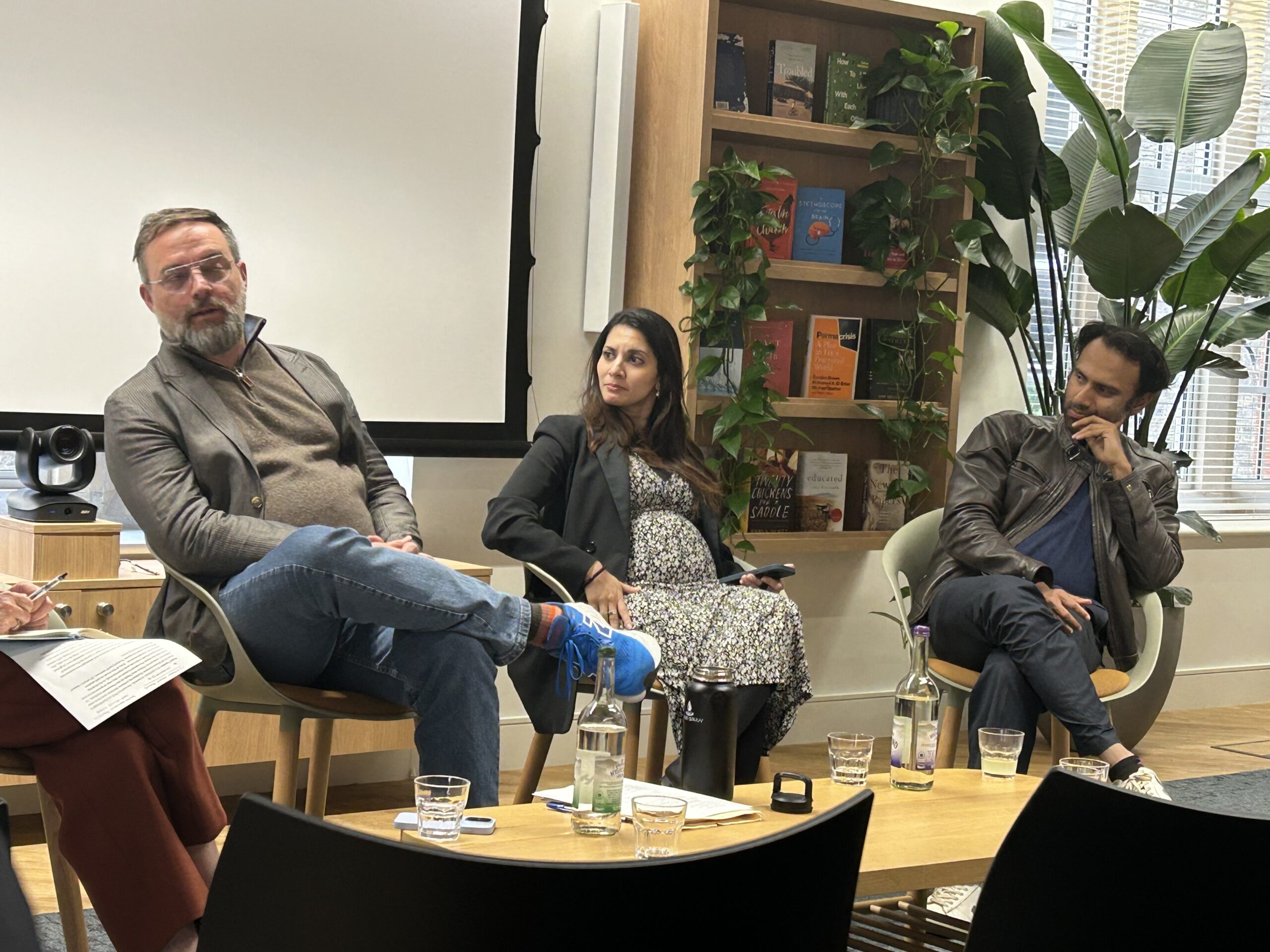 The headline of the panel event, Doing economic policy in anti-policy times, was debated and how things have changed with the advent of the Trump government in particular. There was acknowledgement of some of the flaws of the previous policy world based on liberal norms and rules as well as the ‘organised hypocrisy’ when these are broken on occasion. However, speakers said that it is hard to know what the rules are now as the usual forms of reference have been eroded. “That anchor point has been lost,” said one speaker, acknowledging that a host of social and political issues had contributed to this. Others spoke of ‘technocratic exhaustion’, a disconnect with the working class and a failure to address growing inequality.
Speakers said policy now tends to be more reactive, intuitive and transactional and encompasses a broader set of stakeholders. Communications is more important, for instance, and it is vital that policymakers develop a compelling narrative – often based on case studies – to explain an evidence basis for policy.
The speakers also discussed the growing hostility towards critical policy ideas which makes people afraid to engage in debate. Yet, they said there is room for new ideas and the space from new idea to application is generally much shorter. One speaker spoke about the opportunities in the new world for different ways of doing policy, including more multidisciplinary approaches which have been a feature of the last years.