





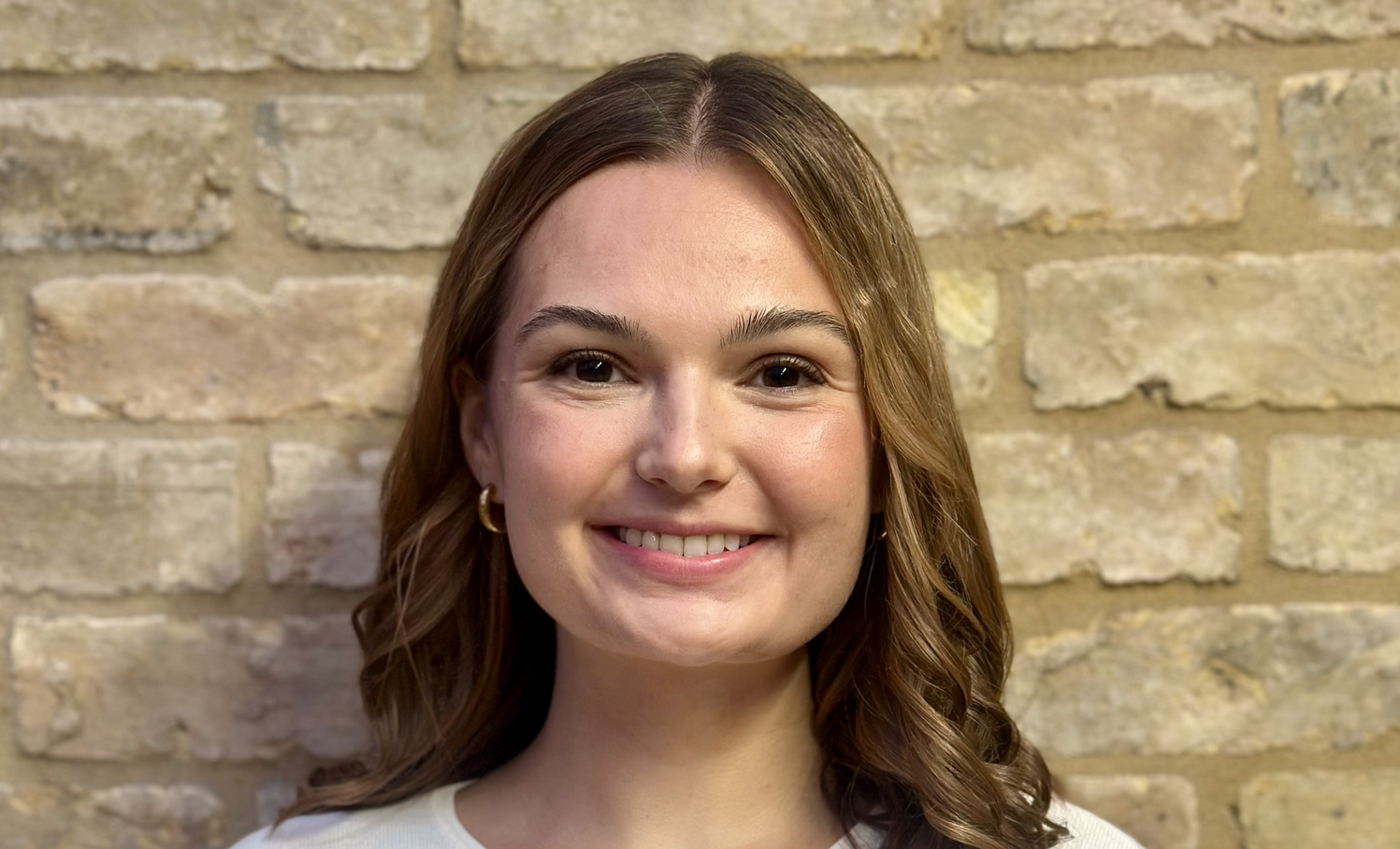
Isabella Morse talks about her PhD which seeks to explore how children access mental health treatment, with a particular focus on waiting times and the experiences of underserved groups.
We are facing a global mental health crisis, especially among children and adolescents. Yet, there remains a significant gap in understanding how children’s mental health difficulties are being treated, and what the process of accessing care truly looks and feels like.
Isabella Morse
Isabella Morse [2022] is passionate about improving the lives of children and understanding their stories, particularly those from underserved or high-risk communities.
Her PhD explores how children access mental health treatment, with a particular focus on waiting times and the experiences of underserved groups. Her aim is to inform policy and practice and to improve mental health care for all children and young people.
The PhD builds on Isabella’s previous work on the impact of Covid-19 on children’s mental health, a study of the pandemic’s impact on rural communities in England and research on diagnostic testing for children with mental health difficulties and autism.
She says: “We are facing a global mental health crisis, especially among children and adolescents. Yet, there remains a significant gap in understanding how children’s mental health difficulties are being treated, and what the process of accessing care truly looks and feels like.”
She brings a multiplicity of interests to the topic, including psychology, public health, education and creative writing.
Childhood
Isabella was born in Cary, North Carolina. As a toddler she lived for three years in central London when her parents moved there for work reasons and she started school there. Her parents both worked in Computer Science as does her younger brother. She also has an older sister who works in PR. The family moved back to Cary when Isabella was four and she remained there for the rest of her childhood.
She always loved reading as a child and would sit in the corner by the bookshelf flicking through books when she was very young. At school she was interested in most subjects. “I just liked school,” she laughs. From an early age she was involved in competitive swimming, continuing until she went to high school when she started doing cross country and triathlons and began teaching children to swim.
Isabella was drawn to education from an early age, and not just as a student. She began teaching at middle school, starting with teaching children who had English as a second language to read through the Read and Feed programme. From that time on, children’s education became the thread that has run throughout her studies. She even considered becoming a teacher at one point and was a member of the Future Teachers of America Club with two other students at high school.
By the end of high school Isabella had become very interested in child psychology and looked around for a liberal arts school which would allow her to explore the diverse range of subjects she was drawn to. She didn’t have to declare her major until second year and even then she couldn’t pick one subject, opting to major in psychology and minor in creative writing and education. “I was always keen to reflect the various interests I had rather than focus narrowly on one subject,” she says.
Undergraduate studies
From 2017 to 2021 Isabella attended Colgate University, a small university in up-state New York where she was surrounded by nature. Isabella went on to become the university’s first Gates Cambridge Scholar. She was studying in Samoa through the School for International Training when Covid hit in 2020 and was unable to return home for the first month. In the end the director of her programme had to ask a cousin who was a pilot to fly her and her fellow American students to American Samoa and from there Isabella took a circuitous route back to North Carolina.
She was due to do a research project while she was abroad, comparing city-based and rural schools. In the end, due to Covid, she did a review of how schools in Samoa had historically been equipped to do online schooling to understand how Covid might impact them.
In her final year, Isabella did a thesis on how Covid impacted younger children’s mental health and their school experiences, based on surveys and online interviews with parents, children and their parents in the US.
Throughout her studies Isabella took part in a lot of extracurricular or research-related activities. She worked as a research assistant in a child psychology laboratory where she helped to set up a study looking at children’s perception of socio-economic status and race. She also worked in a nursery school and at the university’s writing centre, helping other students with their writing assignments. Another project she led was with Somali refugees in Utica, a 45-minute drive away. The programme was similar to the Read and Feed project she had worked on at school and involved helping with after school support. Other projects she was involved in during her studies included a mentoring programme and she received research funding through the Alumni Memorial Scholars programme which she used after graduating.
In her summer vacation, she was also very active. In her first year she taught swimming; in her second summer she spent three months in Ghana teaching English at a rural primary school; in her third summer she was supposed to do an internship in London, but due to Covid she ended up taking a TEFL course, working for the Read and Feed programme doing grant writing and for the charity LitWorld helping children to engage with reading and learning; and in her fourth summer, after graduating, she was able to do research on people’s experiences of Covid in rural parts of the UK which were tourist attractions.
PhD
Isabella knew she wanted to do a PhD related to child psychology, but sought more hands-on clinical experience first. She moved to Philadelphia for a year to work in an autism research centre at the Children’s Hospital of Philadelphia. She was investigating techniques for diagnosing autism and anxiety and depression. She enjoyed being in both a clinical and research setting and talking to parents and children. “Parents were really desperate as the waiting lists for help were long and our project offered a way to be seen more quickly,” she says.
In 2022, Isabella began her PhD at the University of Cambridge in the child health and development group in the Department of Public Health and Primary Care. She works closely with clinicians, policymakers and charities as well as with parents, children and others. She says she struggled between wanting to do research that could have an impact on a large number of people in the longer term and working directly with children on a one-to-one basis. Her PhD has allowed her to do both. “The work bridges the gap. I do research, but I also work with patients and I can get things out more rapidly to practitioners and policymakers,” she says, adding that her work is based on both quantitative and qualitative studies.
The latter involves analysing interviews with young people to understand their experiences of waiting
times and outcomes. She is also seeking to ascertain how effective treatments for anxiety and depression are, based both on a review of the literature and interviews with young people. “I want to understand how young people have experienced their outcomes and to foreground their voices,” she says.
Although she has not finished her PhD yet, her findings so far suggest that medication for depression is the least effective approach, although better than no treatment, followed by cognitive behavioural therapy. However, treatment for anxiety has better outcomes than that for depression, although there is not much variation in effectiveness between the types of treatment. Isabella is also looking at the experiences of children in care in terms of mental health outcomes.
Cambridge
While she has been a Gates Cambridge Scholar, Isabella has taken part in community events and was the social officer on the Gates Cambridge Scholars Council in her first year. She has also been a member of the Gates Cambridge creative writing group, set up through the Learning for Purpose programme and was a member of the Gates Cambridge book club for many years. In addition, Isabella is in her college rowing team and has been nannying for local families.
She hopes to apply for a postdoctoral position to do a project on the interactions between education and mental health, with particular reference to young people with Education, Health and Care Plans.