





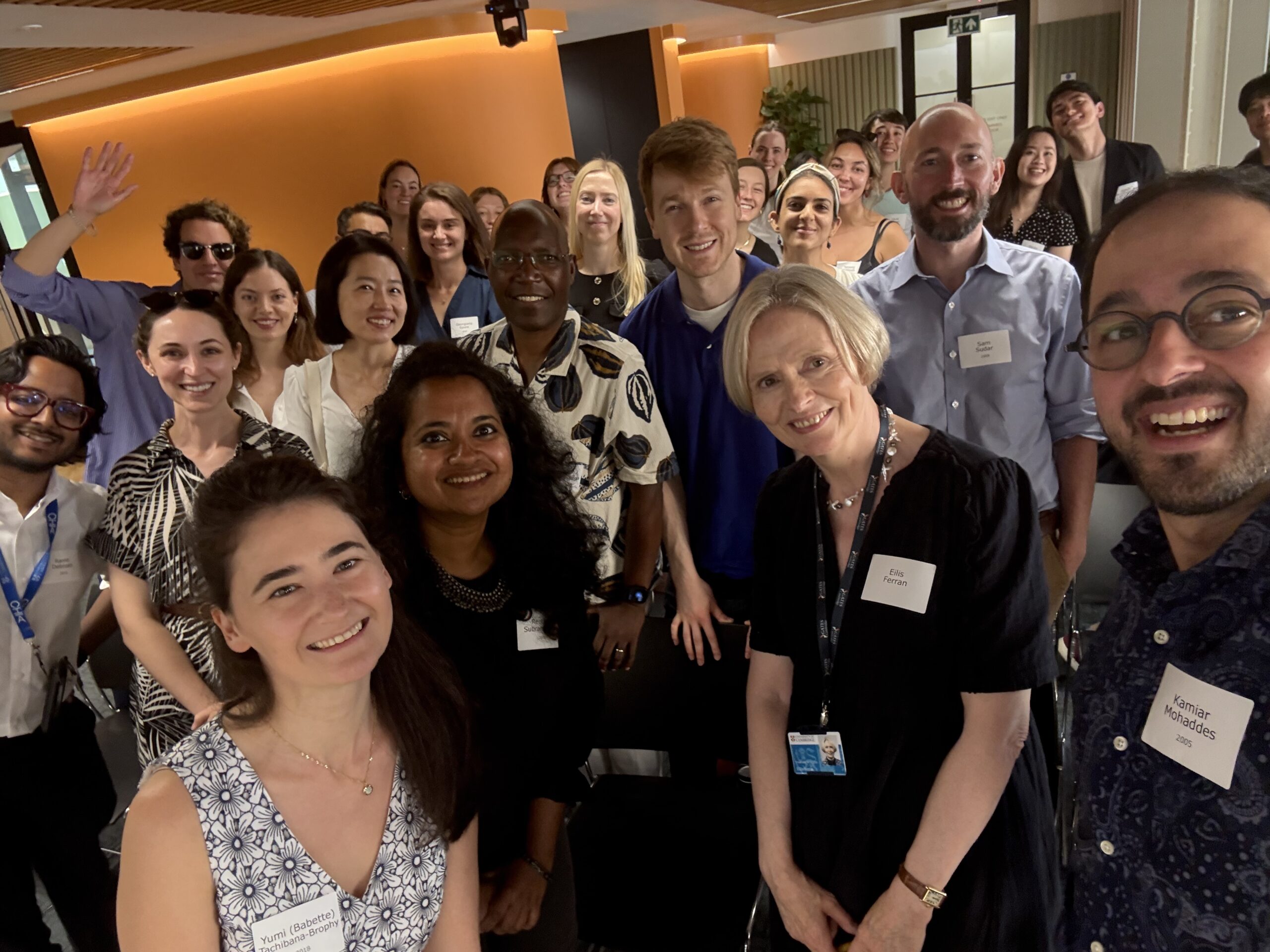
Andy Robertson, one of the first co-chairs of the Gates Cambridge Alumni Association, speaks to his current counterpart, Libby Blanchard, about why the community doesn't stop when Scholars leave Cambridge.
The scholarship was designed to build a global network of future leaders, and that mission wasn’t meant to end with our time as students. Gates Cambridge is about so much more than funding a degree and sending people off to ‘have a good life’.
Andy Robertson
“There was a sense of urgency and optimism,” recalls Andy Robertson [2001] talking about how the Gates Cambridge Alumni Association first began to take shape. While the seeds of the Scholars’ Council were sown in the very first year of the programme, he says it was only as the earliest Scholars were finishing their PhDs that attention turned to what came next.
“The Council was becoming more stable, but it was clear that when we left Cambridge, we would also be leaving the community behind – unless we acted,” says Andy. “The scholarship was designed to build a global network of future leaders, and that mission wasn’t meant to end with our time as students. Gates Cambridge is about so much more than funding a degree and sending people off to ‘have a good life’.”
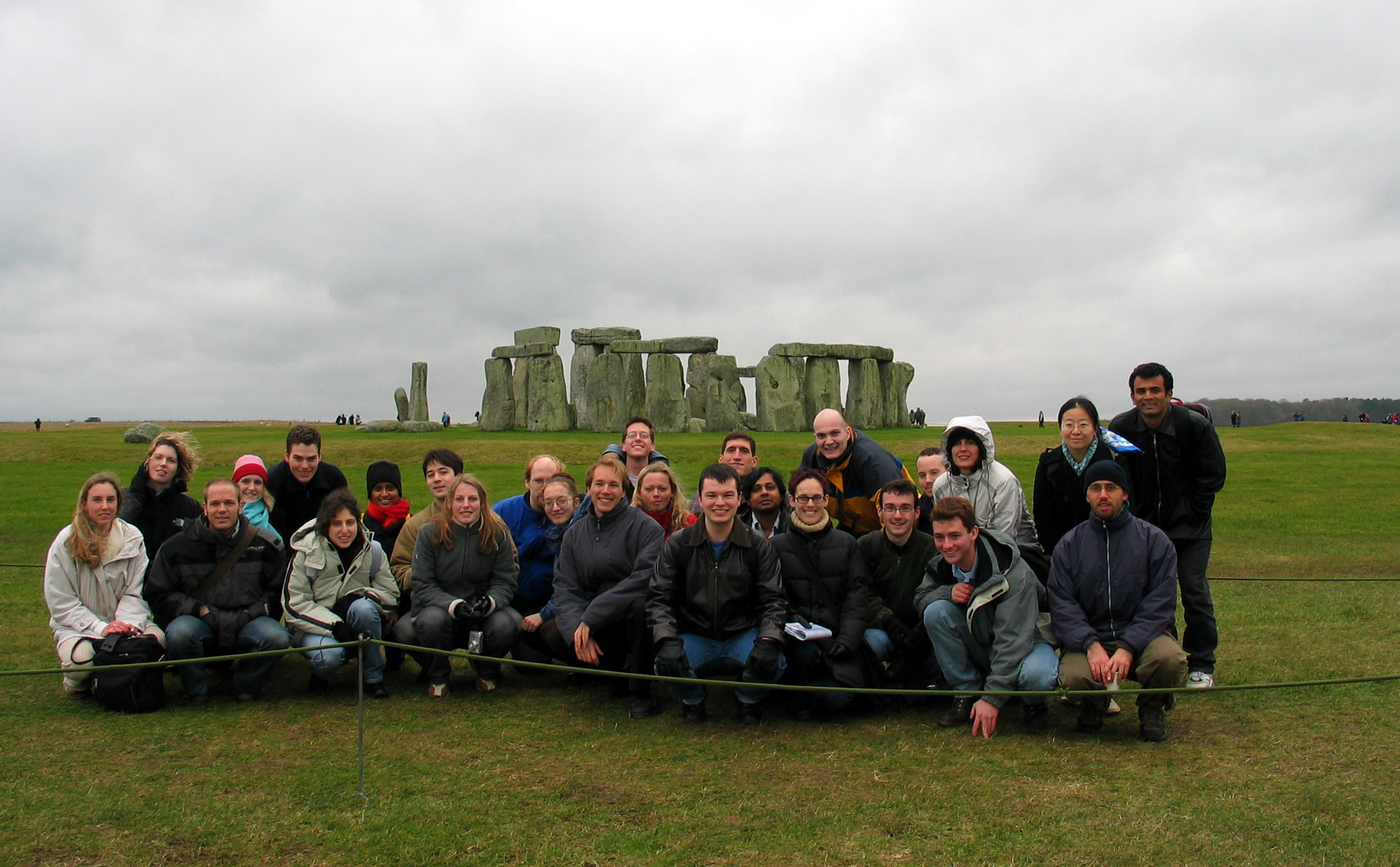 Just like the Scholars’ Council, the Alumni Association was envisioned as something run by Scholars themselves. Andy, who completed his PhD in Genetics and later became the first Scholar on the Board of Trustees, explains: “We wanted alumni to have a real voice in shaping its direction, and we didn’t want to wait for the Trust or the University to take the lead. We had already built a structure once with the Council – if we could do it once, we could do it again. The challenges were new, but the energy was there.”
In the beginning, one of the biggest hurdles was simply keeping in touch with people once they left Cambridge, particularly members of the Class of 2001. Better systems came later, but in those early days it was difficult to track alumni. There were also questions of legitimacy and ownership: who truly “ran” the Association, and how prominent could it be outside the University?
Community-building was another challenge. “Cambridge is very small,” Andy notes, “and the world is very big.” In the first decade, alumni were still establishing their careers, working long hours, and often starting families. Few had much time for gatherings, and without a critical mass of Scholars in most locations, early events could feel thinly attended. To adapt, the fledgling Association often partnered with other scholarships, such as Rhodes and Marshall, to co-host events.
Alumni work takes off
Momentum shifted in 2007. That year, Gates alumni partnered with the British Council to formally launch the Alumni Association with a reception at the British Embassy in Washington, DC. Hosted by Sir David Manning, the British Ambassador to the United States, the event brought together Scholars from the programme’s first seven years.
“That was the official beginning – the moment when the Alumni Association came out of stealth mode,” says Andy. “But we never assumed the organisation was finished evolving.”
Andy remembers feeling immense pride that evening, both in what had been built and in being able to hand it over to the next generation of leaders. “I felt we had contributed something lasting to the programme, and I think that’s a wish we all share as Scholars,” he says.
The next evolution
Today, the Alumni Association has evolved into the Scholars’ Alumni Advisory Committee, co-chaired by Libby Blanchard [2013]. The new structure, she explains, was designed to build on the foundations laid by earlier Scholars while professionalising alumni support.
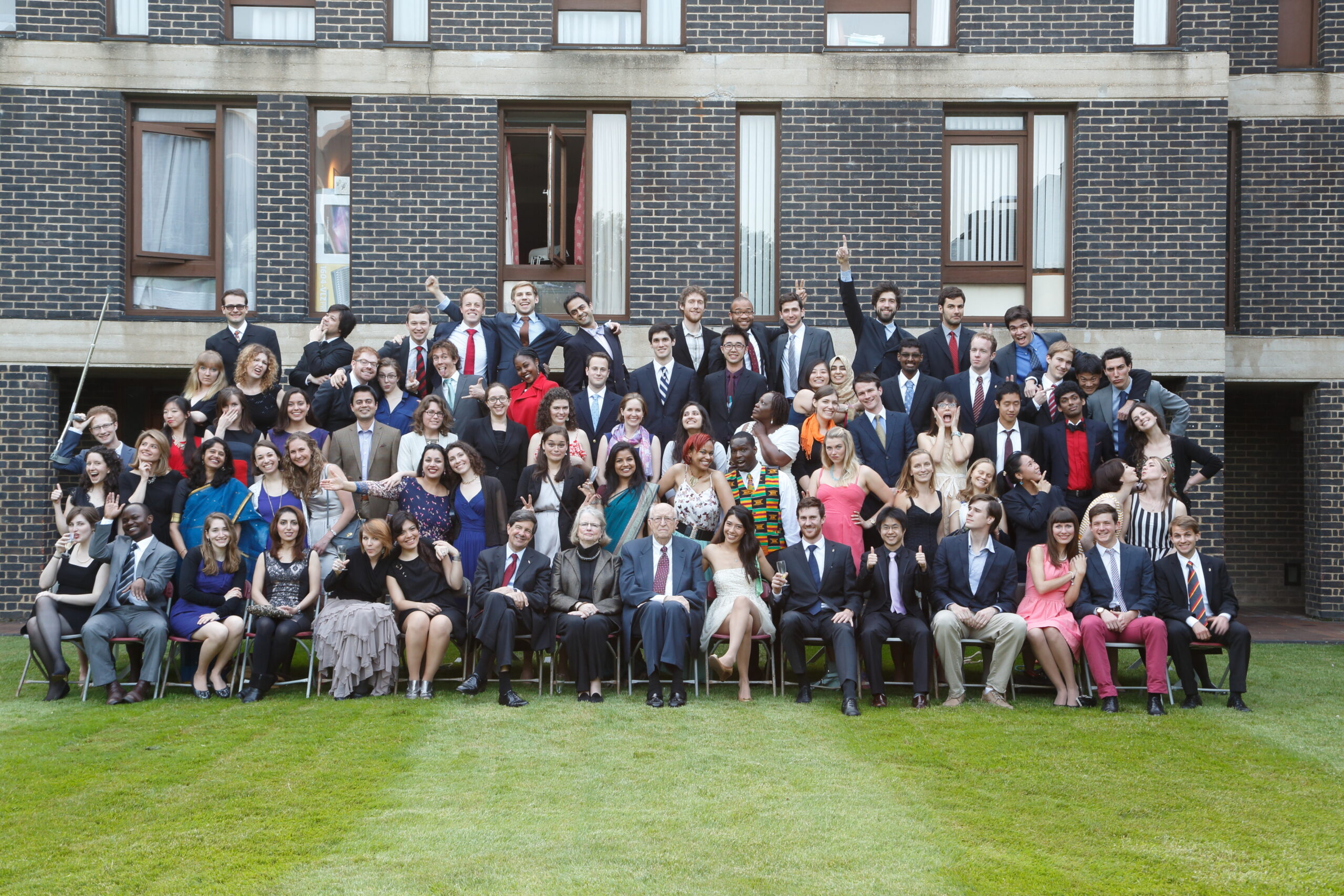 Libby, who did her PhD in Geography, says: “The Scholar Alumni Advisory Committee advises the Trust on alumni activities, but the Trust ultimately runs the events instead of them being dependent on volunteers. We are all very busy people, many with young families, and this makes it far easier to manage. We were also aware that other scholarships do a lot to help their alumni to connect, track them over time and promote what they are doing. Some have a whole army to do that. We don’t need that, but we did need someone to connect people both personally and professionally and that is now in place.”
Andy and Libby discuss how this could free up alumni to focus on more strategic areas and how alumni can be leveraged better. Libby says the field of international scholarships has grown since Gates Cambridge started and it is becoming more competitive. She feels lucky to have lived through what she calls a golden age of Gates Cambridge – a period of growth, engagement and experimentation where scholars have been keen to strike out to do things to benefit the programme and to stay in touch. “I have such fond memories of Cambridge,” she says.
Libby, who is currently a Postdoctoral Research Associate at Wilkes Center for Climate Science and Policy in the US, recalls in particular the work of her predecessors, Halliki Voollma [2011] and Sanjana Mehta [2001]. She was part of the alumni association at the time they were co-chairs and saw the amount of work they undertook to build on what their predecessors had done. She saw changes such as greater inclusion of children in events. She mentions that Halliki brought her baby to an event in Cambridge and Libby herself brought her six year old to an event two years ago.
The advisory committee has had to negotiate its own challenges as the world has changed. One of those is new regulations around data privacy, which means the Trust cannot share scholars’ email addresses with the community. However, she says LinkedIn has provided a good way for alumni to connect. Andy, who is Vice President and Head of Global Regulatory Policy and Innovation at Takeda Pharmaceuticals, says social media has always been a tool for Gates alumni.
“In the early days, Facebook was how people shared where they were travelling and organised impromptu meet-ups,” Andy recalls. Today, his group in Washington, DC uses WhatsApp and works with the Trust on events such as welcome gatherings for new Scholar-Elects. Andy recently hosted one that drew around 25 attendees.
The future
Andy is looking forward to the future. He says Gates Cambridge benefits from the entrepreneurial spirit many Scholars share, but that can be “a double-edged sword”. “It’s one thing to build something; it’s another to maintain it well enough to gain real traction. No-one wants to come into an organisation and leave it the same as they found it. You always want to make improvements, but it can be a case of diminishing returns as the scholarship grows bigger. Handing operational issues over to the Trust frees us up to think about the next big things, about what we want to be when we grow up.
“Libby spoke about the golden age, but I hope we haven’t peaked yet. I don’t think we have yet nailed what kind of network we want to be and how we want to be seen.”
He remembers a conversation with former provost Professor Robert Lethbridge, who once described guiding the Trust through its adolescence. “Successive provosts have professionalised the organisation and are now able to take a longer-term view of what the scholarship should become,” Andy notes. “If I want to be associated with this for the next 20 years, I want to have a voice in what that organisation looks like.”
Libby says the advisory committee aims to fulfill this role. She adds that Gates Cambridge is fortunate that its scholars all feel very aligned when it comes to their goals. That makes meeting up very mutually beneficial. “I know Gates Cambridge events will be good ones and that I will build lasting connections,” she says. “That’s what makes Gates Cambridge unique – our scholars really enjoy being with each other.”
In recent years, Andy has hosted regular welcome events for alumni and new Scholars in Washington, DC. This year, one of the attendees was from the inaugural 2001 class – a Scholar who had never before joined an alumni gathering.
“That really brought things full circle for me,” Andy says. “It’s great that the community continues to grow – not only with new classes, but also with people rediscovering this amazing network. I’m very proud of what we’ve built, and I’m excited to see what we’ll achieve next.”
*Top photo is of the Gates Cambridge Weekend in 2025. Photos embedded in the story are of early Gates Cambridge cohorts at Stonehenge and the 2013 cohort with Bill Gates Sr and Mimi Gardner Gates.
**An edited version of this conversation appears in the Gates Cambridge 25th anniversary magazine, which is out here.