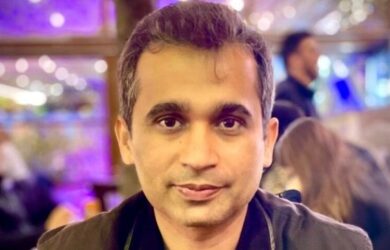






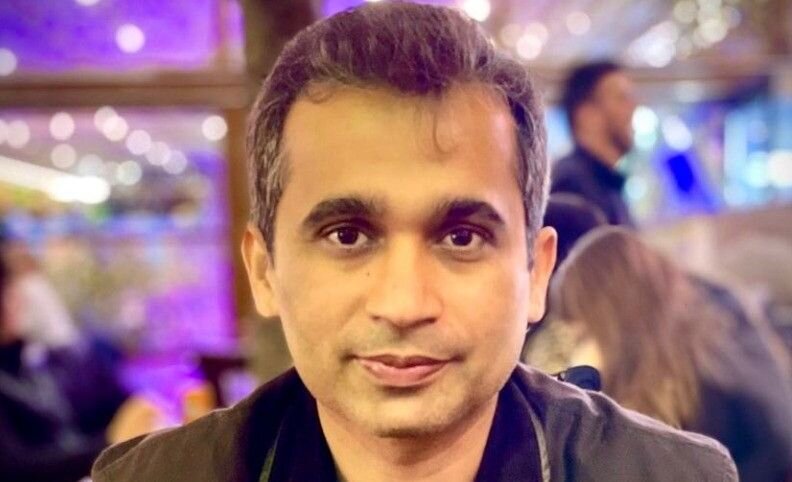
The first Dr Arif Naveed Education Prize winner will be announced at a ceremony in late April.
Arif’s life – a journey of adversity, resilience and humble discovery – mirrored his mission as an academic. His contributions to the study of poverty reflected a deep understanding of the lived realities of the poor, realities he had experienced first-hand. In losing Arif, the world loses a unique voice of compassion, rigour and wisdom.
Peter Sutoris
The University of Cambridge is holding an award ceremony in April to announce the inaugural Dr Arif Naveed Education Prize to honour the life and work of the late Gates Cambridge Scholar.
The event, which is open to everyone, will be held at the Faculty of Education, University of Cambridge and online on 29th April.
The award ceremony will introduce the Dr Arif Naveed Education Prize and speak of the life and work of Dr Naveed. The 2026 prize winner will be announced and plans for the next round will be introduced. The prize is being awarded to honour Arif’s contribution to education, social justice and equality in a South Asian context.
Speakers are Professor Madeleine Arnot, Emerita Professor in Sociology of Education and Fellow of the Academy of Social Sciences; Professor Kamal Munir, Pro-Vice-Chancellor for University Community and Engagement and Professor of Strategy and Policy and Professor Pauline Rose, Director of the REAL Centre at the Faculty of Education.
Dr Arif Naveed [2014] was a Pakistani social scientist with a deep commitment to promoting social justice and equality through the education system. Building on a successful career researching poverty and discrimination, he completed a Master’s degree in International Development at the University of Bath and an MPhil degree and a doctorate in Education at the University of Cambridge. Arif was awarded a Gates Cambridge scholarship for his PhD, and won the Bill Gates Sr Award in 2018. In 2025, Arif was posthumously awarded the Government of Pakistan’s Development Leadership Award, in recognition of the legacy of his work on the ‘geography of poverty’, ensuring the country’s journey to economic transformation is inclusive and just.
Until his untimely death at the age of 42 in 2024, Arif focused on reconciling interdisciplinary tensions in education between economics, sociology and international development, between academic inquiry, policy formulations and their implementation on the ground, and between diverse methodological frameworks.
On his death, Fellow Gates Cambridge Scholar and friend Bhasi Nair [2014] said: “Arif was deeply committed to his work — which he saw as a spiritual calling. The world has lost a brilliant scholar and an even better human being. Such a loss is devastating beyond words, but our only solace is that we, his friends, can honour his memory by staying committed to the issues he cared deepest about.”
Another Scholar and friend, Peter Sutoris [2015], Lecturer in Climate and Development at the University of Leeds and a close friend of Arif’s, said: “Arif’s life – a journey of adversity, resilience and humble discovery – mirrored his mission as an academic. His contributions to the study of poverty reflected a deep understanding of the lived realities of the poor, realities he had experienced first-hand. In losing Arif, the world loses a unique voice of compassion, rigour and wisdom.”