






Ere Derbez combines her work as an author and illustrator with her research on human rights.
[My interest in human rights] is driven by the necessity of memory. I believe that we need to remember the names of the victims of violence and their existence as we live in a context in which people are becoming dehumanised.
Ere Derbez
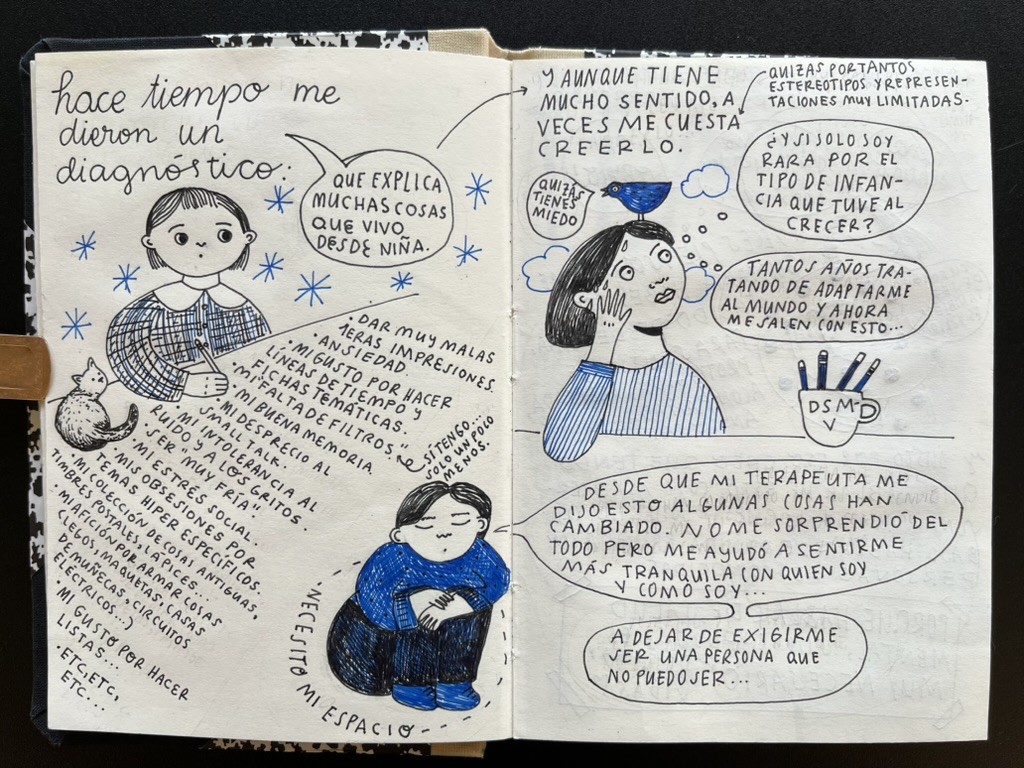
Eréndira [Ere] Derbez [2025] describes herself as an illustrator who works in academia and the two passions, combined with a commitment to human rights and social justice, feed each other in creative ways. Ere always has her notebook beside her and she flips the pages between academic ideas, notes for talks and drawings and designs.
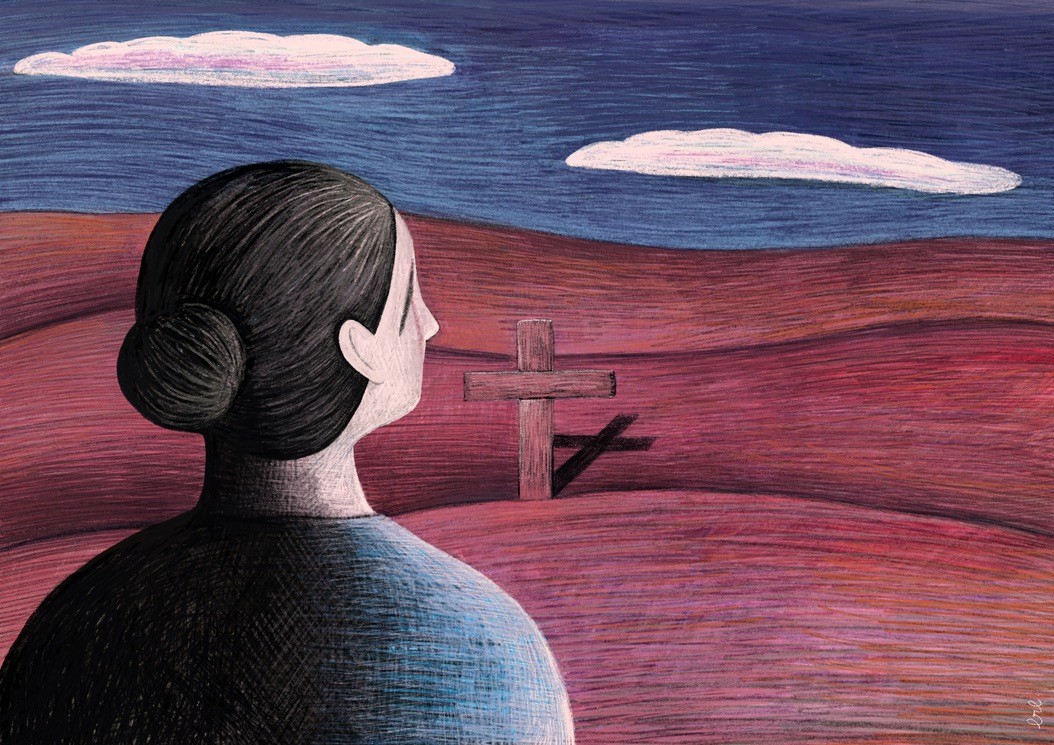
 Her PhD is about how public art can be used to change the narrative about violence and its victims in Mexico. It brings together cultural studies and art history and draws on all Ere’s previous work in human rights, gender studies, art history and politics. It’s a topic she has written about for many years in her books and articles and harks back to a book she wrote on the erasure of women in art as well as to earlier writing.
“It is driven by the necessity of memory,” she says. “I believe that we need to remember the names of the victims of violence and their existence as we live in a context in which people are becoming dehumanised. Street artists have had a very important role to play in this.”
Early years
 When she was growing up in a conservative area of eastern Mexico, a life in academia was far from Ere’s thoughts. In fact she says she didn’t think she was very intelligent. She realised she was drawing a lot as a way of learning. In her Biology and Chemistry lessons, for instance, she would draw as a way of understanding the knowledge being imparted. At the time she dreamed of being a children’s author.
But while she was growing up her city, Xalapa, in the state of Veracruz, underwent a drastic transformation, becoming increasingly violent as a result of drug trafficking. Because of its strategic position between Latin America and routes into the United States, it became a battleground for various organised crime groups, with traumatic effects on those living in the area, including Ere and her friends. “My mum was very worried about my younger brother and me. People we knew had disappeared,” she says.
 As a result, Ere became very interested in human rights. Although she began her undergraduate degree in Spain at the Universitat de Barcelona due to the violence in her home town, she transferred to the Universidad Iberoamericana after her family moved to Mexico City.
She did a degree in Art History and met many others who were also interested in human rights, including her business partner who encouraged her to become an illustrator. Although she had been drawing since she was a child, Ere didn’t consider herself a fully fledged illustrator because she hadn’t studied art. “I began my career without noticing it,” she says simply.
Art and books
 In her last year as an undergraduate, she and her co-founder opened Estudio Plumbago, a design studio for human rights in 2022, which may be the first of its kind in Latin America. “It was a crazy idea that happened to work out,” says Ere. The studio covers a range of different projects, from art installations and book illustrations to children’s books and podcasts. And the studio works with lots of different partners, from music festivals to Netflix.
Ere worked at the studio part time while pursuing her academic interests and earning some money as an academic assistant. She took a range of jobs to get by until a huge opportunity presented itself: Ere was invited to write a book on everyday microaggressions against women. The book came about because she was working in education and had a background in human rights. Initially, she was asked to illustrate it and then, because of her academic background, to write it. The book, No son micro. Machismos Cotidianos [They are not micro. Everyday machismo] was written with Claudia de la Garza, an art historian who specialises in Gender Studies. Claudia was Ere’s teacher for her first master’s in Art Studies, for which she won a scholarship.
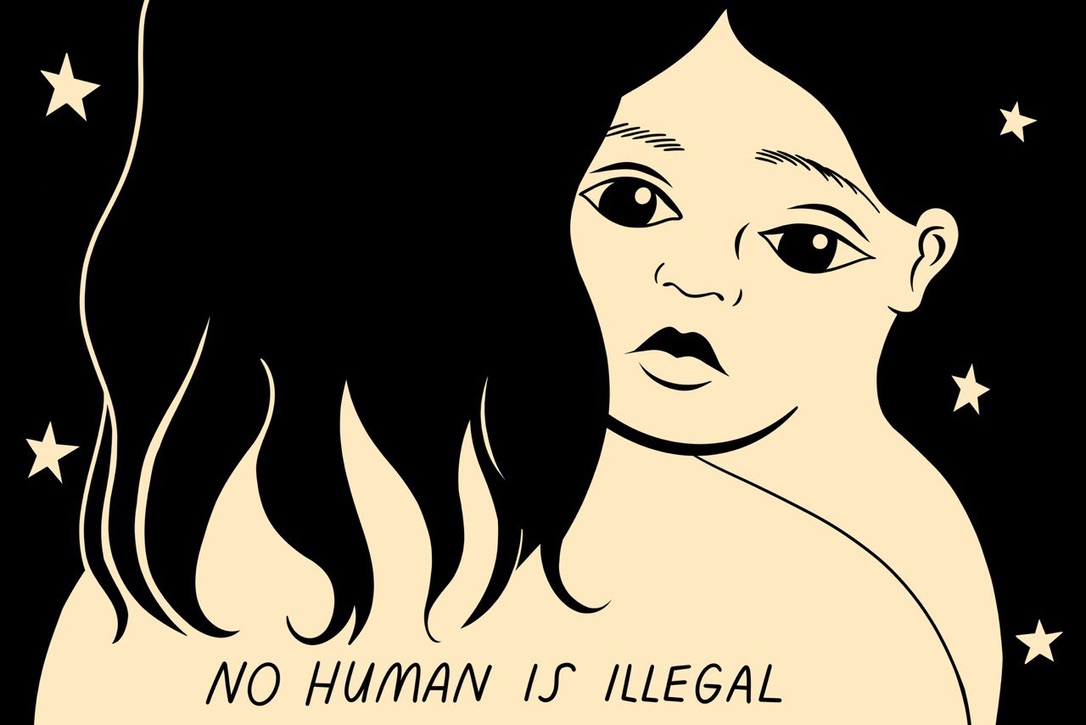 The book, published by an offshoot of Penguin Random House, went on to win a prestigious award and become a bestseller in Mexico. The money Ere earned allowed her to fund her second master’s in Gender Studies at the London School of Economics.
During her first master’s, Ere started researching the first art gallery in Mexico directed by a woman, Inés Amor, who had represented all the well-known female artists in Mexico, including Frida Kahlo. That research became a book, Inés Amor y los primeros años de la Galería de Arte, which Ere plans to get translated into English.
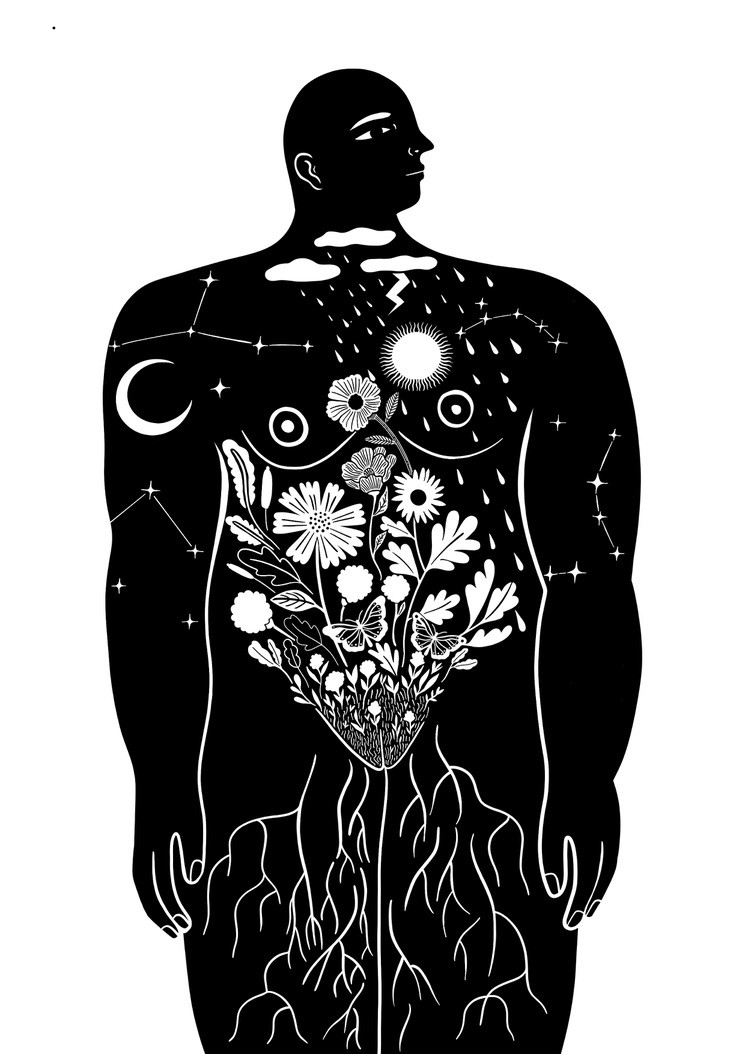
 The book came out in 2024, the same year that Ere and Claudia de la Garza published Mapas Corporales which addresses racism, transphobia, misogyny and ableism through the history of science and art and draws on her second master’s and her experiences of drawing her friends naked to learn more about the human form. “It’s about how we understand the human body, how it is historically constructed,” says Ere.
Working across disciplines
Ere loves to cross disciplines and to find something new in that process. She adds that she is often sought out for book cover illustrations because of her academic background in social sciences and because she is interested in reading the books. She has, for instance, created covers for books on economics, seeking to humanise the topics with striking illustrations of those marginalised by economic policy.
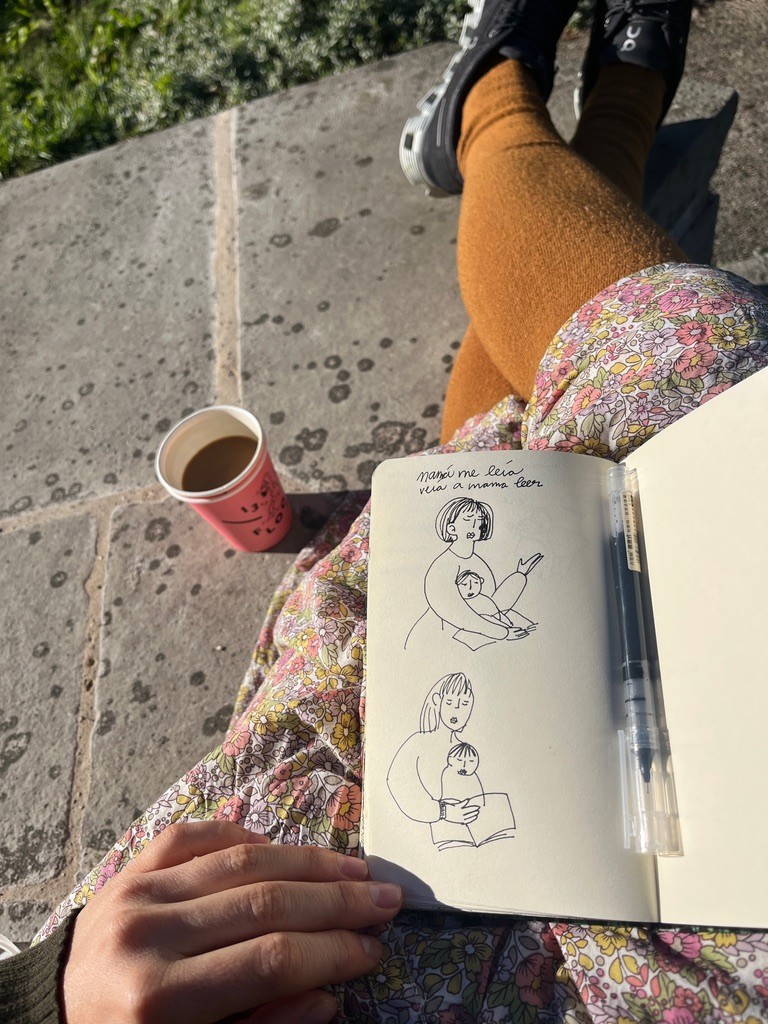 Ere continues to combine her publishing and her academic work. She has just published a book of cartoons, Dibujo por no llorar, with Hachette.
Ere says: “I have a lot of ideas, especially when I wake up at the start of the day.
“The way I think is connected to images. I cannot just do one thing. My writing is better if I draw and vice versa.
“I don’t think my illustrations would be as good because it is important that I bring all my academic training in gender studies and art history to the work and that I bring my creative instincts to my academic work.”