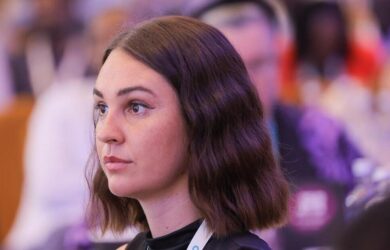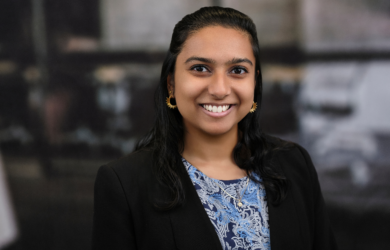






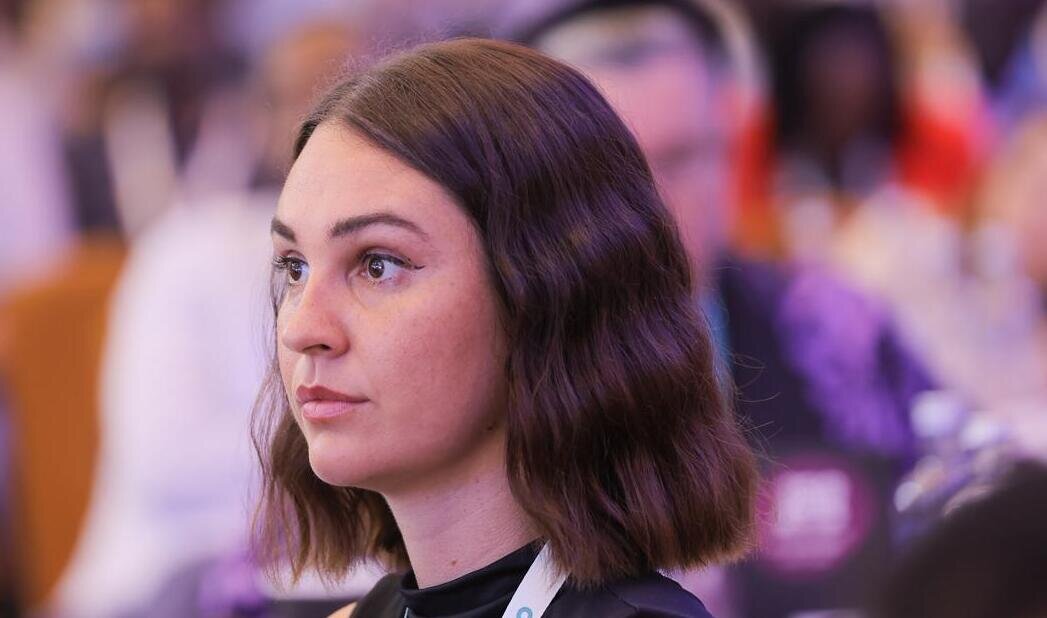
Scholar-Elect Sara Jane Renfroe talks about her work on gender rights and access to healthcare for marginalised groups ahead of her PhD in Social Anthropology.
My work aims to advance participatory, decolonialist research that bridges scholarship and practice through exploring how women living at the margins of formal health systems build knowledge, care and agency in contexts of legal and social precarity.
Sara Jane Renfroe
Sara Jane Renfroe [2026] has been working for several years in gender and human rights around the world, from Syria to Nigeria to South Sudan. She has also, since her undergraduate days, been involved in promoting the rights of immigrant communities, both in the US and in Mexico.
Her current work in Mexico bringing together gender rights and immigrant communities’ access to healthcare will form the basis for her PhD in Social Anthropology which she begins in the autumn. She has already established strong academic contacts there which will help her speak to marginalised communities and ensure she goes about her research with a decolonisation lens.
Her stated aim is “to advance participatory, decolonialist research that bridges scholarship and practice through exploring how women living at the margins of formal health systems build knowledge, care and agency in contexts of legal and social precarity”.
Childhood
Sara Jane was born in Pensacola, Florida and lived there, by the sea, until she went to college. Both of her parents are from Alabama and work in health and social care. Her father works with children with autism and muscular dystrophy, while her mother is a paediatrician. She was the first in her family to go to college. Her father’s family are pecan farmers, but he trained to be a pastor, then psychologist, and then moved over to medicine where he works with children.
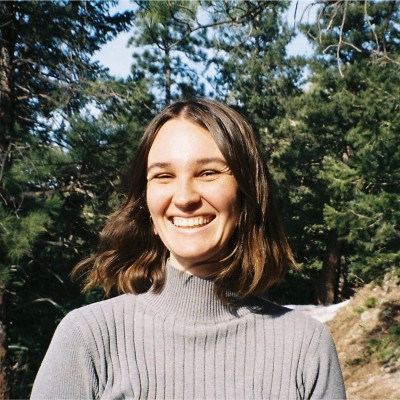 Sara Jane had an unusual childhood. She grew up in a house with no tv, listening to National Public Radio and with an inbuilt preference to play and explore outdoors. She went to a Montessori school for primary and middle school which emphasised non-violence and compassion. That meant she entered high school as a shy “super hippy” with an interest in writing [she was editor in chief of her high school journal] and soccer. Growing up she loved the outdoors and nature and would go surfing before school.
On leaving high school in 2014 she started a degree intending to do a double major in piano and English at Rollins College, a private liberal arts school in Florida where she was an Alfond Scholar. The scholarship puts an emphasis not just on academic success but also on community engagement. It meant monthly check-ins with mentors and participation in an immersion course dedicated to understanding poverty and inequity in Central Florida. It also entailed learning about equity from the outset of her studies and a series of reflections on her impact in the world.
Undergraduate studies
Sara Jane says, in her first semester at Rollins, she took a class on gender and politics in the Middle East and North Africa which was led by Rachel Newcomb, Professor of Anthropology, who had interviewed Sara Jane for the Alfond Scholarship and who told her fairly early on that she would end up an Anthropology major – which she did. “She adopted me and I followed her,” says Sara Jane simply.
 She adds: “She showed me that Anthropology can explain what is below the surface and can be used for advocacy purposes and to build bridges and disrupt the dynamics that perpetuate inequity.”
She felt Newcomb’s work on gender, equity and immigration was important. In 2017 she worked on a crosscultural research project where she investigated the exploitation of immigrant women workers in Spain and Florida, spending six weeks with Newcomb in Barcelona. Before that Sara Jane had done a study abroad project in Nepal on Tibetan displacement and she had finished that determined to study forced displacement.
Development work
When she left Rollins College, Sara Jane had the opportunity of working on a documentary on ‘Dreamers’ – the children of undocumented workers – which advocated for their naturalisation. At university, she had been working with various immigration groups, including Mi Familia Vota, a voting rights group, and through that had met students at the University of Central Florida with whom she, as well as a fellow Rollins student, produced the film.
That experience of working left Sara Jane convinced she wanted to work on human rights and gender. She took up an internship in India, working on a health project with a local group who were training women from the Dalit community in healthcare services and karate. The aim was to leave them feeling more empowered about other aspects of their lives.
Sara Jane then began a master’s course in human rights studies at Columbia to strengthen her understanding of legal frameworks of rights and justice. It was focused on immigration, gender and the socioeconomic rights of refugees.
 She then started working for a refugee organisation, HIAS, as an intern, working her way up to a manager position. She provided wraparound services – everything from housing to clothing and access to education – for refugees, asylum seekers and those seeking legal status on the basis of violence against women. She stayed there until 2021, helping provide emergency financial support through Covid.
In 2021, Sara Jane was burnt out and decided to take a break. She had long been interested in coffee making and how coffee creates community, having worked as a barista at college and given her family background in pecan farming. She set up a coffee truck outside her family store in Florida called Le Petit Pecan.
After a year, however, she missed academia and activism and took a job at Chemonics, an international development firm, working on the Middle East and North Africa, mainly from her home in Colorado. Sara Jane worked on fundraising for the White Helmets (Syria Civil Defence) and on preparing the White Helmets to manage their own grants. She also wrote several technical briefs for the programme and worked with an extraordinary team of women who disarmed unexploded bombs.
That programme, however, came to an end and she moved to Washington DC to look for work. There she found a role at WI-HER LLC, a woman-owned small business which aims to amplify the power and voice of individuals, communities and institutions to drive sustainable change.
She started the job in January 2024 as a senior associate on its Nigeria programme which involved providing integrated healthcare for women affected by gender-based violence as well as training health workers and judges. The project was working with the government to get sex disaggregated data about access to healthcare for women affected by domestic violence.
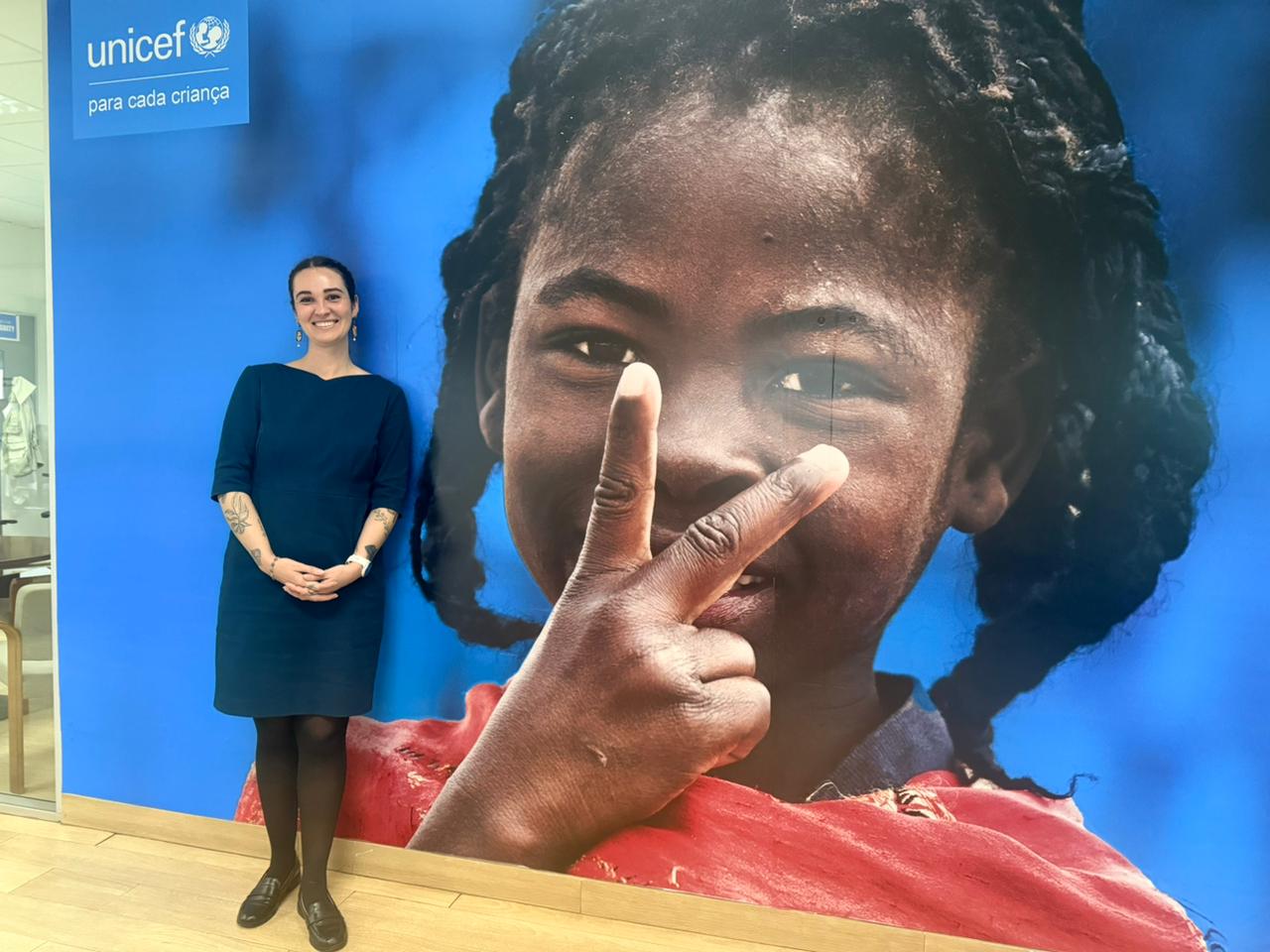
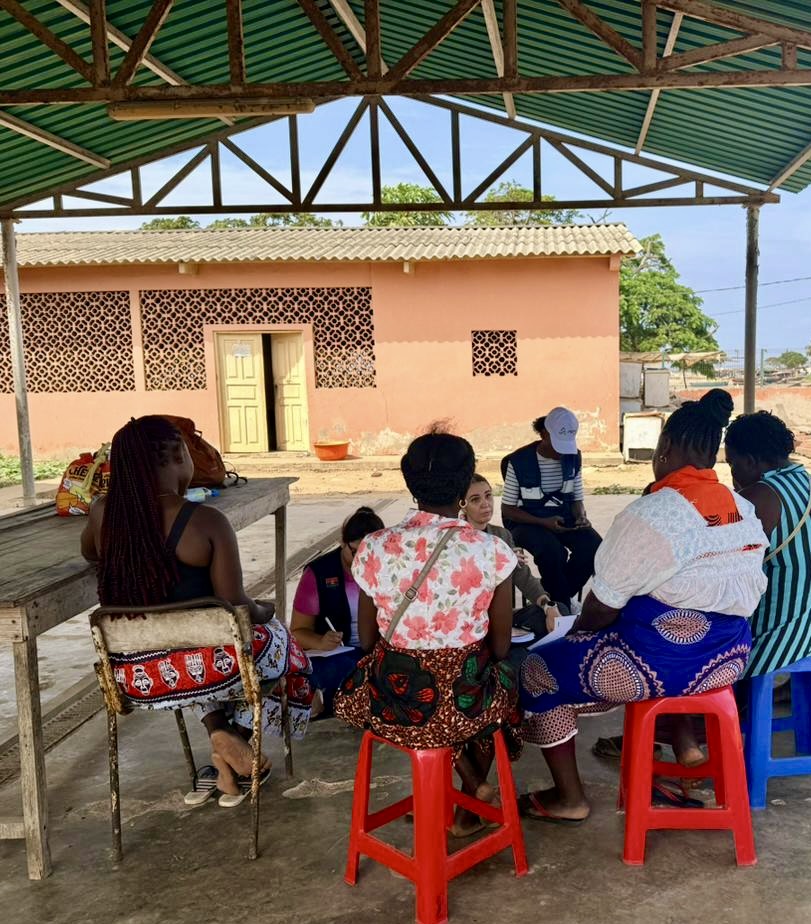
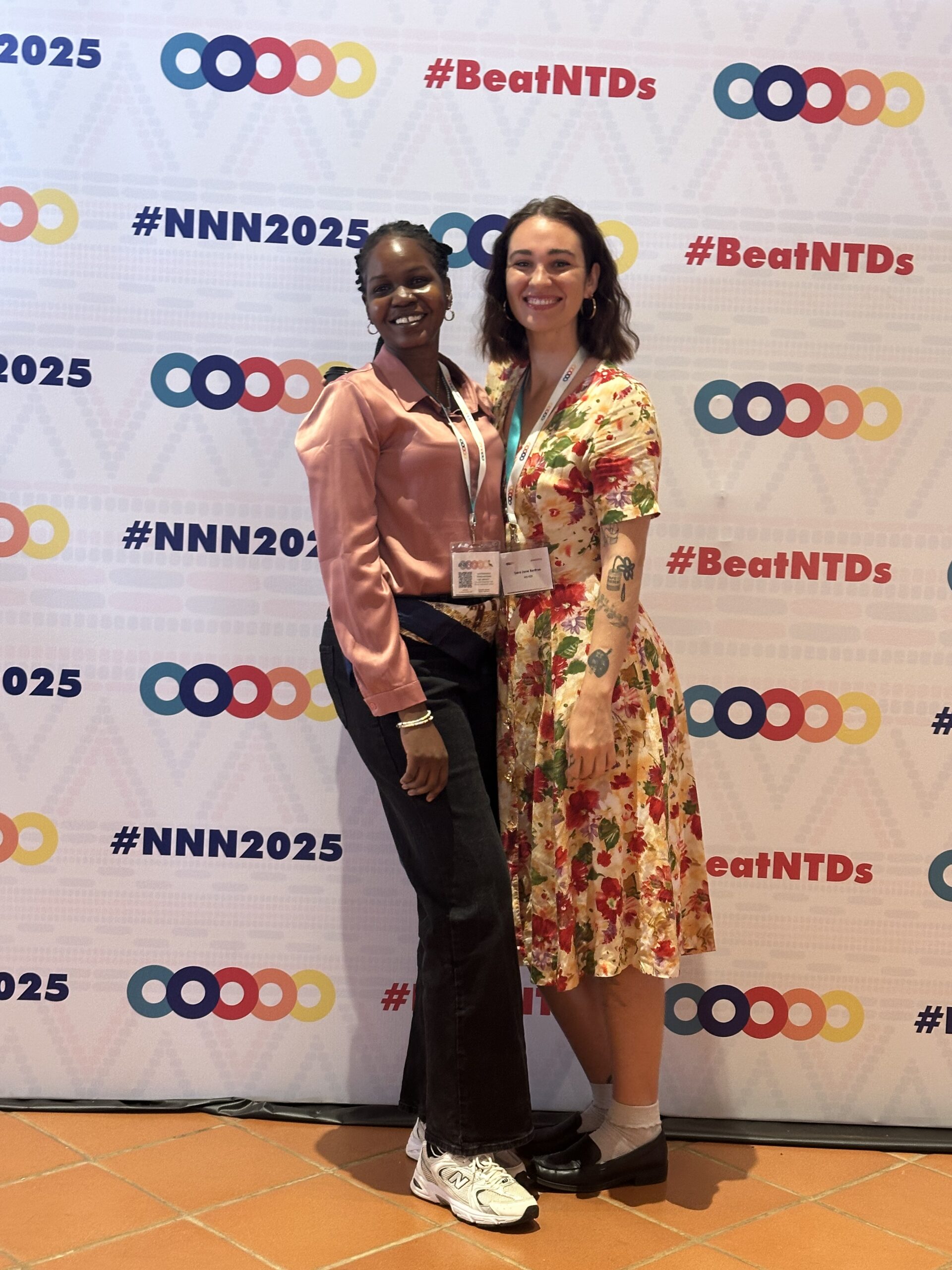 Sara Jane moved on to a programme in South Sudan on neglected tropical diseases which was investigating low access to and utilisation of medication among marginalised groups. She is still finishing up that project, as well as a cholera vulnerability study for UNICEF in Angola.
Sara Jane had been visiting Mexico to learn Spanish in January 2025 and decided, due to the USAID funding cuts, to move there. While continuing her other work at WI-HER, she started working with colleague Caroline Pensotti on an Action for Global Health project in Mexico, as well as remotely on initiatives across Latin America and Sub-Saharan Africa. She became involved in local women’s groups in Mexico City. Through contacts she got to know academics focused on Indigenous women’s rights and access to services such as healthcare.
Gates Cambridge
A colleague in Uganda had told her about Gates Cambridge and, after researching the programme and finding similarities and inspiration from the work of Cambridge academic Natalia Buitron, she applied to Cambridge, thinking she could do her PhD on a healthcare project arising from the Action for Global Health research.
She is very excited to begin her work and says the Gates Cambridge award is very meaningful to her. She pays tribute to her parents, in particular, her mother for inspiring her and her sister, who recently began law school, in their work. “She has been a really beautiful beacon in our lives,” she says. “We have access to the opportunities we have seized because she cared so much about us.”