





US Scholar-Elect Alix De Saint-Aignan talks about her MPhil in Global Risk and Resilience, her research on counter-terrorism and democratic legitimacy and her rowing prowess.
Living in Paris made it clear that security policies are not abstract; they shape how people feel they belong.
Alix De Saint-Aignan
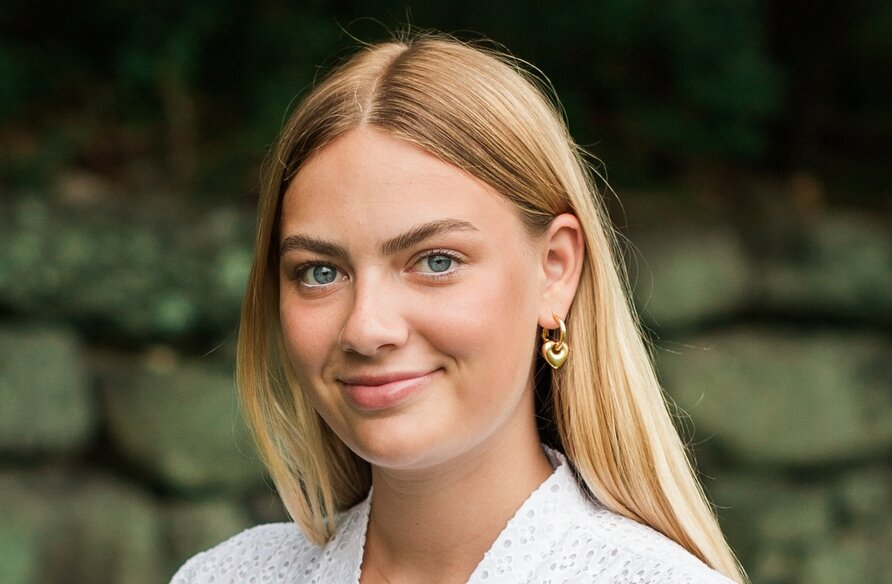
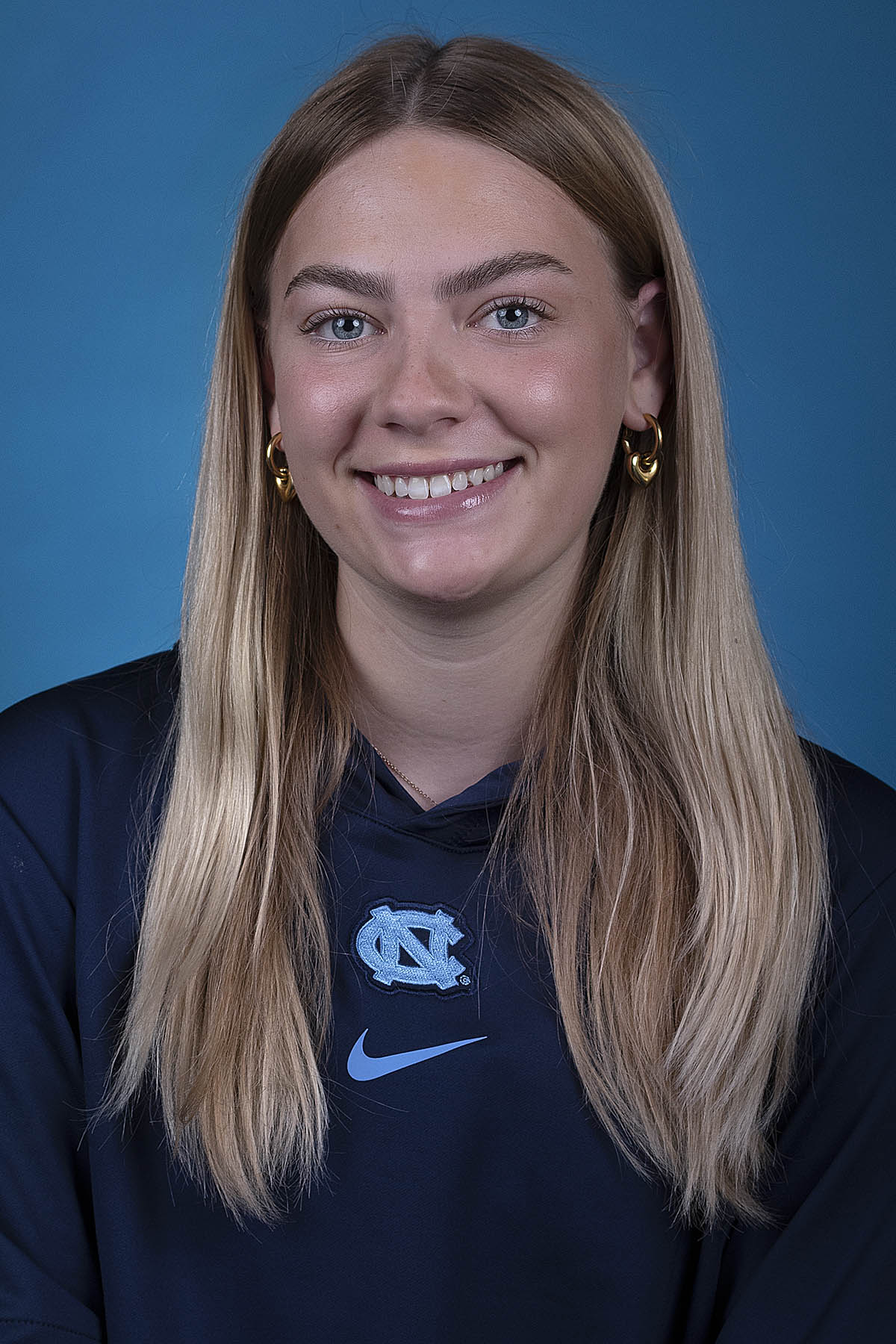
Alix De Saint-Aignan [2026] is at the top of her game both in terms of her academic studies and her sporting prowess.
Alix has just been selected as a Gates Cambridge Scholar-Elect to do an MPhil in Global Risk and Resilience at Cambridge and will be trying out for the US national rowing team next year, having already competed for the French team.
Her MPhil programme is relatively young, having only been offered since 2025. It perfectly fits Alix’s interest in security resilience and in learning from a multiplicity of disciplines and applying this to the kind of intelligence work she hopes to do in the future. Her honours thesis is on how counter-terrorism measures in France affect public trust and democratic legitimacy – something she witnessed playing out first hand during a gap year there.
Early years
Alix was born in Boston. She grew up on Rhode Island until she was around eight and then moved to a suburb outside Boston. Her mother and stepfather work in business, although her mother did international relations at university. She has two younger siblings.
Alix De Saint-Aignan
At school she was interested in everything, but leaned more towards English. She read voraciously. She loved sport and tried many, but she only found her niche in high school when she joined the school rowing team. Alix rowed for two seasons before switching to the men’s team where she was a coxswain. She has been coxing ever since and says being part of a team and working towards a bigger goal has taught her a lot about what she wants to do in the world and how she wants to bring those skills into the workforce.
Alix graduated from high school in 2021 and decided to take a gap year, given many universities were not fully back to in-person classes after Covid. She wanted to travel and have time to reflect on what she wanted to do and how she could be of direct service to others.
So she moved to Paris. Alix holds dual French and American nationality and chose to spend her gap year in France to deepen her connection to her French heritage and immerse herself in the language and culture. She rented a tiny apartment in Paris and learned to live independently over the next year and found a position in which she could have a direct impact on people’s lives, taking up an internship at a women’s organisation that works on domestic and sexual violence.
Rowing
While in France, Alix also joined a rowing club in Paris and started coxing their older team of masters, doing a few races with them. From there she started working with an under 23s team at a club just outside the city. They were ranked third in France at the time and soon Alix found herself trialling for the French national under 23s team.
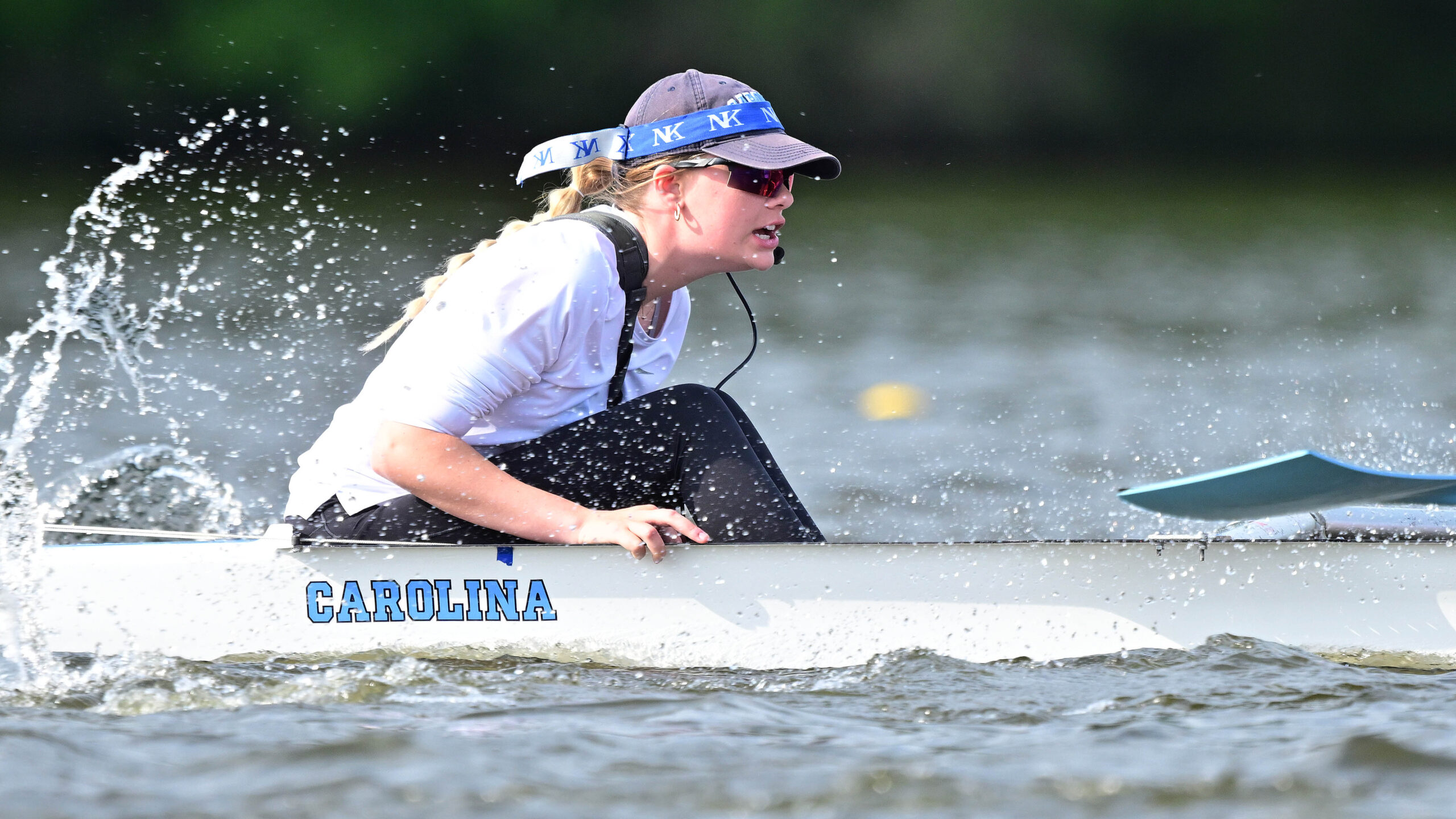
By that point, her time in Paris was coming to an end, but she dropped her plans to return to the US and instead went to the Alps to train for two months for the World Championships. She ended up competing in the 2022 Championship in Italy in the men’s coxed four. “It was an incredible experience,” she says.
On returning to the US in 2022, she joined the women’s team and has been coxing it ever since, competing internationally over the summer months. On one occasion she came to the UK and trained with Molesey Boat Club on the Thames. She has also raced in Lithuania and has trained with the US national team for the past two summers.
Undergraduate studies
Alix started her undergraduate degree at the University of North Carolina [UNC] majoring in women’s and gender studies, but she pivoted later on to international relations after taking a class on the ethics of war. “I was still focused on service, but on a more international, broader level, looking at systems and institutions,“ she says.
She became particularly interested in the intelligence community as a professor on her course – who became a mentor – had been a CIA analyst before she entered academia. “Being able to speak to her after every class and hear about her experiences in the intelligence community – deciding which information should go to policymakers and having that ability to shape policymaking – was very interesting. I could see how it might directly impact people’s lives,” says Alix who specialises in international security and is interested in open-source research and analysis.
Her 130-page honours thesis which she will be defending in March is on post-2015 counter terrorism policies in France and their impact on the political alienation of marginalised communities outside Paris. “The policies can sometimes backfire and end up harming people,” she says, adding that her focus is on how to improve them. “Living in Paris made it clear that security policies are not abstract; they shape how people feel they belong,” she states.
Through her Peace, War and Defence major at UNC Alix has found different communities, such as the Carolina International Relations Association which publishes the Journal of Foreign Affairs at Carolina. Alix has worked on the journal for three years, including as a staff editor and social chair. Over her time at the journal, the number of contributors has tripled and she is proud of its non-partisan approach to foreign affairs and its commitment to promoting different perspectives.
Alix is also involved in the university’s Carolina Diplomacy Fellows programme, which brings students interested in diplomacy and international relations together to work on international problem solving.
She combines all of this with a strict rowing schedule, devoting at least 20 hours a week to training. Alix also has a part-time job as an assistant simulation designer. That involves creating national security scenarios based on potential real-life events, such as crisis scenarios involving geopolitical conflict or emerging technologies. These are used to train government workers, NGOs and others to make decisions in fast-paced environments.
Cambridge
Alix has been interested in studying at Cambridge since her second year at UNC, having visited the UK and met the current president of the Cambridge University rowing team. She has already been in touch with the men’s rowing team, but the academic environment is also a powerful draw for her.
She had heard Professor S.M. Amadae, the director of the Centre for Existential Risk at Cambridge, speak about overlapping risks. Once the Centre launched an MPhil in Global Risk and Resilience, she knew Cambridge was for her. She finds the interdisciplinary nature of the course and of Cambridge generally very stimulating. “Every person brings in a different focus and a different risk and merges them in a way nowhere else does,” she says. “There are so many ways in which that can help me help others. It adds an extra layer. I love to learn from other people.”
Alix is keen to work in the intelligence community, perhaps as an open source researcher. She also has her sights set on greater success in rowing. She has a trial planned for the US national team in Spring 2027 and may then face a choice of going into the workforce or competing in the Olympics. “That may be a decision for later, but it is exciting to have so many doors open to me,” she says.
*Coxing photo courtesy of University of North Carolina Rowing at Lake Wheeler Invitational, Lake Wheeler, Raleigh, North Carolina, 2024.