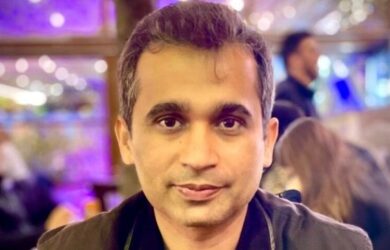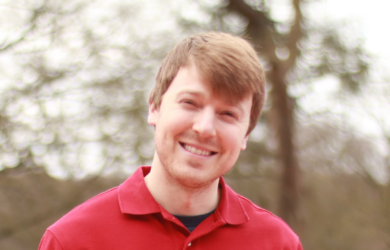







Tara Cookson and Stephen Metcalf talk about how they are helping to hone a diverse group of scholars' leadership skills.
I knew I wanted to start building a bridge between academia and policy decisions, but I didn’t feel I had the leadership skills to know how to do that.
Tara Cookson
In 2013, Tara Cookson had just returned from fieldwork in the Peruvian Andes where she had been studying conditional cash transfer programmes. She had identified various problems with the programmes which aim to alleviate poverty and vulnerability by providing direct financial assistance to individuals and households, but it seemed like policymakers didn’t know about or were ignoring the academic research on the subject.
“I knew I wanted to start building a bridge between academia and policy decisions, but I didn’t feel I had the leadership skills to know how to do that,” she says. She started speaking to other scholars who were facing similar issues and they decided that they could pool their skills and networks.
Then
Tara liaised with the then provost, Professor Barry Everitt and the Gates Cambridge programme director Jim Smith about what resources a pilot initiative that would develop the skills needed to improve the lives of others would require. Tara thought about what the core leadership skills would be that would fit with the Gates Cambridge mission and bridge the worlds of research and practice. She came up with skills ranging from technical capabilities such as public speaking, op-ed writing, building a website and project management to reflecting on what makes a good leader in a specific cultural context or field.
The cost of paying for professional workshops on all these areas was beyond the budget they were able to secure so she and her fellow Scholars reached out to their own networks and were able to secure some top speakers on a pro bono basis. For instance, they got training in public speaking with TEDGlobal’s speaker coach and did a two-day deep-dive into public engagement with the award-winning Op-Ed Project, which taught Scholars to craft opinion editorials from their research. Scholars also gave workshops in areas where they had expertise. Andrew Gruen, for instance, gave a workshop on social media and website building.
Now
Fast forward to 2021 when Stephen Metcalf began his PhD in Public Health and Primary Care. Stephen had been involved in scholarship enrichment programmes in the US and had been keen to join the Gates Cambridge community to develop his leadership skills. However, his arrival in Cambridge coincided with Covid which badly affected the momentum that Learning for Purpose had been building until then and affected community building.
He had anticipated that there would be a fully fledged Gates Cambridge leadership development programme run by full-time staff. He talked to other scholars who also felt this was a gap that the scholarship could plug.
Stephen took on the role of Director of the Learning for Purpose programme and began researching its history after hearing how scholars such as Tara had played a huge role in shaping the scholarship programme. He soon realised just how much work Tara and her colleagues had done to get the programme off the ground. “There was an 80-page report on the programme,” he says.
Fired up by that example, he wanted to help take it to the next step, piloting new initiatives and bringing in speakers such as the philosopher Peter Singer, as well as pushing for a world-leading leadership programme.
Leading with purpose
Tara says the proposed Leading with Purpose programme sounds very much in keeping with the original intention of Learning for Purpose and with what prospective scholars tell her about what they want from the scholarship. She adds that leadership skills like active listening and empathy are needed more than ever today, recalling a session with a former hostage negotiator on just those skills. “Active listening and empathy are skills that have been evacuated from what it means to be a leader. You see it everywhere,” says Tara. “We don’t need to agree with everyone, but we should be able to at least understand the way they see the world.”
Stephen agrees and says leadership is a skill that anyone can cultivate. “Leadership should not be confused with leadership positions,” he says. “There are clearly people in leadership positions who are not exemplary and there are phenomenal leaders who are not in leadership positions.”
He would like to see ‘gold standard’ global leadership training that is rooted in the idea of improving the lives of others. It would include scholar-led activities, he says, and would start from orientation and be based on experiential learning, built on partnerships within and outside the university and with Gates Cambridge alumni.
Both Stephen and Tara were awarded the Bill Gates Sr Prize for their contribution to Learning for Purpose. They agree that a professionally run leadership programme is the next step. “It’s part of an ongoing evolution, building on what Tara started,” says Stephen.
*Photo by Kvalifik on Unsplash
**An edited version of this conversation appears in the Gates Cambridge 25th anniversary magazine, which is out here.