

Julien Domercq is curating an exhibition at the University of Cambridge's Library on the death of Captain Cook after winning the inaugural Cambridge University Library/History of Art Student Curatorial Competition.
A Gates Cambridge Scholar is curating an exhibition at the University of Cambridge’s Library on the death of Captain Cook after winning the inaugural Cambridge University Library/History of Art Student Curatorial Competition.
Julien Domercq’s exhibition, The Death of Captain Cook: Mythmaking in Print which is open until 19th July, examines how reports of Captain Cook’s death in 1779 in Hawaii was transformed into myth by writers, poets and artists in Europe.
It shows how his death, of which there were no eyewitness accounts, gripped their imaginations and how his story was used to promote the values of the Enlightenment. The accounts show the extent to which Cook’s discoveries of distant lands and cultures became appropriated into the visual language of European popular culture at the turn of the nineteenth century. The exhibition is also available online.
Julien [2013] is doing a PhD in the History of Art. His PhD explores how Europeans depicted the peoples of the Pacific in the eighteenth and nineteenth centuries. He says: “When the first explorers returned from the Pacific, its inhabitants were represented as exotic and captivating Rousseauian ‘noble savages’.
However, those depictions rapidly changed as the growing European Empires strove to assume racial and cultural superiority over them. These images reveal the dramatic shift from wonder at the Pacific and its peoples to disgust and distrust, from the perception of a noble to that of an ignoble ‘savage’, and ultimately from enlightenment to colonialism.”
Read Julien’s blog on the exhibition.
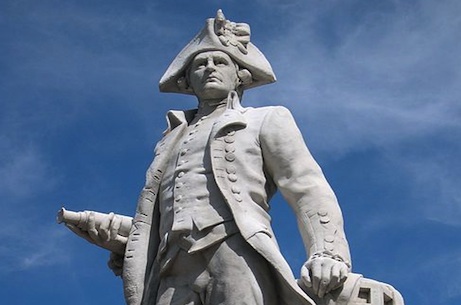
*Picture credit: Wiki Commons and John Steedman. Captain Cook statue, Christchurch, New Zealand.