

José Izquierdo publishes a storybook to encourage children to enjoy opera.
The number of opera goers is constantly decreasing, mainly due to a lack of appreciation of it as entertainment (as it was in the 19th century) rather than as an elite phenomenon as many people think of it today.
José Izquierdo
A Gates Cambridge Scholar has published a children's book on opera to encourage a new generation to enjoy the genre.
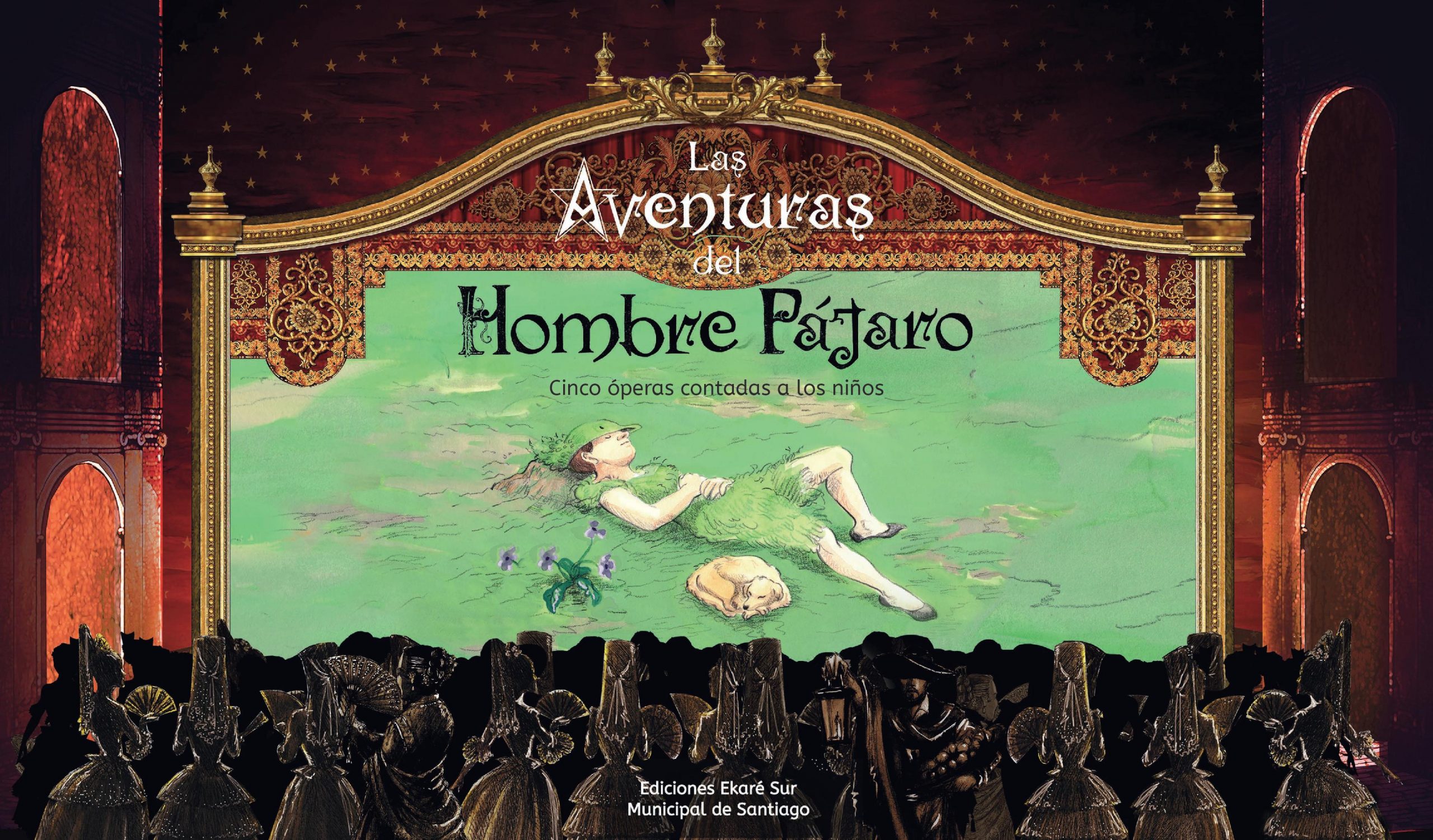
José Izquierdo wrote the book, Las Aventuras del Hombre Pajaro. Cinco Operas Contadas a los Ninos, after he was approached by the Opera House in Chile [Teatro Municipal de Santiago] to come up with a way of introducing opera to children.
After completing his undergraduate degree in Chile, Jose had worked with hundreds of schoolchildren teaching them about the importance of place and music as part of his job creating and managing the opera house's heritage archive. However, there were virtually no children's books on opera published in Spanish to build a wider enthusiasm for the genre.
José [2013], who is just completing his PhD in Music, says: "I thought this was a great project. The number of opera goers is constantly decreasing, mainly due to a lack of appreciation of it as entertainment (as it was in the 19th century) rather than as an elite phenomenon as many people think of it today."
He decided that two of the main problems is that children are usually taught about opera as a series of completely separate stories, one for each opera, so they are not able to understand it as a genre. Another issue is that a large number of the most popular operas are tragedies which depict serious themes such as murder and suicide.
José decided instead to create a new story, using the character of Papageno from Mozart's Magic Flute. The framework for the story was that Papageno was lost and, while trying to find his way back home, he met a host of characters from well-known operas who would tell him things which explained what opera is about. He says: "It can be read as a separate story, but at the same time convey information on opera and encourage children to go to the theatre and watch one or listen to one online."
The book is published by Ekaré, the main publisher of children's books in Latin America. The illustrations for it are the actual sketches for the opera productions in Santiago, which the artist modified slightly to fit the story. "In that way, it also showcases the artistry that goes behind of producing an opera, is something that adults can also enjoy and that most people don't know," says José.
The book was published in December and has received very positive feedback. As an appendix, it includes information on all the operas discussed and the history of the genre. José is hoping to follow up with a similar book on traditional dances from Chile.
José's PhD involves researching how Latin American composers united European and local influences in the 19th century. Much of the music has never been heard before and José has not only discovered old scores for the first time, but has been able to bring them back to life through working with musicians.
Picture credit: cover of Las Aventuras del Hombre Pajaro. Cinco Operas Contadas a los Ninos.