





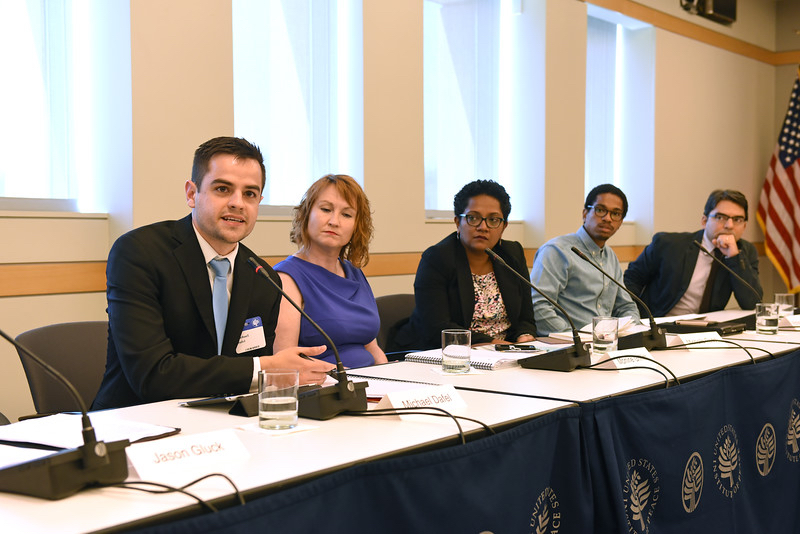
Michael Dafel addressed an international workshop on enhancing protection for LGBTI people.
The major hurdle facing the LGBTI community is that they are a permanent political minority. On their own, they are incapable of securing their own interests. It is therefore necessary to develop and implement strategies that enable the LGBTI community to gain the support of the political class, civil society organisations and the general public.
Michael Dafel
A Gates Cambridge Scholar has participated in an international workshop aimed at enhancing the protection of LGBTI people around the globe.
The LGBTI Rights: Global Activism, US Diplomacy conference in Washington DC was co-hosted by the International Institute for Democracy and Electoral Assistance (IDEA) and the United States Institute of Peace.
The main purpose of the workshop was to create a manual that would assist activists, policy makers and political leaders in their efforts to secure the protection for Lesbian Gay Bi-sexual Transgender and Intersex people in national constitutions.
Michael Dafel [2014, pictured speaking], who is a human rights lawyer doing a PhD in Law, spoke about South Africa’s successful implementation of legislation protecting LGBTI people. In 1993, South Africa became the first the country in the world to prohibit discrimination on the grounds of sexual orientation and analysed the strategies that were employed to overcome negative public sentiment and secure the constitutional protection of LGBTI people.
He says: “A person who identifies as LGBTI is almost certain to be subjected to acts of discrimination and harassment in their lifetime. In some instances, these discriminatory actions take the form of physical violence, rape, and murder. The vulnerable status of LGBTI persons necessitates that they be afforded appropriate legal protection, which may include protection at a constitutional level. As it stands, very few countries provide express constitutional protection to gay and lesbians so what South Africa achieved was remarkable.”
The conference also examined strategies employed in Fiji, Ireland, Kenya, Nepal and Grenada.
“We cannot afford to wait any longer on the issue of LGBTI rights,” added Michael. “The world is moving in polar directions. Some countries have made remarkable progress over the past three decades, which include the recognition of same-sex marriage and adoption. Yet, at the same, other countries have deemed it sensible to implement regressive and draconian laws that seek to persecute and further stigmatise gay and lesbian people.
“The major hurdle facing the LGBTI community is that they are a permanent political minority. On their own, they are incapable of securing their own interests. It is therefore necessary to develop and implement strategies that enable the LGBTI community to gain the support of the political class, civil society organisations and the general public.”
A recording of part of the workshop can be accessed here.
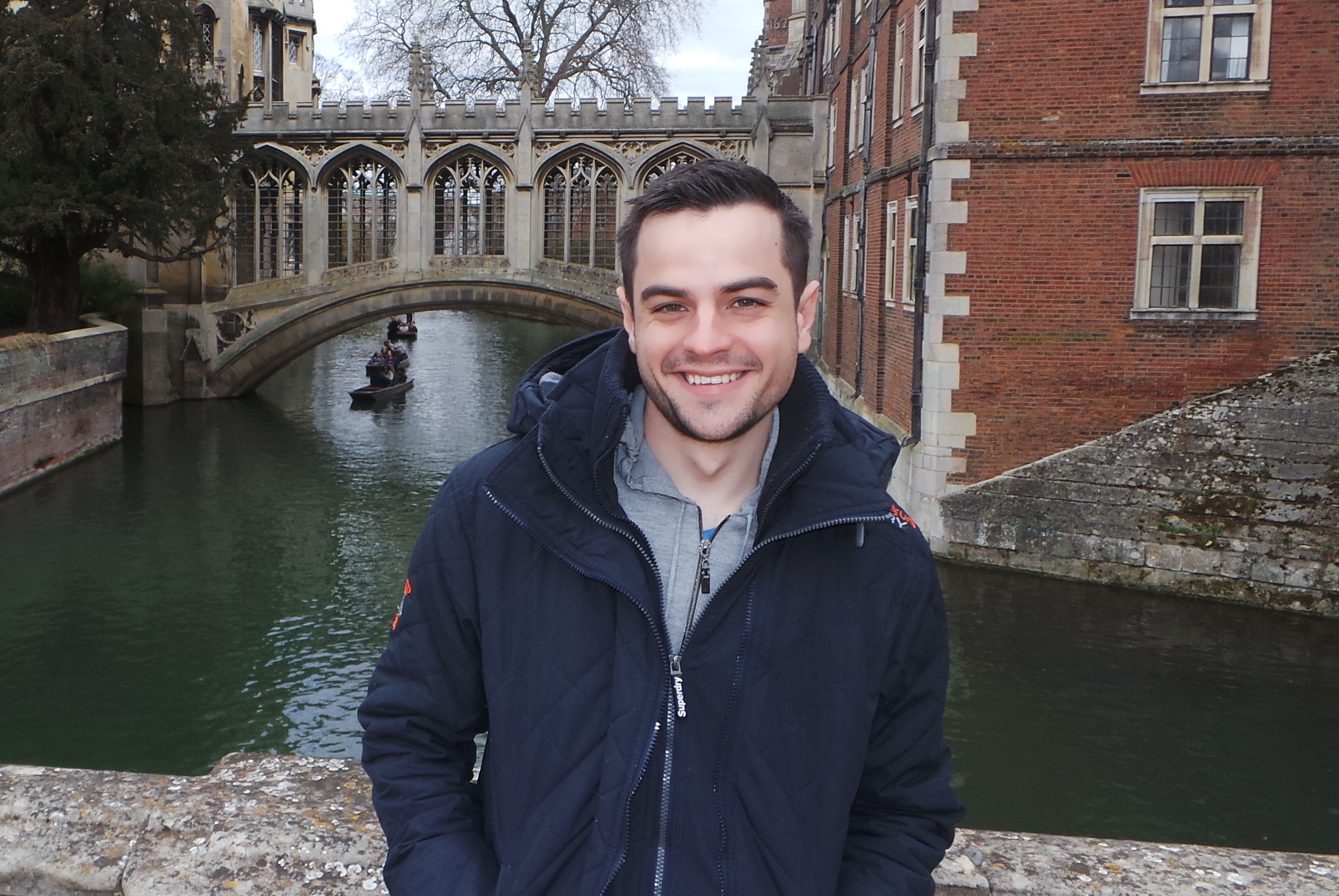
Michael Dafel
- Alumni
- South Africa
- 2014 PhD Law
- Corpus Christi College
Originating from Pretoria, South Africa, I entered a career in human rights law with the hope that I contribute to rebuilding my country following the rights violations that characterised apartheid. My education from the University of Pretoria and New York University led me to clerk at the Constitutional Court of South Africa, work on litigation before the African Commission on Human and Peoples’ Rights, and provide assistance to members of constitutional drafting assemblies in the Middle East following the Arab Spring. It is however academia that is my main interest. My research to date has focused on the extent to which human rights impose obligations on non-state actors, and whether doing so can create a more equitable and just society. At Cambridge, I will further my understanding on this topic by focusing on one particular type of non-state actor, political parties. I am humbled at the opportunity to join a global network of leading minds committed to creating a better society.