






Pradipta Biswas's new book aims to demystify the latest developments in the UI/UX design process.
A Gates Cambridge Scholar has published a book which aims to mainstream the User Interface (UI)/User Experience (UX) design process by explaining the latest developments in a comprehensible way.
Intelligent User Interface: Usable Artificial Intelligence and Artificial Intelligence for Usability by Pradipta Biswas [2006], published by Taylor & Francis, explains the latest AI/Machine Learning models and highlights case studies on developing intelligent user interfaces for XR systems, human robot interaction, cockpit design and trajectory prediction.
Trajectory prediction is the process of forecasting future positions of agents, such as vehicles or pedestrians, over time. It is crucial for autonomous driving to anticipate movements and ensure safe navigation. XR systems are digital tools, platforms and technologies that enable users to experience and interact with virtual, augmented and mixed reality environments through advanced hardware like headsets and smart glasses.
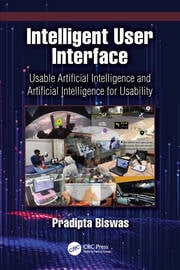 The book also discusses the latest standards and guidelines relevant to areas such as UI/UX design and layout and equipment needed for setting up a lab on intelligent interaction design involving robots, drones and XR systems.
Pradipta is Associate Professor at the Department of Design and Manufacturing and associate faculty at the Robert Bosch Centre for Cyber Physical Systems of Indian Institute of Science. He was elected as a vice chairman of ITU Study Group 9 and was also a Co-Chair of the IRG AVA [Intersector Rapporteur Group on Audiovisual Media Accessibility] and Focus Group on Smart TV at the International Telecommunication Union.
The book touches on a wide range of topics including human factors, computer vision, AR (Augmented Reality)/VR (Virtual Reality) systems, large language models (LLMs) and usability evaluation techniques. It discusses the latest AI systems such as vision transformers, LLM-based human robot interface and virtual reality-based spacecraft simulation systems and it provides a list of freely downloadable software on the topics covered.
It also contains graphical illustrations and a list of quick facts for easy review and recall of basic concepts in each chapter and gives new project ideas on intelligent user interfaces that can be explored by students and early career researchers
Its target audience is engineering and design students and faculty members, user interface designers and product managers who want to know about the latest AI/Machine Learning developments without diving into too many theoretical details so that they can use that information for their projects or product development.
At Cambridge where he did his PhD in Computer Science, Pradipta explored visual and auditory perception, rapid aiming movement and problem-solving strategies in the context of human machine interaction. He also invented new algorithms, for instance, for use in eye gaze technology. Among the technologies he has patented is an eye gaze and gesture controlled interactive Head Up Display.
Since returning to India, he has built on his work on eye tracking technology working with the Indian air force. He has also led a project to design a virtual reality cockpit for India’s maiden human space flight mission and was one of five researchers in India selected to undertake research study on human machine interaction at the International Space Station during the Axiom 4 mission. He has also led the first of its kind toy hackathon to help children with severe disabilities to communicate through eye-controlled interfaces.