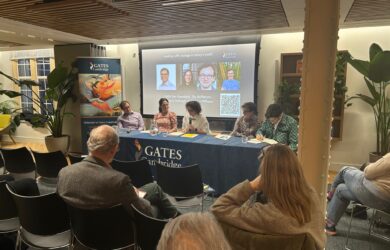






Christopher Kirchhoff and Pranav Ganta discuss security risks in the 21st century and the role and regulation of Big Tech.
There’s an interesting experiment under way with regard to regulation. We will see different regulatory regimes in place and witness both the advantages and drawbacks of each.
Christopher Kirchhoff
What are the major security risks in the 21st century and how should we deal with them? Pranav Ganta is part of the 25th anniversary cohort and will be studying cyberbiosecurity as part of a new master’s in Global Risk and Resilience. Christopher Kirchhoff [2001] has years of experience of military innovation as one of the co-founders of Unit X*, the Pentagon’s bridge to Big Tech. They talked to Gates Cambridge about their careers to date.
Pranav’s path to cyberbiosecurity came through Chemistry and Neuroscience. He was working on a novel cancer immunotherapy at Harvard, using a genetically modified herpes simplex virus to target glioblastoma. The project raised deep regulatory and ethical questions, particularly around the possibility of chemical warfare, dual usage of technology and the lag between that technology and regulation of areas such as AI, biotechnology, quantum networks and other developments.
His MPhil course at Cambridge will allow him to explore the different risk regimes that have emerged in the wake of the Covid pandemic and to put cyberbiosecurity and new vulnerabilities linked to big data and genomics under the microscope.
Chris got into the field of security and defence by accident. He became fascinated by technology while doing his undergraduate degree. During his PhD in Social and Political Science he got the chance to work on the investigation into NASA’s Space Shuttle Columbia accident. He has since been involved in several key government reports, ranging from the Obama Administration’s Lessons Learned Report on Ebola and the White House Big Data Report to Hard Lessons: The Iraq Reconstruction Experience.
Chris was working as a strategist in President Obama‘s National Security Council and as the civilian assistant to General Martin Dempsey, Chairman of the Joint Chiefs of Staff, when, in 2016, he was appointed by the Secretary of Defense to create and launch Unit X, bringing the commercial technology world and defence together. “I have spent my career thinking about how to harness the private sector technology world in the interests of state security,” he says.
The unit tested innovative technology, including that used in the air operations software that prevented ISIS from committing genocide as well as space-based synthetic-aperture radar imaging used to detect North Korean and Russian missile launches.
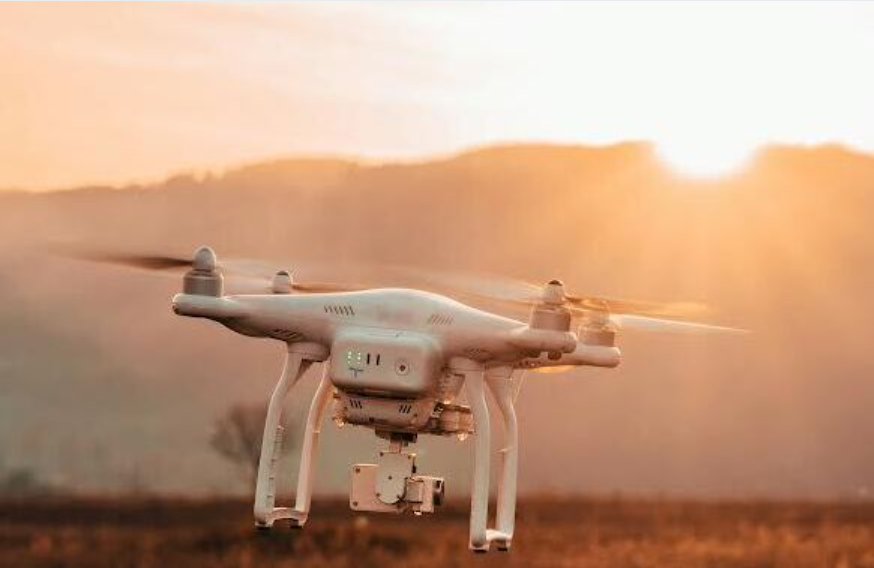
That role has been a highlight of his career so far. “There’s been a revolution on the battlefield,” he says in connection to the transition from hard power in the form of tanks to tech power in the form of drones. He says what is happening in Ukraine is a ‘brutal reminder’ of what is necessary to gain battlefield superiority today and the role technology must play in this.
He adds that Pranav’s ‘MPhil in doom’ is a marker “that we are dealing with serious, maybe existential risks” when it comes to technology’s involvement in the field of warfare. As technology has also become cheaper and more accessible that risk has increased, but Chris says he is optimistic about the ability to design built-in controls. “Technology is an incredible tool for good if properly harnessed,” he says.
Dual usage technology
Pranav is particularly interested in dual usage technology and he feels the conversation about it is very divided between complete apathy, particularly when it comes to the biological sphere, and fear of catastrophe. He too thinks regulation of research, at least in the academic arena, is more attainable today, citing dual usage provisions set in place by institutional review boards. “There is a move away from self-governance in science. We are moving in the right direction post Covid,“ he says.
Yet both Pranav and Chris raise questions about the lack of regulation of Big Tech, particularly in the US, compared to the situation in Europe where the EU AI Act is starting to come into force. Chris says: “There’s an interesting experiment under way with regard to regulation. We will see different regulatory regimes in place and witness both the advantages and drawbacks of each.”
Pranav says the ability to gain a more global view of different regulatory regimes is one of his motivators for coming to the UK. He is especially interested in tracking the regulation of health data as it crosses borders and looking at how that plays out on the ground.
Chris says that when he did his PhD it was just after the period between publication of Francis Fukiyama’s end of history theory and 9/11. “Unfortunately, history didn’t end,” he says. “And that makes Gates Cambridge as important now as it was when it was created, maybe even more so, as it gives scholars from all over the world the chance to come together to grapple with the major challenges of our times.”
*Unit X: How the Pentagon and Silicon Valley Are Transforming the Future of War is published by Simon & Schuster. More information: www.unitxbook.com. Photo by Val Vesa on Unsplash
**An edited version of this interview appears in the Gates Cambridge 25th anniversary magazine, which is just out here.