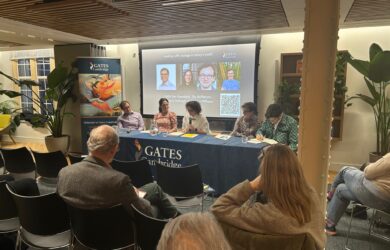






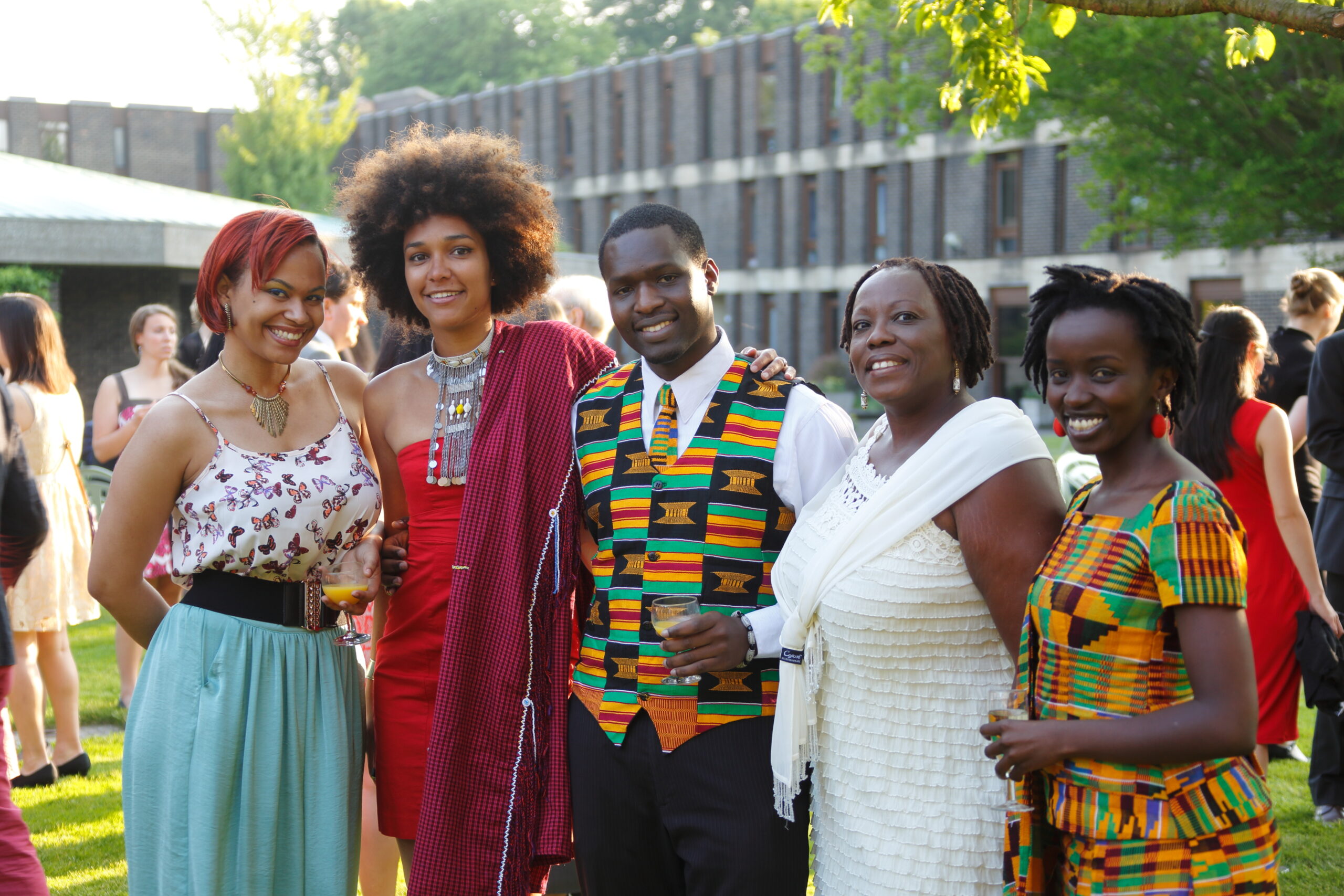
Scholars from the early days of Gates Cambridge talk to 2025 Council members about how the scholar community has evolved.
Here was a scholarship with an important mission - to make the world a better place. We couldn’t do that on our own so we had to figure out how to bring people together so we could all benefit from the common sense of purpose that binds us and change the world for the better.
Jennifer Gibson
“I cannot emphasise enough how much of a jazz performance it all was, how we were making it up as we went along,” says Rob Perrons, Class of 2001, about the early days of the scholar-led community structures many scholars now take for granted.
“You have to remember that in that first year there was virtually nothing,” says Jennifer Gibson, recalling arriving at college in 2001 and not knowing where to go to get her scholarship cheque. Despite a small administrative footprint, the scholars were only loosely connected.
Early on, a number of them joined together and decided they needed a community. They set about creating it from scratch as their way of paying back the gift they had been given. “We had been given this amazing opportunity. I had been a Truman scholar and had seen the power of community. Here was a scholarship with an important mission – to make the world a better place. We couldn’t do that on our own so we had to figure out how to bring people together so we could all benefit from the common sense of purpose that binds us and change the world for the better,” says Jennifer.
The problem – and the opportunity – was that there was no instruction manual for how to create that community. Another issue was that, once any structures were created, they would have to be retrofitted and the scholars would already have made friends in their colleges and departments by that point. Because there was no coming together in the early days, scholars had not had the chance to make Gates Cambridge friends.
So the idea for orientation was put forward – a kind of bootcamp at the very start of the programme where scholars could meet and get to know each other before they had had the time to make friends in their other circles. “We wanted Gates Cambridge to be a first string in their lives and not a third string,” says Rob.
The idea for orientation was put to a group of scholars to see if it passed what Rob calls ‘the sniff test’ and it was taken to Gordon Johnson, the first provost of Gates Cambridge who was based at Wolfson College with Jim Smith, who went on to be the programme director. “Gordon would listen to our ideas like we were on Britain’s Got Talent and give a yes or no,” says Rob. Jennifer adds that the process was a two-way one, with the scholars seeking to earn Gordon’s trust by putting forward sensible proposals.
Gordon Johnson
 Jennifer says that it is hard to underestimate how supportive and open Gordon was to the scholars’ ideas and how he fully understood the need for community in order for the scholarship to have collective impact and truly improve the lives of others.
Both Rob and Jennifer say that not everyone in the university was as supportive about the idea of creating a special community and the scholars had to argue strongly for the benefits of a special orientation programme just for them.
They planned everything on a shoestring from the bus journey [they didn’t realise how far away the Lake District was] to the campsite. “We told jetlagged scholars to pack for a camping trip!” says Rob. It worked.
Council structure
The Council structure came about in a similar way. The first year – 2002 – there were no elections and meetings took place at the graduate pad. Fourteen scholars steered affairs in the early years – Rob [social officer], Jennifer [alumni officer], Luis Briseno-Roa [social officer], Anna Boyana-Font [treasurer, Chris Tooley [external officer], Napoleon Katsos [alumni officer], Pete Manasantivongs [treasurer], William Hollingsworth [technology officer], K Franko [internal officers], Andrew Robertson [internal officer], Pierre Far [technology officer], Albina Shayevich [external officer], Hunter Keith [newsletter design] and Sean Bennett, who was Secretary General.
Another long-term fixture of Gates Cambridge life is The Scholar magazine, where scholars can write about their research and activities, edited by their peers. The original newsletter was laid out and printed around twice a year. It’s now online. In recent years, it has become a platform for scholars to explore their ideas in more creative ways, from poems to photo essays, long-form articles and podcast interviews.
Rob says there was a splinter group led by David Haskell and two others who wanted to produce a creative writing magazine that was affiliated to Gates Cambridge. It didn’t happen, but David took it to New York after he graduated and ran it there for a while before going on to be editor-in-chief of New York magazine.
A changing council
So how have things changed in 25 years? For one, the Council is much bigger, with 22 people on the board, covering everything from professional development, technology, orientation and social outings. Orientation has become a vital part of community formation and there is a whole committee to organise it. Rather than meeting at the graduate pad, the Scholars used to meet at the Gates Cambridge Common Room at the University Centre until last year. In May 2024, Bill Gates Sr. House opened and it has given scholars and Trust staff a beautiful space to meet and work.
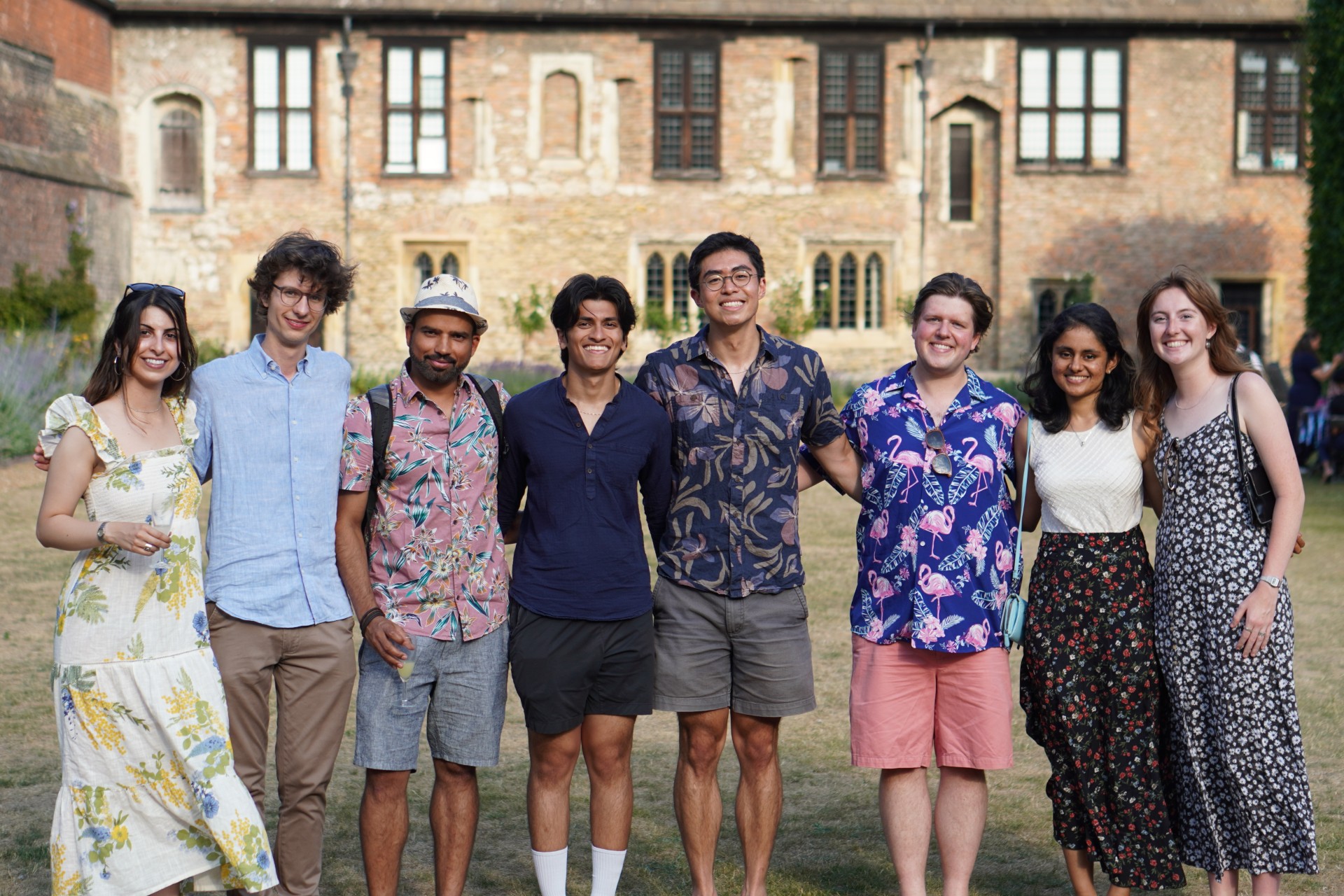 The current Council has, however, faced its own challenges as the number of scholars has increased and as they have had to rebuild a sense of community after everything moved online during the pandemic. Gradually, things are returning to how they were pre-Covid, but Justin Wei, the current President of the Scholars Council, says it has been hard as scholars don’t know the extent of activities before the pandemic. Vice-President Josh Weygant singles out the ongoing importance of orientation in bonding the community together, even through the pandemic years. “Many people make Gates Cambridge friends first – and they keep them,” he states. “I’m so thrilled our instincts were right on that,” says Rob.
One challenge that the new Council is grappling with is the burgeoning of guidelines and policy documents over the years. Justin says there are 150 pages of guidelines, including 20 pages on how to run elections. “We want to simplify these a little and bring back a sense of control as well as not feel constrained by what has come before us. We want to bring back a sense of autonomy,” he says.
A blank slate
Rob says it was impossible in 2001 to anticipate what scholars would want and need in 2025, but what the original council members wanted to do was to give them the latitude to solve whatever might come up rather than to bolt things down. Jennifer agrees. “There were those who wanted to write 150 pages of policy, but we did not want to bind future groups to what we were doing. Part of what made it exciting was that it was a blank slate,” she says.
That is not to say that the Council has not continued to innovate over the years. Schemes such as the Gates Cambridge ambassador scheme where scholars spread the word in their home universities and other venues, the Gates Cambridge mentoring scheme, the Day of Research, the Learning for Purpose programme which gives scholars practical skills and the Day of Engagement.
Innovation
The 2025 Council is keen to innovate too and planned, for instance, a social entrepreneurship incubator day in tandem with alumni entrepreneurs. Justin says: “People feel very lucky to receive the scholarship and to be part of something so special. Our job is to help them harness that and build connections.”
He says the job of president is very varied, but admits it can be hard to build a sense of community when scholars come and go so quickly. Master’s students can be in Cambridge for just nine months and PhD students may come and go depending on the requirements of field work. “It takes sustained effort,” he says, “but it’s really rewarding.” “It’s such a unique opportunity,” agrees Josh.
Jennifer adds: “Gates Cambridge Scholars are some of my closest friends. They can knock on my door at any time and I will be there for them. Building the community is like hanging out with your friends trying to create something positive. And it’s a lot of fun too.”
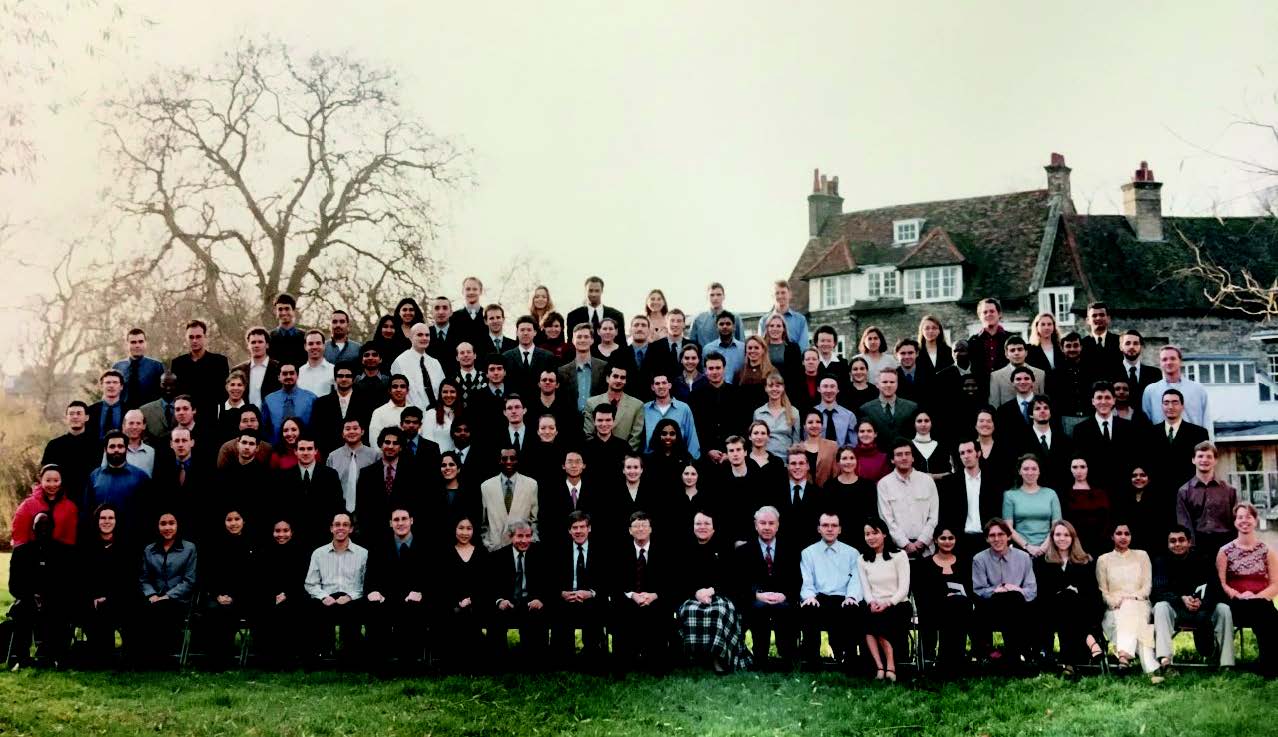
*Photos in story are of the 2001 cohort and of the 2025 Scholars Council.
**An edited version of this conversation appears in the Gates Cambridge 25th anniversary magazine, which is out here.