


Catherine Tan and Simone Eringfeld are pioneering new ways to disseminate academic research. They bounced ideas off each other in a recent conversation.
We are so focused on the written word. It’s really hard to change that. It needs a culture shift.
Simone Eringfeld
Simone Eringfeld and Catherine Tan are from the same Gates Cambridge cohort – 2022 – and share a passion for communicating knowledge in new ways. Both describe themselves as neurodivergent and they believe experiencing the world in different ways has given them a new outlook on their studies and on academia generally. They got together recently to share what they are doing and why.
Catherine is a legal researcher specialising in avant-garde technology and how it is pushing the frontiers of legal principles, for instance, what it means to be dead or alive, what it means to be extinct and what it means to be sovereign. “Some of those involved in this kind of technology are building parallel legal realities,” she says, citing the example of cyborg plants, organisms enhanced with electronic components which enable them to function as input or output devices, monitor environments and perform delicate tasks.
She started thinking about how to get those ideas across to a broad audience in a simple way – “to democratise the ideas” – and began looking at making films using CGI and methods of speculative world-building. It seemed to her the perfect medium as it is more art than realism – she doesn’t like documentaries – and has a future-looking fantasy element.
Through industry word-of-mouth and visual essays critiquing different genres of production, which built a public profile, Catherine was approached by one of the creative minds behind Disney Pixar who wanted to transform her research material into film. Catherine’s essays built on her previous work writing satirical geopolitical plays and on her neurodivergent thinking. She says that, having AuDHD she thinks in images, free association and pattern leaps, qualities which do not translate easily to academic papers which favour sequential, linear thinking. “Everything gets flattened in an academic paper,” she says.
Catherine also became aware that other scholars were looking to film to get their ideas across and started thinking about how to build the infrastructure necessary to allow them to scale their ideas up through an alternative academic publishing venture – Uncommon Future Press. And then as the idea kept rolling, she realised it could also address some of the criticisms associated with traditional academic publishing model. “It seemed to kill multiple birds with one stone,” she says. Along the way she has also been looking at devising a new citation infrastructure that tracks the life of an idea — how far it travels, how deeply it goes and who it reaches — rather than simply counting traction. All this while doing her PhD.
Podcasting
Simone Eringfeld
Simone is also neurodivergent and instantly recognised what Catherine said about the limits that written academic papers place on people who think in different ways. She is also worried that academic papers often only get read by a very specific type of person. “It’s so limiting, not just from a career perspective but for the world. Important topics don’t reach a wider public often,” she says, adding that she had never heard of some of the ideas that Catherine’s research covers.
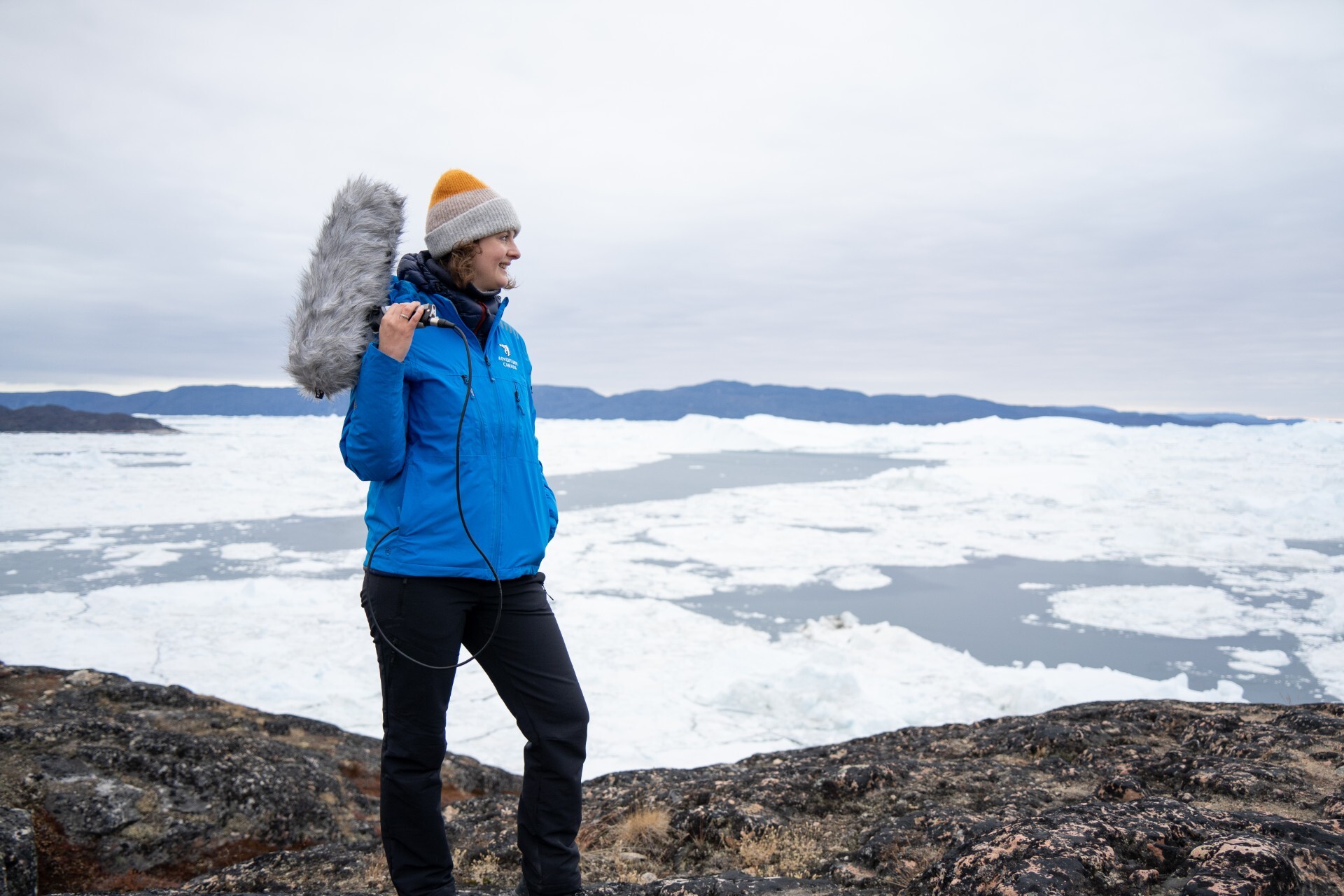
While Catherine is very visual in how she thinks, Simone describes herself as an audio person. From an early interest in music – she is a dancer and singer – to her current research she says she has always been “sonically activated”. For her sound plays a vital role in how we connect to a place. She says: “There are so many ideas generated from a conversation. What’s more, the information we take is not just from the actual words but how something is said, the non-textual communication. There are different ways that our bodies and our voices can convey messages that communicate emotion and urgency and make the message land in ways written words sometimes can’t.” She says that is why she has turned to podcasting as a medium for communicating ideas and she has recently published a book on the subject, Podcasting as a research method: A practical guide.
This is something that has chimed with other academics. When her editor posted about her new book on LinkedIn it went viral. Thousands liked the post. “It was as if people had been waiting for this book,” she says. “I thought it would be very niche, but it turns out that there is a huge demand for a book like this.”
Catherine agreed that interest is growing, mentioning a new master’s in podcasting. For Simone, podcasting is not just about disseminating ideas; it is about storytelling. “It can feel very intimate,” she says. It can also be a means of data collection and the analysis process.
Her PhD is a case in point. It is looking at tourism in Antarctica and as part of her research, she facilitated workshops on ‘site-hearing’ – a different way for tourists to navigate the icy landscape through listening. “Rather than looking at a humungous iceberg, I took them to little bits of ice which are sonically super crispy and poppy,” says Simone. “We are very visually focused usually. Shifting how we know a place to a focus on hearing leads to a different way of knowing and relating to a place. It’s a more embodied way of being in a place. It’s not just about the tourists listening. It’s about being in nature, not separate from it. There’s a sense of entanglement. It changes how people feel connected to a place. It affects how they care about the environment. Sound is very visceral and emotional. It creates a lasting memory of a place.”
Alongside her thesis, Simone is now working on an immersive podcast series which aims to create that sense of entanglement with Antarctica without people having to go there.
An interest in new ways of disseminating ideas
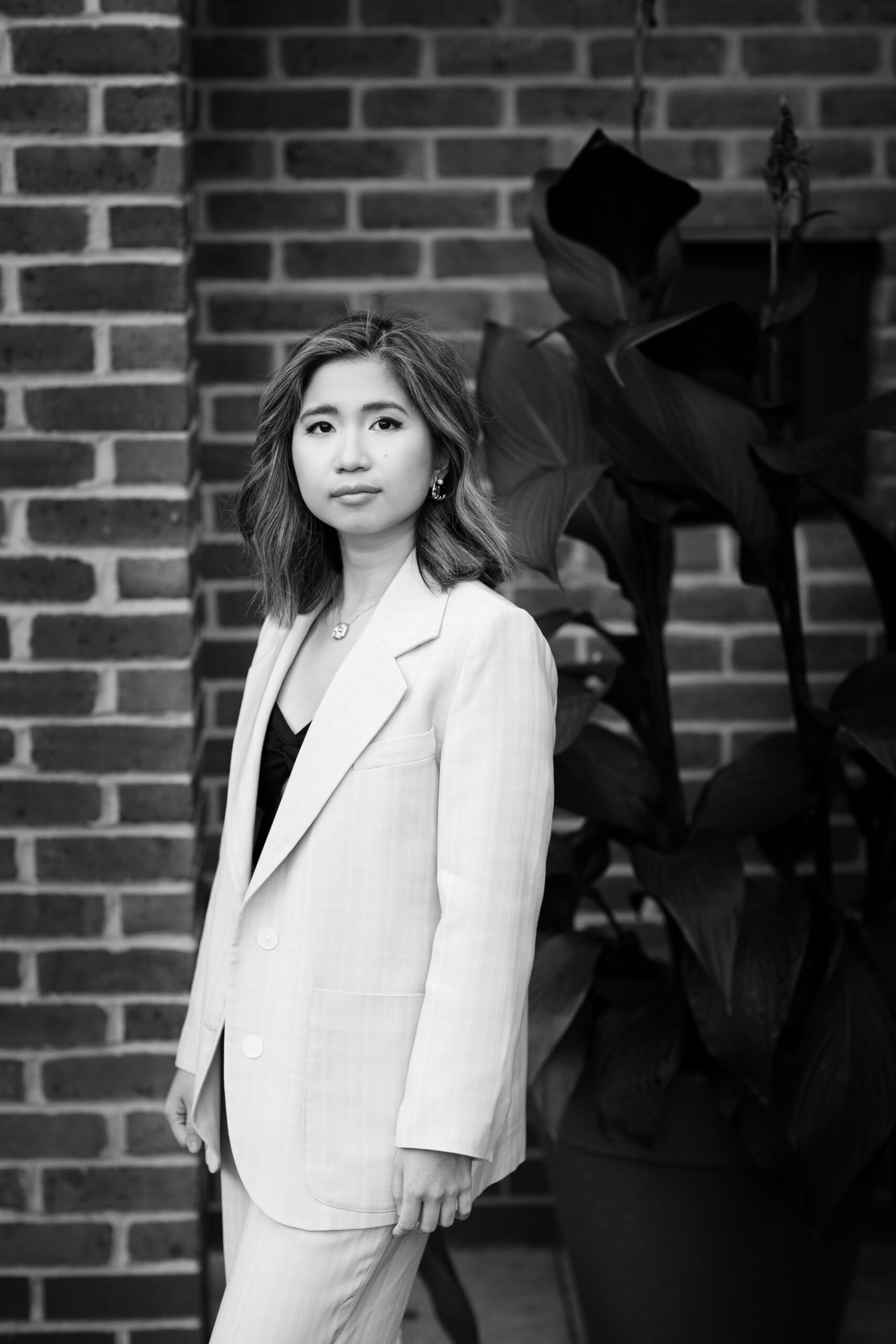
Catherine Tan
Catherine and Simone discussed experiencing the world through other senses, such as taste and touch, adding that thinking about the world through different ways of perceiving it shows how limited we often are with our overreliance on sight. Catherine said she had experienced similar interest to Simone in different ways of disseminating research ideas, particularly from younger researchers. Just two weeks after first circulating her ideas for Uncommon Future Press she received 1,200 sign-ups from academics and artists. “We are resonating with many people,” she states.
Simone says what she calls ‘sound-based scholarship’ is still small scale because universities tend to be opposed to new ways of doing things. Although she has had support from individual supervisors over the years, she feels what she is doing is not fully valued in academia. “All my podcast efforts are additional to my written thesis,” she states. “They are not formally acknowledged as research output. The examiners may not listen to the podcast even though it is an important part of what I am doing in terms of studying sound. We are so focused on the written word. It’s really hard to change that. It needs a culture shift.” However, she sees a chink of space for change and is now teaching about using podcasts for research. “You have to be quite stubborn because people say you can’t do it,” she says.
Catherine agrees with Simone’s frustration. “Universities can be a very no no no environment when it comes to creativity,” she says.
What comes next?
After finishing her podcast series, Antarctica Calling, Simone is planning a music album. “I have big artistic visions for after my PhD,” she says. “I feel really passionate about having a multipath life. I don’t see why we are made to think that it is wrong to do lots of different things rather than focus on one.” Simone’s PhD will be her fifth academic degree. All of them are in different fields. “My work is fundamentally transdisciplinary,” she says.
Her biggest focus post-PhD, however, will be on a course she has developed for her coaching company The Smart Rebel. “Outsmart yourself” is a course she designed specifically for gifted adults who want to make the most of their potential and build ‘multi-path’ lives. “Neurodivergent people do see things differently. I’m interested in how we use that in our lives and careers as a strength,” she states.
Catherine agrees and talks about how breadth and depth can complement each other. Her career path has not followed any linear path. She was an economic diplomat, then moved into law and is now in Geography and says she has learned from each and taken what she has learnt into her next project. “I have taken a thesis from each and eventually it will form a metathesis,” she says.
Uncommon Future Press launches its collaborator and submissions portal on July 30th 2026, with its fuller public launch later in the year, but it will have multiple soft launch points in the lead-up. Catherine is doing most of the work herself. It’s an ambitious project, but she is determined and has a plan for public programmes in 2027 working with arts organisations in the UK to do touring workshops on translating knowledge into different genres. By 2027, she expects UFP to have its first roster of material in a permanent catalogue.
UFP has already drawn early recognition — MIT Solve described it as a “high-quality” solution to the future of global education. Catherine was also named the Most Visionary Media Publishing CEO of the Year 2024 by the Global CEO Excellence Awards and was named as one of the “Q100: Top 100 Trailblazing Queer Alumni of Cambridge University in 2024, alongside Sir Ian McKellen, Robert Fry and Tilda Swinton, with her work on UFP being foregrounded.
After a stimulating discussion, the two Scholars left the conversation keen to collaborate and keep speaking.
*Photo by Patrick Tomasso on Unsplash