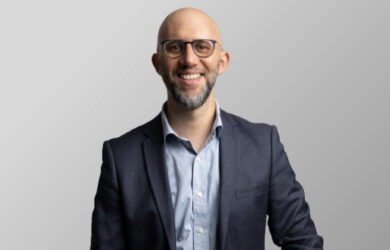



Scholar-Elect Cong Minh Nguyen will study how algorithms can be redesigned to expand fairness and opportunity to all.
I want to use economics not simply to describe the world as it is, but to help build one in which information empowers rather than exploits.
Cong Minh Nguyen
Cong Minh Nguyen is an economist who wants to tell stories about how market systems shape people’s lives and how they can be redesigned to expand fairness and opportunity.
He wants to expand the field of Economics to embrace the multiple and complex reasons behind human decision-making – not just the so-called rational ones – and to ensure all people are included in economic calculations and systems.
His PhD will study how the information design of digital platforms may distort competition and facilitate algorithmic collusion among sellers’ automated pricing agents. He says understanding this and helping people design different algorithms through open source mechanisms form part of his commitment to consumer protection, to giving the consumer more control over what they purchase and at what price.
He states: “I want to use economics not simply to describe the world as it is, but to help build one in which information empowers rather than exploits.”
Childhood
Cong Minh [2026] was born in Pleiku in Vietnam’s Central Highlands, an area that is known for its coffee farming. It’s a region that has been in rapid development in recent years. Educationally, however, opportunities were more limited than in the country’s bigger cities.
 Cong Minh’s father was an electrical engineer and his mother worked in the agricultural sector. He has three older sisters [he is pictured right with one of his sisters]. His eldest sister is 20 years older than him and he has grown up in a completely different world from his siblings, with access to the internet and online games opening up a whole world of possibilities.
Cong Minh heard of the Gates Cambridge Scholarship when he was just 13 when the first Vietnamese Scholar was featured on tv. However, he says he noticed that the only Vietnamese Scholars since seem to have come from the capital. He felt he needed to move out of the area to do the kind of work he is doing now.
He speaks about reading Kafka’s The Metamorphosis for the third time and how, with each reading – at the age of 14, 18 and 26 – he saw different things in the book which are applicable to his own development over time. At 14, the themes of isolation and alienation resonated. He says he often felt that the more sensitive, imaginative and complicated parts of himself did not have an easy place in the world around him.
He states: “My environment often asked for certainty: whether I belonged more to the arts or maths, what it meant to be a man, what it meant to be respectable, responsible, and strong. I do think I am strong, but I have also always felt things very deeply. Kafka gave language to that quiet tension between the person one is expected to become and the person one is still trying to understand within oneself.”
Cong Minh didn’t want to be pushed into a particular pathway and would dream of one day going abroad and building a life where he could simply be himself, while not affecting his family and the community’s traditional values. So when he came across a recruiter for UK schools, he grabbed the opportunity, taking a test and doing an interview. The recruiter recommended he study in England. He ended up winning a scholarship to an international secondary school in Brighton despite his parents being anxious about him leaving.
Studying in the UK
 Cong Minh moved to the UK when he was just 16 and worked part time as a maths tutor, capitalising on Vietnam’s reputation in maths, to pay for his living expenses. He enjoyed the wider curriculum and the time to explore his own interests. At 18, when he read The Metamorphosis again, Kafka’s ideas about the dehumanising nature of work under capitalism resonated more. It was a time when he was thinking more seriously about markets, institutions and the kinds of systems that shape human life and when he was thinking about what degree he would take.
Moving to the UK was a big step, but Cong Minh’s approach to life is to take a leap of faith. “If I just burden myself with fear,” he says, “I won’t do the things I want to. I have to face my truth and commit to something until the end. I was lucky it worked out, but the more I achieved, the less luck played a part.”
After finishing school, Cong Minh applied to study Economics at LSE and began his degree in 2018. He says he was bombarded with opportunities to work in the banking sector there. He did an internship at JP Morgan, but decided he liked academia more. During his degree he worked on a project with the OECD on gender budgeting, analysing how governments raise and spend money and how that impacts gender inequality.
The last part of Cong Minh’s degree coincided with the Covid lockdown. While studying remotely, he stayed in the UK and says the experience changed him a lot. “I became more sure of myself. I got to sit with myself and it brought me more clarity about my thoughts about my research,” he says. He honed his technical skills and also did more writing. He wrote what became his first published paper about how to reconcile cost effectiveness in health policy in Costa Rica with the universal right to health, for instance, in cases of the cost of treating a rare disease. The study included recommendations on potential criteria for procedural fairness and a formula for weighing costs. It also recommended transparency over decision-making so the public could understand and be part of the discussion.
Master’s
For his master’s Cong Minh adopted the same ‘leap of faith’ approach that he had taken to coming to the UK. He decided to do his master’s in Analysis and Policy in Economics at the Ecole Normale Supérieure in Paris, despite not knowing any French and despite having had an offer from a British university. He says he wanted to live in Paris, indulge his love of art and fashion and to learn to speak French. The course was in English, but there were modules in French. He describes the experience as “totally transformative” because the curriculum was so wide-ranging and rigorous.
Cong Minh worked with the director of his course, who he says was a very important influence during a difficult moment when he was unsure what to write about, or even how to become an economist. The director advised him to have fun and they discussed an idea about the economics of dating in relation to gender equality, modelling people’s choices according to materialistic or altruistic reasons for dating, with a materialist approach correlating more with gender inequality.
He also worked on a project on online house exchange platforms and how they can match people better by accounting for factors such as their ability to foster community trust rather than just the popularity of a destination. Cong Minh says: “These mini-models taught me the joy of economics as a form of storytelling: a way of understanding the economy as social interactions, whether large or small. That idea of economics as storytelling still shapes my current research agenda.”
By the end of his master’s in France Cong Minh knew he wanted to focus more on understanding how algorithms work in relation to Economics.
He did a four-month internship at the Analysis Group in Paris before taking up a master’s at Cambridge in Economics and Data Science, with the support of a Jardine Scholarship. His dissertation was on the digital marketplace, in particular Amazon, and the ability of autonomous pricing agents to collude with each other.
He compares digital marketplaces like Amazon to the way coffee farming worked back in Pleiku, with farmers selling through middlemen who hold better information about demand, prices and market access, enabling them to capture value at farmers’ expense. He says: “Platforms like Amazon act as intermediaries, sitting between consumers and sellers, collecting data and controlling what information is observable to market participants.”
Cong Minh explored Amazon’s ‘buy box’ which promotes certain products to consumers. He was interested in investigating how platform design and information disclosure shape competition. In particular, he was interested in how much information a platform should reveal to sellers or pricing algorithms, and whether certain forms of disclosure can help consumers through better prices, or instead help sellers coordinate in ways that soften competition. He says: “This is what I sometimes think of as the “algorithmic whisper”: small pieces of information from a powerful platform that may quietly shape how algorithmic sellers behave.”
Regulating algorithms
After finishing his master’s in 2025, Cong Minh worked full time for the Brattle Group in London, advising companies on issues relating to competition and AI. He learned how so much legal regulation comes too late in the day and is trailing the fast pace of algorithmic evolution. He says the only way to regulate algorithms is by using an ‘algorithmic regulator’ that can track the market and detect collusion.
In January, having previously worked part time, he went full time as a research assistant for his PhD supervisor, Dr Stefan Bucher. Together they are building a cognitive and computational research laboratory which will enable him to do a lot of interesting experiments for his PhD.
He says that, at 26, The Metamorphosis resonates very directly with his current research interests in algorithms and the future of work.
He states: “I had already begun imagining a future where machines and algorithms might replace more forms of labour. If we can help democratise access to these tools, then more people may be able to use them to contribute economically to their families and communities. In that world, usefulness could become something we demand of machines rather than people. Humans would no longer have to be loved only for their economic contribution, but for their humanity.”
Cong Minh’s PhD will build on his master’s dissertation. He says the master’s gave him the knowledge he needs about current thinking about algorithms. He now wants to focus on experimenting with design and working on how we do things better in terms of the information algorithms have access to. He believes consumers can take back more control if they take the initiative and use open software to, for instance, change how products are listed.
 Cong Minh is excited to be a Gates Cambridge Scholar. He is hoping to learn a lot from his fellow Scholars. He states: “I hope to find partners to do projects together and to be inspired because I believe Gates Cambridge is a community that can really make things happen.”
He is also keen to contribute to economic development in Vietnam and is a partner in Trạm Ước, a Vietnamese non-profit founded by his friend Minh Le to help bring Vietnam towards first-world capacity across academia, industry and institutions within a generation. It does this through two connected efforts: building a global community of bright Vietnamese students and young professionals who want to give back, and turning that energy homeward to support talented students facing real difficulties.
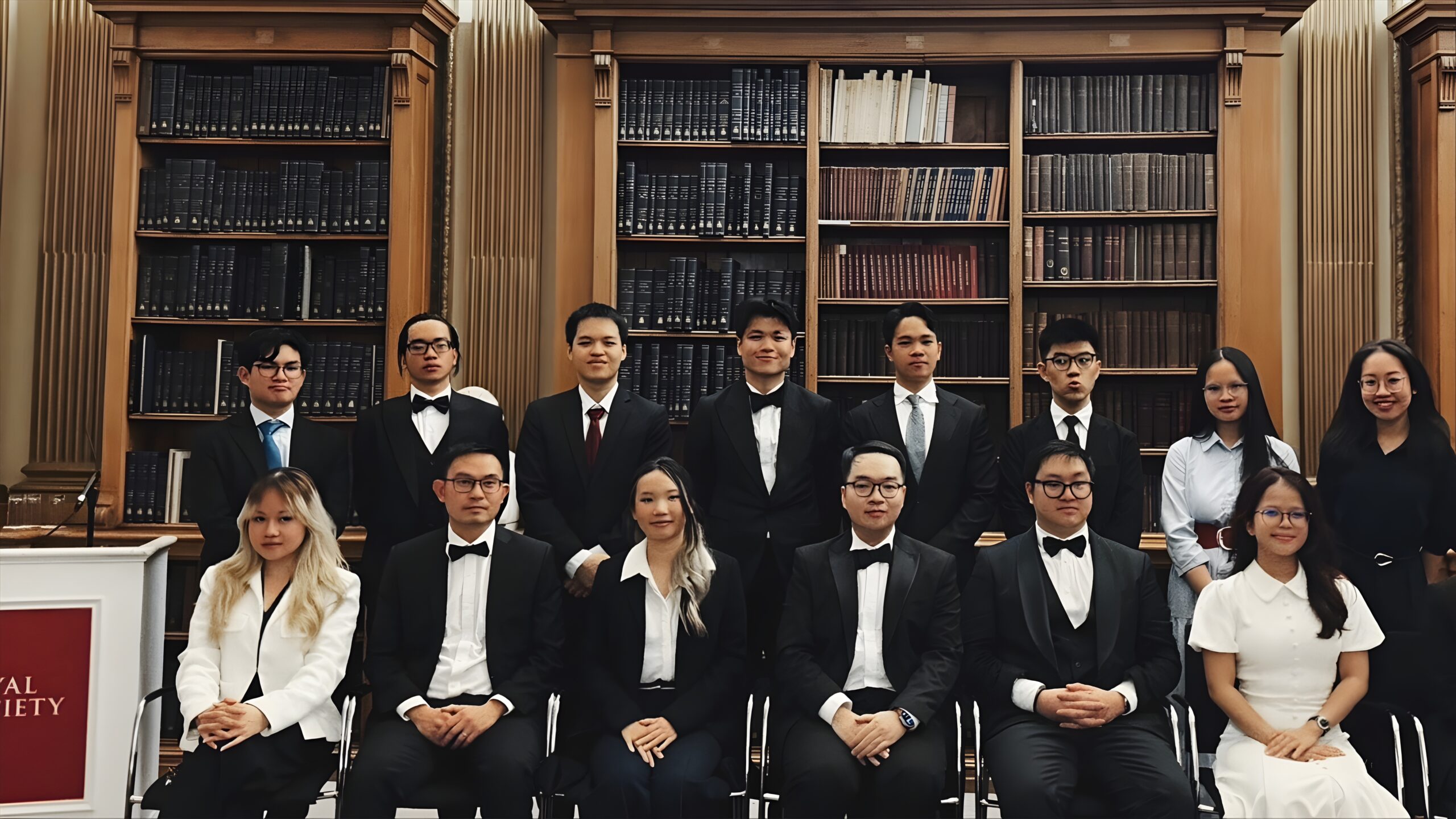
In its first year, the community hosted Through the Oriental Glass: A Close-up on Vietnam’s Young Scientific Talents at The Royal Society in London, the first showcase of young Vietnamese research and talent at the venue. It is also launching the Trạm Ước Scholarship Fund, in partnership with HUS High School for Gifted Students in Vietnam, committing at least 150 million VND, around £5,000, per year through 2030.
Cong Minh says: “What moves me most is its simple promise: to build a chain of support where each generation of Vietnamese talent lifts the one after it.”