

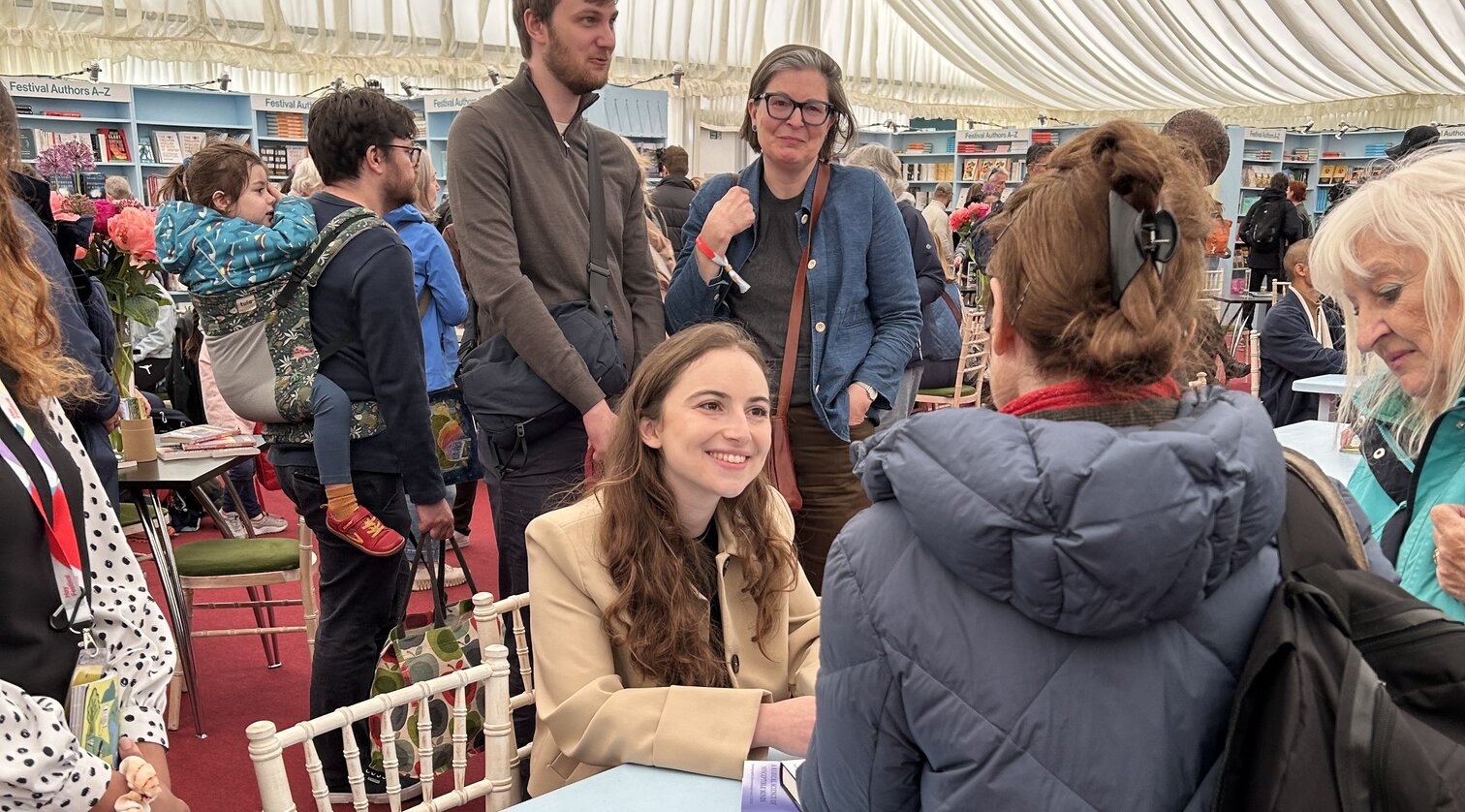
Political neuroscientist Leor Zmigrod spoke at the Hay Festival this weekend to a packed audience about her new book.
Social media seems to prey on characteristics that make people susceptible to radical ideology. It is especially toxic for people who are predisposed to dogmatic thinking.
Leor Zmigrod
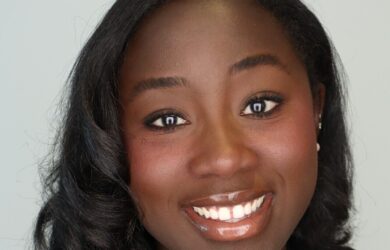
Gates Cambridge Scholar Leor Zmigrod [2016] spoke to a packed audience at Hay Festival this weekend about her new book, The Ideological Brain.
Leor, a political neuroscientist, was in conversation with FT columnist John Burn-Murdoch about her book, which Burn-Murdoch described as “one of the most brain-flexibility-frying books I have read in an incredibly long time”.
The book is based on Leor’s research which shows how political ideologies are not just the result of environmental influences, but also of biology. It shows that some people may be more susceptible to extremist and authoritarian ideologies because their brains are less flexible. Her experiments show that those who are more creative and open are likely to be more resilient to extreme and authoritarian ideologies than those with ‘cognitive rigidity’. ”It’s not so much about what you believe as about how you think,” said Leor, emphasising that this rigidity applies to across the political spectrum.
 She added that the brain is shaped by different ways of thinking and the environment and cognitive rigidity also shapes how we think. “It’s a chicken, egg and nest thing,” she said. For instance, those predisposed to extreme right-wing ideologies tend to have an enlarged amygdala, the part of the brain which processes negative emotions like fear and disgust. Leor spoke about how politicians who play on such emotions can have an exaggerated impact on those predisposed to respond to them. She mentioned Keir Starmer’s recent ‘island of strangers’ comments as one example.
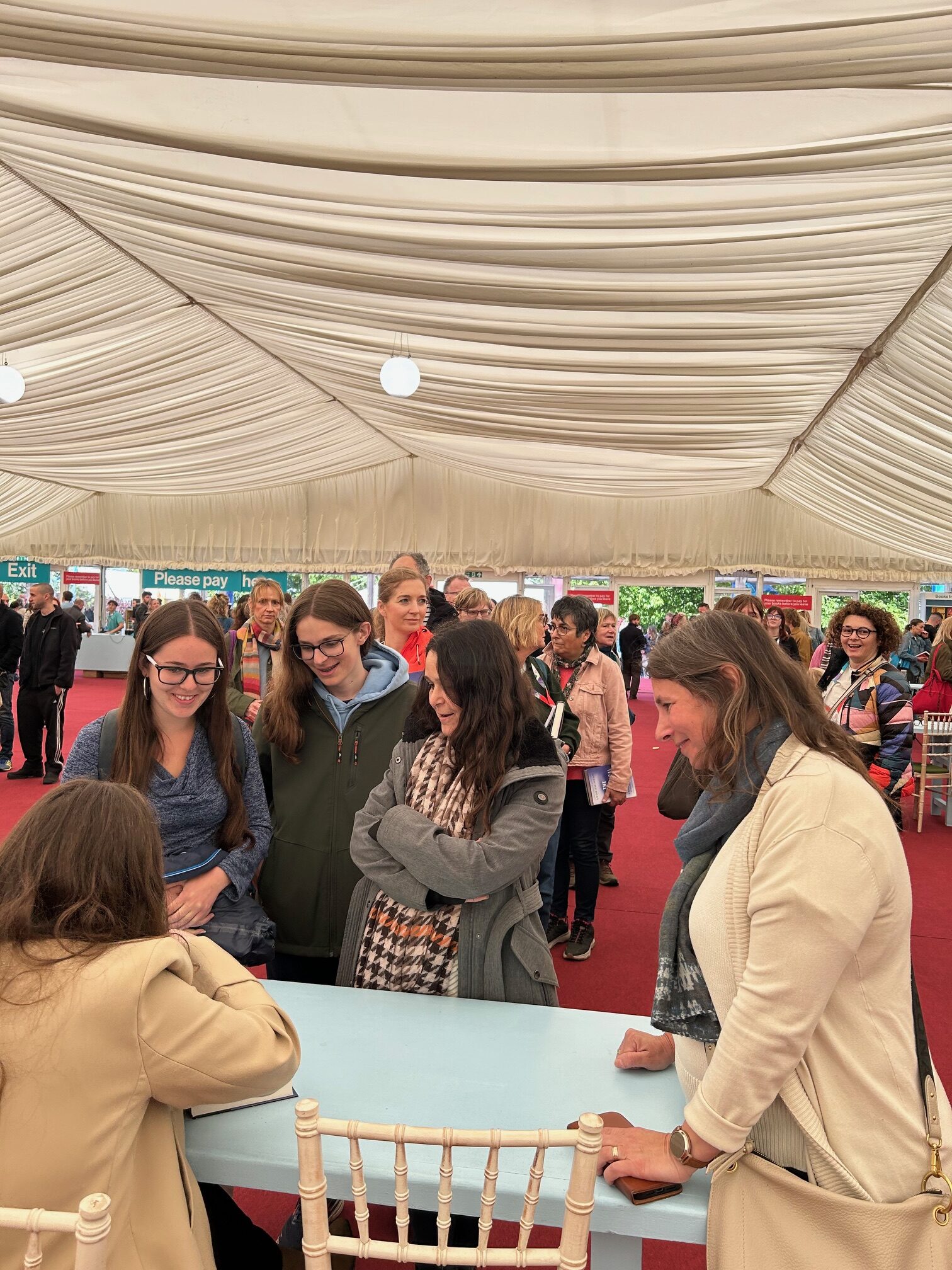
Leor [pictured right signing books at Hay Festival] added that social media “seems to prey on characteristics that make people susceptible to radical ideology” by appealing to negative emotions and binary ideas. “It is especially toxic for people who are predisposed to dogmatic thinking,” she said, adding that it appears to be radicalising people at a pace never seen before not just because it plays on negative emotional responses, but because its algorithms channel particular ideas at users, amplifying their political impact. Hence, she said, people are becoming radicalised at a younger and younger age. “It’s a perfect recipe for disastrous consequences,” she stated.
Yet, people have agency, said Leor. While ideologies can ‘sculpt how we feel about the world’, the brain is plastic and it is also influenced by the environment that people live in. She added that her research shows the importance of encouraging individuals to think more flexibly and creatively in order to have the resilience to resist the kind of waves of authoritarianism that are likely to come in the future. That doesn’t have to be through arts and crafts. Every function can be adapted to introduce playfulness and flexibility, she said.
She ended with a note of hope, saying that the human brain wants to understand the world and is naturally empathetic. It is not hardwired for conformity. Understanding why some brains are more susceptible to dogmatic thinking means people can think more carefully about the environment they find themselves in. “We are empowered citizens who can resist authoritarian thinking,” she stated.
Leor will be speaking at two Gates Cambridge events on 18th June at Bill Gates Sr. House. One is a workshop session for scholars on how to get your book published while the other is open to others and is about her book. Book here for the book session from 5-6pm.