

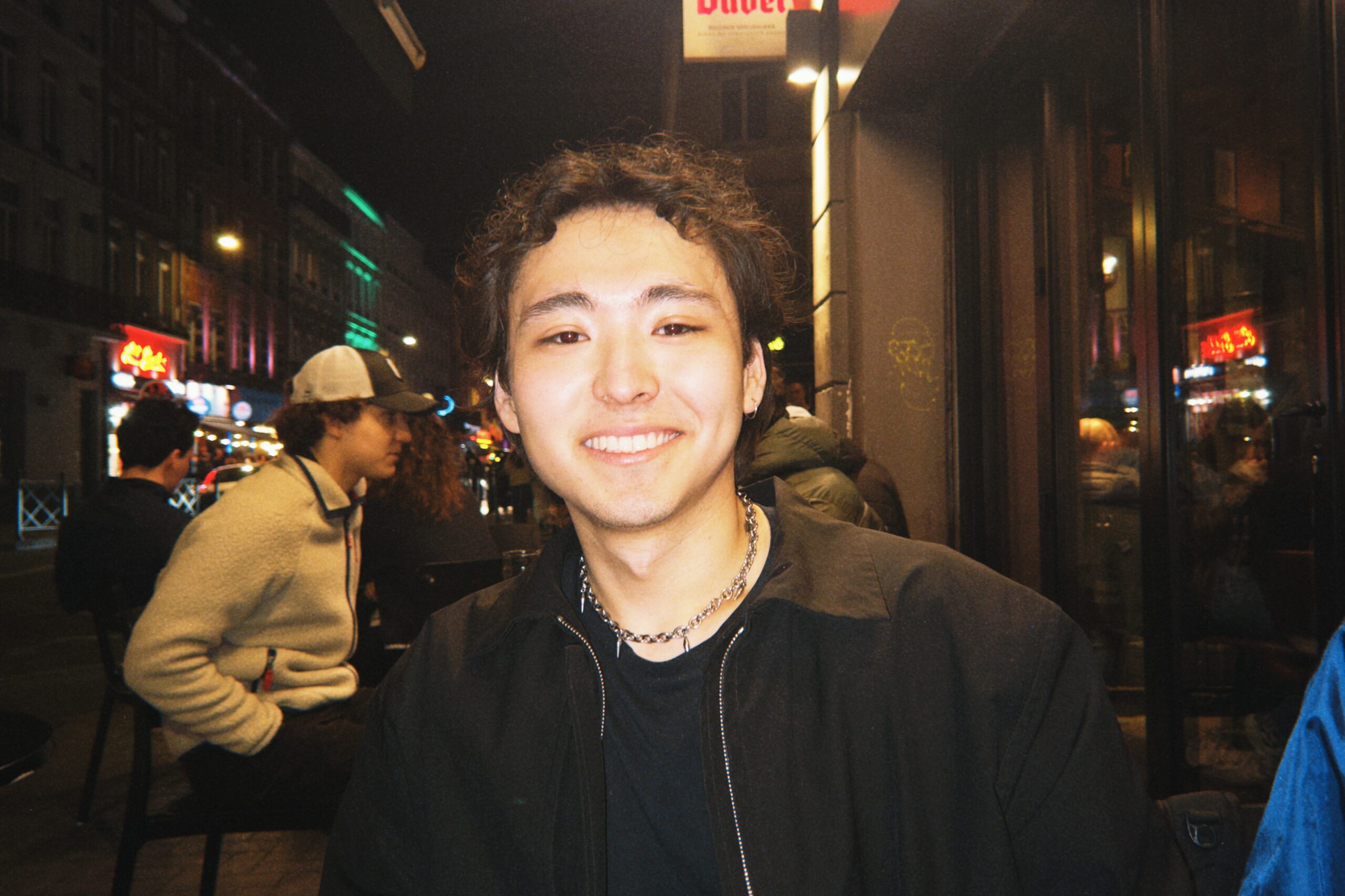
Scholar-Elect Aidyn Taishybay will add to his organic Chemistry skills with a PhD in Computational and Theoretical Chemistry to make better drug formulations
The aim is to develop a more advanced computational approach that will speed up the formulation process so we can reduce the number of labour-intensive experiments to check if a particular combination of molecules works. It will also save a lot of money that can be invested in other things, for instance, treatments for rarer diseases.
Aidyn Taishybay
Aidyn Taishybay [2026] believes firmly that science should make a tangible difference to people. He wants his work to have direct impact in the world and to make medicines more accessible worldwide through providing a solution to what he views as the time-consuming and ineffective approaches currently used in Big Pharma.
Aidyn, from Kazakhstan, took to Chemistry almost immediately and has spent his undergraduate and master’s studies building his skills, doing stints at firms such as Johnson & Johnson.
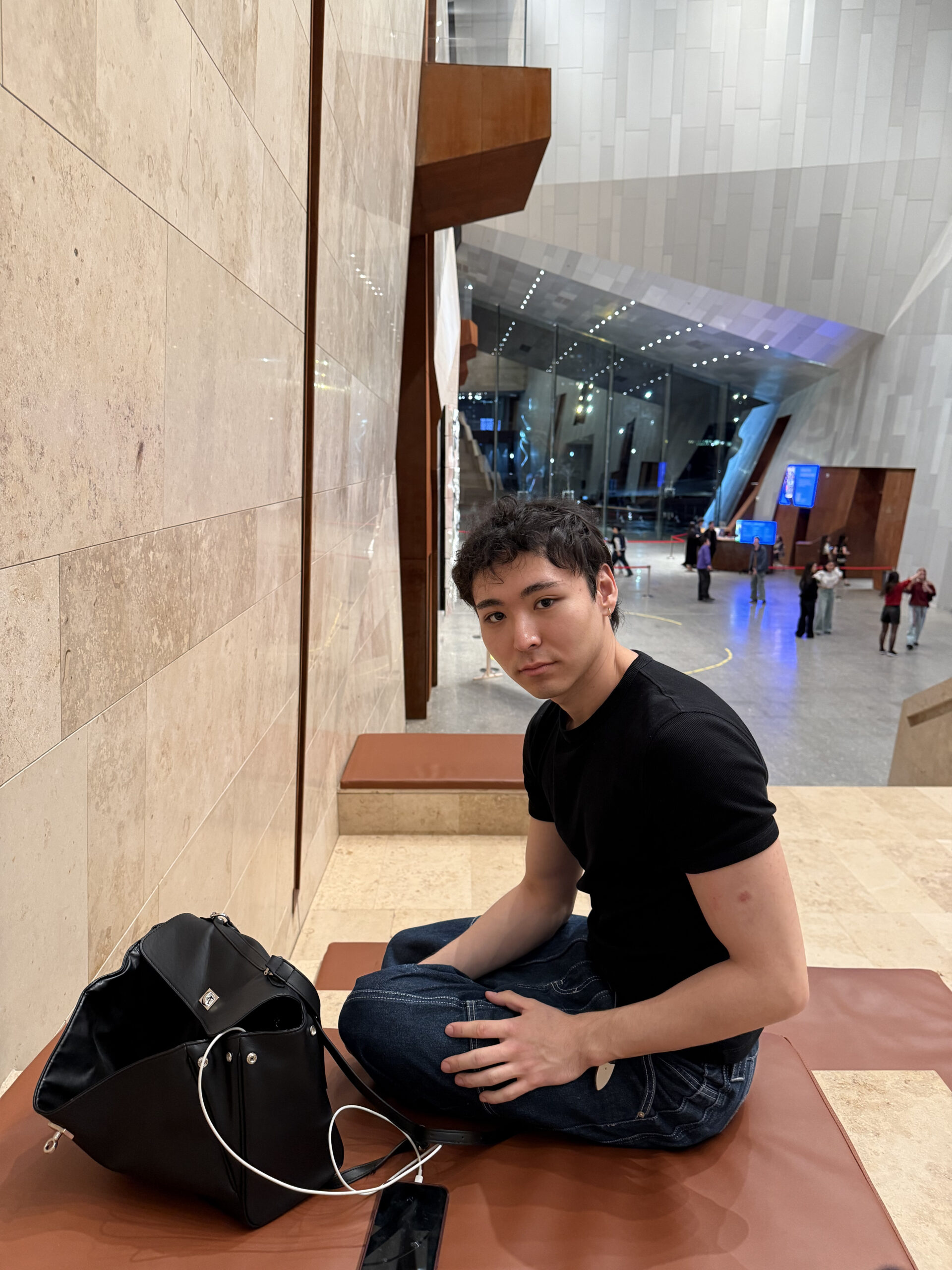 Now, having seen some of the barriers to building new drugs at pace, he wants to explore computational approaches.
His PhD, which he begins in the autumn, brings together computational and theoretical Chemistry. He feels his background in organic Chemistry is a bonus in the pharmaceutical formulation design. He thinks that modelling and simulations can speed up the process of finding alternative formulations of drugs and that, as a chemist, he can bring new elements to the modelling process to predict more accurately which substances would have a better chance of making particular formulations work.
“The aim is to develop a more advanced computational approach that will speed up the formulation process so we can reduce the number of labour-intensive experiments to check if a particular combination of molecules works. It will also save a lot of money that can be invested in other things, for instance, treatments for rarer diseases,” says Aidyn.
Childhood
Aidyn was born in Karaganda in central Kazakhstan. His parents are both lawyers, his mother being a professor of law, and he has a younger brother. His family had to move to Petropavl on the northern border with Russia for his parents’ work and Aidyn spent most of his childhood there.
He attended a local school and says that, while he got good marks, he didn’t respond well to the Soviet method of learning by memorisation. At the age of around 14 he transferred to a Nazarbayev Intellectual School after taking a highly competitive national exam. There are 21 Intellectuals Schools in Kazakhstan, named after former president Nazarbayev. These are specialised state educational institutions for gifted children.
While traditional secondary schools are based on the Soviet model, Intellectual Schools aim to accelerate Kazakhstan’s development, incorporate the best elements of the Western curriculum and give state school students the same opportunities as private school students. The school taught in three languages – Russian, Kazakh and English. At the end of secondary school, following a partnership with Cambridge Assessment, students sit A Levels.
Aidyn enjoyed the different style of teaching, based more on understanding topics and using them as building blocks, and his grades improved. “I have a natural interest in understanding things,” he says. “That is how my mind works. From the first classes in the school I was more engaged in my learning. The teachers paid attention to every individual and encouraged teamwork and we had access to more advanced technology and laptops were provided.”
Aidyn started doing Chemistry just before he joined the Intellectual School. His teacher suggested summer classes in the subject and he wanted to get ahead. He enjoyed it immediately, but even though he was competing for a place on the Chemistry Olympiad team almost as soon as he started at the Intellectual School, it was not until a few years later that his abilities at Chemistry accelerated. In fact, he was thinking of giving up on trying to get into the team, but his mother encouraged him to keep going.
Despite serious orthopaedic leg surgery at 16, which left him bedridden for around half a year, he persisted through the physical pain and hurdles caused by the impairment, and by 12th grade he had won the gold medal at the Republic Olympiad and had become part of the national team and later the international team. The Olympiad opened up the world to him and he travelled to different competitions across the globe, spending one summer at Johns Hopkins University doing a Chemistry course and another participating in the Sakura Science programme in Tokyo after being invited by the Ministry of Education, Culture, Sports, Science and Technology (MEXT) of Japan.
Undergraduate studies
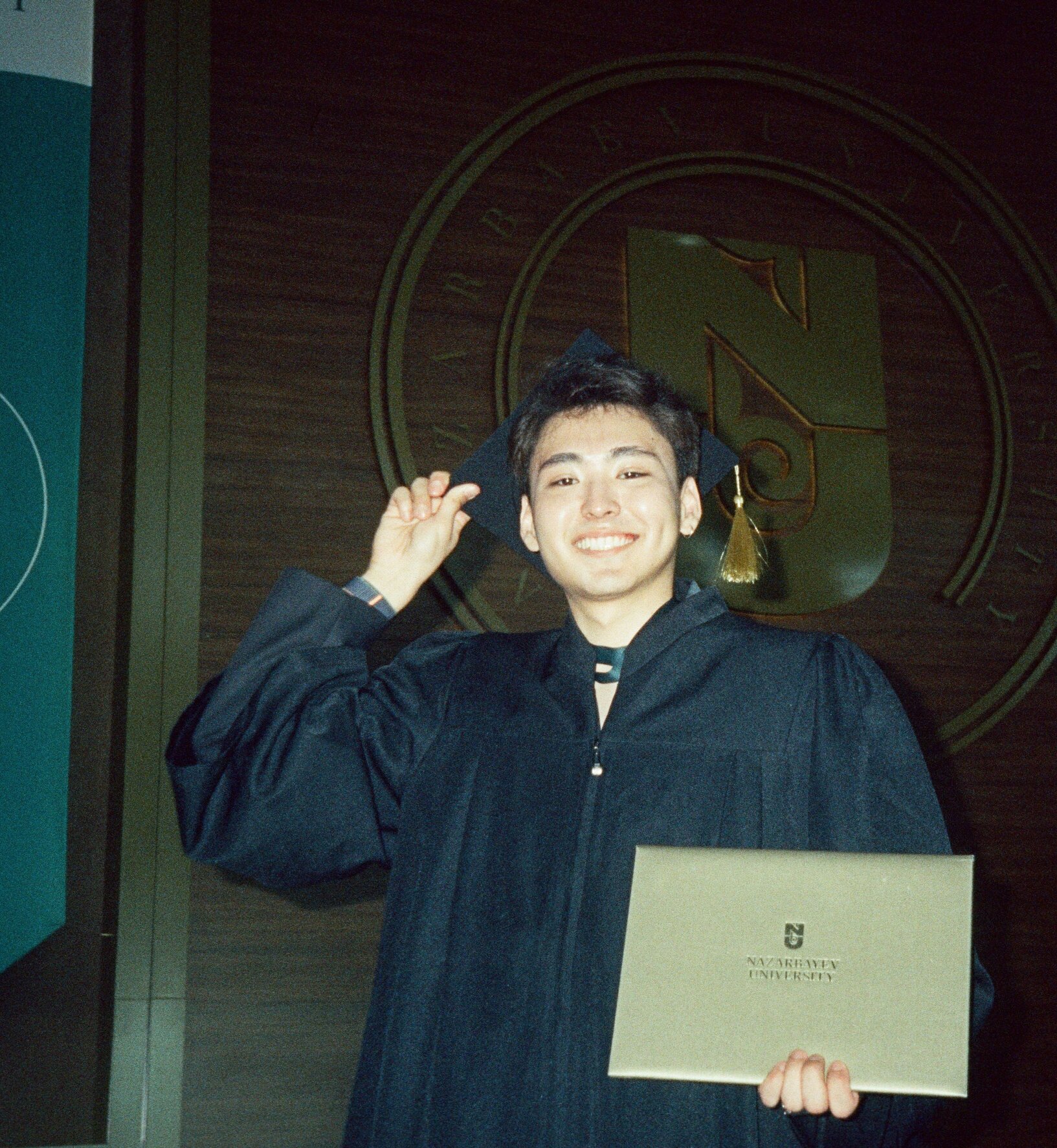 Aidyn started his undergraduate studies at Nazarbayev University in Astana, Kazakhstan’s capital, in Chemical Engineering in 2019. During his first week, however, he decided there was not enough Chemistry in the course. He switched to a pure Chemistry course. He spent two years of his degree in lockdown, studying from home and says it was hard watching videos instead of doing lab experiments. By year three some students were allowed back on campus as research assistants so he found a post at an organic Chemistry lab doing synthetic medicinal Chemistry.
Aidyn admits that lockdown wasn’t good for his mental health. However, upon returning to the laboratory, he devoted himself to rapidly developing his practical research skills. His efforts ultimately led to co-authorship of a scientific paper published in a reputable journal.
He is worried about the growing emphasis in Kazakhstan on publication in top-tier journals as the primary indicator of research success. In his view, this approach may unintentionally restrict opportunities for students and negatively affect their motivation to learn and develop as researchers.
Master’s
Although Nazarbayev University is a leading university in Central Asia and Caucasus and excellent for undergraduates, Aidyn says it lacks some of the equipment needed to do more advanced experiments.
 He adds: “In Kazakhstan there was not a lot of investment in biopharmaceutical research. I knew I had to move to get more knowledge and experience in that field.”
So he chose to do his master’s abroad, winning an Erasmus Mundus scholarship to study a joint master’s in Bio & Pharmaceutical Materials Science (BIOPHAM) at three universities in Europe – University of Pisa (Italy), Polytechnic University of Catalonia (Spain) and University of Lille (France). At the time he was keen to start working in the pharmaceutical industry so he took a programme that was focused on materials science applied to biopharmaceuticals, a field which is at the intersection of Chemistry, Physics and Biology. He was keen to understand how small organic molecules could be formulated into pharmaceutical materials.
During his master’s he was able to gain insights from the leading experts of various pharmaceutical companies, including AstraZeneca and Johnson & Johnson. He was also able to learn a lot from his exposure to the best practice in different countries and to different cultures.
His master’s thesis came out of his work with Johnson & Johnson where he was based in the solid state group researching formulations of drugs. He focused on the need to create alternative formulations to commonly used amorphous solid dispersions (ASDs) to address the ‘big pill burden’ issue. The big pill burden is linked to the low solubility of traditional ASDs and the high therapeutic dosage required that ultimately result in big pills. This significantly affects medicine uptake and adherence by patients.
Aidyn was working on co-amorphous and co-crystalline systems for poorly soluble drugs, which represents a new chemical frontier. Most drugs are currently built using small molecules. Many more complex molecules tend to be less soluble and require high therapeutic dosages. “Pharmaceutical companies need to optimise drug formulations for new types of therapeutics,” he says.
He finished his master’s last summer and, with his visa expiring, he returned to Kazakhstan where he got a job, based in Almaty, on the graduate SeedZ programme at L’Oreal to get more experience in project management. SeedZ is L’Oreal’s global one-year Management Traineeship programme that sees trainees rotate around different functions of the business and learn about how the business works from the inside. Throughout his studies Aidyn has tried to create start-up companies so he was keen to gain some business knowledge.
His PhD supervisor in Cambridge will be Dr Aleks Reinhardt. Aidyn believes his research proposal aligns with the mission of Gates Cambridge and is keen to get started. He hopes eventually that his research has practical results so that people around the world can benefit from it. “It is clear that people with particular diseases in certain parts of the world are being neglected and I believe my research can make a difference,” he says.