





Julia Maybury and Sri Jagannathan talk about their research into sleep and its multiplicity of benefits
People tend to sleep less as they age and have a reduction in deep sleep. If we know that deep sleep is important for memory formation and consolidation, we can seek ways to improve deep sleep as we age and potentially memory.
Julia Maybury
Sleep and the lack of it is behind multiple headlines these days as we worry about screen time affecting sleep patterns and the impact of our 24/7 lifestyles on our health. Research shows that sleep has multiple functions impacting memory, mental wellbeing and physical health and getting too little – or too much – can be damaging.
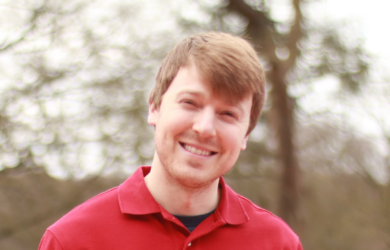
Two Scholars who are looking at the impact of sleep on the brain are Julia Maybury [2023] and Sri Jagannathan [2015].
Julia is interested in understanding the relationship between sleep and episodic memory, which is memory about personal experiences. To better understand how we recall such events in our lives, Julia is investigating memory precision, or how well we can remember specific details of retrieved memories, and the role of age and sleep in this process.
She is based at Professor Jon Simons’ laboratory at Cambridge which seeks to understand the cognitive and brain mechanisms involved in human memory.
Sri’s work centres on the neurobiological function of sleep and its relationship with learning and memory. He is based in Berlin where he started his post-doc work with a Walter Benjamin fellowship at Charité Medical University.
What motivated their research?
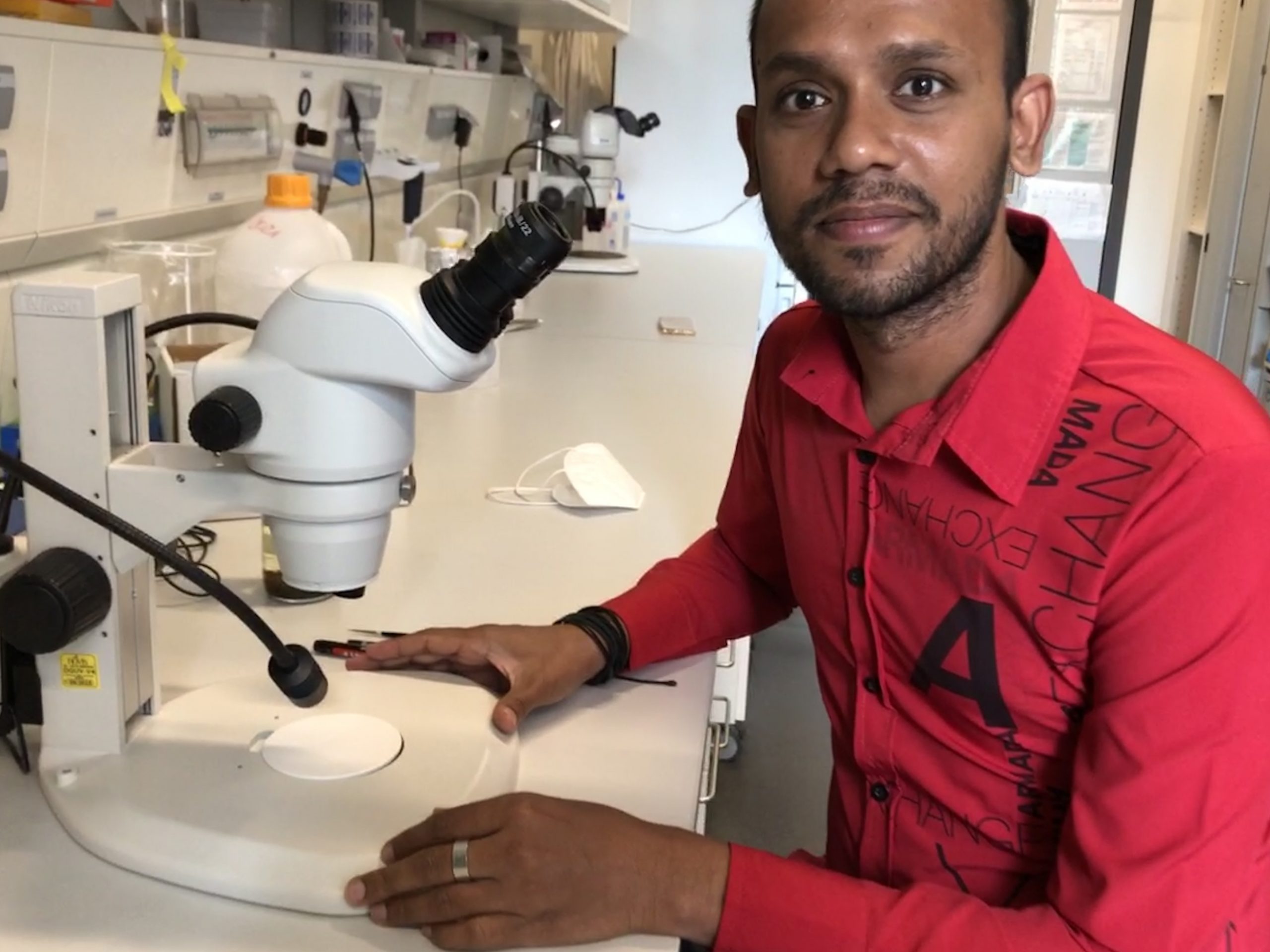 Sri became interested in sleep research through an interesting route. After his masters, he was looking for a complex, difficult-to-solve problem for his PhD. Consciousness being one of the big unsolved problems of neuroscience seemed intriguing. He looked at the profile of Tristan Bekinschtein, Professor of Consciousness and Cognition at Cambridge, whose group has been studying the transition between states such as disorders of consciousness or wakefulness and anaesthesia. Dr Bekinschtein has done pioneering work in how arousal levels modulate decision-making both in the context of healthy individuals falling asleep as well as in patients with disorders of consciousness.
Sri started his PhD with a focus on how people lose consciousness naturally, its effect on spatial attention and whether the process of losing consciousness can be described in a mathematical model. However, halfway through his studies he realised that the human brain is too complex for these questions and that the current technology cannot answer them in sufficient detail. Sri says: “Coming from an Engineering background, I wanted to build things block by block, put them together and take them apart, to understand how they work and the time is not yet ripe to do this for the human brain.”
He also stumbled on What mad pursuit: A Personal View of Scientific Discovery” by Francis Crick (co-discoverer of the structure of DNA) which made him reassess his scientific goals. He decided that he needed to work on smaller, less complex organisms and travelled to Australia to study fruit flies. His PhD thesis on how sleep works was based on both humans and fruit flies. “Many people think flies are stupid, but they are really smart, and they have been important for understanding fundamental biological processes in humans, given that they share 60 percent of genes with us and show many complex human-like behaviours,” says Sri.
In his later work he has focused on the electron microscopy reconstruction of neurons in the fly olfactory system, tracing their structural connections. He also published a paper that details, for the first time in flies, distinct micro-behaviours in different sleep stages and their corresponding electrophysiological signatures along with their purported function.
Sri currently works with Professor David Owald at Charité. He contacted Professor Owald after discovering his work on sleep, flies and memory. Professor Owald’s lab uses optical probes and 2-photon microscopy to understand how neurons work in sleep networks in addition to the usual tools like metal and glass electrodes used in electrophysiology.
Julia, meanwhile, was motivated by a personal interest in memory. Her uncle developed frontotemporal dementia in middle age and she observed how his memories disappeared over time. That and other family experiences led to an interest in how memories are formed, how they change over time and how we may be able to improve our memory through factors such as sleep.
The different stages of sleep
 Julia was an undergraduate at Boston College during the Covid pandemic where she researched how the pandemic influenced the relationship between sleep and personal [autobiographical] memory in the Cognitive and Affective Neuroscience Laboratory, an area she felt was under-researched. Her master’s research was on the role of sleep stages in the consolidation of emotional memories across the lifespan.
She is extending this research by investigating whether memories become less precise with age, less sleep or at different times of the day. She adds that there are conflicting findings about the role of specific sleep stages in different types of memory. For example, it remains unclear which sleep stages are most important for prioritising general versus detailed memories.
“I am interested in how precise people’s memories are and how specific details of a memory change over time, and how different factors such as age and sleep influence their precision,” she says. “Could sleep preserve specific details of memories? Does a lack of sleep cause memories to lose these details, making them more general?” She recognises that lack of a detailed memory may have a benefit too, for instance, in cases of trauma.
As part of her research on ageing, Julia is interested in how performance may vary across the day. This includes whether the time of day influences the precision of memory and other cognitive tasks, and whether these effects change with age. Older adults tend to perform better on memory tasks in the morning, while younger adults perform better in the afternoon and evening. However, her findings suggest that there is no age difference in the precision of memories for tasks performed at different times of day.
She has also studied ‘quiet wakefulness’, which is similar to meditation, to see whether memory can be improved by a period of time spent with eyes closed and eye movements reduced in the way that it is improved by a good night’s sleep. Her preliminary analysis suggests quiet wakefulness may not be as beneficial as sleep overall, although it still may be beneficial for certain tasks.
Sleep and resilience
Sri agrees that different memories could be affected by the quality or duration of sleep. His current work is trying to understand the benefits of sleep for fruit flies’ resilience to keep trying at a task despite repeatedly failing, a way of overcoming so called learned helplessness. His research looks at neurotransmitter levels and synaptic changes in the brain in relation to doing tasks that the flies repeatedly fail and whether the threat of punishment or reward makes any difference.
Learning a new task changes the synapses in the brain and sleep is thought to keep synaptic strength in balance. Sri says lack of sleep affects neurotransmitters such as dopamine and serotonin, which influence mood, help calm the brain and mitigate feelings of helplessness in the face of repeated failure.
Measuring sleep
Both Julia and Sri discuss the technicalities of recording sleep stages. While Sri’s work at Cambridge was lab-based, Julia records brain activity during sleep using both traditional EEG cup electrodes as well as newly developed self-applied, adhesive sensors placed around the forehead. There are pros and cons to this new self-applied approach for measuring brain activity, she says. There can be problems getting sensors to stick to participants’ foreheads, depending on individual forehead size, and this can impact the quality of the signal from the sensors. However, using self-adhesive sensors saves a lot of time compared to the traditional EEG set-up, is more comfortable and also means people can put them on at home without having to come to the lab.
Julia also mentions the role of new technology in measuring sleep, such as wearables, including Oura rings. These are packed with sensors that measure a wide range of body metrics associated with fitness, sleep and readiness for physical activities. In terms of tracking sleep, the ring can give wearers a score based on how well they slept the previous night.
It calculates this score based on how much time they spend in each of the four stages of their sleep cycle, along with heart rate and heart rate variability, skin temperature and other body metrics that change during sleep. This mitigates the need to go into the lab to track sleep patterns. Julia suggests the ring appears to be fairly accurate when compared with other polysomnography [sleep tracking] devices, highlighting the potential for newer sleep-tracking devices to become increasingly reliable, though she says more studies are needed.
There can be drawbacks of new wearable devices, however. Sri says he bought a watch that tracked his sleep, but became a little paranoid about whether he was sleeping well or not so after a while decided not to use it.
He also talks about recent technological developments, for instance, in electron microscopy that enable scientists to trace individual neurons in fruit flies. He says: “If you think of different parts of the brain as being different cities with roadways leading to each, we now know the structure of a lot of those roadways in the brains of fruit flies which gives us a good understanding of how different neurons are involved in performing specific tasks.” He adds: “Flies also have a distinct advantage in that we can record, activate and shut down specific neurons with advanced genetics. That means we can see if different treatments, such as those that improve sleep, can boost memory directly.”
The senses and sleep
Sri also discusses the combination of different senses involved in memory formation and says that smell plays an important part as it has a direct link to the brain, reflecting its evolutionary importance.
Julia and Sri speak about how the senses can be accessed in sleep to reinforce memory, such as playing songs or listening to revision notes at particular stages of sleep before an exam. Sri says there are many stages of sleep with distinct brain and behavioural signatures, so it is important to pinpoint and understand how sensory information is processed and memory is consolidated in different stages.
Sri adds that while his research is more fundamental than Julia’s, looking at how the fly brain works, it could have long-term implications for understanding the function of sleep, which could in turn help with the development of treatments for sleep problems in humans.
Recently, he was also awarded the NeuroCure Talents Fellowship to further his work on how internal states like sleep and hunger affect learning in flies via neurotransmitters like dopamine and serotonin.
Julia notes that animal studies like Sri’s are important because they explore underlying neural processes, such as changes in neurotransmitters and synapses during sleep and sleep deprivation. These processes are difficult to study in humans during sleep as techniques such as EEG cannot measure activity of individual neurons and synapses.
Sri says research like Julia’s is vital because it has direct applications in the real world. Julia talks about how understanding the way sleep influences memory can help develop practical strategies for boosting memory as we age. She says: “There are things we can do. People tend to sleep less as they age and have a reduction in deep sleep. If we know that deep sleep is important for memory formation and consolidation, we can seek ways to improve deep sleep as we age and potentially memory.”
*Photo by Dmitry Ganin on Unsplash