



Biography
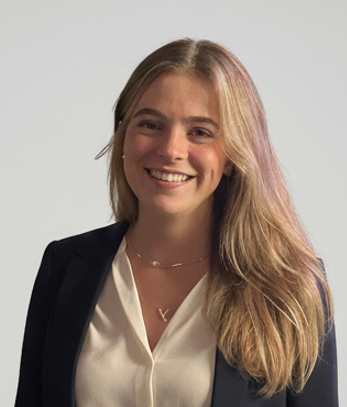
Eugenia Lopez-Belmonte Deza
- Scholar
- Spain
- 2026 PhD Physiology, Development and Neuroscience
- Lucy Cavendish College
Growing up alongside my cousin, who has Down syndrome, gave me an early awareness of how complex healthcare challenges shape everyday life and sparked my interest in finding solutions that can make a tangible difference. I soon realised such solutions rarely emerge from a single discipline, but rather at the intersection of fields. This led me to study Biomedical Engineering at UCL, where engineering principles moved beyond theory to be applied to biological systems in clinical contexts, translating experimental findings into real-world impact. Fascinated by neural engineering and excitability, I pursued an MPhil at Cambridge, modelling skeletal muscle channelopathies computationally in Dr Fraser’s Lab. Yet the deeper I delved, the more I asked: how can we move beyond understanding mechanisms to actively transforming patient care? That question made a PhD a necessity. I aim to develop an excitability window to optimise targeted treatments and guide the diagnosis of excitability disorders and ultimately extend this work to the broader ageing population, ensuring scientific progress reaches those who need it most. I am honoured to pursue this as a Gates Scholar, joining a community aiming to make the world a better place.
Previous Education
University of Cambridge Biological Science (PDN) 2026
University College London Biomedical Engineering 2025
