





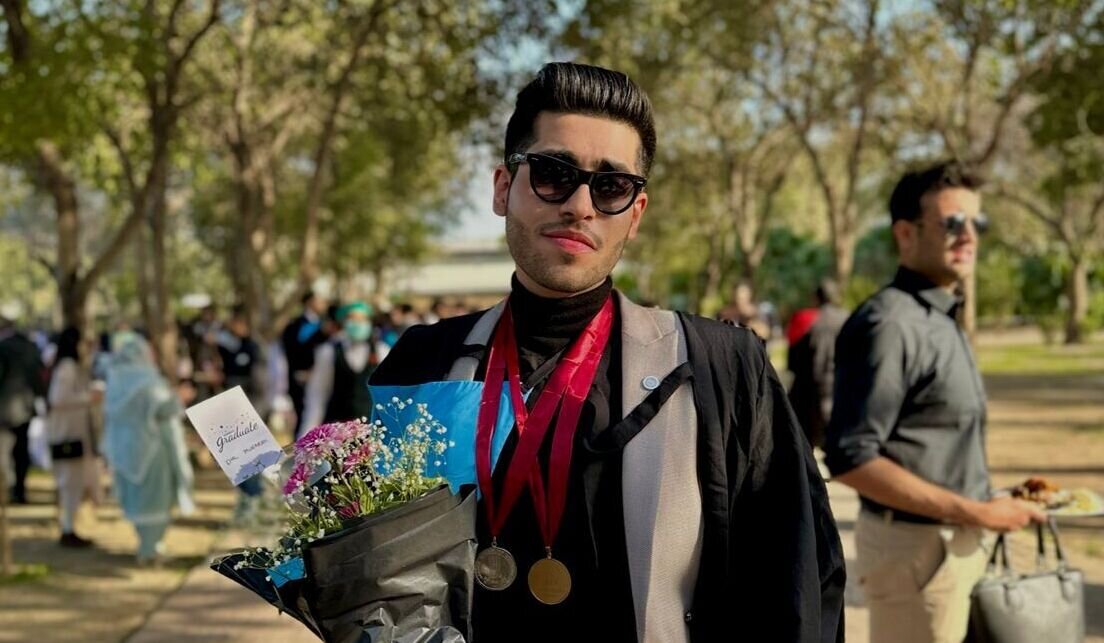
Muaz Chaudhry talks about his research on gender economics and his leadership of Gender Rights Watch, an NGO advocating for the rights of gender minorities worldwide
I was working with trans and queer people and there were not a lot of people working in that area who had a development policy lens. Most work was being done through critical or queer theory.
Muaz Chaudhry
Muaz Chaudhry is proud to have carved his own path, defying social expectations and norms to do impactful research in the field of gender economics and to lead an NGO, Gender Rights Watch (GRW), which advocates for the rights of gender minorities worldwide, combats misinformation, raises awareness and provides medical, legal and legislative support for equality and justice.
It has not been an easy path, but he wants his own experiences to be turned into positive actions for others. He says: “My journey has always been about ensuring that marginalised communities don’t endure the same struggles I faced.”
Childhood
 Muaz [2025] was born in Bahawalpur in south Punjab to a medical family. Many of his family members were doctors, from his great aunt, a psychiatrist in the US Navy, to his parents and siblings.
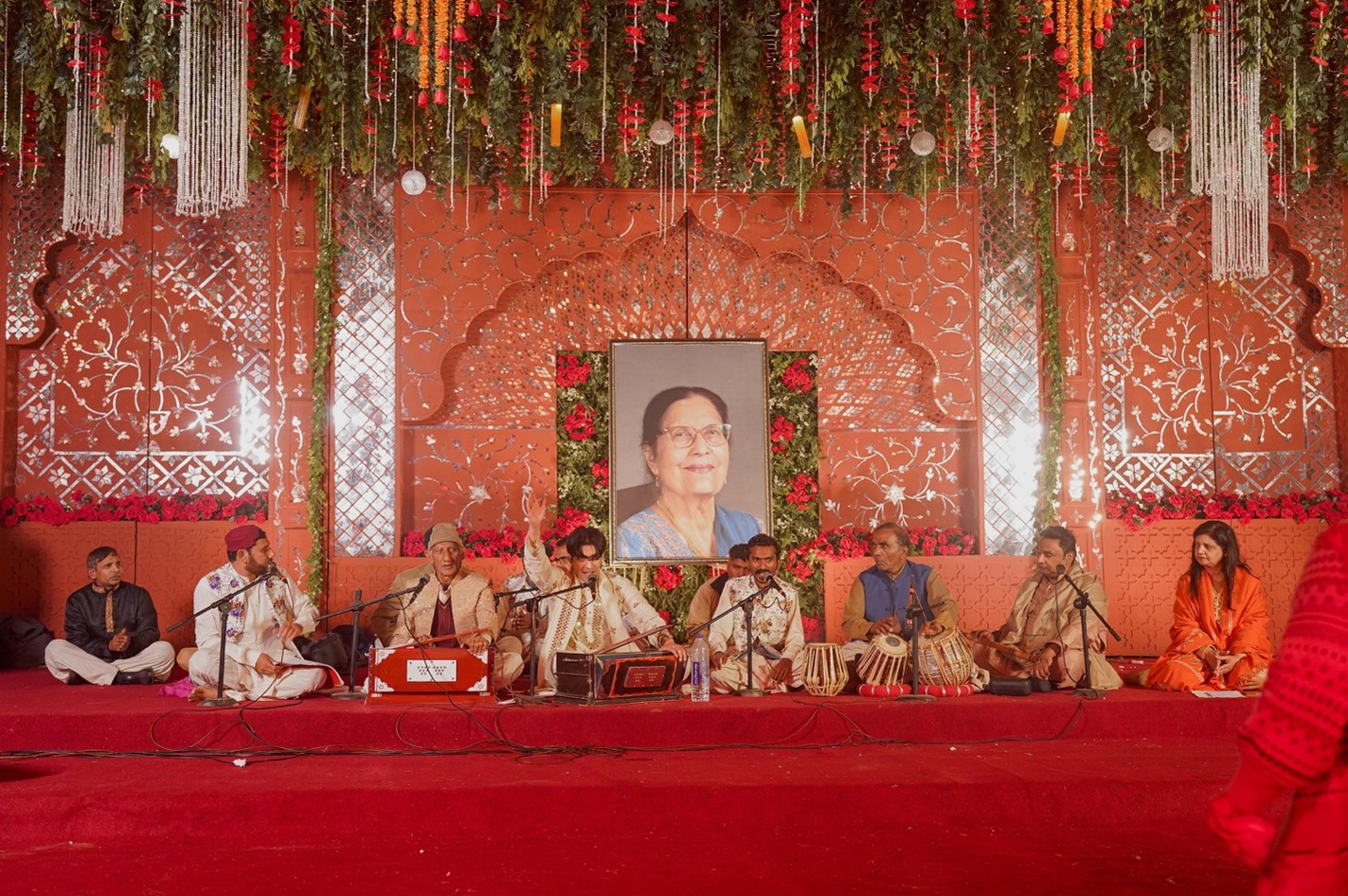
Muaz’s late grandmother – Amajan [Muaz is pictured left at a celebration of her life] – whom he was very close to, had wanted to become a doctor, but her husband wouldn’t let her go to medical school.
So, she studied for her master’s at home. and was keen for all her children to be doctors. It was expected that Muaz, the youngest in his family, would follow the medical route.
But, through her determination, Amajan also inspired Muaz to pursue his own path, against the odds, and she was very proud of his academic achievements.
Muaz went to an all-boys’ school in Punjab which he says had a predominantly militaristic, patriarchal culture. He was miserable there. “It was the worst time in my life,” he says. “It was very controlling. I did not feel I belonged there.”
At school, although he preferred social sciences, he took natural sciences as he got older because he needed them for entry to medical school.
After school, Muaz’s parents helped him get accepted onto a medical course, but he dropped out to move to a college nearer home. However, he soon realised medicine was not what he wanted to do. He was also going through a personal identity crisis as a result of living in a very conservative society that clung firmly to heterosexual norms and shut out those who were different.
The day before his 18th birthday, Muaz reached his lowest point and considered suicide. He was stopped when his friends came around. “That was a big turning point for me,” he says. “I chose not to end my life and to live and I decided that I might as well live a life of impact so that when I die I will leave behind a legacy for others to appreciate. I realised I had to follow my heart,” he says.
Beyond medical school
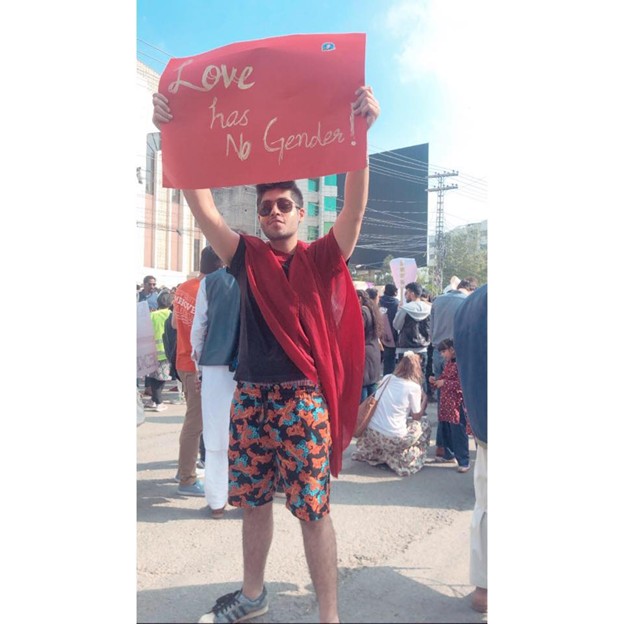 Muaz decided to drop out of medical school again and change direction, despite little support and overwhelming pressure to conform to social norms and return. He was determined, however. So much so that he pretended for months that he was not interested in education at all. “People thought I was a hopeless case,” he says. His plan was that his parents’ expectations would eventually be so low for him education-wise that they would let him study economics in Lahore. He had earlier spent a month at the Lahore School of Economics and knew it was where he wanted to be. His plan worked.
It was not until he went to Lahore and felt more like he belonged that his grades began to improve. He describes himself as a bad student at school, but at the Lahore School of Economics he not only rose up the ranks, but graduated as the best graduate from his university and a gold medalist..
Muaz started doing a lot of research projects, supported by a supervisor who had lived in Europe and the US. One of his professors had worked at the International Labour Organisation in Geneva. “They had a broader vision of the world and I was able to work more productively,” says Muaz, who published several research reports, policy papers and helped with a book while an undergraduate and research assistant. He was also awarded best research paper at a World Bank conference on health economics in South Asia held in Nepal in January 2020.
Over the course of his degree, Muaz furthered his economics and maths knowledge and learned how development works as well as studying South Asian semi-classical and classical music on the side. He started to work with non-profits supporting gender and sexual minorities, using his training in development and macroeconomic policy to bridge the gap between academia and non-profits. “I was working with trans and queer people and there were not a lot of people working in that area who had a development policy lens. Most work was being done through critical or queer theory,” he says. That is also the case in Cambridge, he says, meaning his PhD is being supervised by two different academics from different disciplines – Shannon Philip, Assistant Professor in the Sociology of Gender and Sexuality, and Professor Shailaja Fennell from the Department for Land Economy.
Master’s
Muaz finished his undergraduate degree in 2021, having worked on the impact of the pandemic on Pakistan’s economy while studying remotely. From 2021 to 2022 he worked with an education non-profit, the Citizens Foundation, the largest network of non-profit schools in the world, coordinating 257 schools for underprivileged children in North Punjab.
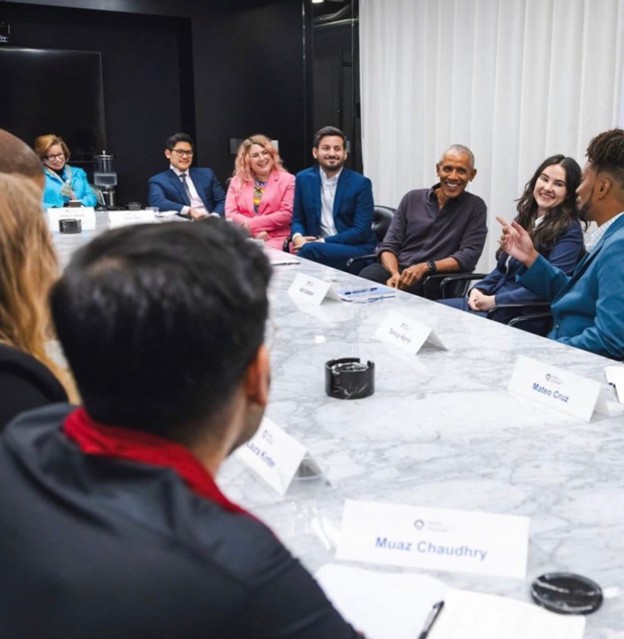 During this time Muaz was applying for postgraduate studies in the US where he had spent a lot of time as a child visiting relatives there. His family were very proud of his achievements, particularly when he won a full-ride scholarship to the University of Chicago for his master’s. Muaz did two master’s at the university and was selected as an Obama Scholar in 2023-2024. His first master’s was on public policy (MPP) and the second on social sector leadership and non-profit management (MA). He was the only Obama scholar from Pakistan among the 30 global scholars hand selected by former President Obama, and the youngest. The scholarship also meant Muaz became a lifelong member of the Obama leadership network.
In January 2023, before his second master’s began, Muaz had co-founded GRW to support the mental health of gender and sexual minorities across the Global South, especially South Asia and the Middle East. He had had the concept for a long time, but the Obama Scholarship helped accelerate things. Muaz says having both the Obama Scholarship and the Gates Cambridge Scholarship gives him access to networks that can help the organisation have a bigger impact and provide at least some protection in what can be very challenging circumstances in the Middle East and South Asia.
The organisation has designed several projects it will be working on, including a suicide hotline, and has created a panel of health and legal experts. It is currently raising money to turn the projects into reality.
Cambridge
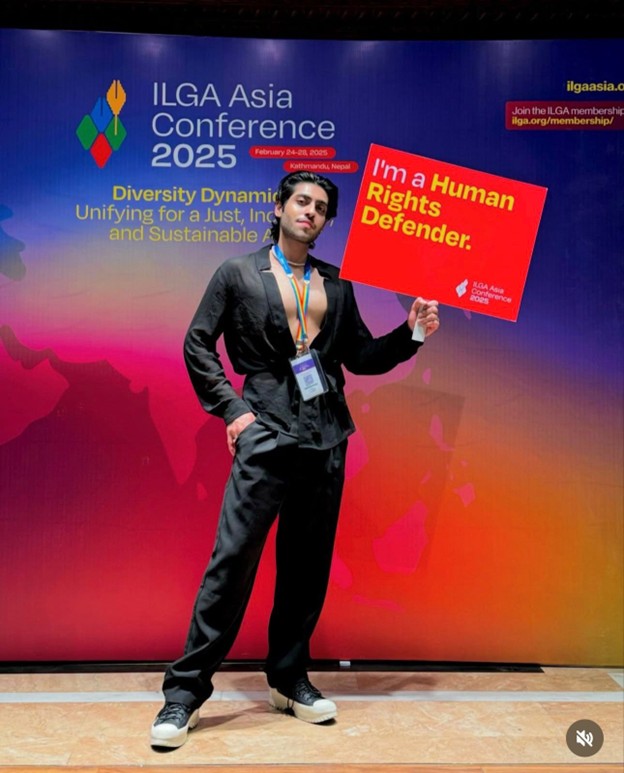 Muaz finished his master’s degrees in 2024, having won several awards including the University of Chicago Humanitarian and the Dean’s Distinguished Leadership Awards. Later that year, after returning home when Amajan became ill, he applied for a Gates Cambridge scholarship to pursue his PhD in Development Studies. His research focuses on the exclusion of trans and queer communities from the labour market in South and South East Asia, drawing on a comparative analysis between Thailand and Pakistan.
Muaz began his research in 2025 and has immersed himself in the Gates Cambridge community. He works in the Bill Gates Sr. House every day and says it is a privilege to have that space where he can meet people from across the world and across disciplines. He is currently the Equality, Diversity and Inclusion officer on the Gates Cambridge Scholars’ Council.
He says: “I want to ensure that all scholars feel included in this community, in their colleges and in their departments.” He is collecting data from scholars and will use that to hold departments who are not including all students to account. “We should expect inclusion and belonging, not more stigma,” he says.
=