



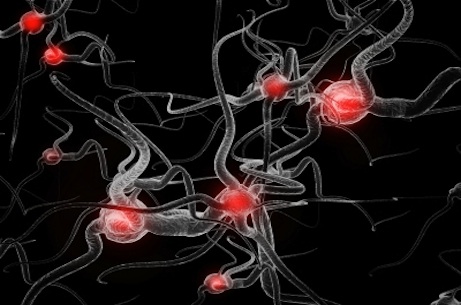
Molly Crockett gives a TED talk on the way neuroscience is being manipulated and oversimplified by marketeers and the press.
Can a cheese sandwich or chocolate help you make better decisions? Can a brain scan cure mental illness? Or are these just two examples of neuro-bunk, where neuroscience is being overly simplified and distorted to sell products and newspapers?
In a recent TED talk, neuroscientist and Gates Cambridge Alumna Molly Crockett [2006] talks about how to spot when neuroscience has been simplified to support unrealistic claims.
She talks about an experiment she conducted which involved people drinking a horrible-tasting concoction which depleted the amino acid tryptophan. She found that depleting tryptophan made people more likely to take revenge when they were treated unfairly.
The headlines that emerged from the study suggested cheese sandwiches and chocolate, which contain tryptophan, could help people make better decisions.
Does this oversimplification matter, asks Molly. After the reports were published, she was approached by marketeers and others interested in getting her to endorse their products. She says neuroscience is being increasingly used to sell products without any evidence to back up the claims made on their packaging.
In the TED talk, she shows how putting a picture of a brain on something makes people more likely to believe in the product. “Brains sell,” she says.
Molly, who did a PhD in Experimental Psychology, says there is some very exciting neuroscience taking place, but a lot of the deductions made by non-scientists about neuroscientific research are neuro-bunk.
One report, for instance, claimed that brain scans show that people love their iPhones because they show that a part of the brain linked to love is active when people look at pictures of iphones. However, that part of the brain – the insula – is also involved in other emotions, such as pain and anger, says Molly. Another study claims the hormone oxytocin is the ‘moral molecule’ because it is involved in trust and empathy, but other studies suggest it is also linked to envy and bias towards one’s own group. Boosting it could therefore lead to a decrease in co-operation. It could just as easily be called the ‘immoral molecule’, says Molly.
She adds that clinics in the US are making millions by offering brain scans to people, including children, claiming they can identify and prevent mental illness and help overcome marital conflicts.
“The broad consensus in neuroscience is that you cannot yet diagnose mental illness from a single brain scan,” says Molly, who is currently working with support from the four-year Sir Henry Wellcome Postdoctoral Fellowship studying human altruism in laboratories worldwide.
She says there is tremendous potential for neuroscience, but it is too early to make overblown claims about its abilities.
“Real science is playing a much longer game,” she says. In the meantime, people should question any claims on products which say they are backed by neuroscience and they should expect the answers not to be simple, because the science is not simple.
She states: “[Neuroscientists] haven’t found a ‘buy’ button inside the brain, we can’t tell whether someone is lying or in love just by looking at their brain scans, and we can’t turn sinners into saints with hormones.”
Picture credit: www.freedigitalphotos.com and renjith krishnan