

A week of cooking gas disruption in Mumbai reveals a deeper truth: from food and fuel to data and ideas, modern life runs on global systems we barely notice until they break, argues Vijay Kanuru.
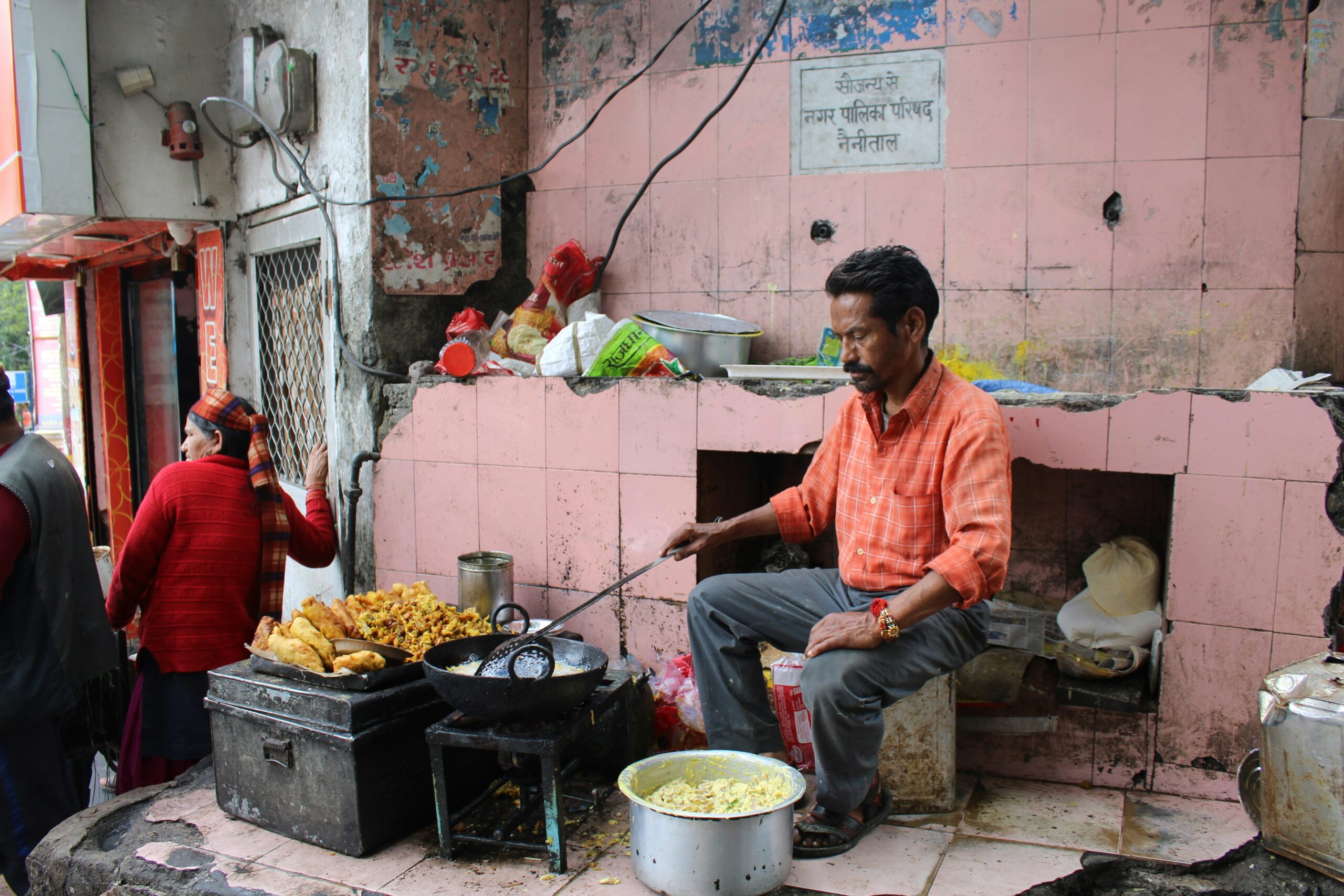
Last month in Mumbai, something unusual happened. Restaurants quietly put up signs: “Vada and dosa not available due to LPG [liquified petroleum gas] issues.” Street vendors adjusted their menus, replacing fried snacks with idlis and poha.
It was surprising not because food disappeared, but because no one saw it coming.
A disruption somewhere else had arrived, unannounced, onto everyday plates.
A cooking gas cylinder normally invisible in public life suddenly became a marker of something larger. A delay at a port, a disrupted shipping route, a strained supply line and dinner, quite literally, is postponed.
War is often understood as an act of separation. It redraws borders, sharpens identities, and reinforces the idea that nations can stand apart.
Yet moments like these reveal something else: how difficult it has become to do so.
Modern life is sustained by systems that rarely align with political boundaries. What appears local is often the final expression of processes distributed across geographies.
Consider an ordinary morning
Tea contains leaves from Assam, sugar shaped by crop cycles in Brazil and a spoon made of steel whose raw materials may have originated in Australia. Milk depends on cold chains, polymers and energy systems that are themselves globally connected.
A handful of almonds may come from California. Lentils from Australia or Canada depending on seasonal gaps. Edible oils from South America. Even the most familiar meals are assembled through long, distributed chains of production.
Step into an urban café and the quiet globalisation of taste becomes visible – quinoa from Peru, avocados from Mexico, kiwi from New Zealand, salmon from Norway, served alongside “local” offerings.
Our consumption has globalised quietly. Our political imagination, less so.
The same pattern extends beyond food
A smartphone brings together rare earth minerals from Africa, semiconductor fabrication in East Asia, design architectures from the United States and assembly networks spread across multiple countries. A routine commute depends on global energy markets, satellite systems and digital infrastructures that operate far beyond the visible horizon.
And then there is the invisible layer, data. Every payment, message or search travels through undersea cables, distributed servers and protocols maintained across jurisdictions. These systems are not located in any single place, even though they are experienced locally in every moment of use.
The internet enabled connectivity. What has followed is a deeper condition: interdependence.
Ideas beyond borders
Such interdependence is not limited to goods, energy or data. It extends to ideas.
Research today is rarely confined within national borders. Scientific discovery, climate modelling, medical research and technological innovation increasingly emerge from collaborations that span institutions, disciplines and geographies. A climate model may rely on data gathered across dozens of countries. A medical breakthrough may draw on researchers, laboratories, patients and datasets spread across continents. A doctoral student in Cambridge may depend on fieldwork in Kenya, datasets from Brazil, satellite imagery from the United States and collaborators in Singapore.
International scholarship, in this sense, mirrors the logic of global supply chains. It distributes expertise, connects institutions and enables knowledge to be co-produced rather than contained.
But there is a deeper reason why this matters.
Knowledge problems
The defining challenges of the 21st century – climate change, pandemics, food security, biodiversity loss, artificial intelligence and energy transitions – are not merely global problems. They are knowledge problems.
And no single country, institution or discipline possesses all the knowledge required to solve them.
For much of history, nations competed primarily for territory, resources and power. Increasingly, they are confronting challenges that demand something different: the ability to learn across borders.
This is not entirely new. Exchanges of goods, ideas, and knowledge have connected societies for centuries, even during periods marked by frequent wars and political rivalry. Traders carried not only commodities but technologies. Pilgrims transmitted beliefs and philosophies. Scholars translated and expanded ideas that originated far beyond their own civilisations. Knowledge often crossed borders more easily than armies did and frequently outlived the empires that sought to contain it.
What distinguishes our era is not the existence of interdependence, but its density, speed and intimacy. What once connected civilisations now shapes daily routines. What once took decades now unfolds in real time.
Which is why this moment matters.
What happens when knowledge flows narrow
As geopolitical tensions intensify and political systems turn inward, networks of exchange – material, digital and intellectual come under strain. Some disruptions are immediate and visible, such as supply shortages. Others are slower and less visible, but potentially more consequential.
A delayed shipment is not logistics, it is a missed meal. A disrupted route is not geopolitics, it is a household adjustment.
And when the flow of knowledge narrows, the consequences may take years to surface but decades to repair.
Climate change, public health, food systems and technological risk do not recognise national borders. They require sustained forms of cooperation that extend beyond them.
This leaves a quieter question at the centre of our moment.
Not whether societies should be self-reliant or global, but how resilience can be built within interdependence.
Because the systems that sustain modern life, material and intellectual alike, do not conform to the boundaries through which we often interpret the world.
War may draw borders.
But life, through its steady circulation of goods, data, knowledge and ideas, continues to move across them.
In an age increasingly defined by walls, sanctions, rivalries and competing national narratives, perhaps the more important question is not how nations stand apart, but how humanity continues to learn, create and solve problems together.
Interdependence and global cooperation are no longer simply desirable ideals. They have become necessary conditions for navigating a world whose greatest challenges are shared.
*Dr Vijay Kanuru [2006] is a Gates Cambridge Scholar, Helmholtz Research Fellow and Lowry Prize Winner. Dr Kanuru’s nanomedicine research has been featured in leading national dailies like Times of India, The Indian Express & India Today. The views expressed are personal.
**Photo by Sanjeev Malhotra on Unsplash