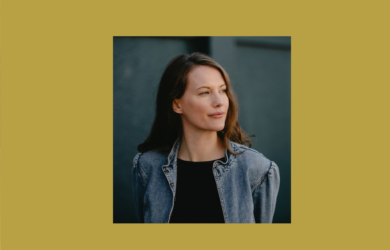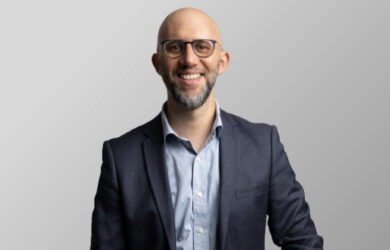


Three Gates Cambridge Scholars will present their research at an internal symposium this week.
California’s pioneering climate change policies, how autistic people perceive emotions in music, speech and faces and quantum physics are the subjects of tonight’s Internal Scholars Symposium.
The Symposium takes place at 7-9pm in the Gates Cambridge Scholars Common Room.
The three speakers are:
– Libby Blanchard, who is doing a PhD in Geography [2012].She will talk about the implications of California’s Global Warming Solutions Act for tackling climate change. She says: “While no binding global commitments currently exist to respond to climate change once the Kyoto protocol expires, sub-national strategies have begun to be implemented to address climate mitigation. In 2006, California passed the first statewide legislation in the United States, to reduce levels of GHG emissions to 1990 levels by 2020. California has since implemented a number of regulations and a cap-and-trade system to achieve this goal. California is currently working to establish an innovative ‘jurisdictional REDD+’ scheme to buy forest carbon offsets from subnational states in the developing world. This would make California the first official compliance market to formally incorporate forest carbon offset credits.”
She will discuss the decision-making processes that resulted in these recent moves and the complex challenges and trade-offs of protecting biodiversity, empowering local people and mitigating climate change which are inherent to such forest carbon offset programmes.
– Erica Cao [2013] who is doing an MPhil in Music Studies. Her talk will cover how individual with Autism Spectrum Condition perceive emotions in music, speech and faces. She says that while deficits of emotion perception are reported to be present in individuals with ASC, previous studies suggest that these deficits do not include music. Her research is looking at whether ASC individuals perceive emotions more similarly to typically-developing individuals when listening to music than when listening to speech or when viewing faces. A key aim is to better understand the relationship between music and speech and investigate whether there might be therapeutic applications of music which could aid general emotion perception in ASC.
– Felix Barber [2013] who is doing a Masters in Applied Mathematics. His talk is entitled Bose Einstein condensates, BCS superconductors and what goes on in between. He will talk about the crossover between BECs and BCS superconductor gases. BECs and BCS superconductors have proven useful in exploring a wide range of questions in fundamental physics, with the former having the potential to be used to model black holes.
Felix says: “My intent for the future is to produce research in a dynamic area of physics displaying potential to have a positive impact on serious world issues. Such issues include the alleviation of world inequality, and the development of new technologies to facilitate a sustainable human existence.”