

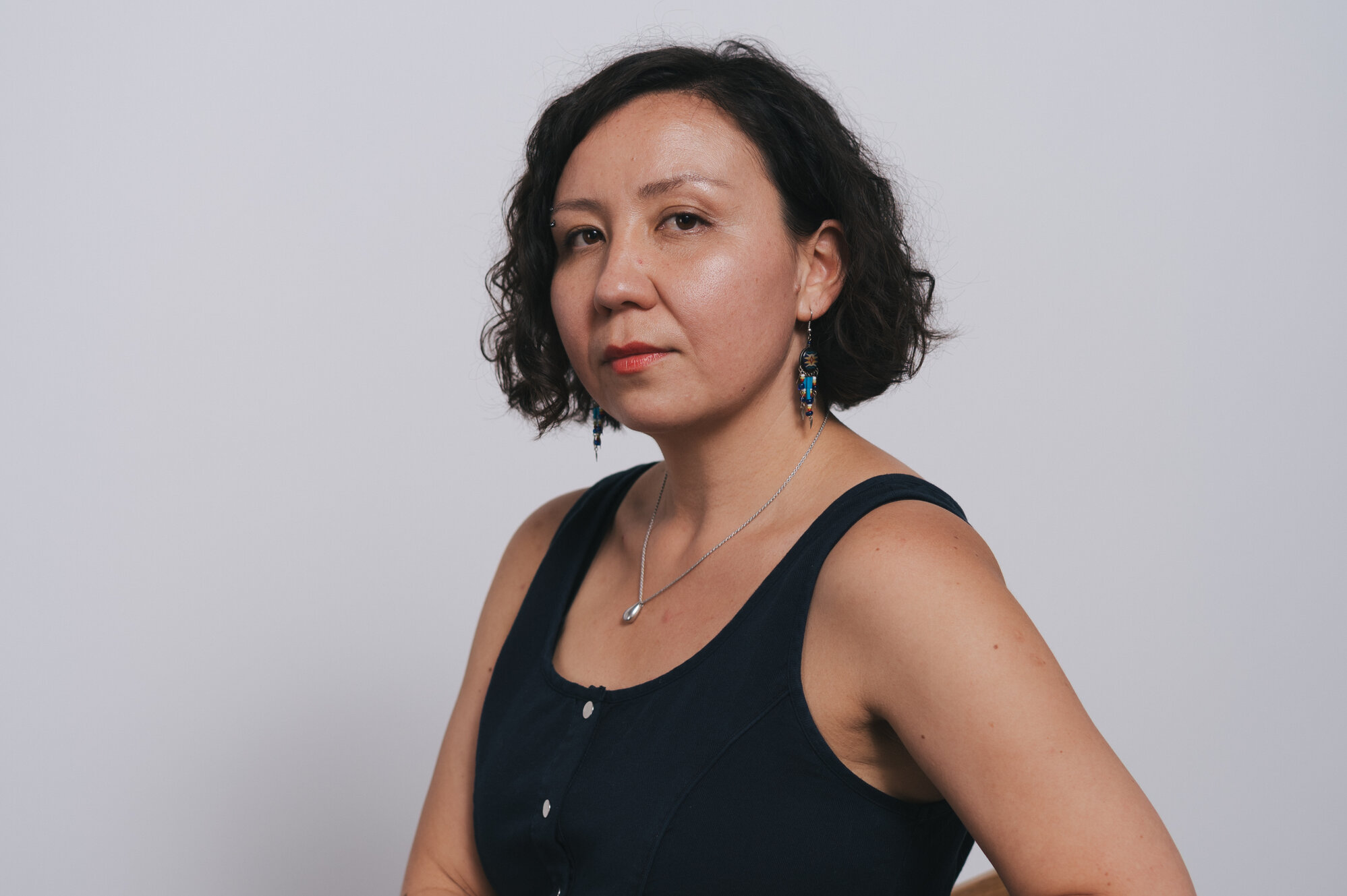
Emine Ziyatdin talks about her work as a sociologist, photojournalist and NGO co-founder and how her PhD on the microhistory of a Crimean Tatar family is bringing together a lifetime of experience.
When I look back I have always been interested in the same theme - identity, memory and how larger geopolitical events shape one’s story in relation to Crimea.
Emine Ziyatdin
Emine Ziyatdin’s path to doing a PhD has not been a straightforward one. After completing her master’s studies in the USA, she moved back to Ukraine in 2013 with the intention of applying for a PhD programme. But those plans were repeatedly postponed as she spent years covering the conflict in Ukraine and supporting other journalists.
It is only recently that she decided she had to return to her studies now or she would regret it forever. Her PhD is not directly about the current war in Ukraine. Her research is a microhistory of one Crimean Tatar family set against the broader history of Crimea, the Soviet Union, Ukraine and Russia.
“When I look back I have always been interested in the same theme – identity, memory and how larger geopolitical events shape one’s story in relation to Crimea,” she says.
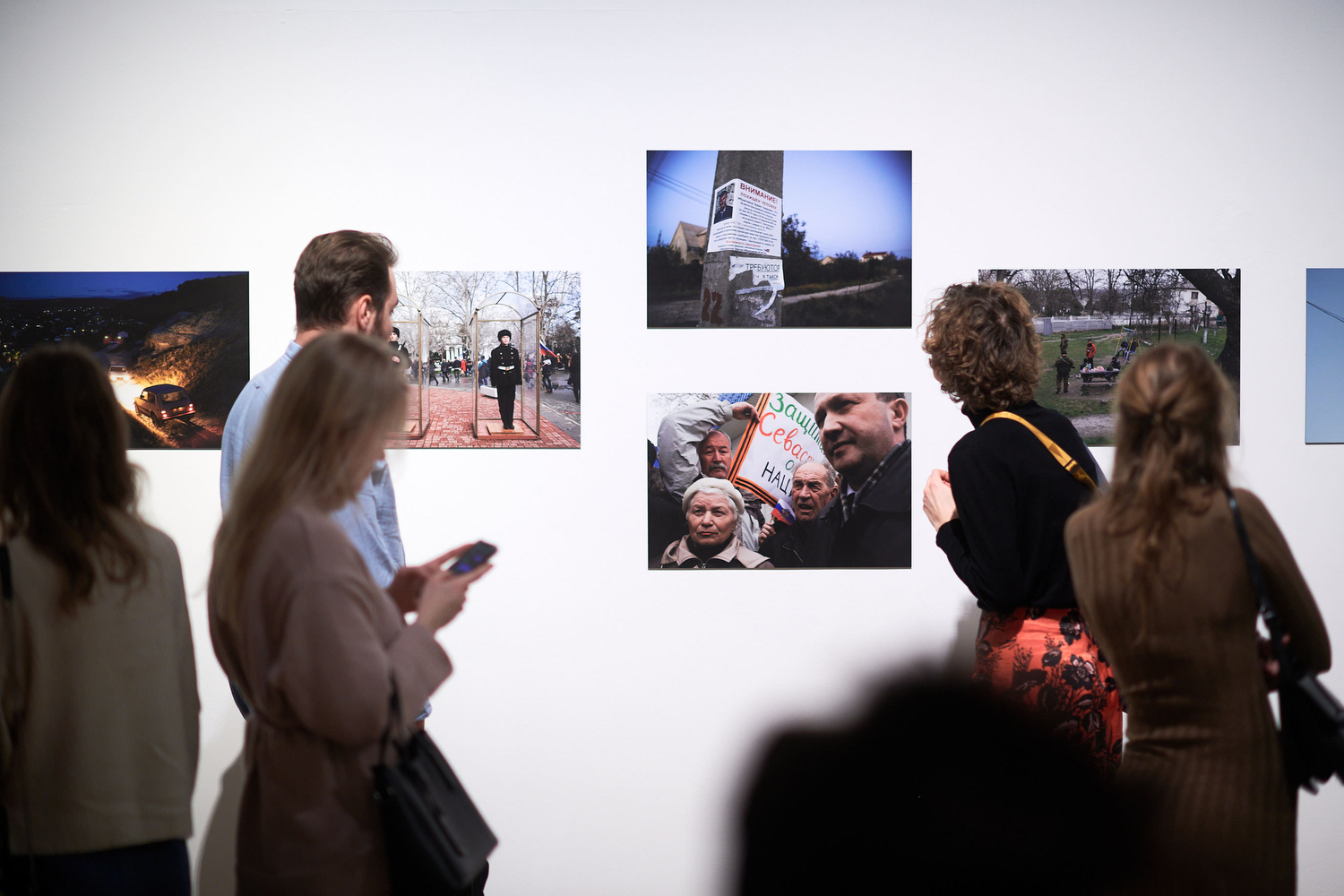
Emine’s exhibition “Crimea” in Galeria Centralis in Budapest in 2023
Her project examines how personal histories are affected by state violence, displacement and colonial narratives, and how these histories can be recovered through oral history, visual archives and counter-archival practice. It is rooted in the experience of the Crimean Tatars, the Indigenous people of Crimea, who were deported en masse by the Soviet regime in 1944 and barred from returning to their homeland until 1989. The deportation was accompanied by a campaign of propaganda that cast Crimean Tatars as traitors and sought to erase them from the historical record. Emine is particularly interested in the politics of historical narration, the afterlives of imperial archives and the broader relevance of displacement in the contemporary world.
“There are so many people in the world who are having to flee their own countries that this has become much more of a universal theme,” she says.
Her PhD in Slavonic Studies brings together her experience growing up as a Crimean Tatar, her search for how she fits in and who she is, her work documenting people’s lives as an academic and in the ongoing war in Ukraine as a photojournalist and co-founder of an NGO.
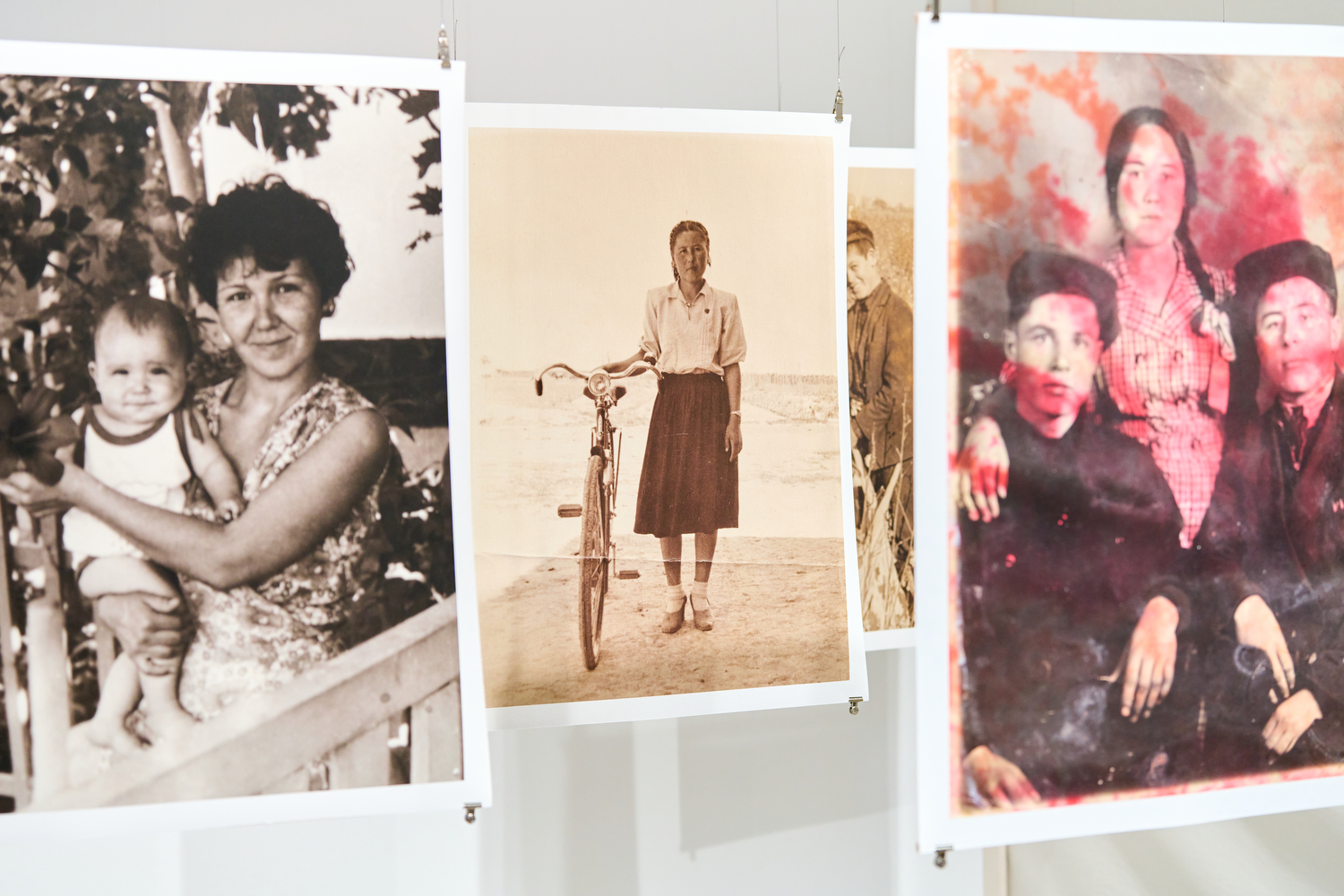
Emine’s current exhibition “Crimean Counter Archive from Below” in Open Eye Gallery in Liverpool (Image by Rob Battersby for Open Eye Gallery) 2026
Emine [2026] is also working on a forthcoming artistic exhibition at the Open Eye Gallery in Liverpool which shares the same theme as her PhD. It is an attempt to visualise colonial ‘othering’ narratives about Crimean Tatars, using photos and collages, drawing on old Soviet archives. She mentions, for instance, how a relative was considered illiterate because they barely read or wrote in Russian even though they read the Koran and wrote in Arabic script.
Her supervisor will be Rory Finnin, Professor of Ukrainian Studies who launched Cambridge Ukrainian Studies in 2008 and is author of the book Blood of Others on the Crimean Tatars, which inspired Emine.
Childhood
Emine was born in Uzbekistan. Her family returned to Crimea amid the collapse of the Soviet Union when she was three and she grew up in a small village in the north of Crimea. She was very aware that Crimean Tatars were not welcome there. The area had been repopulated since their deportation, mainly by Christian Slavic people. Crimean Tatars are Muslim and Turkic and have different names to others in the region. Emine says her family found many of the Soviet lies about Crimean Tatars had stuck. She recalls the discrimination her family faced, for instance, her parents struggled to find jobs or to settle in the big cities where the work tended to be.
Emine went to her local school. Many of her fellow students dropped out, in part because of the collapse of the Soviet Union. Collective farms went into decline and people moved away. When she joined the school there were up to 40 children in her class, but only 12 graduated.
Emine finished school at the age of 16. At the time she wanted to study science, but corruption in higher education and financial constraints made that route inaccessible. Instead, she entered a mobility programme for Crimean Tatars in western Ukraine and studied sociology and history at Ivan Franko National University of Lviv.
“Sociology was an accidental choice, but I loved it so much. I really found my passion there. It encompassed all my questions about who I am and how I fit in when there is so much structural discrimination and othering. I had amazing professors and felt very supported,” she says.
University
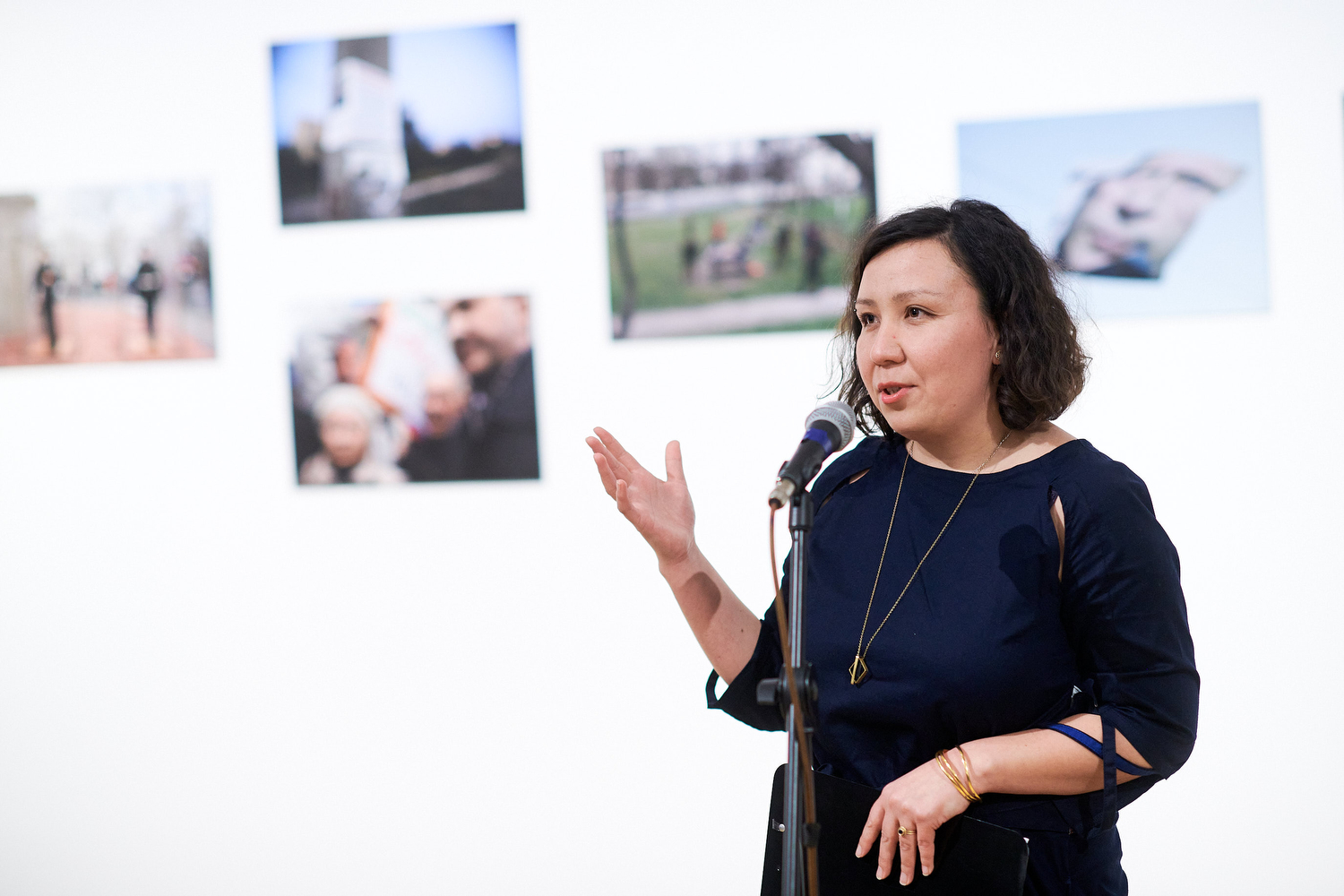
Emine’s exhibition “Crimea” in Galeria Centralis in Budapest in 2023
In 2004, when she started her course, there were very few Crimean Tatars in Lviv, western Ukraine. Some could not understand that Emine could be Ukrainian. Her undergraduate degree took four years and she followed that with a one year master’s in 2008 when she took part in an oral history research project on the impact of changes in agriculture policy – the move away from collective farming – in Ukraine.
Emine’s research dealt with the impact on Crimean Tatars. The project was led by Dr Natalia Khanenko-Friesen, the director of the Canadian Institute of Ukrainian Studies at the University of Alberta. Years later, Dr Khanenko-Friesen reconnected with Emine to revisit the interviews, recognising that the Crimean Tatar testimonies stood apart from the rest of the material. Together they began developing an oral history book tracing Crimean Tatar history from the late 1930s to 2008.
“The interviews were so unique as they were done before Russia’s annexation of Crimea when people felt very free to express themselves and describe their life stories and opinions. That is not the case now,” says Emine.
After her master’s in Ukraine, she headed to the US to do a master’s in photojournalism and visual communications at Ohio University on a Fulbright Scholarship. She had become interested in photojournalism after meeting US documentary photographer Carolyn Drake in 2006 and had started photographing her own community. She decided she needed to build her photography skills, which would allow her to communicate her work to a larger audience. Her two-year master’s was followed by a Magnum Foundation fellowship in photography in New York City, where she documented the lives of immigrant communities from the former Soviet Union in Brighton Beach.
Photojournalism and activism
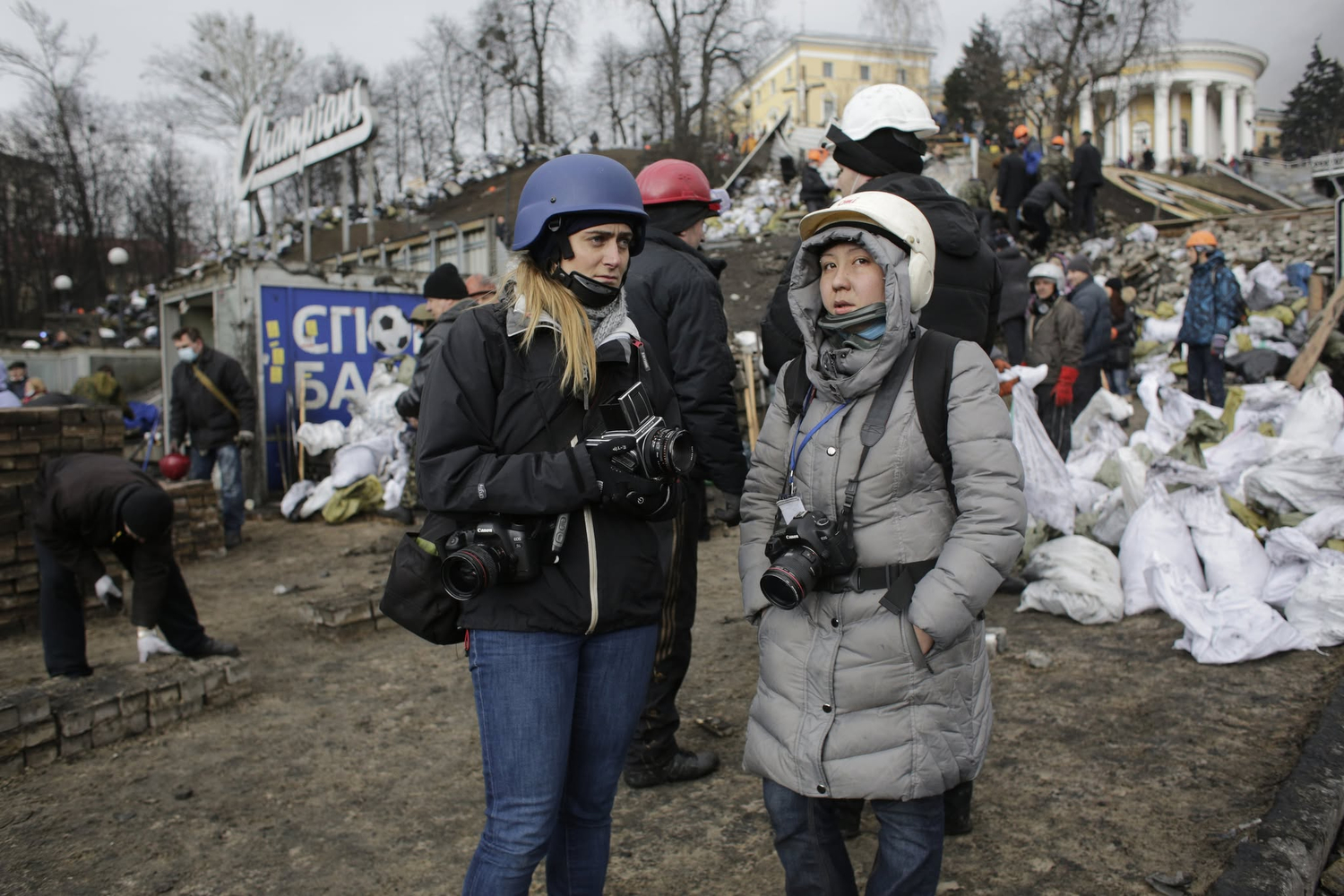
Emine at Euromaidan revolution (Image by Alexander Chekmenev) 2014
Emine returned to Ukraine in 2013 where she covered the Euromaidan Revolution. She returned to Crimea with a tv crew just days after the first Russian soldier appeared in the area in early 2014 and covered the Russian annexation. She then travelled around eastern Ukraine to cover the beginning of Russo-Ukrainian War.
Emine says she had never intended to be a war reporter. She wanted to cover daily life rather than conflict. “I did not seek conflict out intentionally, but I ended up in the middle of it and learned how to do it as I went along. No-one was prepared at the time,” she says.
In 2017, she moved to London and began working in the NGO sector, supporting independent and freelance journalists. She worked on the Eurasia programme at the Rory Peck Trust, which supports freelance journalists and their families in crisis, and later became a media consultant for the Thomson Reuters Foundation, which works to strengthen the resilience of independent media.
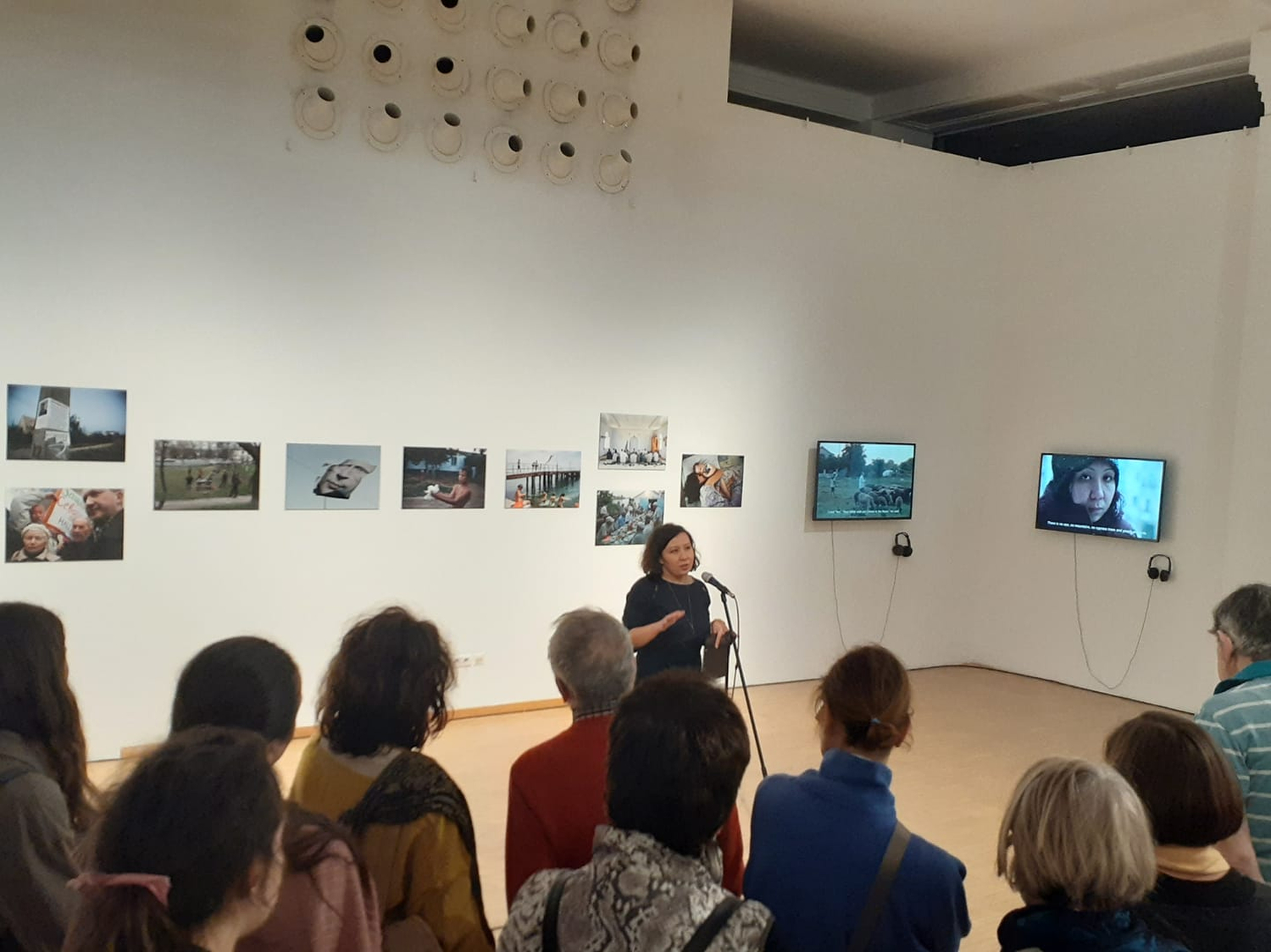
Emine’s exhibition “Crimea” in Galeria Centralis in Budapest in 2023
In 2022, she co-founded Ukraine Warchive, a digital photo archive of the Russo-Ukrainian war. The NGO was established to support photojournalists in Ukraine through archival, publishing, exhibition and grant-making initiatives.
Emine is very much looking forward to starting her PhD and says she is very happy to join the Gates Cambridge community. “These days it is so important to surround yourself with passionate people who can envision a better future,” she says. “I have taken a conscious decision to become a dreamer again. I want to see a better future. I know things look very grim everywhere, but people need to envision something good and take steps to achieve it so change can happen.”
*Top photograph by Oksana Botovets