


A US government programme to incentivise companies to research and develop treatments for neglected tropical diseases could be more widely adopted if three key issues are addressed, according to a research paper just published.
A US government programme to incentivise companies to research and develop treatments for neglected tropical diseases [NTD] which affect over 1 billion people could be more widely adopted if three key issues are addressed, according to a research paper just published.
The paper, The Impact of the U.S. Priority Review Voucher on Private-Sector Investment in Global Health R&D, is co-authored by Gates Cambridge alumnus Andrew Robertson [2001] and published in the Public Library of Science [PloS].
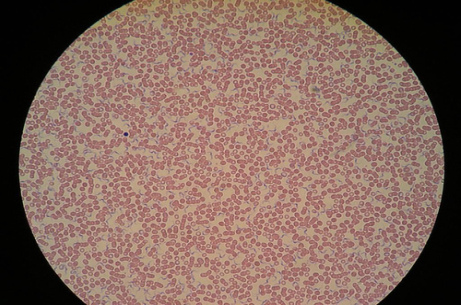
The Priority Review Voucher programme was signed into law by the US government in 2007 to give drug companies an extra incentive to research and develop new medicines for neglected tropical diseases. Through the programme, companies that develop new drugs for NTDs are awarded a transferable voucher enabling the bearer to get priority (six-month) review by the US Food & Drug Administration (FDA) for any future drug of their choice. Typical FDA review times can take up to 18 months. This would mean, for instance, that creating a new drug for African sleeping sickness [pictured] would allow a company to receive priority FDA review for a drug that treats baldness or high cholesterol. Although economists have estimated the voucher to be worth up to $300 million, it is unclear how successful the programme has been to encourage investment in new NTD medicines.
The authors of the PloS report conducted an industry-focused survey of for-profit companies working in drug research and development.
Their results suggest that the PRV is well recognised by industry, and is taken into consideration when selecting drug development priorities. However, the researchers say there are three key issues restricting its widespread adoption. They are the lack of demonstrated market value of a PRV; distrust that the FDA will honour the PRV; and prohibitive rules concerning the implementation of the PRV programme.
The researchers discuss potential solutions for each of these issues. For instance, they say the development of rules surrounding the voucher programme could improve it as an incentive, reduce uncertainty, and increase its value to drug and vaccine developers.
They conclude that previous negative evaluations of the PRV programme need to be reassessed according to alternative criteria for success. For instance, they say that any dedication of resources to NTDs should be considered a success since it is a cost-neutral scheme. Indeed they say that from their research three companies cited the voucher as their principal motivator to pursuing new medicines in NTDs.
They also warn that it is still early days to judge the value of the PRV since average development times from preclinical stages through to submission are in the range of 10-20 years.
They say: “Looking prospectively, the demonstrated sale of a voucher from one company to another, or the reform of the PRV regulations, could increase the value of the voucher significantly. Given the important interest from industry, these changes may provide a tipping point that could greatly increase the value of this R&D incentive.”
A companion paper on the same issue for which Andrew Robertson is co-first author will also be published shortly by PLoS. Andrew, who did a PhD in Genetics, is currently Director for US Regulatory Policy at global healthcare company Merck & Co as well as a Trustee at the Gates Cambridge Trust.
Picture credit: ryrodman1_r2@sbcglobal.net and Creative Commons