

A new report is just out on an intellectual retreat on the future of AI where sessions were co-led by several Gates Cambridge Scholars.
The leadership implication, for public institutions and private firms alike, is that in a post-AI environment it is no longer enough for a source to be reputable. People need to see the process, and to feel they were part of it rather than dictated to by it.
A new report brings together discussions by leading thinkers in the areas of AI and Human Judgement in Decision-Making, Innovation and Inclusion in Technological Systems, Resilience in a Polycrisis Era and Public Trust in the Age of Deepfakes and Polarisation.
The report, Shaping the Future Together: AI, Innovation, Inclusion and Resilience in a Fractured World, is based on discussions at an intellectual retreat for senior executives and CEOs organised by Bridgehouse, the Gates Cambridge Trust and the Intellectual Forum at Jesus College, Cambridge, which took place in Cambridge from April 29th to May 1st.
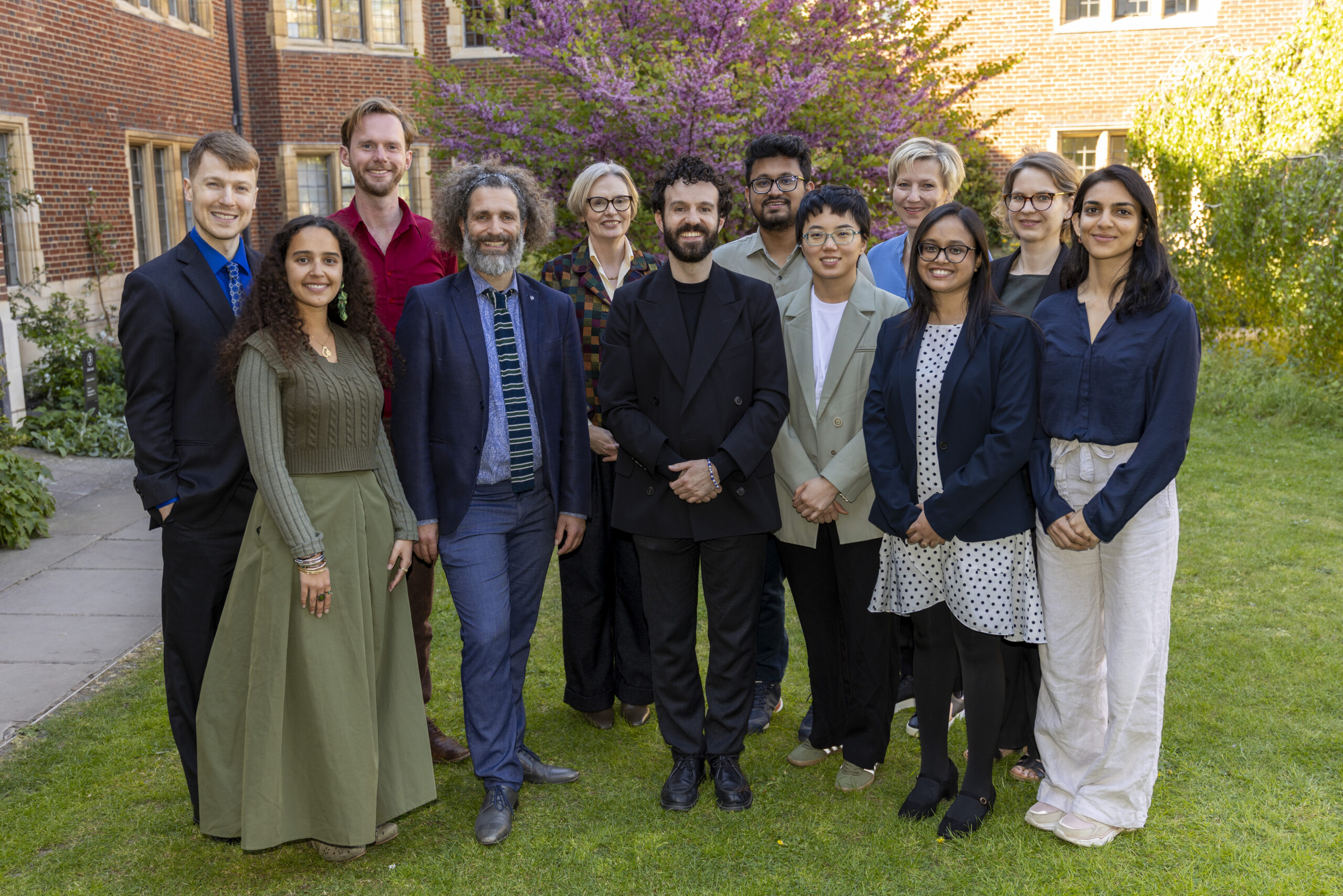
Gates Cambridge Scholars and academics led all four sessions. The session on AI and Human Judgement in Decision-Making was led by Gates Cambridge interviewer Mateja Jamnik, Professor of Artificial Intelligence in the Department of Computer Science and Technology at the University of Cambridge, and Scholars Hannah Claus [2024] and Meiru Zhang [2021]. It covered cognitive identity, AI functionality, the representativeness of AI models and the role of human beings in ensuring AI accuracy.
The session on Innovation and Inclusion in Technological systems was led by Bryan Zhang, Executive Director of the Cambridge Centre for Alternative Finance, and Scholars Abdullah Hasan Safir [2024] and Aliva Salmeen [2023]. It argued that the financial system needs to ensure that innovation is balanced with consumer protection, market integrity and financial stability and stressed that innovation is not just about technical progress, but also about inclusion, justice and whose knowledge systems are allowed to shape the future of AI.
The Resilience in a Polycrisis Era session was led by Dr Charlotte Hammer, Assistant Professor in Health Security and Infectious Diseases at the Centre for the Study of Existential Risk at the University of Cambridge, and Scholars Albert Van Wijngaarden [2023] and Nikita Jha [2021]. It asked what does it take for systems, organisations and countries to hold together under compounding, unprecedented pressures in an increasingly complex world.
Led by Gates Cambridge Scholars Andreas Vlachos [2006], Professor of Professor of Natural Language Processing and Machine Learning at the University of Cambridge, and Alex Mentzel [2022], the Public Trust in the Age of Deepfakes and Polarisation session analysed the historical continuity of propaganda alongside the distinct challenges posed by the collapsed costs of generating modern misinformation and explored how institutions and verification networks need to evolve to preserve corporate and social stability.
The discussions threw up three key themes: trust, relevance and opportunities.
Trust
The discussions found trust to be central to the successful navigation of global uncertainties and challenges. Concerns were raised about the reliability of AI systems when it comes to consistent, accurate outputs, with delegates suggesting the need to use multiple AI tools to cross-check answers, demand verifiable reasoning chains and resist allowing emotional framing to colour queries. There were also worries about the gap between people’s ability to use AI and their ability to critically evaluate it, with delegates agreeing human oversight is non-negotiable in important decisions and that a clear threshold is needed about where it kicks in.
Another issue was emerging risks in relation to multi-agent pipelines, which sit outside the scope of conventional line management, supply chain and cybersecurity frameworks that were not designed for agent-to-agent interactions and demand a system-wide approach.
Misinformation was also discussed. While not a new problem, participants said the cost of producing, distributing and verifying information has collapsed all at once with the advent of generative AI.
The report emphasises the importance of inclusion, saying: “The leadership implication, for public institutions and private firms alike, is that in a post-AI environment it is no longer enough for a source to be reputable. People need to see the process, and to feel they were part of it rather than dictated to by it.” Participants said that this is particularly the case for Majority World communities, whose experiences and realities are often marginalised in the design and governance of AI systems and who tend to lose out in a ‘one size fits all’ scenario.
Some questioned if placing an emphasis on trust and shared values was idealistic given the present state of geopolitics, but it was argued that the case for cooperation is also one of self-interest.
Relevance
When it comes to relevance, participants discussed what remains that is distinctively human and valuable in a post-AI world and concluded that initiative, creativity and wisdom were key. They placed an emphasis on collective human intelligence – the ability to reason together. They also talked about the importance of humans keeping ahead of the current limits of AI and of being globally inclusive. “Societies and organisations that ignore cultural plurality, local knowledge and community participation risk becoming socially and politically disconnected from the people they claim to serve,” the report states. It also adds that resilience building cannot be siloed by sector or scale and needs all actors – public and private – to work together.
Opportunities
On the theme of opportunities, participants spoke about the need for organisations to leverage their unique data, platforms and domain knowledge or risk being outpaced by general AI tools that lack specificity. They called for more embedded forms of AI, with companies and organisations customising their own agents for domain-specific tasks.
In addition to public-private collaboration, they highlighted the importance of community-centric and participatory approaches to AI in areas ranging from culture to health, where technical systems are co-created rather than imposed on people. However, they stressed that governance must keep pace with capability, with global regulations needed to back this up.
The report ends by saying that opportunities and risks are inseparable, which means governance capacity, for instance, in relation to climate change, needs to go hand in hand with risk analysis, community engagement and systemic change.