

Distinguished Lecture Series: Dr. James Nataro
“Vaccine Development in the Year 2100”

Cambridge University Communications Office:
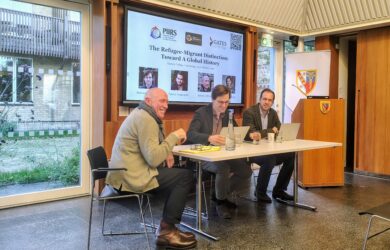
Vaccines could eventually be developed which could prevent the deaths hundreds of thousands of children a year from diarrhoea, according to an international expert in infectious disease. Dr James P Nataro, a major researcher in vaccine development and global health, is speaking about the future of vaccine development in an open lecture on 2 March organised by the Gates Scholars Council. The lecture, ‘Vaccination in the Year 2100’, will focus on the future of his field, looking forward to the day when vaccines will elicit a more natural form of resistance to infectious diseases.
Dr Nataro’s lab at the University of Maryland focuses particularly on understanding the nature of Ecoli and finding ways of preventing its spread. The World Health Organization says Ecoli accounts for several hundred million cases of diarrhoea and several ten of thousand deaths each year. The lab is also involved in the development of vaccines against potential bioterror agents, especially plague. Dr Nataro is principal investigator on a $5.6m programme funded by the Bill & Melinda Gates Foundation to develop a faster and more precise test to diagnose the causes of diarrhoeal disease in developing countries, which account for at least 18% of deaths of children under five in the world. One of the main problems is identifying the particular pathogens that make children sick. Dr Nataro, who is a professor in the Departments of Pediatrics, Microbiology & Immunology, Biochemistry & Molecular Biology, and Medicine, says current tests for establishing the cause of diarrhoeal disease and therefore the best treatment are “cumbersome” and expensive and so not suited to developing countries. The programme’s goal is to develop mobile technology which allows the causes to be quickly and accurately diagnosed and could eventually lead to the development of suitable vaccines.
The talk took place on March 2, and part of the recording of this lecture is available in mp3 here: http://www.cl.cam.ac.uk/~pb400/DrNataro.mp3
Return to the Distinguished Lecture Series Online Calendar and Media Page here.