

125 scholars from four international scholarship programmes came together on Friday to share their research and discuss global challenges.
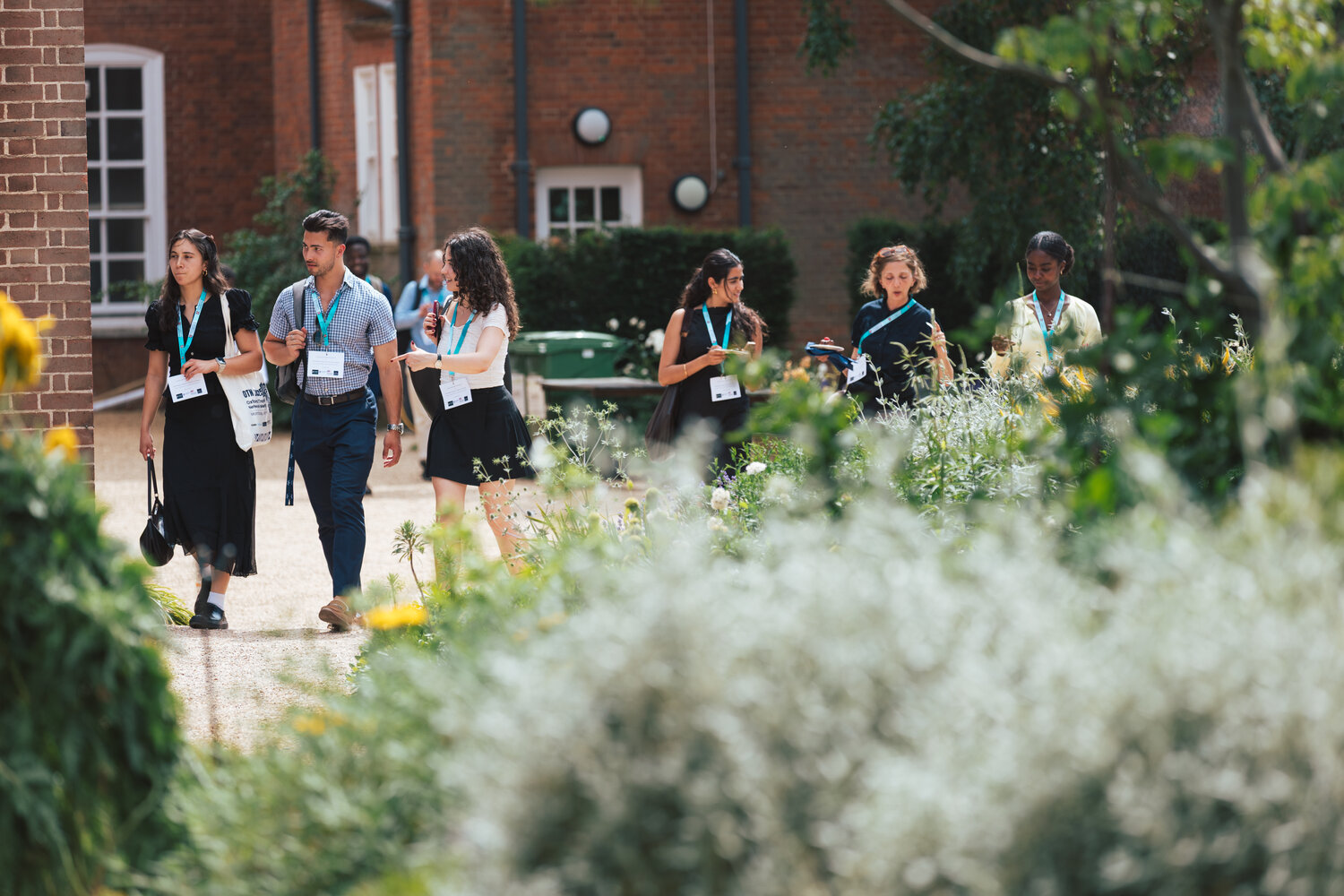
Gates Cambridge, Rhodes, Clarendon and Marshall scholars gathered at Newnham College in Cambridge on Friday for the UK Global Scholars’ Exchange.
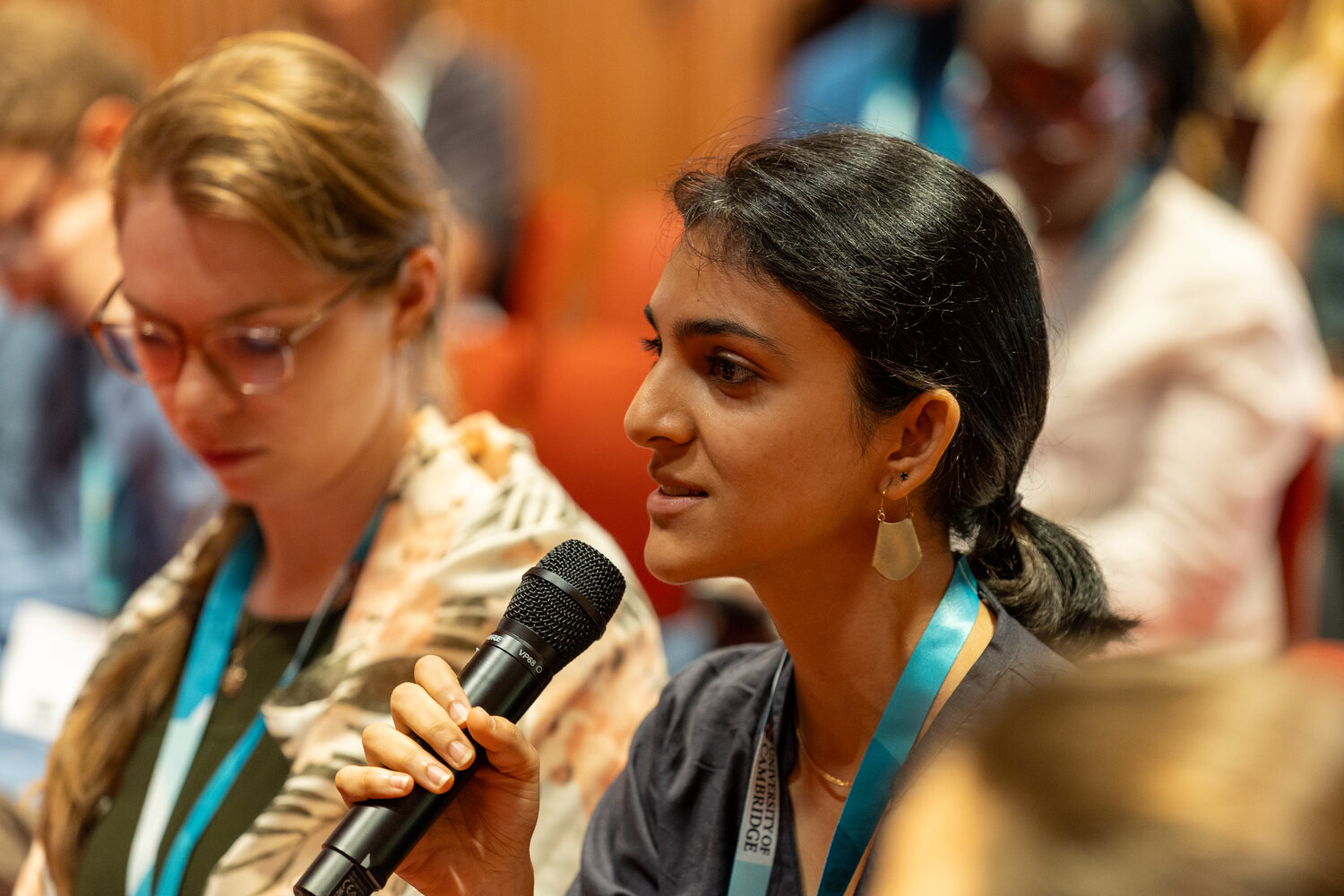
Nikita Jha
The event, which brought together around 125 scholars, was hosted this year by Gates Cambridge Scholars’ Council and enables scholars to share their research, get to know each other and hear from a number of alumni about the different paths they have taken to get to where they are today.
Senior Pro-Vice-Chancellor Kamal Munir kicked off proceedings and spoke about the current challenges of insecurity, inequality, polarisation and a shifting world order amid the acceleration of AI.
He said that, to prepare, we need cross-disciplinary knowledge and he hoped the exchange would enable this.
The morning was taken up with a series of presentations by scholars in three break-out rooms. Scholars talked about their research, for instance:
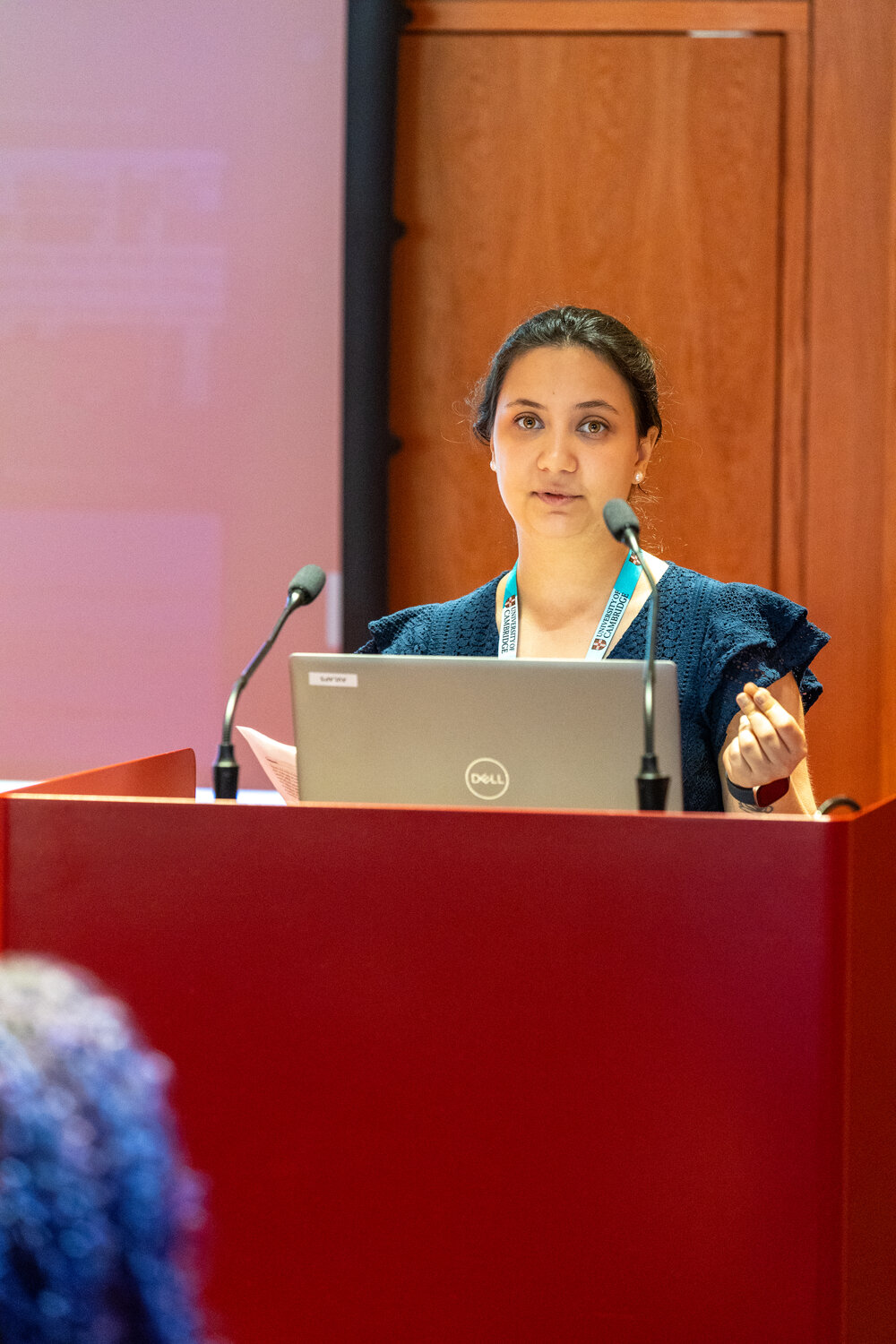
Alejandra Vijil Morin
Alejandra Vijil Morin [2024] spoke about her fieldwork with displaced children in Mexico and at the Darién Gap at the Colombia–Panama border. Children face a hostile and dangerous environment. Her research found that play is a constant and that it does not have to be joyful [for instance, it can be used to share and reframe traumatic memories]. “Play is not a luxury that waits for peace,” she said, underscoring play as fundamental to the right to childhood.
Ere Derbez [2025] also discussed her work on interrupted childhoods and how artists and photographers are capturing the lives of disappeared children in Mexico, creating “alternative archives of memory”.
Catalina Hierro Hernandez-Mora [2025] spoke about the UN Convention on Genocide and its lack of clarity on prevention of genocide in particular. She traced the history of the Convention to the post-World War 2 period when genocide had already happened and the focus was on punishment. She is interested in what specific actions states could carry out to prevent genocide, such as arms embargos.
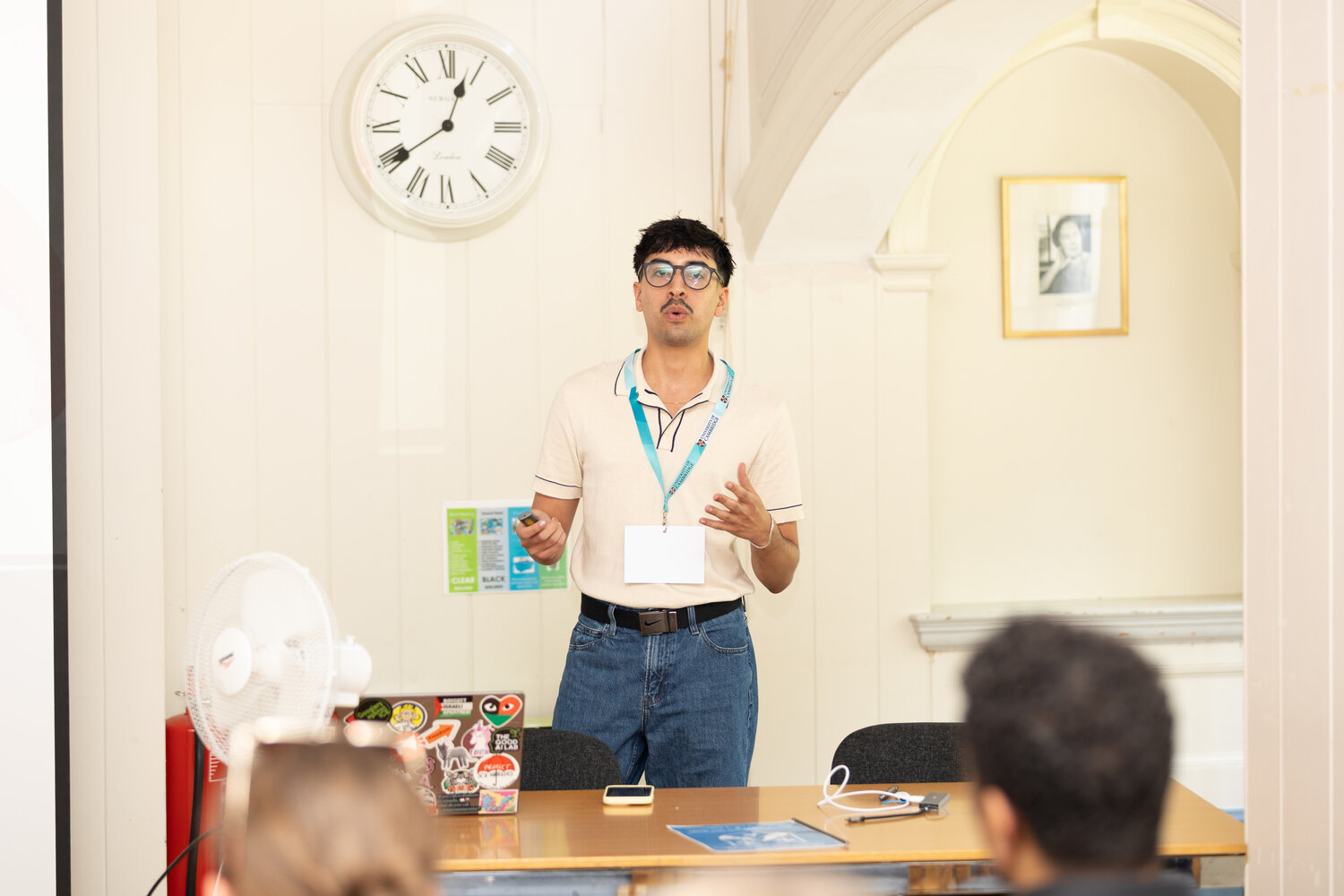
Erixberto Olivencia Alvarez
Erixberto Olivencia Alvarez [2025] spoke about his research on embryogenesis and reproduction and the three zones of the placenta, humans’ only temporary organ. All three zones have different functions. He is investigating the role of the maternal environment in placental development.
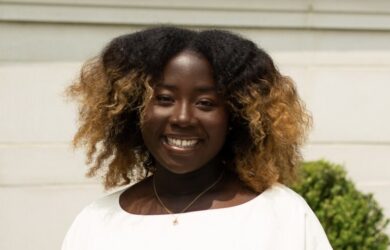
Nikita Jha [2021, pictured above asking a question] talked about how some schools have evolved from Covid while others are still struggling. Her research questions what contributes to creating ‘antifragile’ schools. She drew on research in India which showed that factors such as the ability to reconfigure existing assets, innovate and share best practice are important and that every crisis can be an opportunity for learning and growth and can build resilience to the next crises, even if we don’t know what they will be.
The afternoon saw a series of talks by – and a Q & A with – Gates Cambridge alumni – Associate Professor Ramit Debnath [2018], Mona Jebril [2012], Jennifer Gibson [2001] and Ola Osman [2019]. All spoke about how they came to be in their current position.
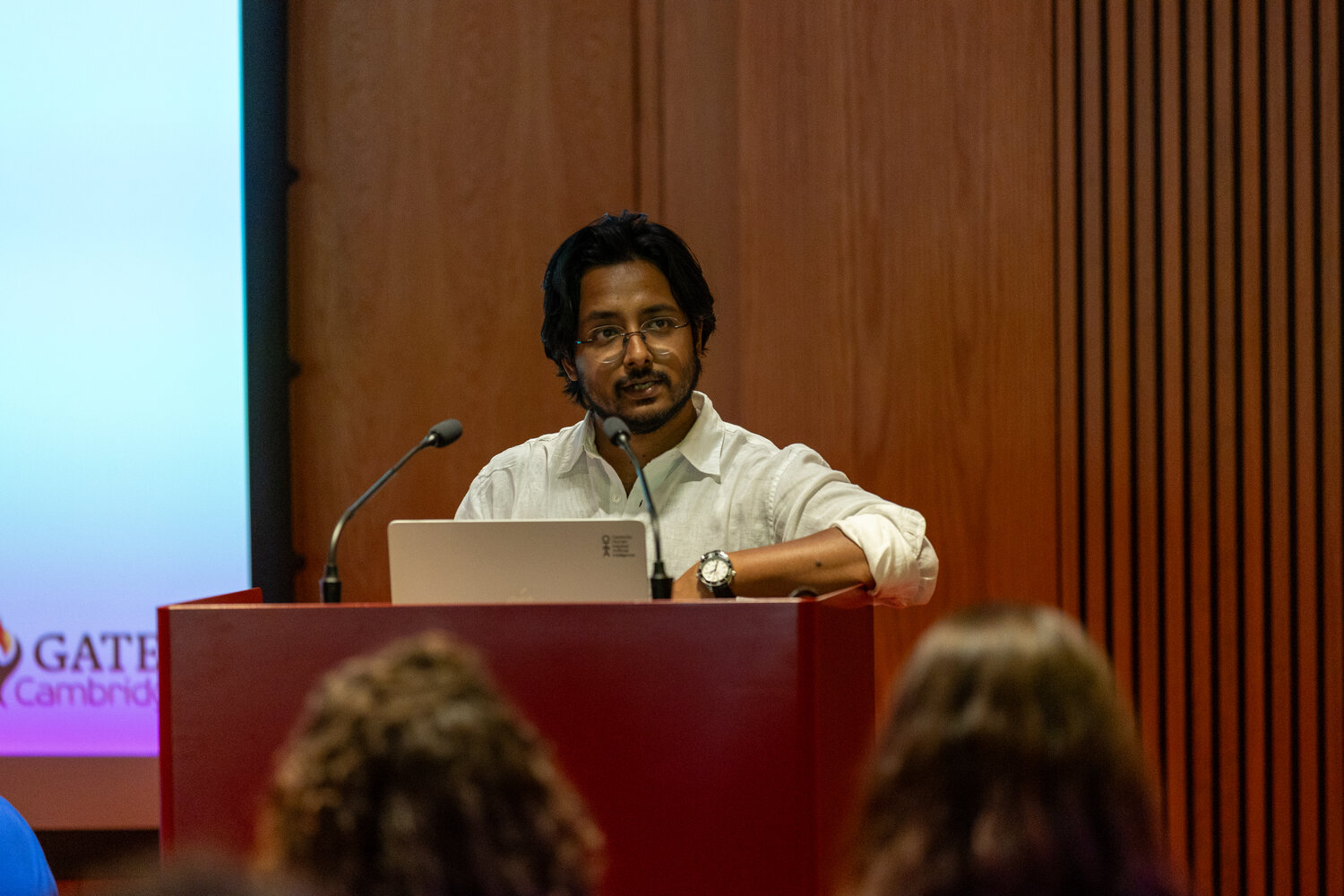
Ramit Debnath
Ramit is a University Associate Professor and Executive Director of Centre for Human-Inspired AI (CHIA) at the University of Cambridge, where his group pioneers responsible AI systems for climate and environmental sustainability. His work advances environmental computational social sciences, designing tools to mitigate emissions and align AI with public good. He leads the Cambridge Collective Intelligence and Design Group and climaTRACES Lab, advises the UK Government on AI methods and co-leads Caltech’s Climate and Social Intelligence Lab.
He spoke about the need for interdisciplinary and design-led approaches to AI, climate change and energy justice, which centre ethics and responsibility.
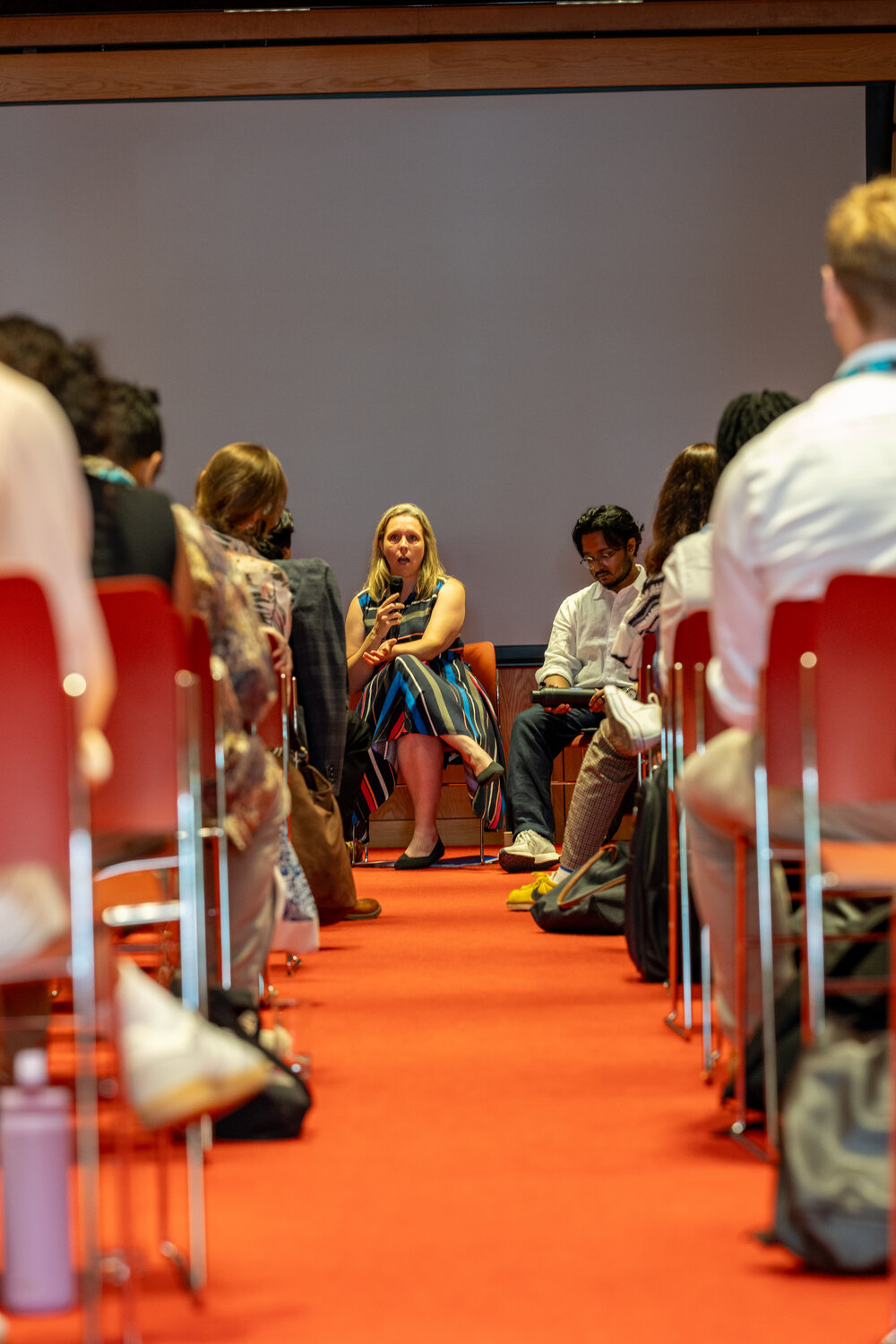
Jennifer Gibson
Jennifer is Co-Founder and Executive Director of Psst.org, a non-profit helping tech workers speak out by transforming whistleblowing from an individual act into collective action. Through its platform, SAFE, Psst provides a smarter, safer way for people in tech to share public interest information and raise concerns together. A human rights advocate for over 20 years, Jennifer spent a decade investigating and litigating War on Terror cases on behalf of civilians harmed by the US’s covert drone programme and also served as Legal Director at The Signals Network.
She spoke about her non-linear journey from international relations, girls’ education and law to human rights and whistleblowing and how her work had shown the importance of protecting whistleblowers, particularly in the tech industry, through an emphasis on collective action.
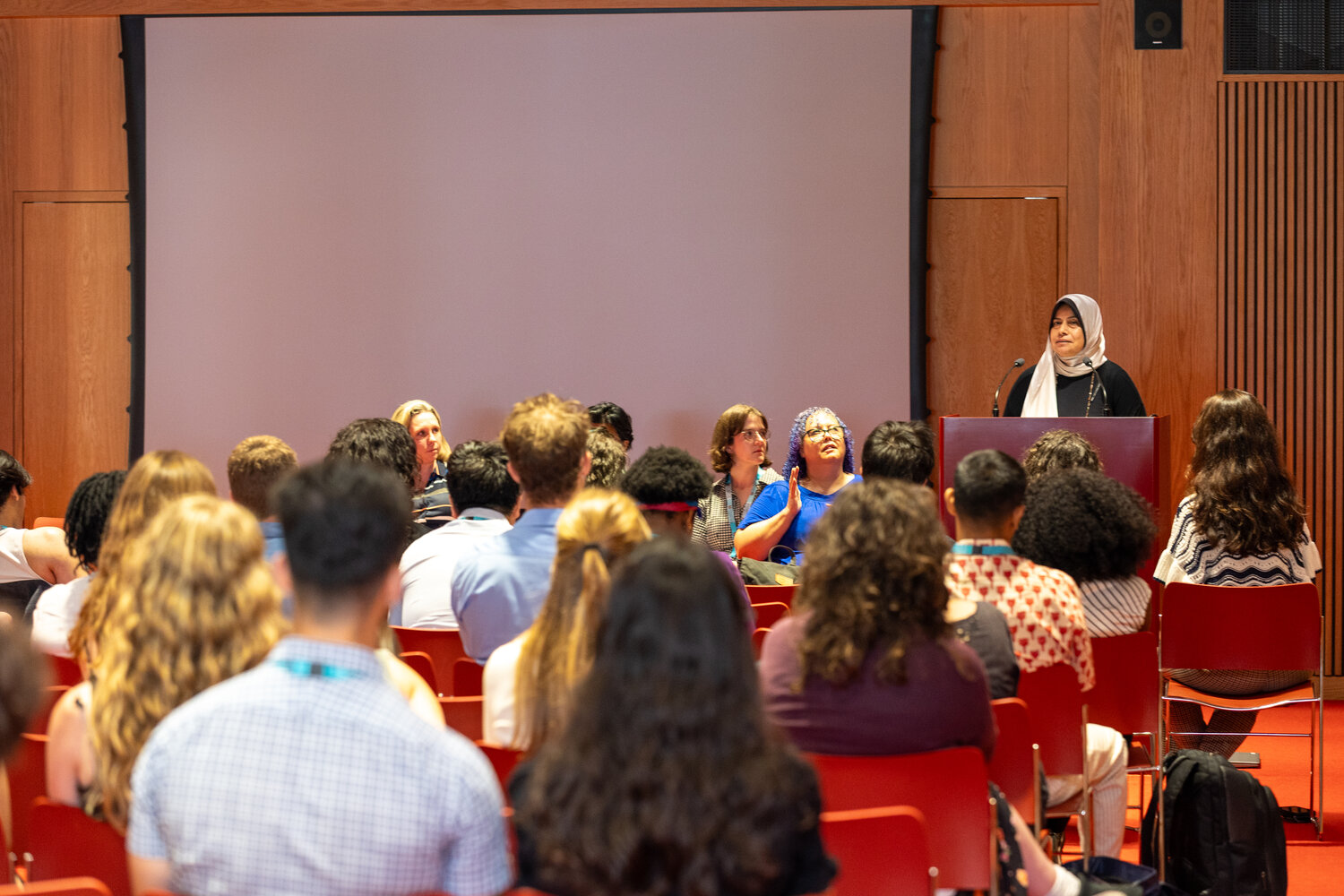
Mona Jebril
Mona is a Research Fellow at the Centre for Business Research and a Bye-Fellow in Education and Academic Development at Queens’ College, Cambridge. Her doctoral research examined higher education in Gaza and her postdoctoral research examined the political economy of health in Gaza. A Gates Impact Prize winner, she was recently awarded a British Academy Global Innovation Fellowship to work with the Carnegie Endowment for International Peace in Washington, DC.
She talked about how she went from being a teacher in a disadvantaged school in Gaza to lecturing at a university before coming to the UK for her postgraduate education. She said her PhD and subsequent research showed how impossible it is to disentangle education from politics and social issues. It also left her with a lot of emotional data that did not fit easily into academic documents. So she looked for alternative creative outlets to bridge the gap, from poetry to playwriting.
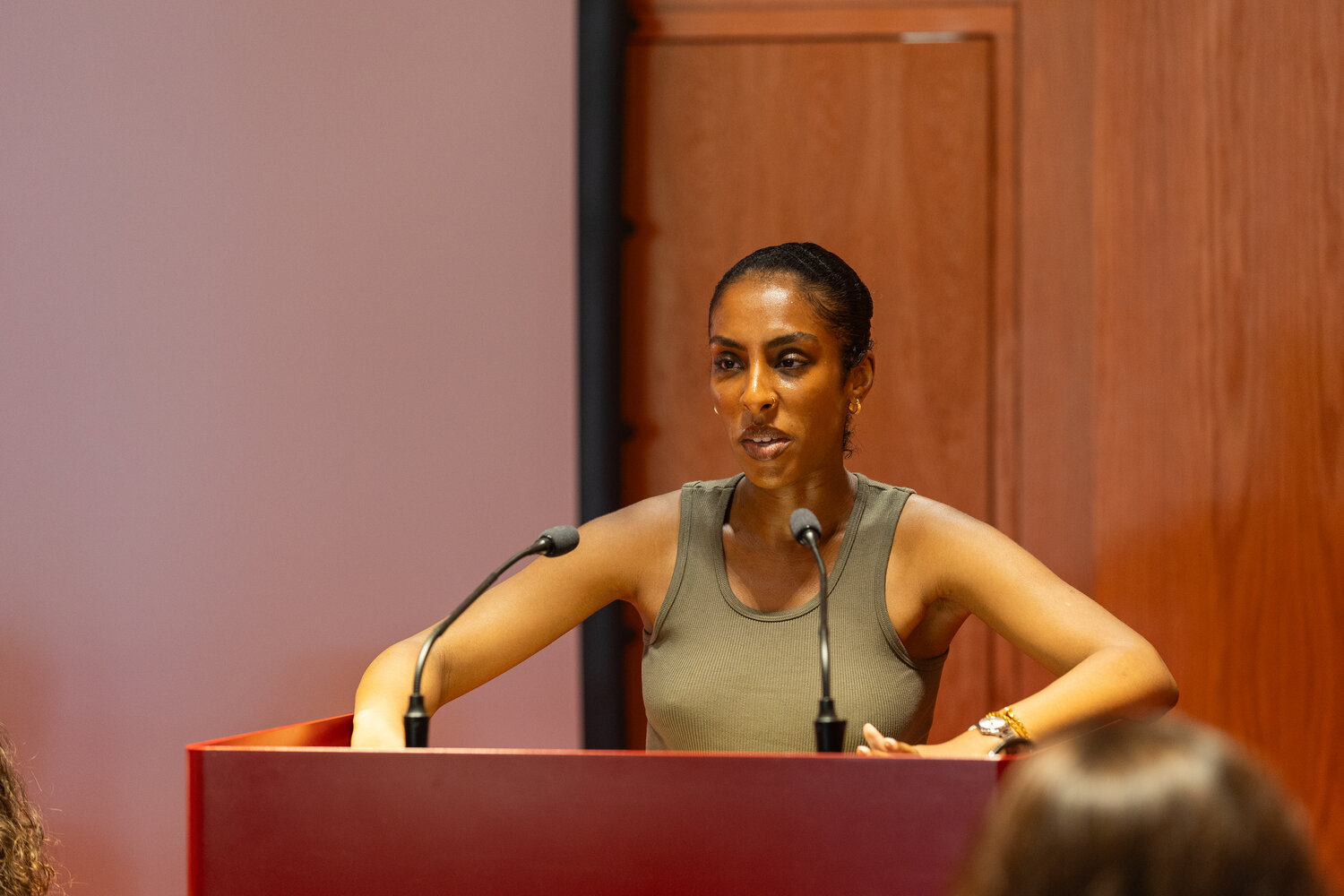
Ola Osman
Ola is Assistant Professor of African Politics at the University of Cambridge, a Fellow of Trinity Hall and a senior gender consultant with the United Nations World Food Programme. She did her PhD in Politics and International Studies. Her interdisciplinary research reframes so‑called “ethnic” conflicts in Africa by situating them within the longer history of Atlantic slavery.
She spoke about how she moved from Chemistry to a master’s in women’s studies and a focus on the reception given to Back to Africa Movement advocates in Liberia and how different layers of racism affected that. She became the first black woman lecturer at the Centre for African Studies and at Cambridge’s Department of Politics and International Studies and talked about how Politics has a serious racial blindspot outside Black Studies, and how Black Studies has a blindspot about race outside of the US. She said the pursuit of truth is at the heart of what motivates her.
In the panel discussion that followed scholars were advised to disrupt in a way that makes the system better, to tell different stories, to work outside silos and to try to bridge the gap between policy and academia. Asked about how to address the urgency of the current moment, panellists spoke about the need to celebrate small successes. Mona said she sees life as a gift and tries to do more when she feels she can do more. “Everything you learn is important. Nothing is wasted,” she said.
The day’s talks ended with a session on leadership run by the Rhodes Scholarship, tours of Cambridge colleges and a dinner for all participants.
The Gates Cambridge Scholars’ Council organising committee for the event consisted of Luisa Dell [2024], Jane Clarke [2025], Muaz Chaudhry [2025], Kate O’Brien [2025], Tess Stanley [2025], Aneisa Babkir [2024], Isabelle Hoover [2025] and Sonia Fereidooni [2024]. Thanks also goes to Trust staff Luisa Clarke, Stephen Metcalf, Arianna Koffler-Sluijter and Mandy Garner for their support.