

Four Gates Scholars will give the final internal symposium of the year on Thursday, covering topics ranging from RNA and synthetic biology to the barriers facing ex offenders after their release, molecular diffusion and African sleeping sickness.
Four Gates Scholars will give the final internal symposium of the year on Thursday, covering topics ranging from RNA and synthetic biology to the barriers facing ex offenders after their release, molecular diffusion and African sleeping sickness.
The symposium takes place from 7-9pm in the Gates Scholars Common Room.
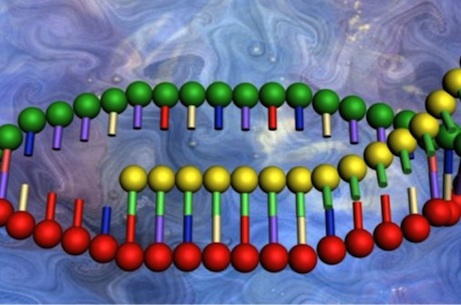
Devinn Lambert [2013], who is doing an MPhil in Biological Science, will talk about how the recent and extensive discovery of regulatory RNA molecules is redefining how synthetic biologists can control the metabolism of organisms in biotechnology and about her research which seeks to integrate a regulatory mRNA sequence called a riboswitch into the diaom Phaeodactylum tricornutum. This work is important because algae, including P. tricornutum, show potential as green biomanufacturers of chemical commodities.
Wesley Hazen [2013], who is doing an MPhil in Criminology, will speak about his research into how laws and policies act as barriers to ex-offenders getting jobs and access to funding for basic necessities which help stop them re-offending.
Nicholas Rice [2013], who has just completed an MPhil courtesy of a Gates Cambridge Scholarship and is about to start a PhD in Chemical Engineering, will focus on an experiment that demonstrates molecular diffusion to small or large undergraduate classes in chemistry or chemical engineering. Students use a cell phone camera in conjunction with open-source image processing software to measure concentrations of a coloured species in a clear liquid, as a function of position and time. Nicholas says: “The method is especially relevant for institutions with limited financial resources. The work also has implications for the potential use of mobile phones in the learning environment, and the inclusion of other simple practical experiments for the learning of scientific and engineering principles.”
Nicholas Murphy [2013], who is doing an MPhil in Biological Science, will speak about his research into African sleeping sickness.
Picture credit: Wiki Commons