

Pradipta Biswas' research wins backing from Microscoft's AI for Accessibility programme.
A Gates Cambridge Scholar has won a $15,000 grant from Microsoft for his work on human computer interaction, intelligent user interfaces and inclusive design.
Pradipta Biswas won the AI for Accessibility grant for his work for the Intelligent Inclusive Interaction Design Lab at the Centre for Product Design and Manufacturing at the Indian Institute of Science.
The lab recently began a collaboration with Microsoft Research India through a funded project, led by Pradipta, on developing Gaze-Controlled Applications for eInclusion of users with Severe Speech and Motor Impairment. The project involves the use of the newly released Microsoft Windows 10 gaze tracking API.
Pradipta's work focuses on analysing ocular parameters of children with severe spasticity. The team also involves JeevithaShree DV (PhD student) and Kamal Preet Singh Saluja (RA) from the I3D lab.
Their initial findings were reported in a paper in Ophthalmology journal and at a demonstration at a recent ACM Designing Interactive Systems conference. The team is developing new gaze-controlled software for communication and social inclusion for people with severe disability. The I3D lab is also deploying a similar set of gaze-tracking software for the automotive environment through a funded project with Faurecia Services Groupe, France and for military aviation through a funded project with Aeronautical Research and Development Board of India's Ministry of Defence.
At the University of Cambridge, Pradipta [2006], who did a PhD in Computer Science, led a research team at the Department of Engineering which developed a computer control interface that uses a combination of eye-gaze tracking and other inputs. The aim was to help people with physical impairments and others who cannot use a mouse or touchscreeen to perform complex computing tasks at speed.
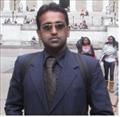
Pradipta Biswas
- Alumni
- India
- 2006 PhD Computer Science
- Trinity College
Pradipta Biswas is an Assistant Professor at the Centre for Product Design and Manufacturing of Indian Institute of Science. His research focuses on user modelling and multimodal human-machine interaction for aviation and automotive environments and for assistive technology. Earlier, he was a Senior Research Associate at Engineering Department, Research Fellow at Wolfson College and Research Associate at Trinity Hall of University of Cambridge. He completed PhD in Computer Science at the Rainbow Group of University of Cambridge Computer Laboratory and Trinity College in 2010 and was awarded a Gates-Cambridge Scholarship in 2006. He undertook a first degree in Information Technology at the University of Kalyani and a master degree at the Indian Institute of Technology, Kharagpur. He conducts a course on Human Computer Interaction at Indian Institute of Technology, Mandi, guest lecture at Indian Institute of Technology, Madras and was a vice chairman of ITU-T Focus Group on Smart TV.