

A Cambridge team wins a prestigious prize in the biotech equivalent of Dragon's Den with their hair loss treatment company.
A team of biotechnology entrepreneurs from the University of Cambridge has scooped a prestigious prize in the biotech equivalent of Dragon’s Den with their hair loss treatment company.
The Calvitium Solutions team scooped the £1,000 Biotechnology Young Entrepreneurs Scheme (Biotechnology YES) 2012 prize in the annual contest co-organised by the Biotechnology and Biological Sciences Research Council (BBSRC) and the University of Nottingham Institute for Enterprise and Innovation (UNIEI) at the London Marriot Hotel County Hall earlier this week.
The winning team, which includes Gates Cambridge Scholar Anastasiia Kamenska, created a hypothetical company whose novel hair loss treatment is cheaper and has fewer side effects than other products on the market.
Minister for Universities and Science David Willetts said: “The participants in this competition have shown that there is a bright future ahead for biological science. This is one of the most vibrant and increasingly important sectors of the UK. They are developing the skills needed to translate world class research into wider economic and social benefits.”
The competition, in its 17th year, sees bioscience postgraduate and postdoctoral researchers develop hypothetical business plans for plausible biotechnology companies. They receive help and advice from speakers, mentors and judges in areas such as intellectual property, financial planning and marketing.
The team members assume the roles of directors of their company and seek funding for their business plan from a group of “equity investors” – drawn from science and industry.
The hypothetical companies compete against each other and during the process participants gain valuable knowledge and skills about entrepreneurship, the world of business and commercialisation, in addition to transferable skills such as team working and time management.
The five members of Calvitium Solutions came top of the 377 competitors across 82 teams in five regional workshops held in October and November. Twelve teams competed in the London final.
This year for the first time a Biomedical-themed workshop was hosted by GlaxoSmithKline (GSK) and Stevenage Bioscience Catalyst which attracted researchers from the clinical biosciences. It also received support from the Medical Research Council, the Wellcome Trust and the Technology Strategy Board (TSB).
As in last year’s competition agri-business Syngenta also hosted a workshop to give participants a chance to learn about the commercialisation of science from the perspective of a large agri-business company.
Past entrants of the competition have gone on to form successful companies, develop business ideas and work in industry, as well as pursue research careers.
Professor Sir Tom Blundell, chair of BBSRC, said: “Biotechnology YES has not only grown, but it’s evolved into a broader area of application, particularly with Environment YES and the biomedical clinical side as well, which I think is impressive.
“The participants are full of exciting and innovative ideas and have bright futures. I hope that by taking part in Biotechnology YES they have acquired invaluable skills in areas such as finance, marketing and intellectual property which will benefit them in years to come.”
Anastasiia [2010], who is doing a PhD in Biochemistry, said: “The competition was a truly amazing experience and an extremely steep learning curve. It really shed light on what a complex process a scientific idea has to go through before reaching the market and that one really needs to have a diverse set of skills to make it happen. Though I had never envisaged myself an entrepreneur before, I quite enjoyed being in those shoes.”
An independent review of Biotechnology YES published in 2010 showed that it gives early career researchers the edge in entrepreneurial skills and future career prospects. Having participated in the competition, early career scientists are well prepared to move into industry where their improved entrepreneurial skills are highly valued. There is some evidence to suggest that past participants perceive their earning potential as greater following the competition and the review indicates that the skills gained are exactly complementary to those acquired during a PhD.
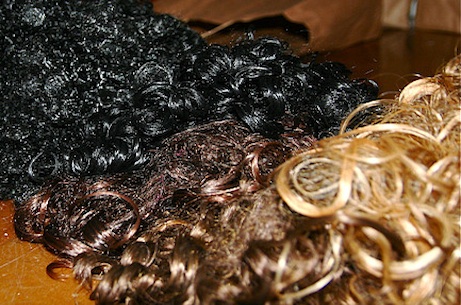
Picture credit: Steven Depolo and Creative Commons