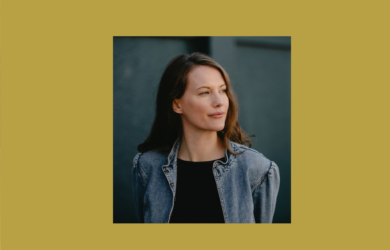


Scholar and award-winning poet Jaya is invited to meet the Queen.
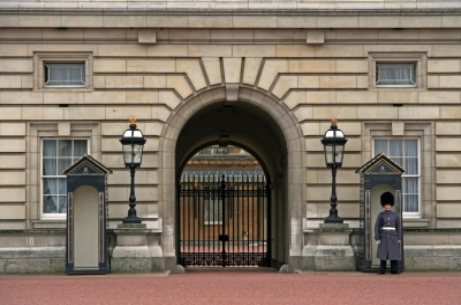
Gates scholar Jaya Savige was invited to meet the Queen at an official reception earlier this month ahead of an official royal visit to Australia this week.
Jaya [2008], an award-winning poet who is studying for a PhD in English, also met the Duke of Edinburgh, spoke to Prince Edward and discussed the poetic concept of ‘duende’ with the musician, poet, novellist and screenwriter Nick Cave at the reception at Buckingham Palace on 13 October.
Jaya will be giving a reading at the Australian High Commission early in 2012, as part of a memorial event for the Australian poet Peter Porter. His invitation came after he gave a reading at the British Museum in July as part of an exhibition of Australian art and botany that ran over the summer.
He has been writing poetry for as long as he can remember, but it was only after arriving at university that he began to send poems out for publication.
He started his undergraduate studies in law and then switched to English. He says he had always had a passion for writing, but he didn’t have his heart set on a writing career from an early age. His careers advisers suggested law. He says: “I didn’t grow up with books; neither of my parents went to university; in fact, they didn’t even finish high school. As an undergraduate I found myself wandering wide-eyed through the literature and philosophy stacks, and was surprised to discover there a world I didn’t know existed, one where ideas and literature and poetry and art were considered part of a serious intellectual pursuit, a conversation that had been going on for millenia. The intellectual stimulation that these books provided was overwhelming, like a drug.”
Midway through his first year of law he switched to literature and says he hasn’t looked back. He says that he finds inspiration for his writing in all sorts of places, particularly words. “Poets get off on the history of language, and the etymology of words, because every single word carries the freight of cultural history – like a mineral deposit. Indeed, poets are miners of a sort, miners of the terra lingua; they prospect, they drill, they extract and they process linguistic ore for use in the production of literary culture,” he says.
For his PhD he is focusing on the concept of “risk” in western epistemology, and its representation in European literature of the late nineteenth and early twentieth centuries, particularly in the works of James Joyce. He says the field of “Risk studies” is interdisciplinary by nature, spanning sociology, economics, mathematics, history and philosophy. He aims to open this field up to literary studies also.
He says that, although poetry and academic writing involve very different modes of thinking, one of the poems in his new book of poetry emerged directly out of his research. The book, ‘Surface to Air’, was launched on a seven-week reading tour over the summer, where he gave readings, guest lectures and workshops at festivals and universities along the east coast of Australia.