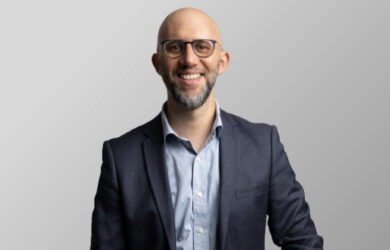


Michael Young has won a prestigious medical ethics prize at Harvard Medical School.
A Gates Cambridge alumnus has received a prestigious prize in medical ethics from Harvard Medical School.
Michael Young [2011], who completed an MPhil in Philosophy in 2012, has won the Beecher Prize in Medical Ethics for his essay on the ethical and philosophical dimensions of medical repatriation and immigrant healthcare. He recently completed his first year in medical school at Harvard.
The Beecher Prize was established in honour of Dr Henry K. Beecher, the first Professor of Anaesthesia at Harvard. Dr Beecher was a pioneer in the field of medical ethics and helped launch the field of medical ethics with his 1966 New England Journal of Medicine article “Ethics and Clinical Research”. This work exposed widespread ethical violations in research using human subjects. Many of these unethical studies were published in peer-reviewed medical journals and supported by agencies of the US Government. Dr Beecher’s work led to significant reforms in human experimentation and patients’ rights.
Michael’s essay, “Undocumented Injustice? Medical Repatriation and the Ends of Healthcare”, is thematically linked to his studies at Cambridge, which focused on philosophical issues in medicine and bioethics, such as the ethical and social implications of addiction vaccines on which he co-authored an article in Nature Immunology.
It looks at the ethics of medical repatriation, a practice that involves the transfer of undocumented immigrants to alternative medical care facilities in their places of origin.
Michael says: “It assesses and explains the tension between the practice of medical repatriation and the ethical and professional duties of healthcare providers, drawing on the ethical dimensions of distributive justice, human dignity, informed consent, professional integrity, transparency and trust.”
It concludes that any comprehensive solution to the problem of medical repatriation will be multilayered, involving not only clinicians acting at the bedside but also administrators, policy makers, medical educators and public health officials. However, Michael says individual doctors can make a huge difference.
He states: “By virtue of the special position they inhabit at the critical junction of policy and practice, clinicians are uniquely equipped to display the moral courage necessary to effectively advocate for patients by calling attention to the profound ethical issues raised by repatriation, and to set us on a path toward a more equitable and dignified approach to the treatment of vulnerable persons in our communities and around the world.”