

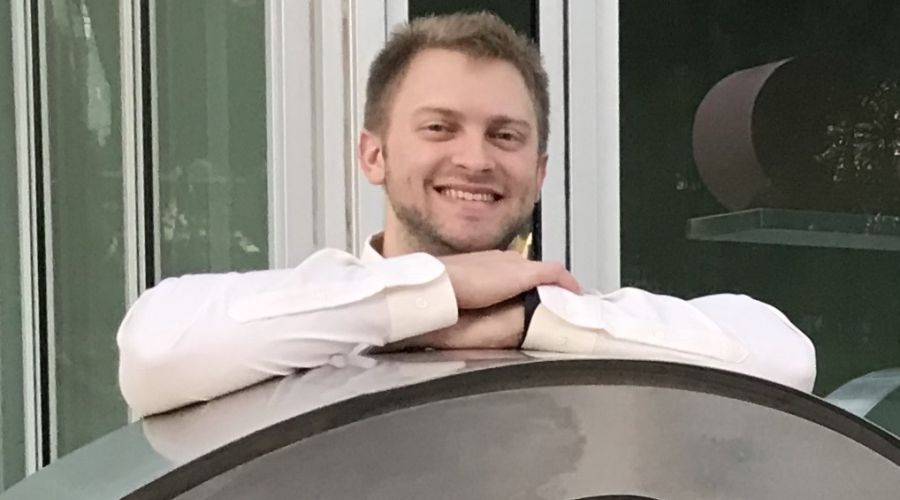
Stephen Gadomski is first author on a new study on the behaviour of endothelial cells.
A Gates Cambridge Scholar is first author on a study which sheds new light on the normal behavior of the cells that line blood vessels, called endothelial cells.
Stephen Gadomski [2019], who is doing a PhD in Haemotology, is lead author of the study published in Cell Reports.
He and colleagues examined the blood vessel system in the bone marrow and how it can regulate the blood cell formation process [haematopoiesis] during adult life. Using gene deletion strategies and specific mouse models, they found that the breakdown of the blood vessel system, specifically the bone marrow sinusoids [vascular channels] which are found in the centre of the bone marrow cavity, leads to a breakdown in blood cell production. That can result in anaemia and thrombocytopenia, a condition characterised by abnormally low levels of platelets in the blood.
Stephen and colleagues found that these haematological problems were the result of the abnormal behaviour of the haematopoietic stem cell in the bone marrow cavity which continuously replenishes blood cells during adult life. In particular they show how the breakdown of bone marrow sinusoids lead to stem cell migration and exhaustion.
They say: “These findings can be used to further study novel treatment strategies for diseases that originate from abnormal behaviour of the vasculature, specifically vasculitis [an inflammation of the blood vessels], retinopathy [damage to the retina of the eyes] and several types of cancers.”
Stephen is an MD/PhD candidate and is on the National Institutes of Health Oxford-Cambridge Scholars Programme.
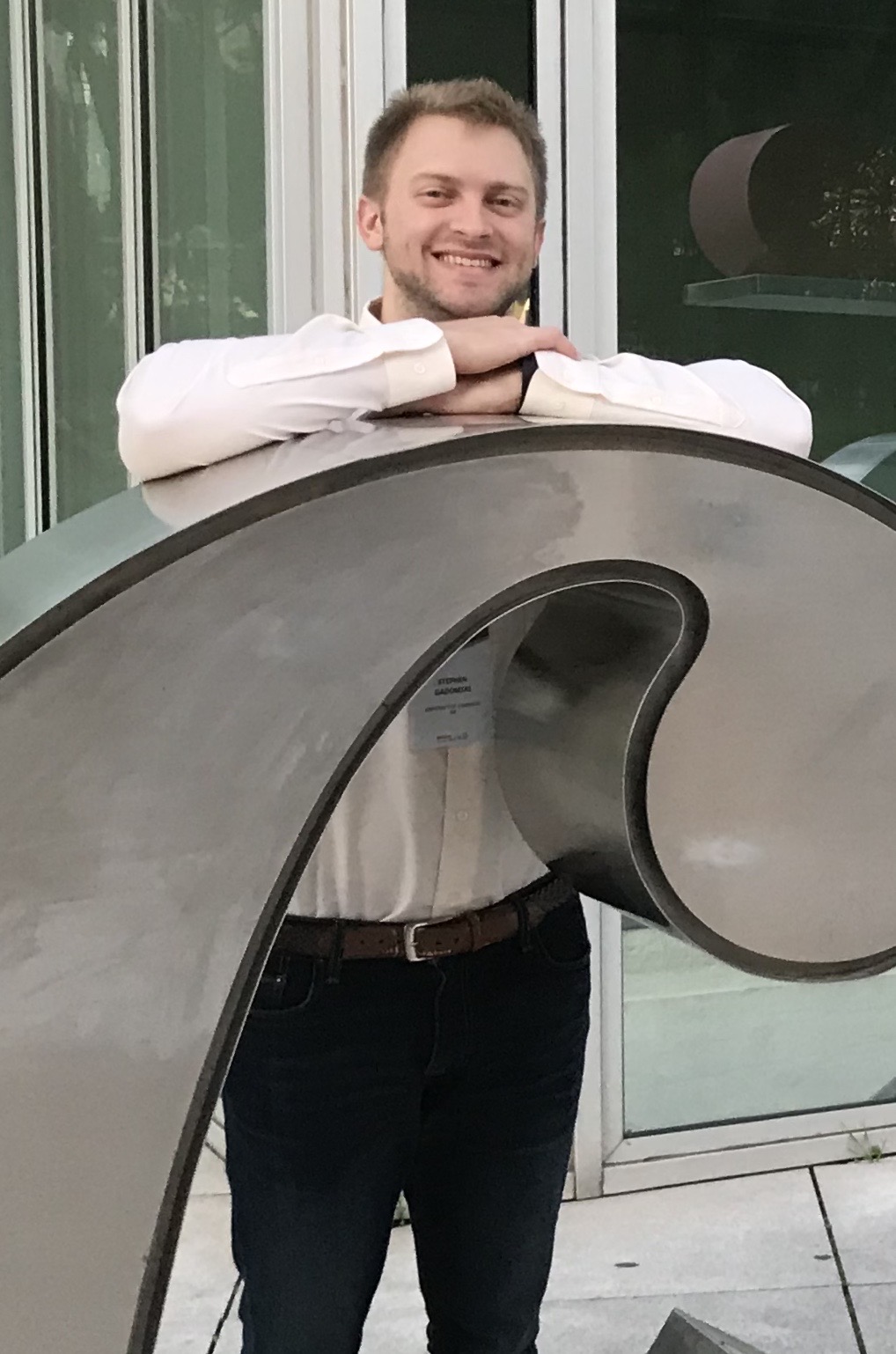
Stephen Gadomski
- Alumni
- United States
- 2019 PhD Haematology
- Girton College
My goal as an aspiring physician-scientist is to harness the advances of scientific research to prevent and treat human disease. As an undergraduate at the University of Scranton, I became fascinated with the human body and, in particular, the idea of manipulating tissue-resident stem cells to aid in organ regeneration. At the National Institutes of Health, I was able to investigate several regenerative processes in the bone marrow, including blood and vascular regeneration. During my PhD training, I plan to study a different population in the bone marrow—the skeletal stem cell. Through identification and characterization of the pure skeletal stem cell and its interaction with neighboring cell populations, my hope is to improve stem cell therapies for skeletal disease. Outside of the lab, I will also continue to compete in the sport of powerlifting, and to partner with healthcare teams that provide medical services to the poor and underserved. I am sincerely grateful to be part of the Gates Scholar community and to work with this unique and vibrant community to improve global society.
Previous Education
Medical University of South Carolina MD/PhDMedicine 2025
University of Scranton MD/PhD Medicine 2015