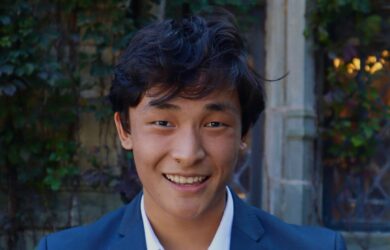






Tiancheng Hu contributes to comprehensive report on international AI safety.
With all the noise around AI, I hope this report provides policymakers, researchers, and the public with the reliable evidence they need to make more informed choices about how to develop and deploy this critical technology.
Professor Yoshua Bengio
A Gates Cambridge Scholar is a contributor to the new International AI Safety Report 2026, the most comprehensive evidence-based assessment of AI capabilities, emerging risks and safety measures to date.
Over 100 independent experts contributed to the Report, including Nobel laureates, Turing Award winners and Gates Cambridge Scholar Tiancheng Hu, along with an Expert Advisory Panel nominated by over 30 countries and international organisations, such as the European Union, OECD – OCDE, and United Nations. Hundreds of reviewers from industry, academia, and civil society helped ensure the report maintains technical precision and high evidentiary standards while remaining accessible to a general audience.
Professor Yoshua Bengio, a Turing Award winner from the University of Montreal who chaired the project, says AI poses an “evidence dilemma” to policymakers, meaning capabilities evolve quickly, but scientific evidence emerges far more slowly. “Acting too early risks entrenching ineffective policies, but waiting for strong evidence may leave society vulnerable to risks,” he says, adding: “With all the noise around AI, I hope this report provides policymakers, researchers, and the public with the reliable evidence they need to make more informed choices about how to develop and deploy this critical technology.”
Tiancheng [2022], who is doing his PhD on Computation, Cognition and Language, was the only University of Cambridge researcher in the Writing Group, co-authoring the “Current Capabilities” section, which assesses the state of AI systems today.
*You can read the full report here.
**Photo by Igor Omilaev on Unsplash