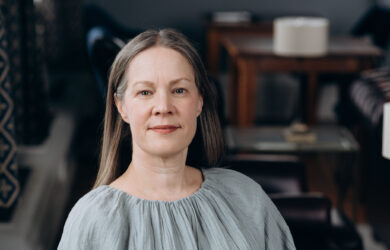


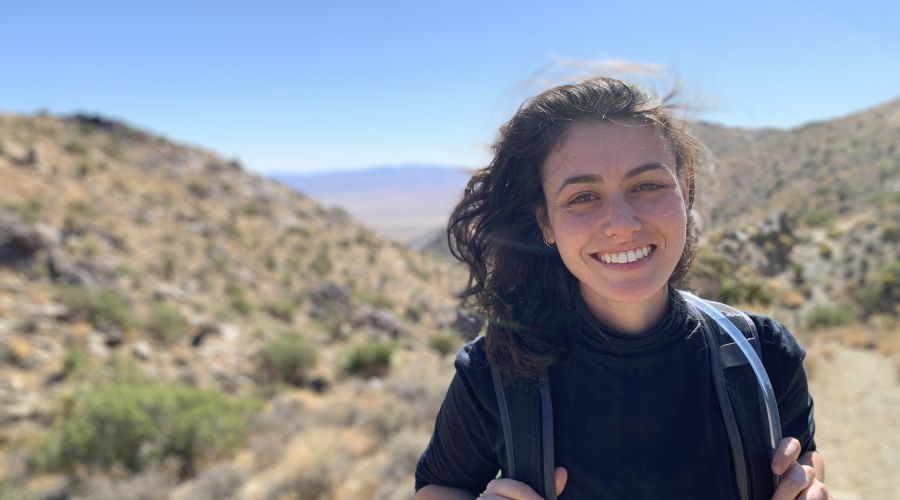
Gabriella Heller is named one of 22 new Schmidt Science Fellows.
This opportunity would not have been possible without the incredible support of the Gates Cambridge Scholarship.
Gabriella Heller
A Gates Cambridge Scholar has been selected for a prestigious science fellowship which brings some of the world’s most brilliant early career scientists together to tackle long-term societal challenges in an interdisciplinary way.
Gabriella Heller [2015], who has just completed her PhD in Chemistry, is one of 22 scientists selected as a 2020 Schmidt Science Fellow. The one-year postdoctoral programme, now in its third year, will enable her to explore new experimental techniques and provide training in leadership, policy and communication.
The programme is run by the philanthropic organisation Schmidt Futures, in partnership with the Rhodes Trust.
The Fellowship supports postdoctoral research placements at world-leading laboratories around the world. The placement must be in research in a significantly different discipline from the Fellow’s PhD, with the aim of exposing them to ideas and skills that will help them examine scientific problems and approaches from different perspectives and to accelerate discoveries.
Each Fellow receives a $100,000 stipend and is paired with an internationally accomplished and experienced senior scientist as a mentor. Schmidt Science Fellows attend Global Meetings as a group during their Fellowship Year at international science and innovation clusters. The aim is to enable them to engage with new concepts and renowned thought-leaders from science, business, policy and society.
Gabriella is a computational biologist who used her PhD to take high-powered computational approaches to probe how drugs interact with a class of disease-causing proteins in the body called disordered proteins. These proteins are challenging to target with drugs as they rapidly change their structure. As a Schmidt Science Fellow, Gabriella aims to pivot into experimental structural biology to uncover the rules of binding viral disordered proteins. She aims to work towards approaches for drug design that could offer entirely new opportunities for antiviral treatments.
Dr Megan Wheeler, Schmidt Science Fellows Executive Director, said: “Training the next generation of interdisciplinary scientist-leaders and helping them achieve their potential for the world has never felt more important than it does today.”
Gabriella said: “This opportunity would not have been possible without the incredible support of the Gates Cambridge Scholarship. I am so grateful.”

Gabriella Heller
- Alumni
- United States
- 2015 PhD Chemistry
- Churchill College
My research focuses on a class of proteins called intrinsically disordered proteins. Unlike most well-studied proteins, such as those responsible for immunological responses, catalysis, and DNA replication, disordered proteins have no rigid three-dimensional structure and are instead highly dynamic. Despite their high prevalence in diseases such as Alzheimer’s, cancer, and diabetes, these proteins receive little attention, likely a result of how difficult they are to observe experimentally. My doctoral research will combine experimental methods with high-powered modelling techniques to understand these proteins and their relation to disease. Originally from Chicago, I attended Pomona College, where I double majored in chemistry and mathematics. There, I studied topics ranging from protein-ligand binding to topological complexity in protein structures (such as knots and links). My love of working at the intersection of biochemistry, math, and physics led me to begin working with Professor Michele Vendruscolo at the University of Cambridge as a Churchill Scholar, where I am combining computational methods with experimental techniques to understand the interactions between disordered proteins and therapeutic drugs. I am keen to improve the ways in which biochemists obtain information about protein function and stability and am intrigued by the potential of such work to have direct implications on our understanding and treatment of disease.
Previous Education
Pomona College
University of Cambridge