

Ofir Hendel and Stella Nordhagen - Scholars from across cohorts - discuss food security and its impact on politics.
We need to build a system where it is not just about one thing failing. We need to find other alternatives to sourcing food. That requires more global cooperation, not less.
Stella Nordhagen
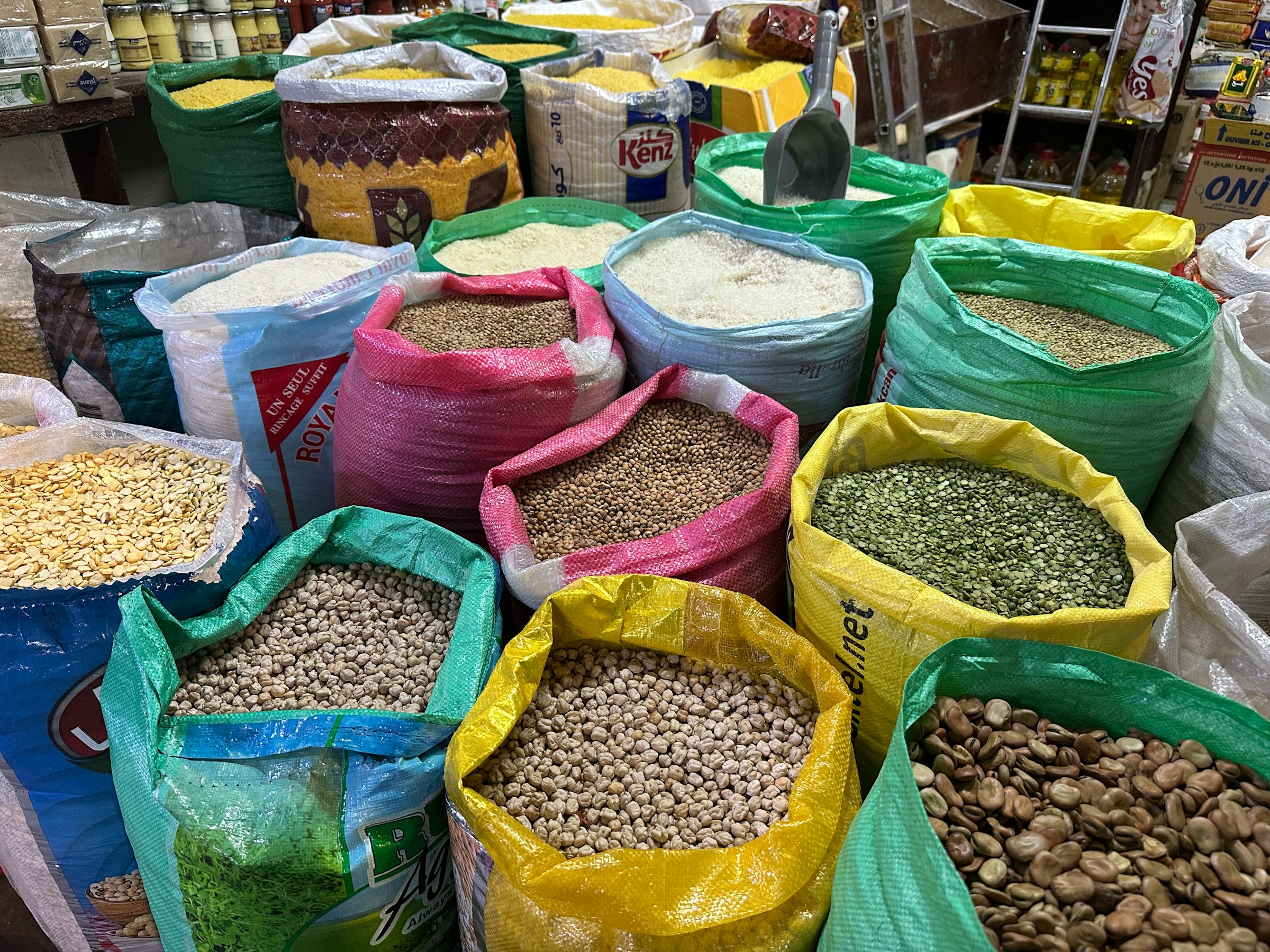
Food security has been much in the news in the wake of the Middle East and other conflicts as well as in light of the ongoing climate crisis. It’s an issue that spans multiple areas, from agriculture, climate change, energy, transport and diplomacy to politics.
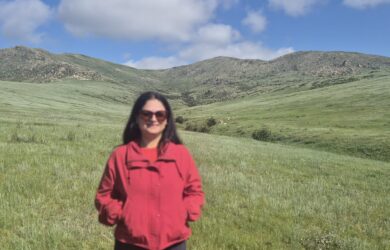
Stella Nordhagen [2008] is a Gates Cambridge Scholar who did her PhD on how farmers’ crop choices relate to the incidence of environmental shocks and is now working as a Research Lead for Food Environments and Supply Chains with the Global Alliance for Improved Nutrition (GAIN), where she oversees research and learning activities related to the food system.
Ofir Hendel [2025] is about to start her PhD in Economics where she intends to investigate how climate-driven food inflation could stall economic mobility for families and fuel political polarisation. She has just completed her MPhil in Economic Research for which she also received a Gates Cambridge Scholarship. Stella also got a Gates Cambridge Scholarship for both her MPhil and PhD.
The two Scholars came together to talk about their work, what motivates it and how food security needs a multi-pronged approach.
Taking a food system approach
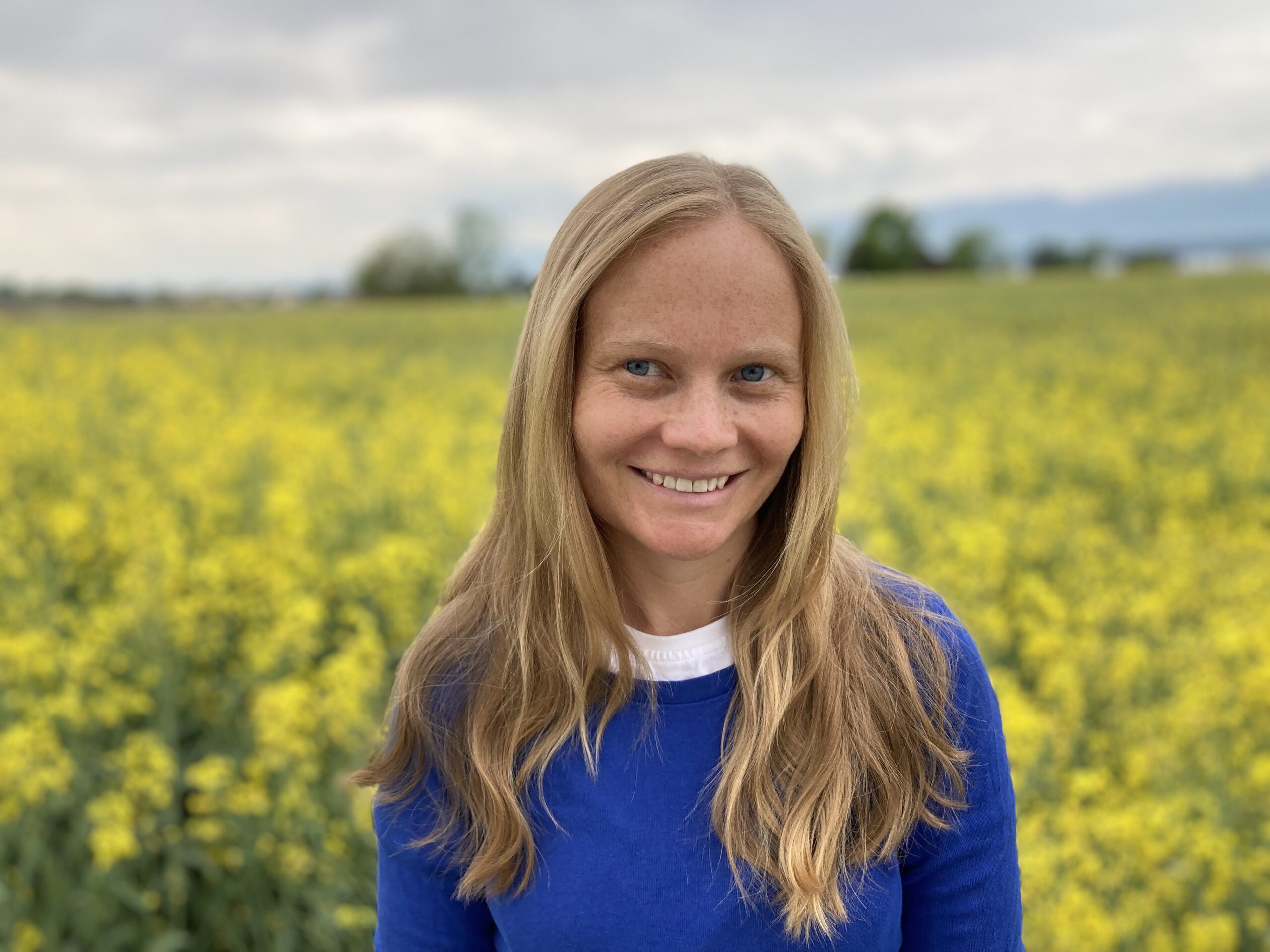
Stella Nordhagen
Stella says GAIN, which is particularly active in lower and middle income countries in Asia and Africa, works in three areas – to increase the availability, affordability and the quality of food through direct implementation of programmes; to contribute to policymaking on better nutrition and food security; and to provide data and evidence to support the first two areas.
She has been working there for around seven years and is motivated by the need to look at food security from a food system level, for instance, how people make choices about what they eat and how food gets to the places people are. For her, food security is fundamental to human health, wellbeing and dignity.
Ofir says her research is motivated by her previous work with Deloitte which explored how climate change is affecting their portfolio. She feels governments, particularly in higher income countries, are underestimating the impact of climate-driven food security problems, their contribution to food inflation, social inequality and people’s voting intentions. “At the end of the day, food price inflation is something people encounter every day,” she says.
Inflation
Stella agrees that food inflation is having an impact across economies, for instance, she says food price inflation in Nigeria is at 16% over the past year, with fuel inflation having a knock-on impact. She points to affordability issues, including around food, as being a driver of non-traditional candidates in recent US elections, and notes that Kenya has also seen popular protests about price hikes, which have turned violent in some cases.
Ofir says: “Generally inflation drives people towards populist parties.” This can in turn increase food inflation around the world, for instance, if nationalism leads to increased conflict, as in the Middle East. Stella speaks of the impact of the Iran war both on food transportation costs due to fuel inflation and on fertiliser availability, a subject which is making many worried about the long-term outlook for global food security.
She says having a globalised approach to food security spreads the risk. “We don’t notice until something happens to the system how we really are all connected,” she states, adding that the pendulum seems to swing between a globalist approach and a fear of being too dependent on others resulting, for example, in export bans. “The real issue is about resilience,” she says. “We need to build a system where it is not just about one thing failing. We need to find other alternatives to sourcing food. That requires more global cooperation, not less.”
Ofir agrees that international cooperation can lessen the impact when shocks hit. She cites India’s rice export ban of 2023, which caused price increases in global rice markets and disproportionately impacted low-income consumers in countries that are heavily dependent on rice imports.
How to build resilience
Stella says resilience can be built on several different levels, for instance, improving the national food system through investment in infrastructure, technology and other mechanisms that support resilience. At the community level, resilience can be built via income diversification and diversification of crops grown as well as by building social protection systems that offer a safety net to the most vulnerable. She points to some governments in LMICs which are using smart-tech social protection systems based on those who use pay-as-you-go mobiles to identify the households most at risk to economic and other shocks.

Ofir Hendel
Ofir says technical changes are quicker than legislative ones and that sudden inflation rises often take a while to be reflected in benefit or wage increases, as happened during Covid, resulting in people having to cut back on food and food quality. Stella mentions current discussions in the nutrition community about tying benefits to a basket of healthy food, not just to price inflation, in order to encourage better nutrition.
Climate change
The two Scholars turned specifically to climate change and food security. Stella spoke about how climate change is already causing food security problems in many countries. “Two decades ago we could talk about adapting to climate change as if it was coming soon, but now it is here and it is experienced every year. So we have to integrate resilience. We need to prepare for the reality of what is happening and our interventions in this area will overlap with interventions in other areas,” she says.
She adds that in the regions she works in there is a constant push and pull between the health and sustainability agenda and the economic agenda which foregrounds export and productivity. Boosting the economy can increase food security, she states, but this has to be done in an equitable way and designed into the system. Ofir thinks food security needs to move further up the political agenda, with diversification of crops becoming more important even if the crops used are not the cheapest to produce.
For Stella sustainability has to be at the heart of everything. Unsustainable processes can work in the short term when it comes to food security, she says, but that is just kicking the can down the road. “So many political decisions are short term and the incentives are short term. How do we build something for generations to come?” she asks, citing, by way of example, the cancellation of international disease monitoring and response programmes by President Trump’s administration.
Ofir thinks a huge shock could force action. Stella, however, is not optimistic that there will be big changes given the current geopolitical context and leadership. But she does point out beacons of hope, for instance, some countries in Europe trying to tackle greenhouse gas emissions in the food system. What’s more, policy papers increasingly mention climate change in relation to food and she says LMICs, who are experiencing the biggest impact on the ground – for example, food spoilage due to heat – are lobbying for it to get greater priority. And farms are taking action, for instance, installing solar-powered cooling rooms to store produce and reduce waste.
Ofir hopes increases in food prices in the wake of the Middle East conflict will push more people towards renewable energy as they see those who were early adopters saving money.
Green shoots of innovation
Stella is more cautious, saying it depends how long the crisis lasts. “If the crisis persists we may see a shift towards greener energy,” she says.
She is also not optimistic about food security in terms of humanitarian aid following the US-led cuts to aid programmes. Nevertheless, she is more optimistic in terms of the development outlook. “We are seeing more solutions developed at a local level and more innovation,” she states.
“I do most of my work in Africa and there are a lot of interesting things that small companies are doing to transform the food system in many different ways, for instance, allowing small farmers to rent a tractor for several hours so they don’t need to own it. They can share it instead with other farmers. That enables people to get into the mechanics of agriculture without needing to be rich to begin with. Good things are happening at the grassroots.”