






Meir Barth writes about his autoethnographic research on ultrabilitation: how effective therapy expands function through iterative experimentation and innovation.
Ultrabilitation does not absolve technoscience of its dangers, nor neglect the nightmares braided through its promises. But it offers a compass. It asks not whether enhancement is capitulation to ableism, nor whether restraint is capitulation to fear, but rather: Does this intervention enlarge the horizon of human possibility, or does it constrict it?
Meir Barth
The human endeavour is driven by dreams, for to dream is to exist boundlessly in ways both triumphant and terrible. So fundamental are dreams that, from first breath, we are encouraged to reach for them by nearly everyone and everything from the sage council of trusted mentors to the banal platitudes of book-shop posters. So many ardent and talented dreamers, I among them, come to Cambridge to chase their dreams. But I also came to Cambridge to learn to live with my dreams.
I dream vigorous dreams of movement and height – climbing mountains, performing parkour, running full-tilt down crowded city streets, covering hilly cross-country miles with the wind in my hair. I dream textured dreams of light, colour, noise and smell, of cranking my senses up to 11 on a whim, hushing them to a whisper as necessity dictates. I dream of having a reservoir of functional potential in terms of energy, time, endurance, attentional focus and so much more besides.
I dream all these dreams as a person with cerebral palsy, for whom it is sometimes a struggle to walk down a city block and for whom it is always a struggle to stand for more than 10 minutes uninterrupted. I dream them as someone whose sensitivity to sensory input can interrupt not only work, but the very stuff of life. Beneath the vigour and the texture of life, I dream that I never have to make one of the terrible ergonomic choices of prioritisation that define the “disability” experience. By ‘ergonomic’ I mean something broader than its usual sense: the allocation and expenditure of embodied resources – time, energy, attention, endurance – in the pursuit of living. The choice between the excitingly novel and the safe. The choice between the spontaneous and the practical. The choice between the satisfying and the necessary. Or between desire and obligation.
Dreams and nightmares
For years my dreams were encumbered by the weight of nightmares. I woke up worried my dreams spoke to an internalised ableism; whether in pursuing them I was rejecting some indispensable part of myself or turning traitor to the crip community, to my siblings in struggle.
As I dreamt, I felt the weight of the intrinsic entanglements between transhumanism and eugenics and that of the history of technoscientific progress as mixed blessings tight as terror on my chest.
Both the dream and nightmare have crystalised over the course of my PhD study. As I have pored over the proverbial stacks I have been reminded of the nightmarish injustice created when privilege and innovation are combined to exclude, incapacitate and even erase difference and the different. At the same time, I have been buoyed by the rising tide of thought, scholarship and regulation which seeks to direct and employ technoscientific progress – turbo-charged by AI – and emerging human enhancement and augmentation tools in biotechnology and adjacent fields in ways that are just, accountable and consistent with human flourishing.
As I have followed lines of inquiry – always striving to reconcile dream and nightmare – I have drawn on not only my research but also my personal experience both as a crip and as someone who has spent more time than is typical among world-class scientists, researchers, practitioners of medicine and therapists of all sorts. That is to say, with professionals belonging to what is increasingly coming to be construed within the social science of medicine as the rehabilitation sector.
I have had the good fortune to encounter rehabilitation professionals who have profoundly impacted my life, becoming some of my closest guides and partners in my own empowerment. These practitioners, regardless of their background and field of practice, had a core commonality. Their therapeutic practice broke down the line between the therapeutic and the educational, defining and measuring therapeutic efficacy and progress not in terms of restoration but instead in terms of evolution. Their practice was that of the expansion of human function – what I now know to be called ultrabilitation – and this has become the guiding thread of my doctoral work.
The fall
However, before crystalising these abstract currents into concrete scholarship came the fall. A literal fall. Getting up to answer the door my toe caught on the curled lip of a rug – a rug I had successfully navigated thousands of times before – and my knee erupted in pain. I spent 24 awful hours in the hospital and submitted myself to a barrage of diagnostic artillery – X-rays and MRIs and CAT scans and EMGs and physical therapy evaluations – to no diagnostic avail. My joint was unstable; no one knew why.
The why, however, was irrelevant to questions of function. Without some sort of drastic surgical intervention, I would have to radically rethink my mobility. Friends and mentors in the crip community counselled the latter course of action – rely on wheelchairs or more supportive walkers, they said; don’t put yourself through certain agony and risk the uncertain outcome of surgery, they said; it is not incumbent upon you to modify yourself to better conform with social expectations. Their advice resonated with me yet I did not want to surrender to the constraints following it would entail. I opted for surgery.
As I was not a good candidate for a knee replacement, questions like what type of intervention and performed by whom turned out to be rather tricky to answer. A long search led me to the office of Dr Nicholas Pascos, a man who I now know belongs to the group of ultrabilatative practitioners working to expand human function. Dr Pascos told me that he thought he could employ a cutting-edge joint reconstruction technique – one he invented and had never previously applied to a knee – if I successfully completed what he called pre-habilitation prior to surgery. Further, he told me that if we moved forward, I shouldn’t just assume that my previously existing state of function would be restored, but said that I would actually learn to walk differently and thereby gain function.
A light bulb clicked. The various and diverse moths of thought that had been fluttering around my research for years began to coalesce around it. Pioneering expansion of function through experimentation and pedagogy lay at the centre of the empowering medical and rehab interactions and interventions I had engaged in throughout my life. I had a research path.
This bulb in the dark didn’t calm my nightmares, however.
In the weeks leading up to my surgery I heard from a number of friends who expressed concerns that felt accusatory – how could I so casually submit myself to what looked like a transhumanist enterprise, nay experiment?! How could I let the side down?
The potential surgical intervention was also met with deep scepticism by Dr Frankl, my long-time physiatrist and a physician whom I hold in the highest possible esteem. He cautioned me that surgery in cases like mine seldom yields net functional gain. He counselled caution, a course of physical therapy, warning that trauma and downtime lower strength thresholds. “Ask a barber if you need a haircut,” he offered as a parting shot – surgeons see surgical solutions.
The night after my meeting with Dr Frankl I lay awake, my course obscured by the competing currents of an emotional and metaphysical maelstrom sucking me down into the depths of despair. The cautions and criticisms of those dear to me echoed across the turbulent waters of my troubled sleep, churning fear and shame up from the murky muck of memory. I tossed and turned, wrestling with my nightmares.
I grappled with guilt and fear; tussled with the potential for technoscience to perpetuate injustice; sparred with privilege and power. As I wrestled, I felt my self – slowly at first – disentangle from the powerful grip of my knotty nightmares. I slipped loose from the thought that I was somehow betraying my principles – I have long been empowered, not patronised, by my interactions with pioneering rehab practitioners. I slipped loose from the thought that undergoing surgery was a form of internalised oppression – the proposed procedure would help me meet my expectations and goals for myself; it was not a normative imposition. Finally, with swift clarity, I pinned my nightmares down – I am exercising my free will, not abdicating it in the face of hegemonic medical authority. I understand the risks and I accept them. No evolution is ever risk free.
I awoke the following morning resolved to carry forward with Dr Pascos’s innovative intervention. I had wrestled with my nightmares and I had won. I had won the right to set my sail toward capacity expansion with clear eyes and a clean conscience. And, I had begun to learn to live with my dreams.
Living my research
I had also begun to bring coherence to the central idea of my research – effective therapy expands function through iterative experimentation and innovation. In a bid to make lemonade from lemons I decided to test this idea against the habilitative intervention I was about to undergo. The intervention began with a course of physical training. The process should have been familiar – I have worked with therapists my whole life – but this intervention felt unprecedented.
I had never before trained for a surgery, learning to preserve strength I would inevitably lose during the long recovery. And from the outset, no-one could tell me what, precisely, we were working toward. There was a broad aim – achieving a stable, safe gait – but no-one could describe what that gait would look like, what devices I might use, or how long the journey would take.
Thus, I decided to write an autoethnography, a research method that allows me to use my own experience to study the trends I had noticed in the rehabilitation field up close. This allows the researcher, in this case, me, to take advantage of their unique access and position within a research project to examine a phenomenon in ways that are concrete, minute and personal, and which may not have been accessible via other methods. Autoethnography is, of course, not without its weaknesses – it is poorly suited to large-scope studies of systems. This is why my research incorporates other sociological research methodologies, such as discourse and network analyses. (Here, before returning to the narrative, I must tip my cap to Tom Shakespeare, an academic mentor of mine who brought my attention to the World Rehabilitation Alliance, an organisation ripe for sociological analyses, which features prominently in this second category of research).
Blurring the lines
Three institutions began collaborating on my care, each practitioner chosen for their willingness to navigate uncertainty. When the “big data” gait-analysis system failed to recognise my movement as human, my therapist simply shrugged and continued. When months after surgery my joint was stable, my strength improved and my motor control sharpened, but my balance was still insufficient for unaided indoor walking, no-one felt this was a failure. It simply meant that a long-term secondary walker remained part of my functional landscape. And yet the absence of crisp, measurable goals, which had always been foundational in my past therapeutic experiences, troubled me.
As I lived through this, the experience felt both strange and entirely familiar. In the abstract, Western biomedicine insists on clear, predefined therapeutic goals – an ethical legacy of the Nuremberg Code, a boundary meant to separate treatment from experimentation. But in practice, almost all effective therapy involves uncertainty, iteration, responsiveness. The rehab centre itself embodied this truth: one floor is labelled “research”; the other “treatment”, but both are filled with the same equipment, follow the same methods and adopt the same spirit of exploration. What was unusual was not that these practitioners blurred the line between therapy and inquiry, but that they did so openly, deliberately and as a matter of professional identity.
My fieldwork later confirmed the pattern I had been living. Many disability-studies frameworks revolve around competing models – medical, social, biopsychosocial – each insisting on a primary locus of disability within the individual, the environment or society. But the practitioners who worked with me simply didn’t treat these models as serious constraints. Not because they were naïve, but because such categorical distinctions were irrelevant to the work of expanding human function – the very sort of ultrabilitative practice that shapes my research.
They treated me not as a passive patient but as a partner, engaging my goals, my contexts, my whole lifeworld. They understood each facet of disability as a blend of biological, psychological and social phenomena – fluid, shifting, morphing across situations. Sometimes the right intervention was environmental; sometimes it required reshaping my body, my skills, my habits. What mattered was what I wanted to accomplish and what configuration of self, tool and world would best get me there.
Their refusal to treat any one version of my body as sacrosanct didn’t reflect a disregard for ableism or ethics. Instead, it reflected a practical, humane commitment to helping me pursue my aims. They weighed costs, certainly, but they did not dismiss options simply because they involved changing me. And I did not need to ask them to state these commitments explicitly – their priorities emerged naturally in every conversation, every adjustment, every choice we made together.
Innovation
What struck me, living inside this unfolding inquiry, was that this collaborative, iterative and personalised approach was, by nature, a type of experimentation. However, what I was witnessing was not a rejection or abdication of ethics, but a reorientation of ethical practice in innovation, grounded in accompaniment rather than absolutes. The partitioners were not throwing a lifeline to rescue me from turbulent seas nor were they bending me to fit a mould of societally constructed expectation. Rather, they were helping me tune the instrument of my being so that its harmonies could meet my aims. Their intervention was based in a tacit yet clear understanding that ability and disability do not live in bones or air, but in the dynamic resonance between function and fit, between what one can do and what the world allows one to do.
And slowly, as if waking from a long, half-remembered dream, I began to hear that resonance for myself. It startled me. I had spent so many years trying to decide whether the “locus” of my disability was within me or outside me – as if I were adjudicating the property lines of some metaphysical dispute. But watching these practitioners work, I realised how misplaced that entire debate had been. Asking whether disability lives in the body or the environment was like asking whether the dissonance of a tritone belongs to the lower note or the upper. Neither, of course. The dissonance lives in the interval – in the relation – not the components.
The dissonance I was experiencing, my mobility struggles, didn’t exist in my knee nor did it exist in the built environment around me. Rather, my struggles existed in the feedback loop between my body and my environment.
A revolutionary realisation
Another bulb clicked. My experience illuminated the ways in which ability and disability were not opposing poles but co-constitutive forces in the evolving ecology of one’s existence. I saw that the rigid binaries that structure so much disability discourse failed to capture the dynamic lives they sought to describe. Ability and disability are not fixed characteristics of a person’s functional landscape – not lightning-scorched trees or energetic rapids and cascades. No, ability and disability are the meteorological conditions. They shift and, in shifting, prepare the landscape for certain abilities to flourish (while making it less hospitable to others). The question was never “Where is the problem?” but rather “How might we redraw the conditions under which ability could take root?” And that realisation, though simple, was quietly revolutionary.
For these practitioners, the aim was never restoration; it was reconfiguration. They were not architects rebuilding from an old set of blueprints, but gardeners cultivating new growth. My body-mind was not a broken structure to be repaired, but a biome – living, relational, emergent.
In their hands, therapy became inquiry; inquiry became collaboration; collaboration became a shared journey into new ways of being.
I had not known, when I began this work, that such practitioners existed in meaningful numbers. But once I started naming what I was seeing – once I began tracing the subtle signatures of their practice – I found them everywhere. In physical therapy suites and occupational therapy labs; in gait clinics and speech pathology offices; in psychiatry consult rooms and adaptive technology workshops. Their methods differed, their languages varied, but the orientation was unmistakable: they approached human function as something malleable, relational and potentially expansive.
Still, the shape of this emerging dynamic of practice eluded me. I could see the outline, the contours, the similarities, the patterns, the recurrent refusal to prioritise restoration over evolution, this orientation toward possibility rather than prohibition. I needed language to braid the currents I could see into a single tide.
The missing chord
Then, one evening, while trawling through literature adjacent to my sociological research, I stumbled upon a special issue invoking a new term: ultrabilitation. The word struck my ear like a bell, resonant with meanings I had been circling for years without being able to capture them. “Beyond habilitation”, the authors wrote; “beyond the fixed”. A concept meant to describe the pursuit of fitness not as return but as expansion, defined not by the separation of function and fit, but by their intersection. This is about moving ‘beyond the fixed’ on multiple levels (beyond the mirror repair, but also beyond the idea of the fixed as in fixed in place, pre-assumed and pre-determined).
Reading those pages, I felt as though I had found the missing chord. These scholars had theorised what I had lived. They proposed the term lightly, almost hesitantly, acknowledging its embryonic status and explicitly asking for empirical substantiation. What they needed – what they said outright that they lacked – was precisely what I had gathered. Not prevalence data, not adoption curves, not grand sociological mapping, but something far simpler: evidence that ultrabilitation existed at all in real clinical practice.
I realised then that I had, quite unintentionally, become their answer.
The orientation I had observed – the one that had shaped my care, stabilised my joint and rewritten my understanding of ability – was the very thing they hypothesised. The practitioners I had worked with were not outliers, but early exemplars of a broader pattern. And so the term “ultrabilitation” offered as a theoretical seed, became the trellis upon which my own research could grow.
I adopted it not because I wished to coin a jargon, nor because new words are fashionable, but because sometimes clarity demands language where none yet exists. Without naming this pattern, I could not describe it; without describing it, I could not study it; without studying it, I could not help make space for practitioners and people with disabilities to recognise themselves. A name can be many things – a tool, a bridge, a flare sent up to signal that others are not alone in what they perceive. This term, I believed, could serve all three purposes.
Voxium
And then, unexpectedly, almost a year after returning to Cambridge, I found myself living through a second wave of autoethnographic data collection – not in a clinic this time, but in my own study. Though my joint had healed, and my function had improved, I found myself unable to write with the autonomy my dissertation demanded. Cambridge offered support – scribes, staff hours, structured assistance – but none of it solved the core problem: my mind needed more bandwidth than my body could reliably deliver.
And then the summer of 2025 arrived, and with it the sudden renaissance of vibe coding. Everywhere, people were using it to build tools that scaffolded their creativity in ways that were previously unimaginable. I watched this wave cresting toward me and realised, with a familiar mixture of dread and exhilaration, that I could ride it. I could build the tool I needed.
It took months – months of false starts, labyrinthine detours, and learning curves that were as steep as cliffs. It was only with the advent of the GPT-5 generation of models that the last pieces fell into place. But eventually, improbably, triumphantly, I built Voxium, the system through which I now write these words. It expanded my function overnight, as suddenly as the rug had once stolen it.
Yet gaining function was not the same as gaining ability. In fact, I quickly discovered that my new functional potential outpaced the fitness of my surrounding skills and practices. I could dictate thousands of words, but I lacked the editorial fluency to shape them effectively; I could navigate reference managers for the first time, but my learning curve was decades delayed. It was as if someone had given me wings before I had learned how to balance with them.
And that experience – of sudden expansion, of lagging skills, of the asymmetry between capacity and competence – revealed something I had long suspected, but never seen so clearly: society is exquisitely prepared for sudden loss of function, but catastrophically unprepared for sudden gain. We have infrastructures for rehabilitation after injury, but almost none for habilitation after augmentation. We treat improvement as something that unfolds gradually, linearly, through education alone – as though evolution itself were always gentle.
But evolution is rarely gentle. Function flowers and withers; fitness expands and contracts; dissonance can emerge from abundance as easily as from lack. Ultrabilitation recognises this. It offers not a roadmap but a methodology: iterative inquiry, experimental adjustment, ethical attunement, and above all, partnership with the individual’s aims.
And here, finally, is where my dreams return – not as spectres of betrayal but as navigational stars. Ultrabilitation does not absolve technoscience of its dangers, nor neglect the nightmares braided through its promises. But it offers a compass. It asks not whether enhancement is capitulation to ableism, nor whether restraint is capitulation to fear, but rather: Does this intervention enlarge the horizon of human possibility, or does it constrict it? The answer will never be simple. It will never be final. But it is a place to begin – a way to steer the vessel of human becoming toward open water rather than the jagged shores of imposed perfection.
And perhaps, if we are careful, if we are courageous, if we are willing to dream with clear eyes instead of closed ones, it is a way to ride the coming waves rather than be crushed beneath them.
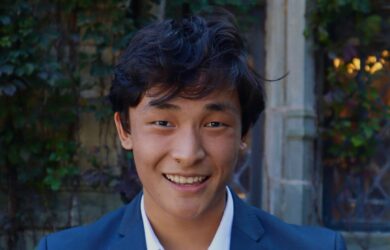
*Meir Barth [2020] is a Gates Cambridge Scholar doing a PhD in Sociology. The photo at the top was created by Meir.