

Alexandra Mannerings on preventing the next Ebola outbreak.
Supporting development policies that move people away from risky behaviours like bushmeat hunting while reducing poverty and improving nutrition could do far more to reduce future zoonotic outbreaks of all kinds than could any single vaccine.
Alexandra Mannerings
Preventing the next major epidemic won’t be easy. But if social, veterinary, biological, and medical scientists work together, we’re much more likely to succeed.
The latest Ebola epidemic in West Africa has killed almost 8,000 people. The fact that the virus originated in bats is powerful evidence that zoonoses (pathogens that jump between animals and humans) pose one of the greatest public health threats worldwide.
Dr Francis Collins, Director of NIH, recently claimed that “if we had not gone through our 10-year slide in research support, we probably would have had a vaccine in time for this [Ebola outbreak].” Of course, all that can be done to control this deadly Ebola outbreak should be done.
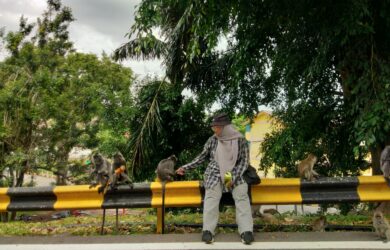
But one problem with Dr. Collins’ comment is that we cannot know until after the fact which zoonosis will lead to the next outbreak. For example, in the 40 years preceding the most recent outbreak, Ebola has caused only about 1600 deaths; twice that number die each year of another African haemorrhagic fever, Lassa fever (for which there is also no vaccine). Because they mutate and spill over from a vast number of wild and domestic animals, particularly those that live near humans, zoonoses present a growing threat as human development in volatile areas continues.
The driving factors behind emergence are thus only partially biological, making many of these epidemics unpredictable from medical research alone. Instead, tackling zoonoses requires understanding the political, social, and behavioural context surrounding outbreaks, and the inextricable links among animal, human, and environmental health. Social scientists are just as vital in this battle as natural scientists. The first responders from the CDC in March focussed only on medicine.
They fatally underestimated the role burial traditions would play in spreading the disease as well as the depth of distrust of foreigners that existed, keeping patients away from aid workers. Veterinarians, farmers, and ecologists – groups with which doctors are unaccustomed to collaborating – could provide rapid detection of new outbreaks at the forefront of the animal-human interface, rather than waiting until an outbreak is in full swing. Supporting development policies that move people away from risky behaviours like bushmeat hunting while reducing poverty and improving nutrition could do far more to reduce future zoonotic outbreaks of all kinds than could any single vaccine.
The biggest successes against Ebola, and the pathogens that will undoubtedly follow, can only come from social, veterinary, biological, and medical sciences collaborating fully. As Helen Keller said, “Alone, we can do so little. Together we can do so much.”
*Biography: Having had to move on from chasing bats, livestock and antelope, Alexandra Mannerings now pursues her passion for people’s wellbeing and public health as a healthcare research analyst for the Colorado Hospital Association in the United States. This article was written for the latest edition of The Gates Scholar magazine.