





Impact in Outer Space


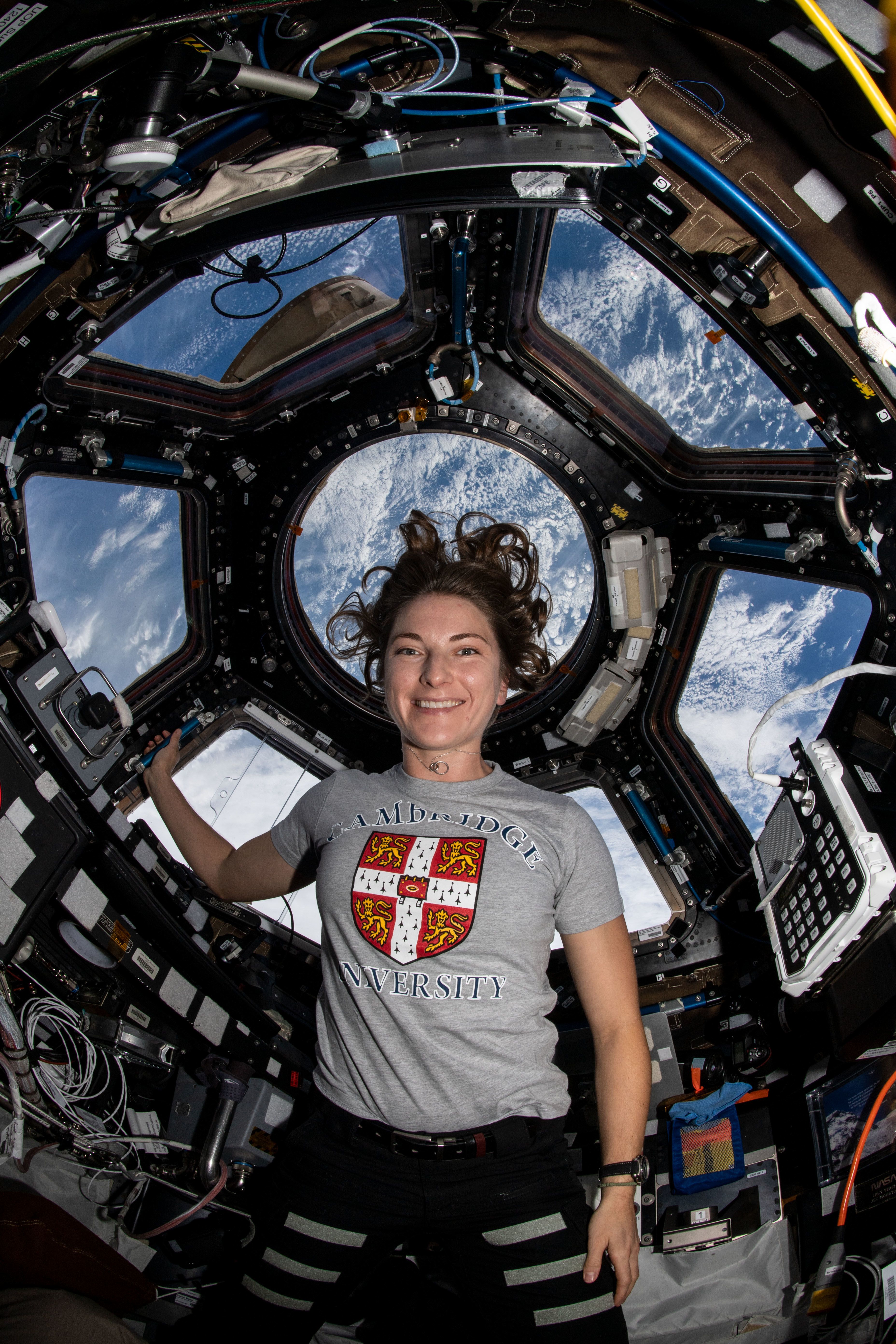

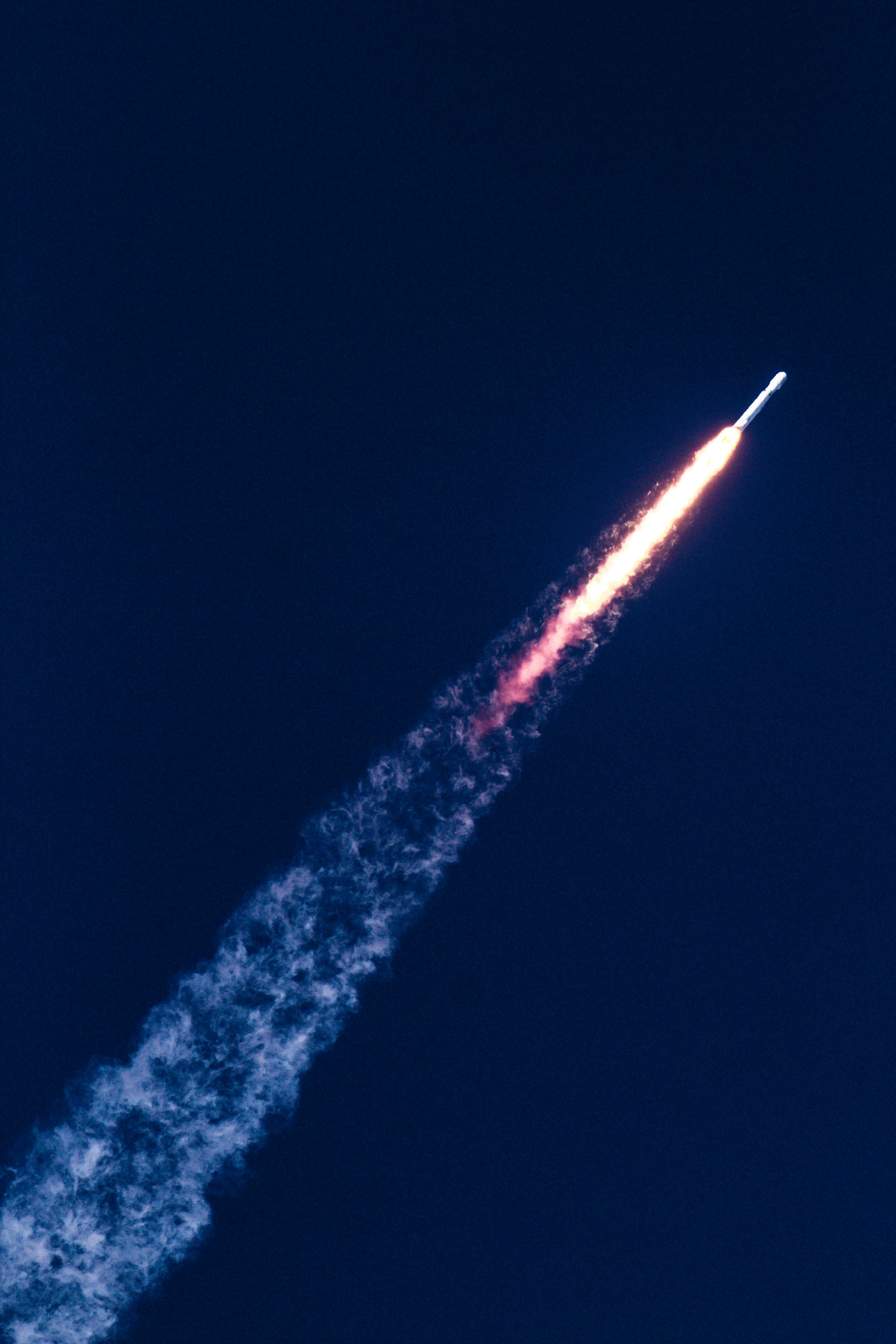

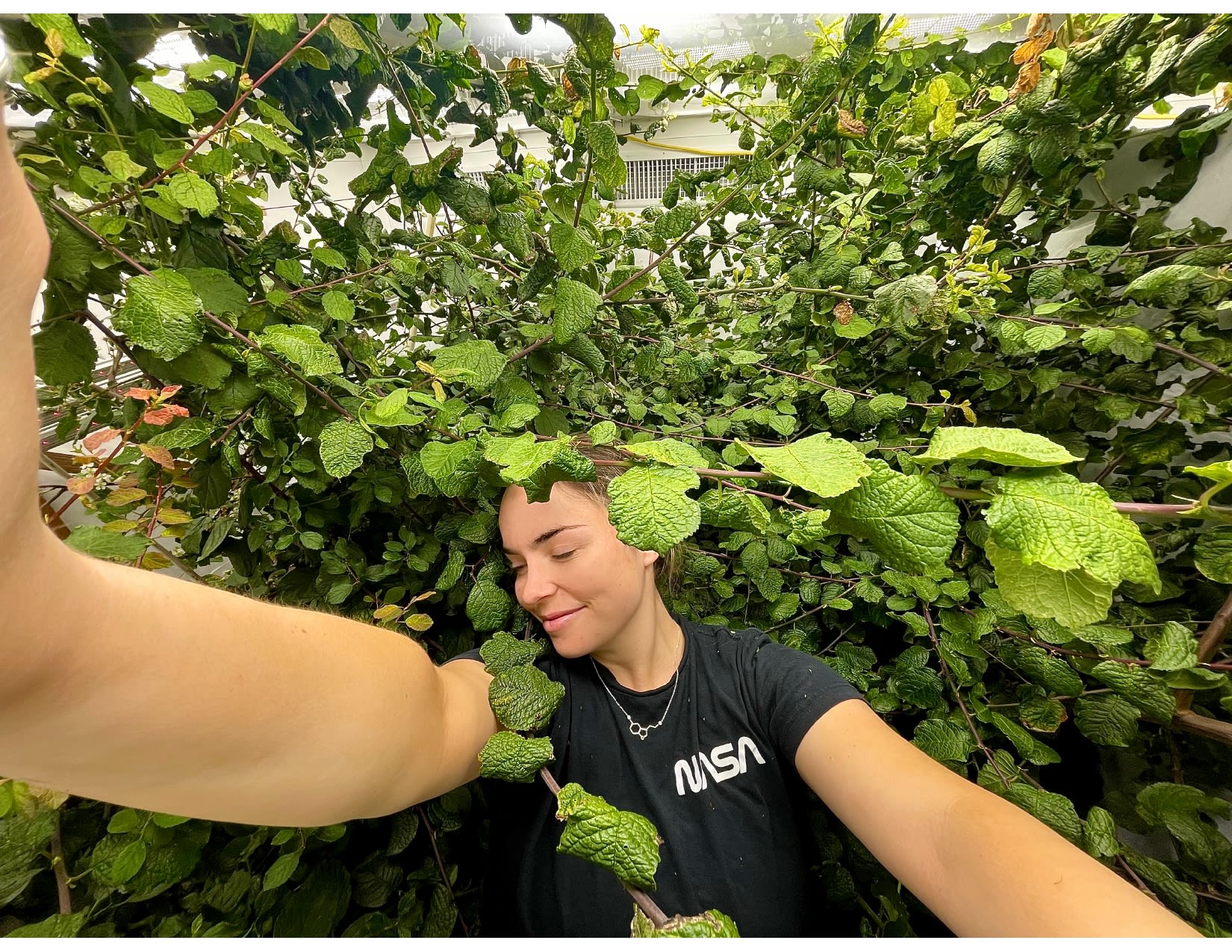
While only one Gates Cambridge Scholar has been into space - NASA astronaut Kayla Barron [2010], several are working on space policy or have pushed the boundaries of research beyond Earth.
Those working on space policy include Christian Boehm [2013] who was recently appointed Germany's Attaché on Technology and Space to the European Union. His role will focus on negotiating the EU Space Act on behalf of Germany. This is the first unified legal framework governing space activities in the EU.
Other Scholars have been working on space programmes, including Pradipta Biswas [2006], Associate Professor at the Department of Design and Manufacturing at the Indian Institute of Science, who has been working on assessing the impact of microgravity on astronauts’ wellbeing as part of the Indian space programme.
Meanwhile, Annie Shelton is doing a PhD in Plant Sciences on how to build resilient food systems in extreme environments that can enable people to thrive both on Earth and in space. Annie [2025] has worked on the Crop Production Team at NASA Kennedy Space Centre as both an intern and a contracted scientist.
When it comes to Astronomy, however, Gates Cambridge Scholars have studied everything from the recent history of space research to the early galaxies and exo-planets, adding vital new knowledge to our understanding of our place in the universe.
History

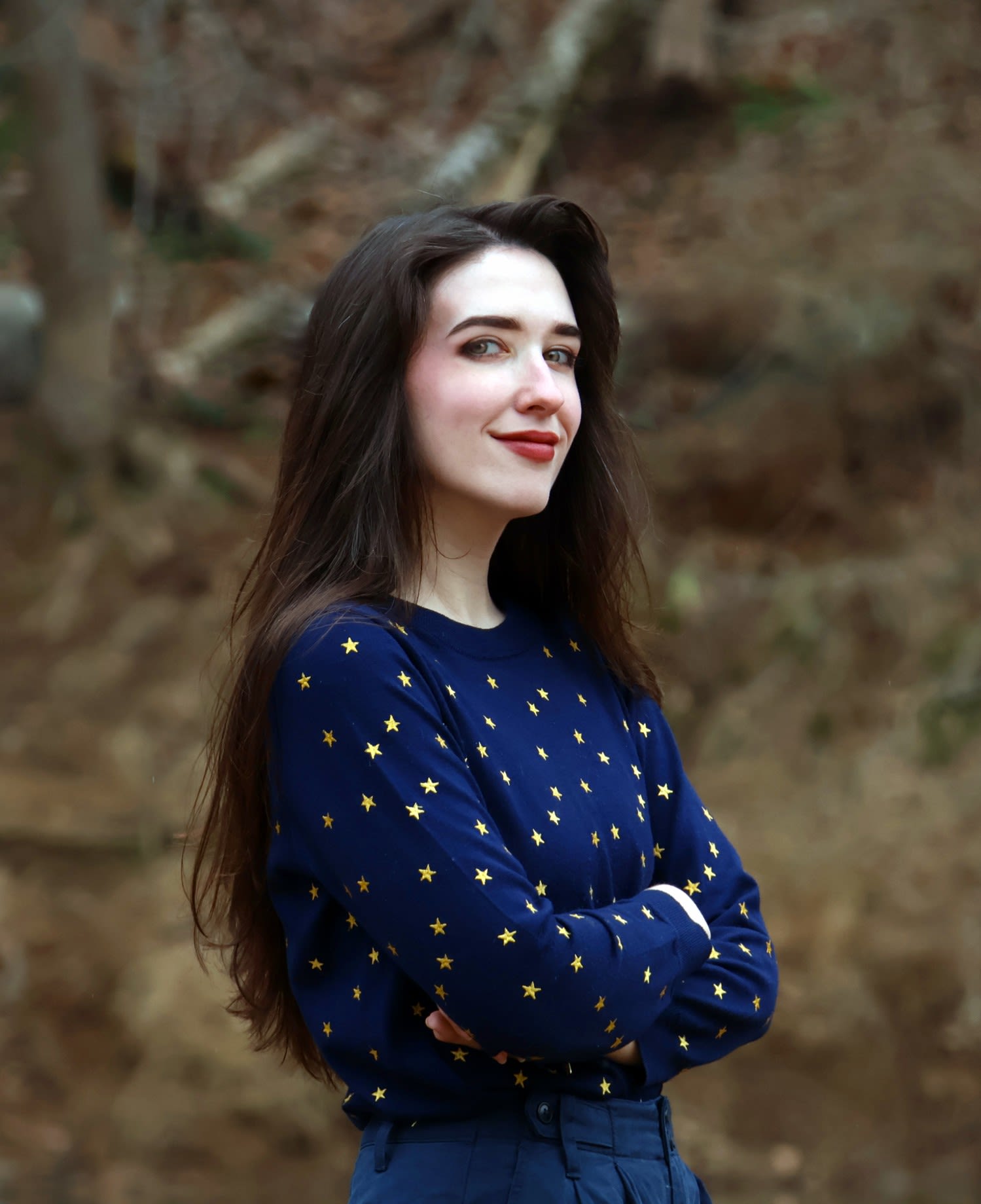
Rebecca Charbonneau [2018] is a historian of science at the American Institute of Physics, where she leads the Institute’s astrophysics initiatives, including a major project documenting the history of exoplanet research.
She also serves as an Adjunct Assistant Scientist at the National Radio Astronomy Observatory and as a Research Fellow at the SETI Institute’s newly launched Discovery and Futures Laboratory, where she studies the history of post-detection and discovery in the search for extraterrestrial life and other worlds.
Rebecca Charbonneau [2018] is a historian of science at the American Institute of Physics, where she leads the Institute’s astrophysics initiatives, including a major project documenting the history of exoplanet research.
She also serves as an Adjunct Assistant Scientist at the National Radio Astronomy Observatory and as a Research Fellow at the SETI Institute’s newly launched Discovery and Futures Laboratory, where she studies the history of post-detection and discovery in the search for extraterrestrial life and other worlds.

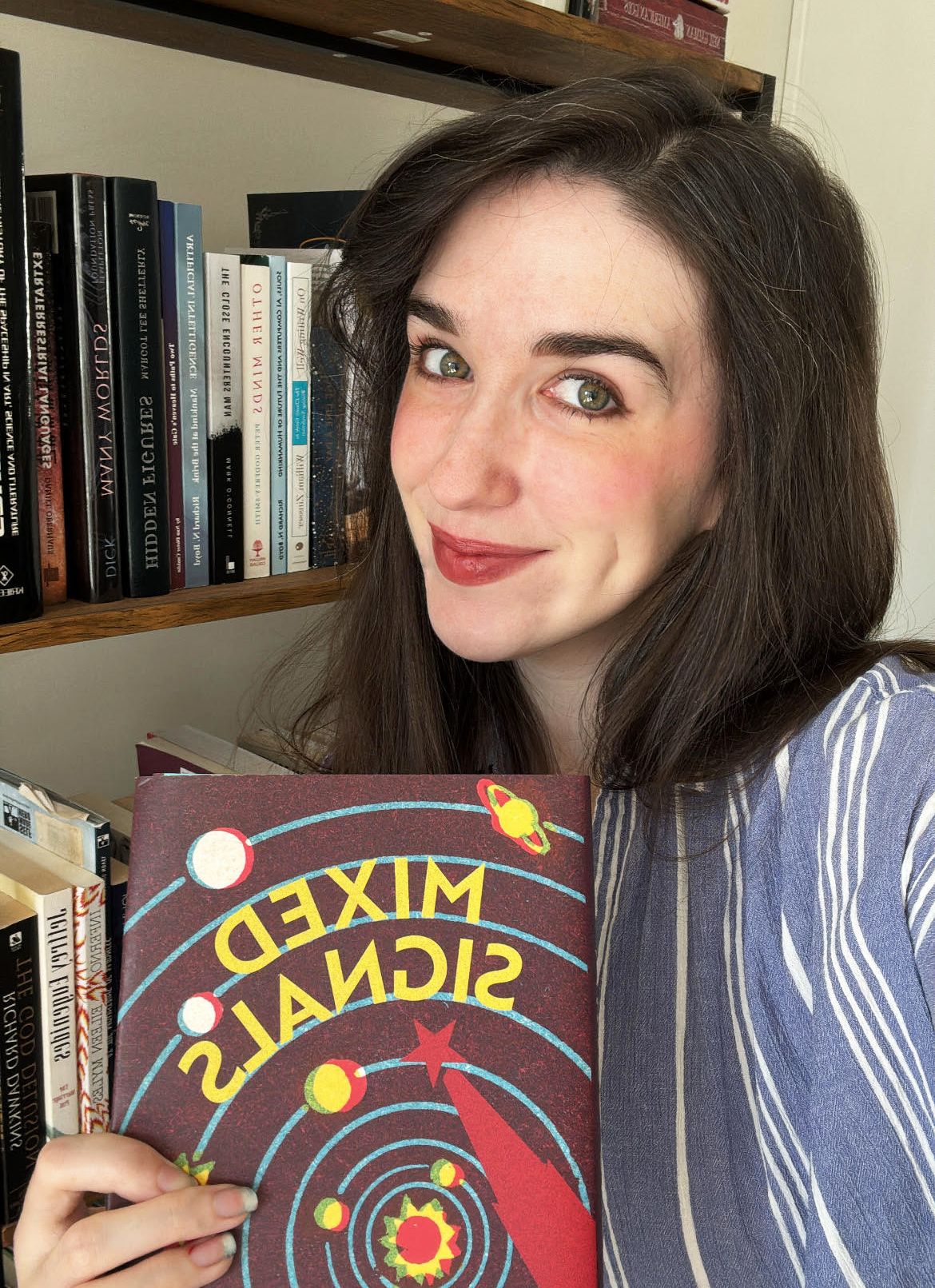

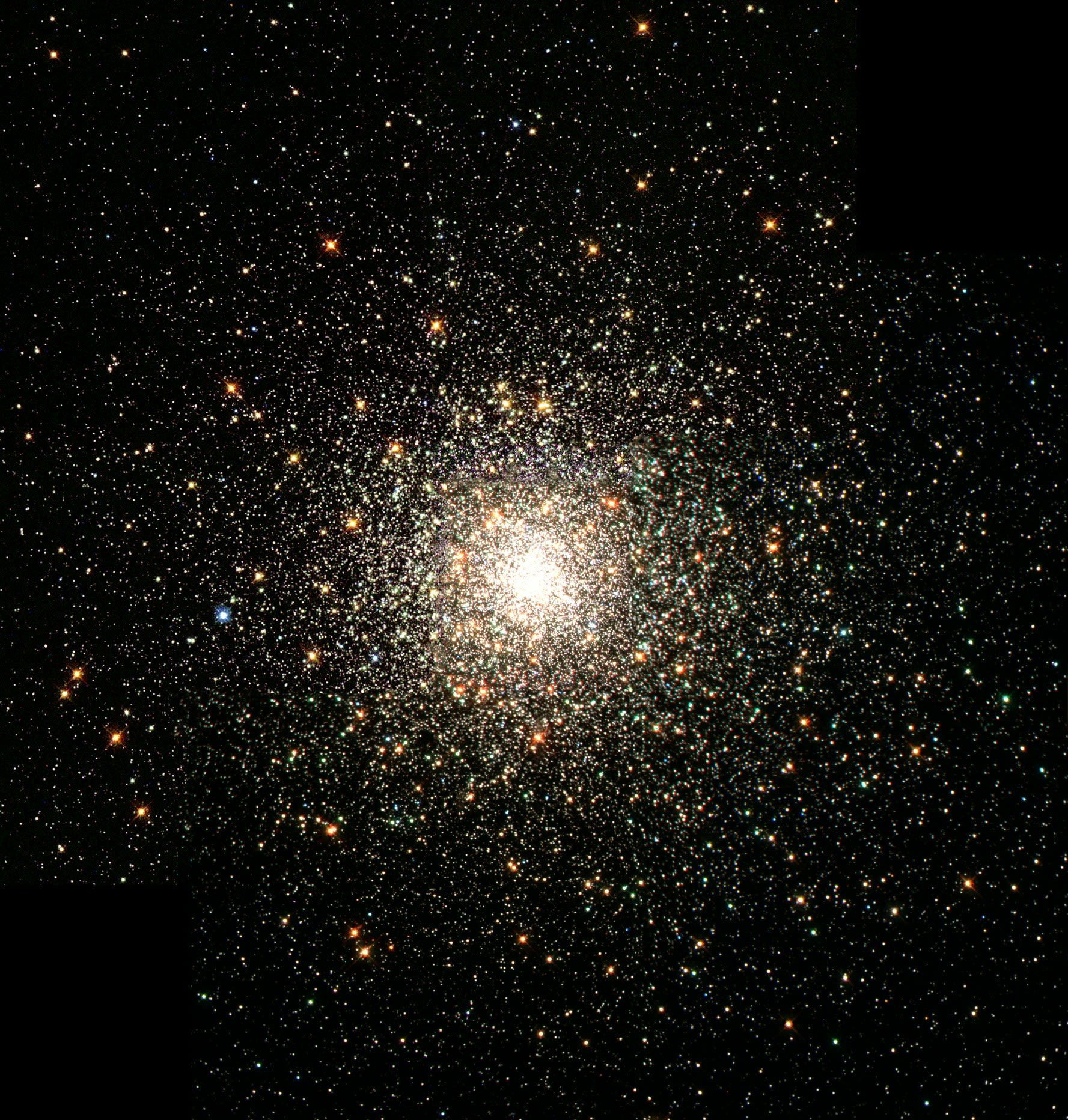
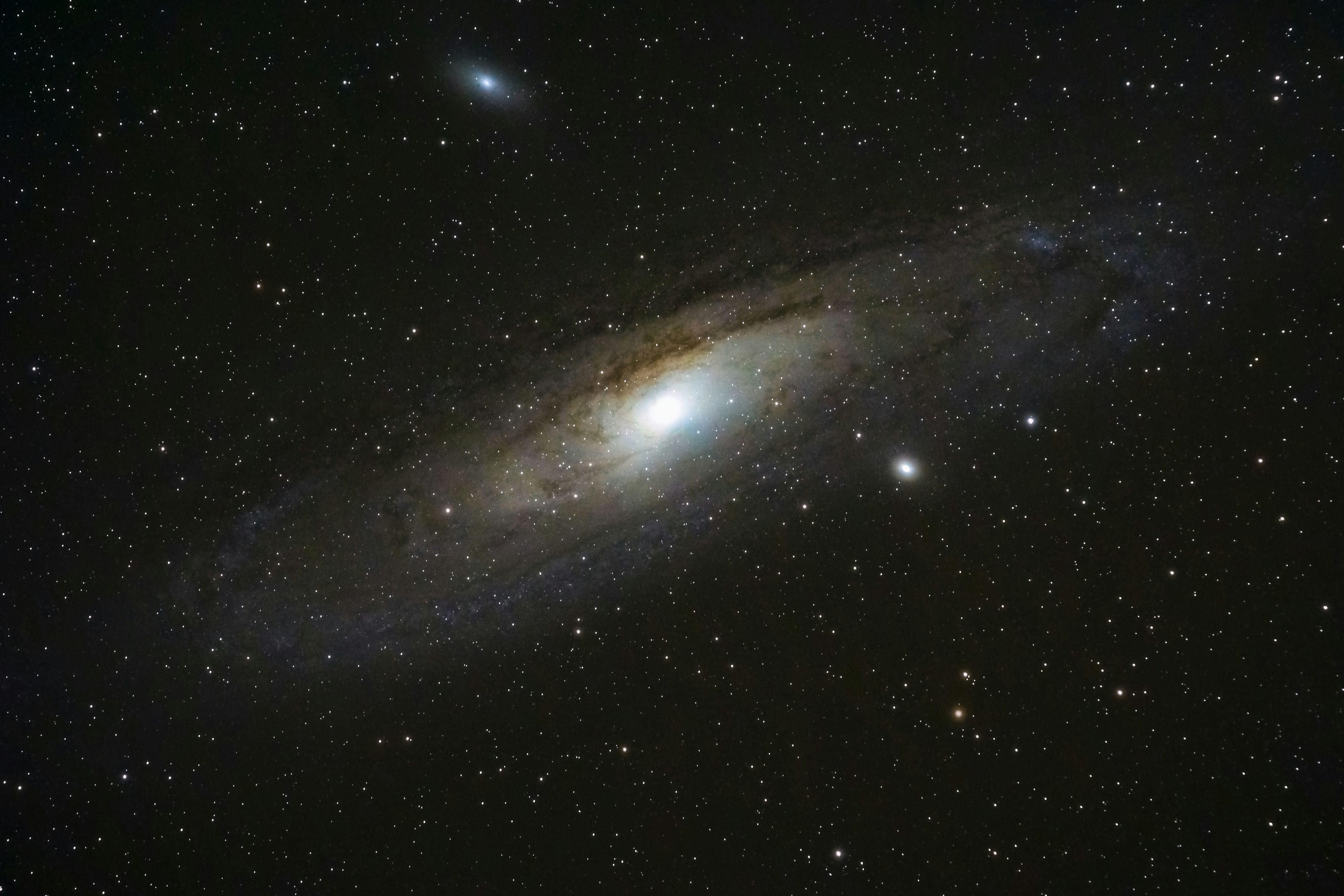
A close-up photo of the bright center of a star cluster. Photo by NASA on Unsplash
A close-up photo of the bright center of a star cluster. Photo by NASA on Unsplash
Early galaxies
Twenty Scholars have studied for MPhils or PhDs in Astronomy over the last 25 years. Many are multi-award or fellowship-winning. Here is a selection of some of the research they have produced, beginning with those who focus on the origins of the universe.

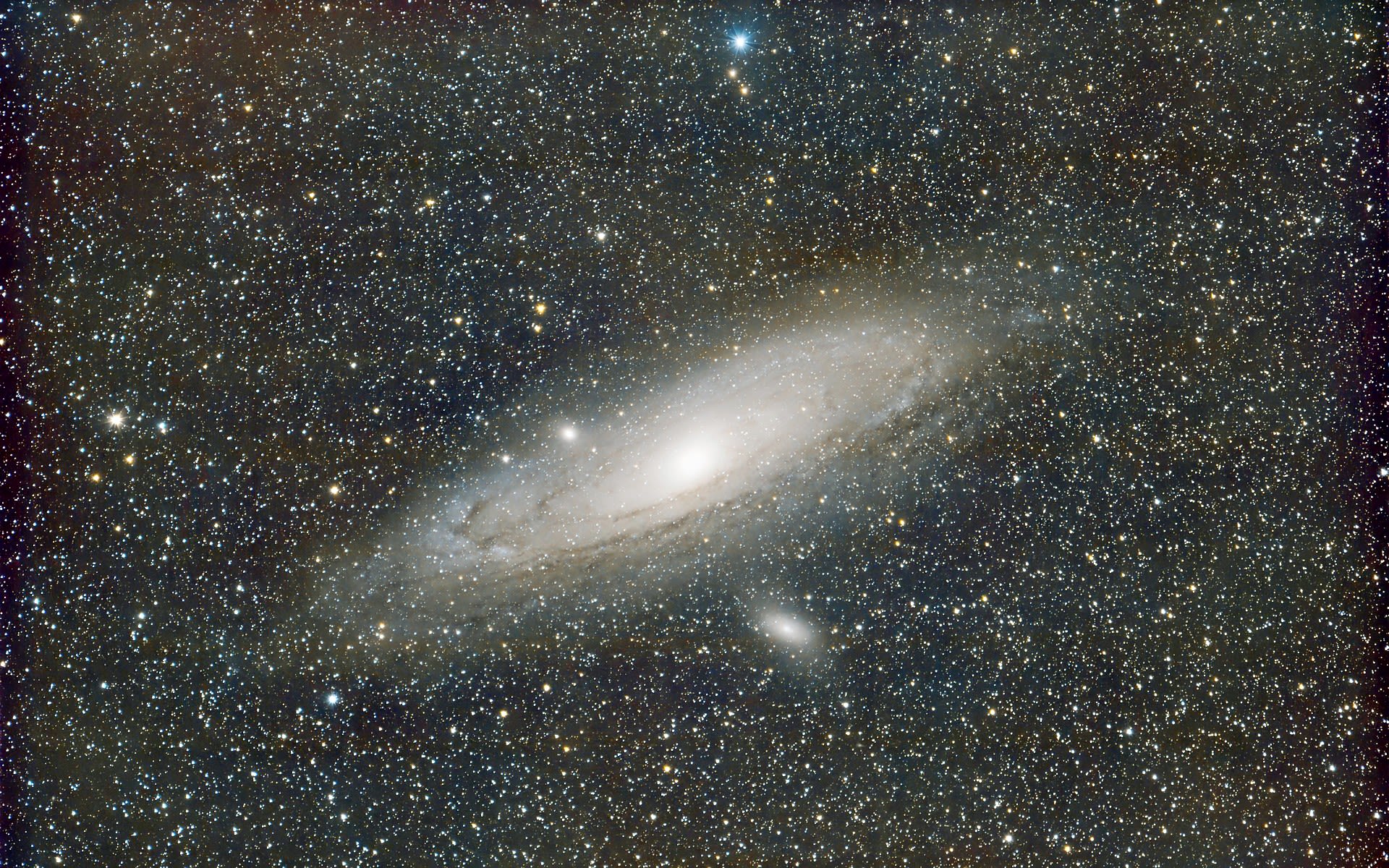
Picture: Mattia Verga via Pixabay
Picture: Mattia Verga via Pixabay
Allison Strom [2010], Assistant Professor of Physics and Astronomy at Northwestern University in the US, studies galaxy formation and evolution. Using some of the largest telescopes on the ground and in space she is specifically interested in understanding the baryonic processes - those that occur at a subatomic level - that determine galaxies’ varied formation histories within dark matter halos [the vast, invisible regions surrounding galaxies, composed primarily of dark matter], including accretion from the cosmic web [the intricate network of galaxies and dark matter that stretches across the universe], winds and feedback from massive stars and large-scale outflows.
Allison is an expert in using deep rest-UV and rest-optical spectroscopy - techniques used to study the properties of early galaxies - of star-forming galaxies across redshift to trace changes in their physical conditions and chemical abundances. Redshift is the shift of light towards the red end of the spectrum, indicating that an object is moving away, due to the expansion of the universe or the Doppler effect which indicates a change in frequency or period of a wave.
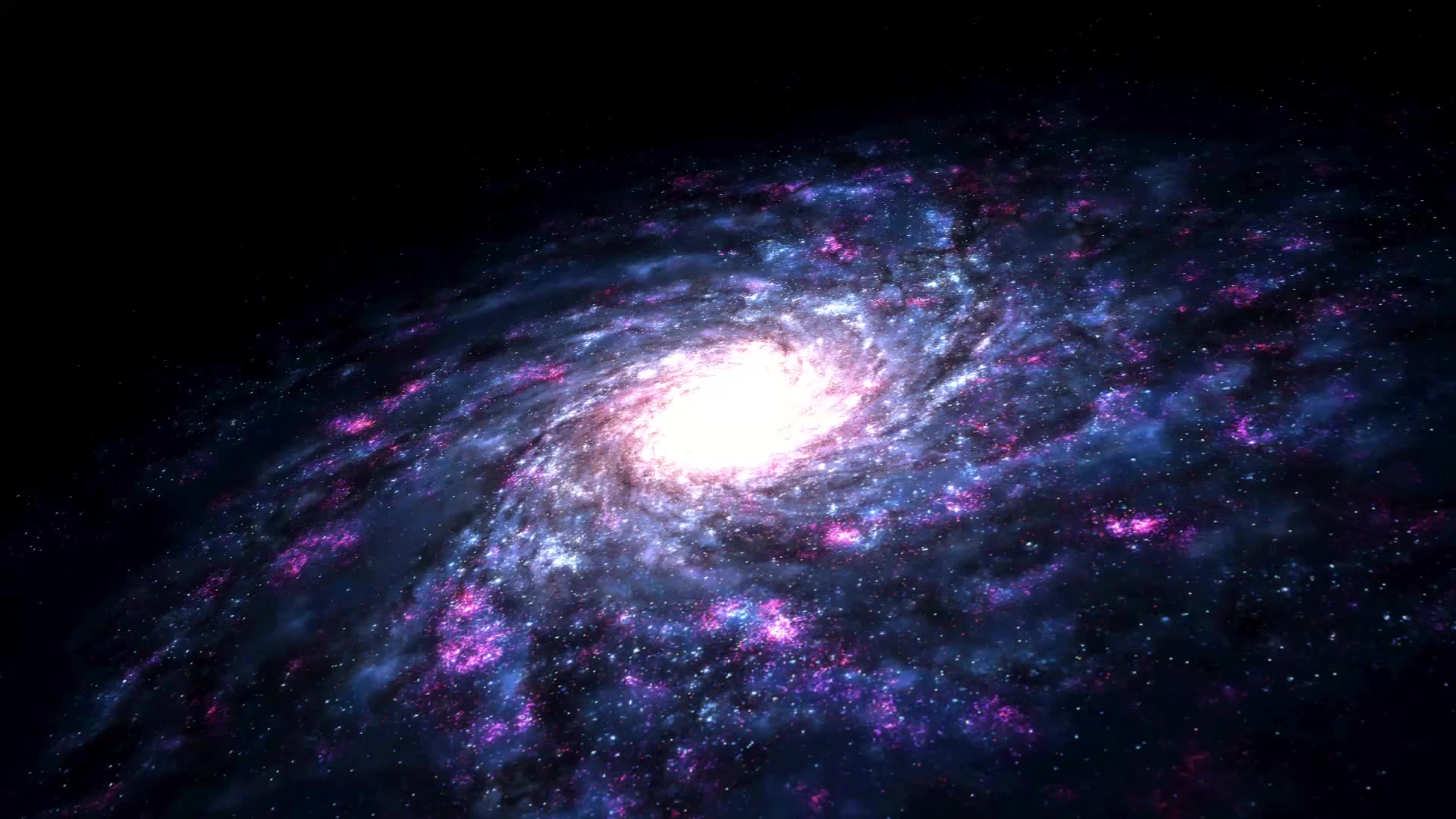
Video by YakupMert Aksoy: https://www.pexels.com/video/scenery-of-starry-night-sky-5651047/
Video by YakupMert Aksoy: https://www.pexels.com/video/scenery-of-starry-night-sky-5651047/
Caitlin Casey [2007], Professor of Physics at the University of California Santa Barbara is an observational astronomer who studies the assembly of the most massive galaxies in the Universe. She says new observations from cutting-edge observatories like the James Webb Space Telescope (JWST), the Atacama Large Millimeter Array (ALMA) and Keck Observatory have taught us that the earliest times after the Big Bang were far more active than expected from our cosmological models. They suggest galaxies had more gas, formed more stars and built supermassive black holes in the blink of an eye.
By finding the most extreme galaxies formed at the earliest times, Caitlin tests fundamental laws of physics within our cosmological framework. She leads the COSMOS survey which is a two square degree extragalactic deep field dedicated to finding the most rare, extreme galaxies and mapping them within their large-scale environments.
COSMOS-Web, a sub-project within COSMOS, earned the largest allocation of public observing time on JWST in its first year and has mapped an area three times larger than all other JWST deep fields combined.
Beyond early galaxy evolution, Caitlin is also interested in observational measurements of galaxy clusters in formation, weak gravitational lensing out to high redshifts and the detection of high-redshift transient phenomena.
She also has a significant background in radio and submillimeter astronomy and their application to the high-redshift universe, particularly in taking census of cold gas and dust at early times, which, she says, are not as well understood as galaxies’ stellar content. Among other prizes, Caitlin was awarded the 2018 Newton Lacy Pierce Prize for outstanding early career achievements in observational astronomical work by the American Astronomical Society.

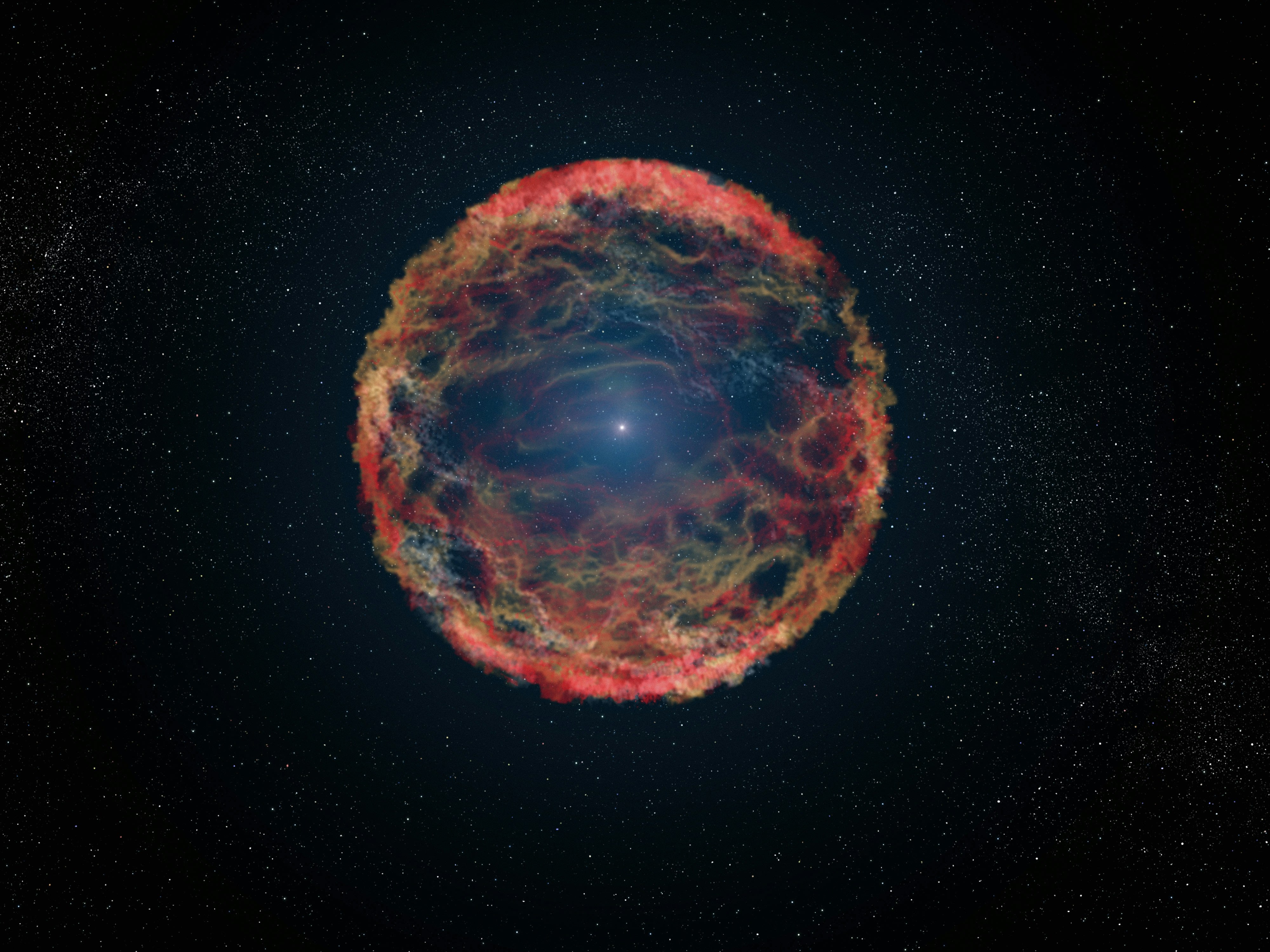
This is an artist's impression of supernova 1993J, an exploding star in the galaxy M81 whose light reached us 21 years ago. Credits NASA, ESA, and G. Bacon (STScI)
This is an artist's impression of supernova 1993J, an exploding star in the galaxy M81 whose light reached us 21 years ago. Credits NASA, ESA, and G. Bacon (STScI)

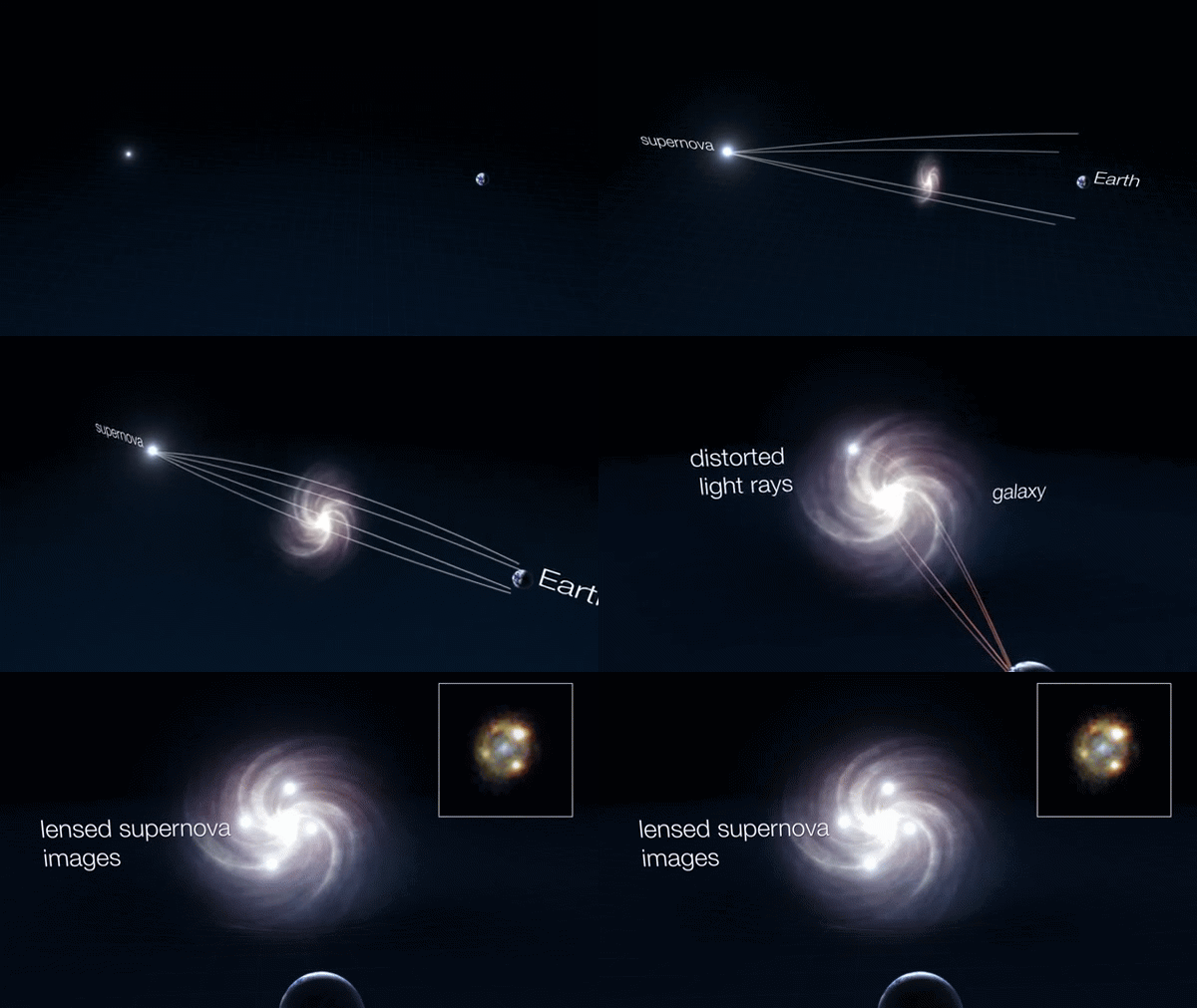
How gravitational lensing works. Credit: https://esahubble.org/videos/heic1710a/
How gravitational lensing works. Credit: https://esahubble.org/videos/heic1710a/

Stars
Erin Hayes [2022] says studies of the origins and fate of our universe are currently at a profound crossroads.
“For the past three decades, the leading model of the universe has provided an excellent explanation for the fossilised light of the Big Bang to the cosmic structure observed today. However, recent direct measurements of the expansion rate of our universe, known as the Hubble constant, disagree with the model-predicted value. This “Hubble tension” is the strongest evidence to date of the breakdown of the standard model, raising significant concerns for our understanding of the universe as a whole.”
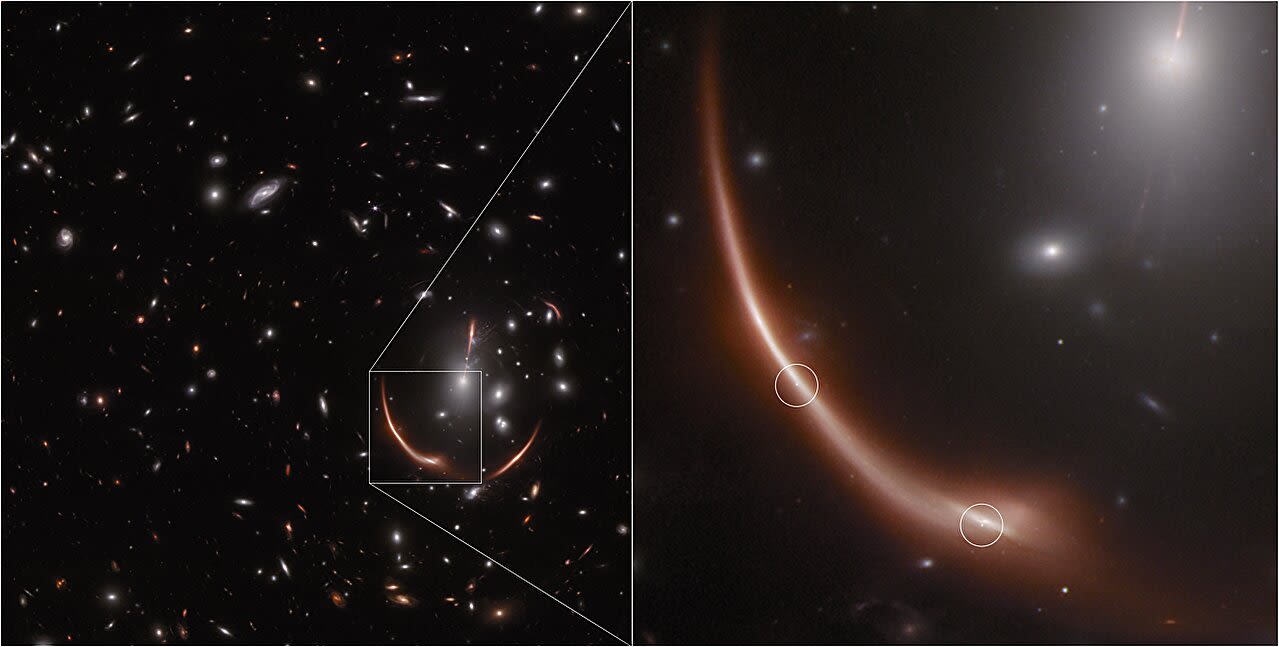
Erin is also an observational astronomer looking to settle the tension by making an entirely new and precise measurement of the Hubble constant using exotic stellar explosions, known as “gravitationally lensed supernovae”. Supernovae occur during the last evolutionary stages of massive stars or when white dwarves - very dense stars - are triggered into runaway nuclear fusion.
Gravitationally lensed supernovae occur when the light from an exploding star, or supernova, is bent when it passes by a massive galaxy such that the supernova appears magnified to us, the observers on Earth.
Erin says: “The geometry of the system can be leveraged to measure fundamental parameters of the universe, such as its expansion rate.”
In her thesis work at Cambridge, she developed a sophisticated model for the brightness of gravitationally lensed supernovae over time. This model was recently used for observations of gravitationally lensed supernova “Encore” from the James Webb Space Telescope to give a new measurement of the expansion rate of the universe.
Although the measurement is not yet precise enough to settle the Hubble tension, Erin is confident that combining measurements from multiple systems in the near future will bring about a new understanding of our universe.

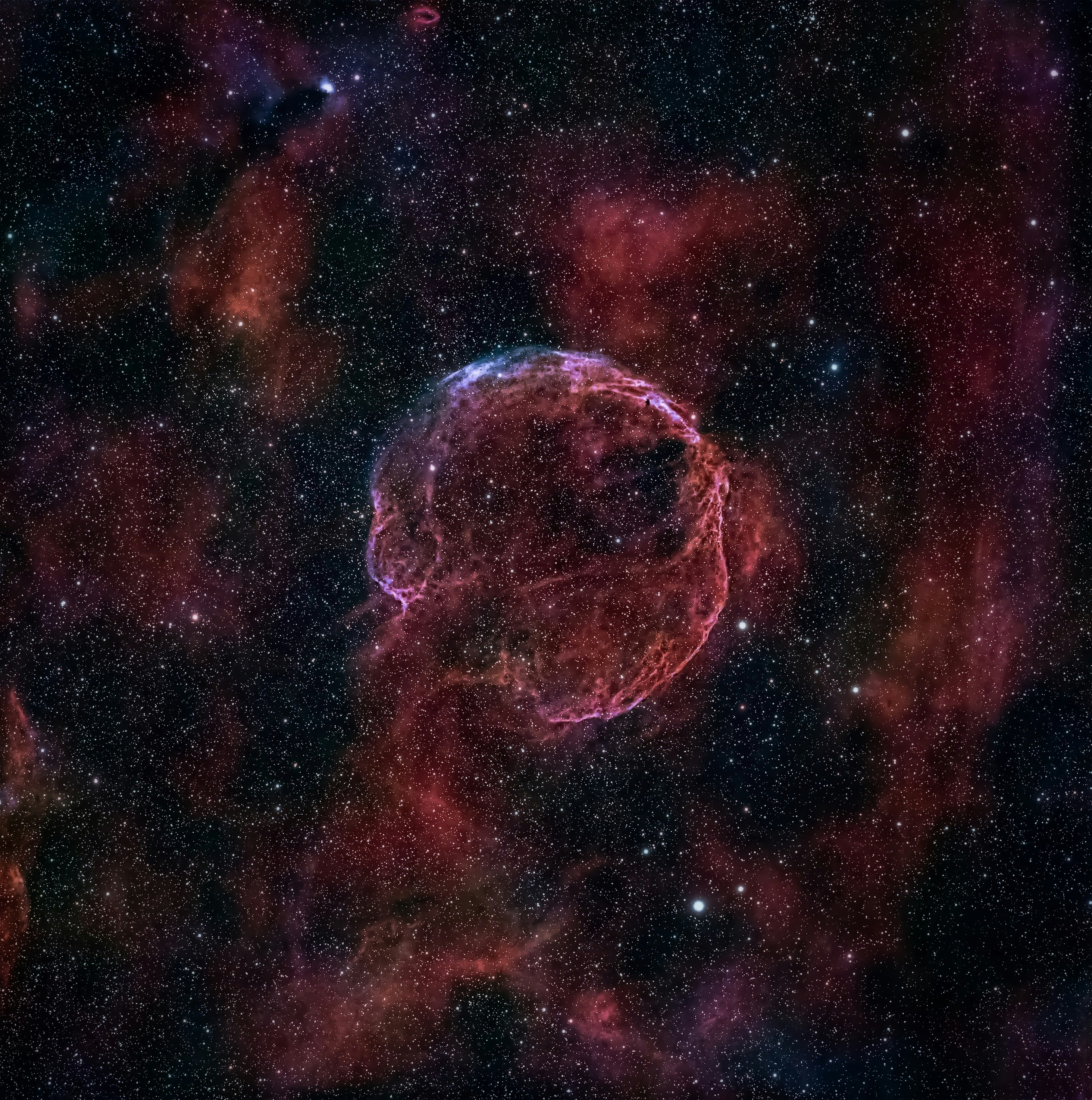
Officially designated as CTB1 or the Garlic Nebula. Photo by Scott Lord on Unsplash
Officially designated as CTB1 or the Garlic Nebula. Photo by Scott Lord on Unsplash
Stars and dust
Yinuo Han’s work focuses on planetary and stellar astrophysics. His PhD led to a first-authored paper which revealed the first direct observation of how intense light from stars can ‘push’ matter. The observation was made when tracking a giant plume of dust generated by the violent interactions between two massive stars. The results, made using infrared images of the binary star system WR140 taken over 16 years, were reported in the journal Nature and attracted international coverage.
Yinuo [2020] is now a postdoctoral research fellow at Caltech, funded by a GPS Barr Fellowship. He is mostly interested in thinking about belts of comets in alien Solar Systems, and what they tell us about how Solar Systems like our own formed.
He took part in a Gates Cambridge podcast on astronomy with Rebecca Charbonneau and Luis Welbanks in 2025 in which he stated: “A lot of our clues come from the study of extra solar systems. I study Wolf-Rayet stars. These are really rare systems. They’re sort of the opposite of the solar system. They’re the sort of extremely massive stars that are dozens of times the mass of the sun. And they’re at the end of their evolution as a star. They’re about to explode and essentially become a black hole. And during that very final phase, a lot of that material is released into the star’s surroundings in the form of dust and that dust has really beautiful structures.
“You can imagine these beautiful spirals as stellar peacocks and link them back to the physics of how this dust is produced. A lot of that dust presumably goes on to fill up the volume in space and some of it might go on to form stars and planets like the ones that we live nearby. So I think this flow of material really links together the different processes happening in the universe.”
Other Scholars who have worked in this area include Maggie Celeste, whose research focused on code development to include dust into the public hydrodynamics code AREPO in order to study the chemical composition of giant planets formed by gravitational instability.

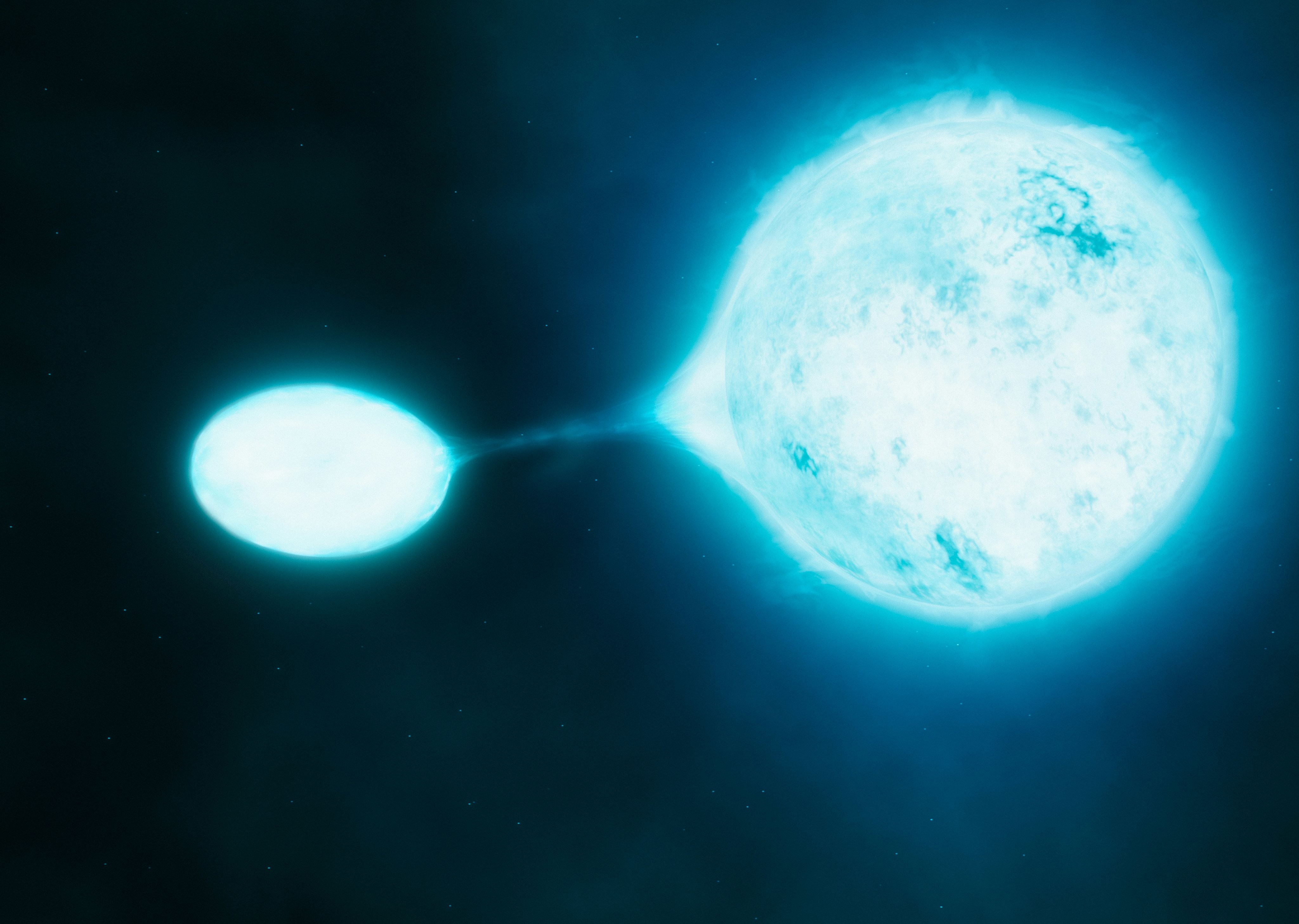
New research has revealed that the hottest and brightest stars, known as O stars, are often found in close pairs. Many of these binaries transfer mass from one star to another. Photo by NASA Hubble Space Telescope on Unsplash
New research has revealed that the hottest and brightest stars, known as O stars, are often found in close pairs. Many of these binaries transfer mass from one star to another. Photo by NASA Hubble Space Telescope on Unsplash
Meanwhile, Arnab Sarkar’s PhD in Astrophysics [2021] focused on modelling the angular momentum evolution of low-mass stars, both in isolation and in interacting binary systems. His work demonstrated that a single underlying mechanism can explain a wide range of observed stellar evolution phenomena, including long-standing unexplained features in orbital period distributions of binary stars and in stellar spin behaviour of single stars. A binary star is a system of two stars gravitationally bound and orbiting around a common centre of mass.
Alongside this research, Arnab worked closely with international collaborators on joint projects and regularly presented his findings at conferences and public events, communicating these complex ideas clearly to diverse audiences.
Since completing his doctorate, he has moved into the energy sector as an Analyst at Rystad Energy, an independent energy research and consulting firm based in Oslo, Norway, where he applies the same forecasting, modelling and data-driven approaches to long-term cost and scenario analysis for critical assets across the energy value chain.
His work incorporates AI- and machine-learning-based methods to extract signals from large, complex datasets and to improve the robustness of long-horizon forecasts. He says: “I focus on helping organisations make financially sound decisions in uncertain and sustainability-constrained environments, reflecting my longer-term goal of translating scientific forecasting methods into practical, scenario-based decision tools.“
Black holes
Professor Erin Kara is an observational astrophysicist at MIT where she is working to understand the physics behind how black holes grow and affect their environments.
She has advanced a new technique called X-ray reverberation mapping, a technique that uses time delays between correlated X-ray emissions to spatially map the hot gas near a black hole, helping to measure its mass and spin.
She also works on a variety of transient phenomena, such as Tidal Disruption Events, Quasi Periodic Eruptions and Galactic black hole outbursts.
In addition, she works to develop new and future space missions. She is the Deputy Principal Investigator of the Advanced X-ray Imaging Satellite (AXIS), a Probe mission concept designed to extend high angular resolution X-ray imaging and spectroscopy into the next decade, with improved sensitivity and a larger field of view compared to the Chandra X-ray Observatory telescope. If selected, it will launch in 2032.

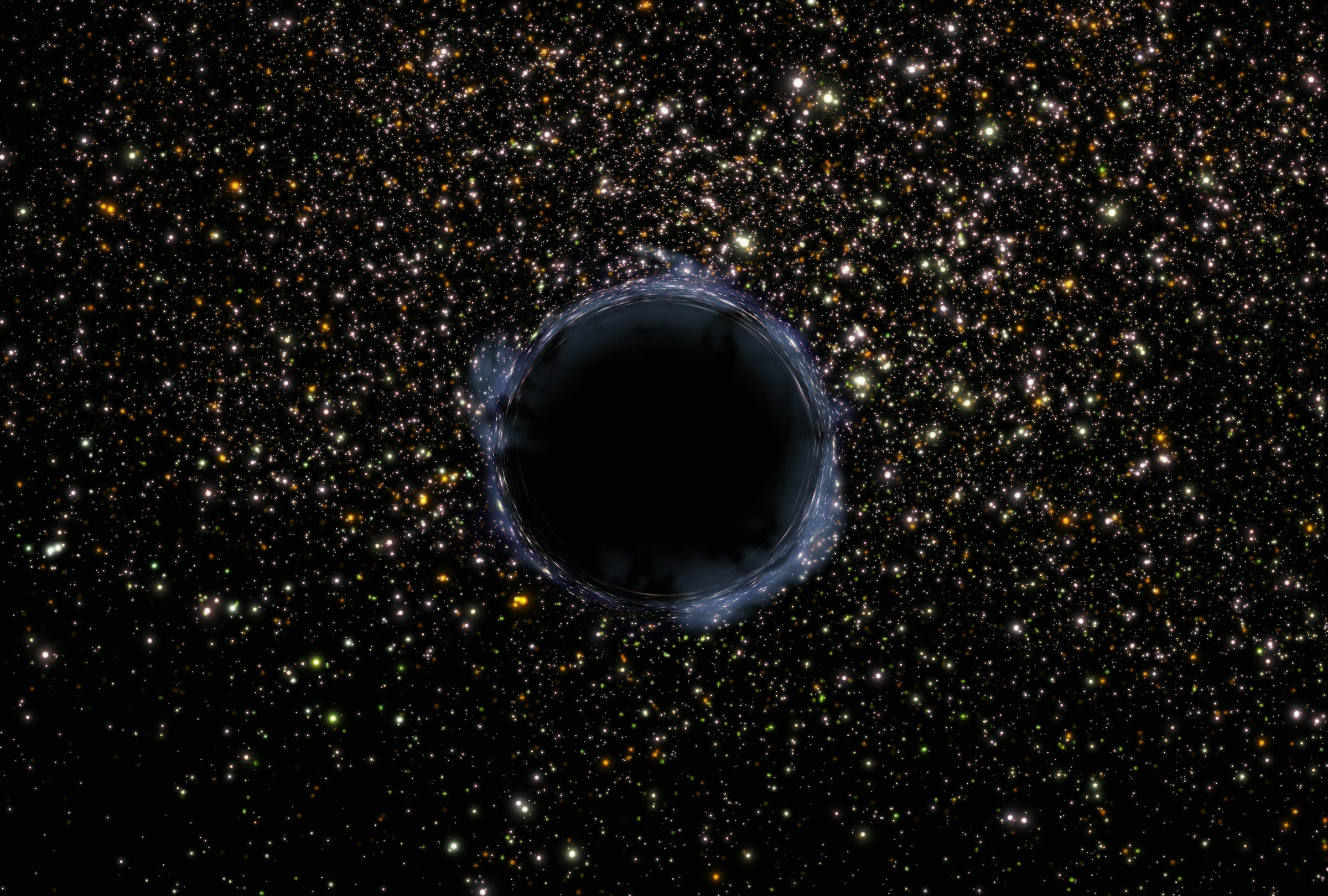
Photo by NASA Hubble Space Telescope on Unsplash
Photo by NASA Hubble Space Telescope on Unsplash
Erin is also a NASA-selected Participating Scientist on several approved international space missions, including the newly launched XRISM Mission (focusing on high-resolution X-ray spectroscopy), the ULTRASAT mission (a UV all-sky time domain surveyor set to launch in 2027) and the LISA Observatory (a first low-frequency gravitational wave observatory which is set to launch in 2035).

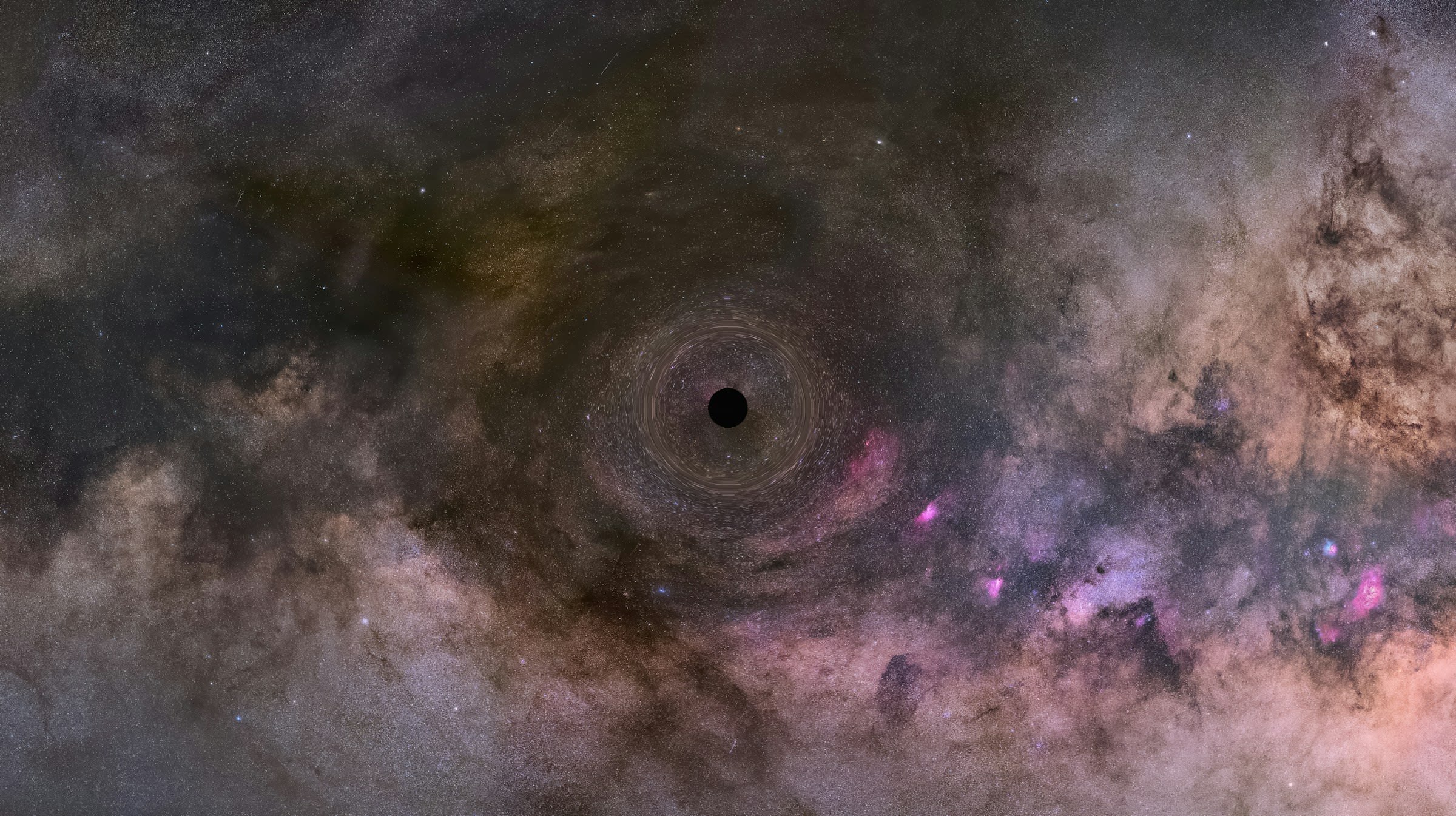
Photo by NASA Hubble Space Telescope on Unsplash
Photo by NASA Hubble Space Telescope on Unsplash
Michael Calzadilla [2015] is an observational astrophysicist and a NASA Hubble fellow at the Harvard-Smithsonian Centre for Astrophysics. He focuses on the interaction and co-evolution between the biggest black holes in the Universe and their large scale galaxy cluster environments.
Annabelle Richard-Laferriere [2019] has recently completed her PhD on mechanisms enabling supermassive blak holes to transfer energy to their surroundings. And Guilia Ortame [2024] has recently started her PhD on the dynamics of supermassive black hole pairs that originate from galaxy mergers. She is developing and running cosmological simulations using supercomputers, introducing elements of machine learning to improve their efficiency and accuracy in making predictions for gravitational-wave missions.

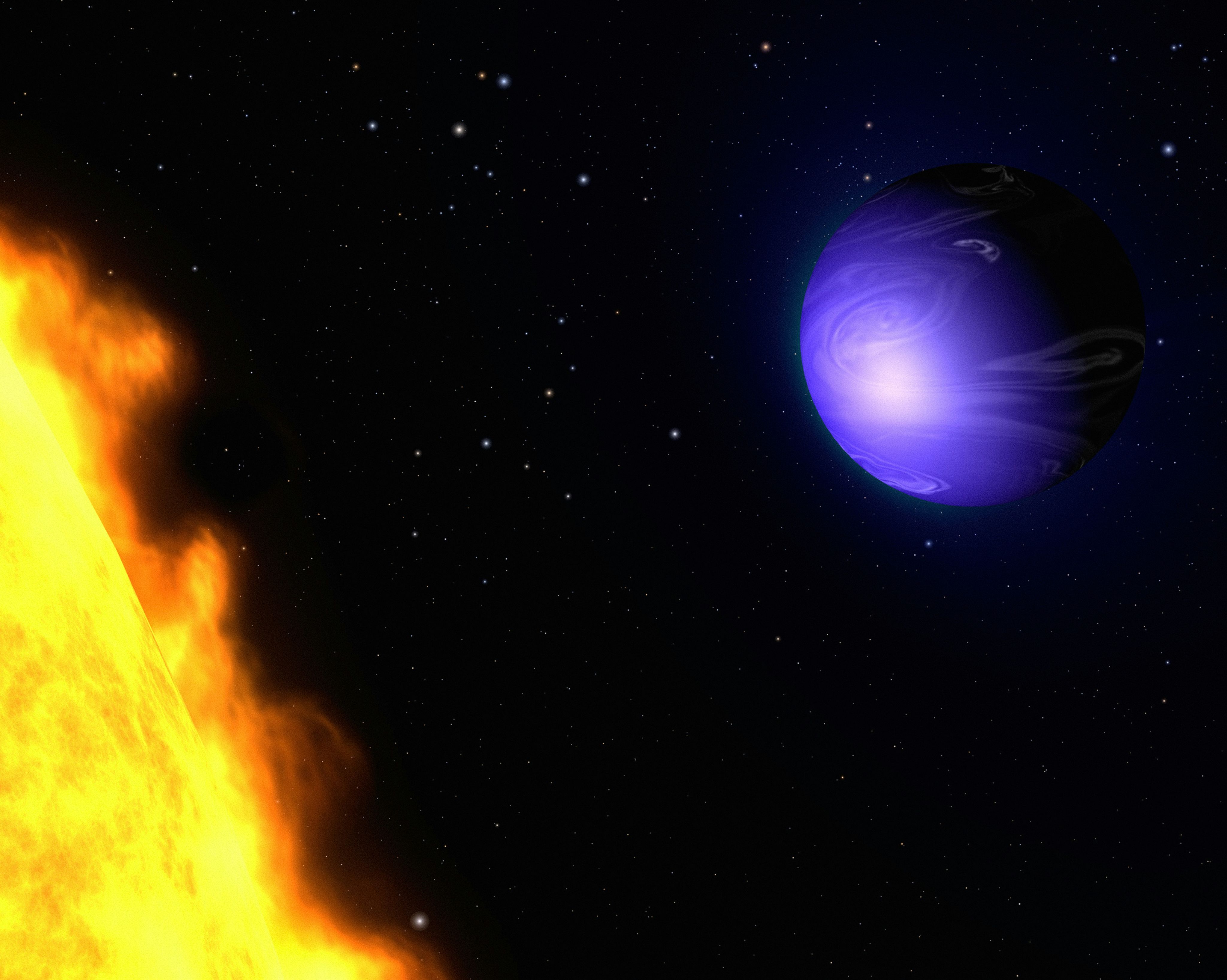
Artist's view of extra solar planet. Photo by NASA Hubble Space Telescope on Unsplash
Artist's view of extra solar planet. Photo by NASA Hubble Space Telescope on Unsplash
Exo-planets
Luis Welbanks [2017] is an Assistant Professor at the School of Earth and Space Exploration at Arizona State University. His research focuses on the characterisation of exoplanet atmospheres, from ultra-hot Jupiters to temperate Earth-sized planets, acquiring and interpreting low- and high-resolution atmospheric spectra of their atmospheres. He says: “I seek to unravel the physical and chemical conditions for these planetary atmospheres as individual objects and populations. That is, my research aims to bridge the gap between atmospheric observations and their interpretation."
The objective is to not only answer what are exoplanet atmospheres made of, but which data drive our inferences and how reliable these inferences are.
His research results include the first detection of methane in an exoplanet atmosphere in transmission and emission – as part of the MANATEE GTO, and the detection of CO2 in an exoplanet.
He has also developed new techniques and frameworks for exploring exo-planets. He says: “An increasingly diverse planet population and higher fidelity data necessarily demand more flexible and complex Bayesian modeling frameworks. The development of these new frameworks has been a focus of my research.” One result of this work has been Aurora – a next-generation retrieval framework for the characterisation of hydrogen-rich and hydrogen-poor atmospheres.
Emilie Hertig’s research [2021] explores false vacuum decay in semiclassical lattice simulations [configurations of quantum spacetime]. False vacuum decay is a theoretical quantum field transition where a false vacuum, a seemingly stable high-energy state, decays into a lower-energy true vacuum, potentially altering fundamental physics and the universe's structure.