


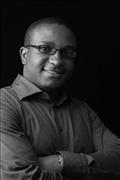
Gabriel Onagoruwa
- Alumni
- Nigeria
- 2008 PhD Law
- Wolfson College
Gabriel Onagoruwa
- Alumni
- Nigeria
- 2008 PhD Law
- Wolfson College
I am very grateful to the Trust for funding my PhD research interest. My research was focused on the legal and institutional framework for cross-border bank finance and resolution.

Jonathan Ong
- Alumni
- Philippines
- 2007 PhD Social and Political Science
- Corpus Christi College
Jonathan Ong
- Alumni
- Philippines
- 2007 PhD Social and Political Science
- Corpus Christi College
Jonathan Corpus Ong is a Lecturer in Media and Communication at the University of Leicester. He was Co-Investigator of the ESRC-funded Humanitarian Technologies Project and lead researcher of the DFID-funded “Obliged to Be Grateful” listening project which conducted ethnographic research in the Philippines following Typhoon Haiyan. He convenes the Newton Tech4Dev Network, which is currently inviting for new collaborations on research streams including on 1) media in disaster management, 2) crisis cultures and convivialities and 3) digital sweatshops.
Links
http://www2.le.ac.uk/departments/media/people/jonathan-ong-profile

Stanley Jachike Onyemechalu
- Alumni
- Nigeria
- 2021 PhD Archaeology
- King's College
Stanley Jachike Onyemechalu
- Alumni
- Nigeria
- 2021 PhD Archaeology
- King's College
Growing up in south-eastern Nigeria, a recurring phrase among elderly Igbo people in the region is, “before the War…”, followed by narratives of how things used to be and how things could have been. This piqued my interest in cultural heritage and how they are impacted by tragedies and conflicts. During my B.A. at the University of Nigeria, I studied how prolonged interregnal periods in certain Igbo communities, occasioned by succession difficulties after the death of a king, could impact cultural continuity. Now, I will be exploring the destructive and generative impacts of Nigeria’s 30-month Civil war, remembered as the “Biafran War”, on the cultural identity and patrimony of the Igbo people. At Cambridge, my PhD research will focus more explicitly on the complex interaction of conflict and intangible heritage and the dissonances in memorialisation, canonisation, representation and silencing. I hope to further our understanding of the uses of heritage during conflicts and to help post-conflict communities to develop comprehensive approaches to their heritage in order to inform policies for dealing with the legacies of difficult pasts. I am thrilled to belong to the Gates community and I look forward to an impactful partnership.
Previous Education
University of Nigeria Cultural Resources Management 2020
University of Nigeria Archaeology and Tourism 2016
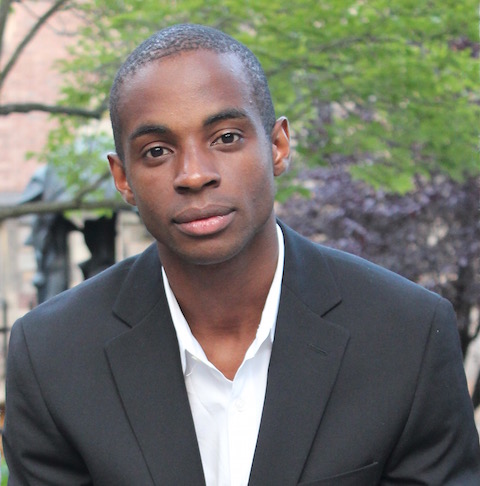
Uzoma Orchingwa
- Alumni
- United States
- 2015 MPhil Criminology
- Magdalene College
Uzoma Orchingwa
- Alumni
- United States
- 2015 MPhil Criminology
- Magdalene College
Previous Education
Colby College
Matthew Oreska
- Alumni
- United States
- 2008 MPhil Biological Science (Zoology)
- Christ's College
Matthew Oreska
- Alumni
- United States
- 2008 MPhil Biological Science (Zoology)
- Christ's College
As an undergraduate at the College of William and Mary, I studied both geology and economics. At Cambridge, I studied the economic impacts of aquatic invasive species.
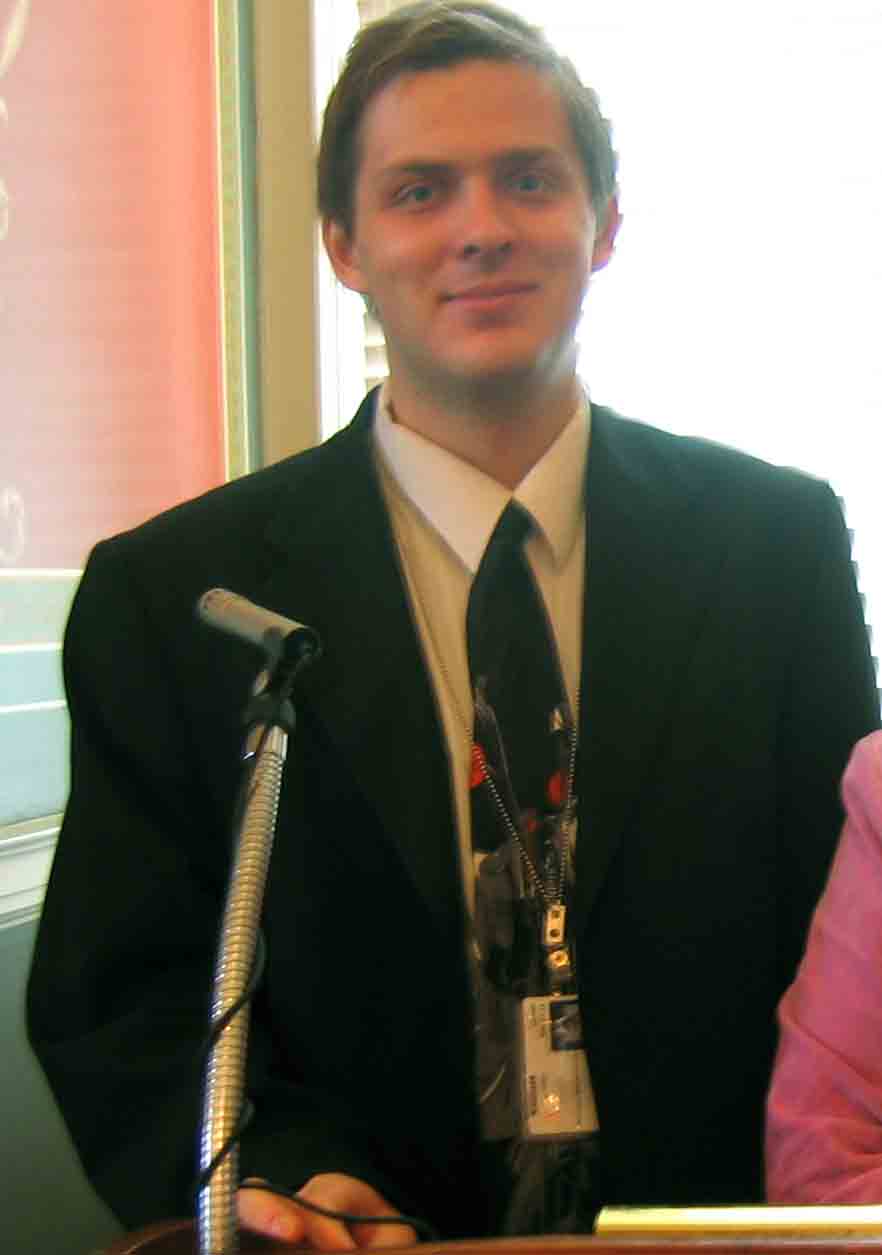
Vladimir Orlov
- Alumni
- Russian Federation
- 2006 PhD Music
- Clare College
Vladimir Orlov
- Alumni
- Russian Federation
- 2006 PhD Music
- Clare College
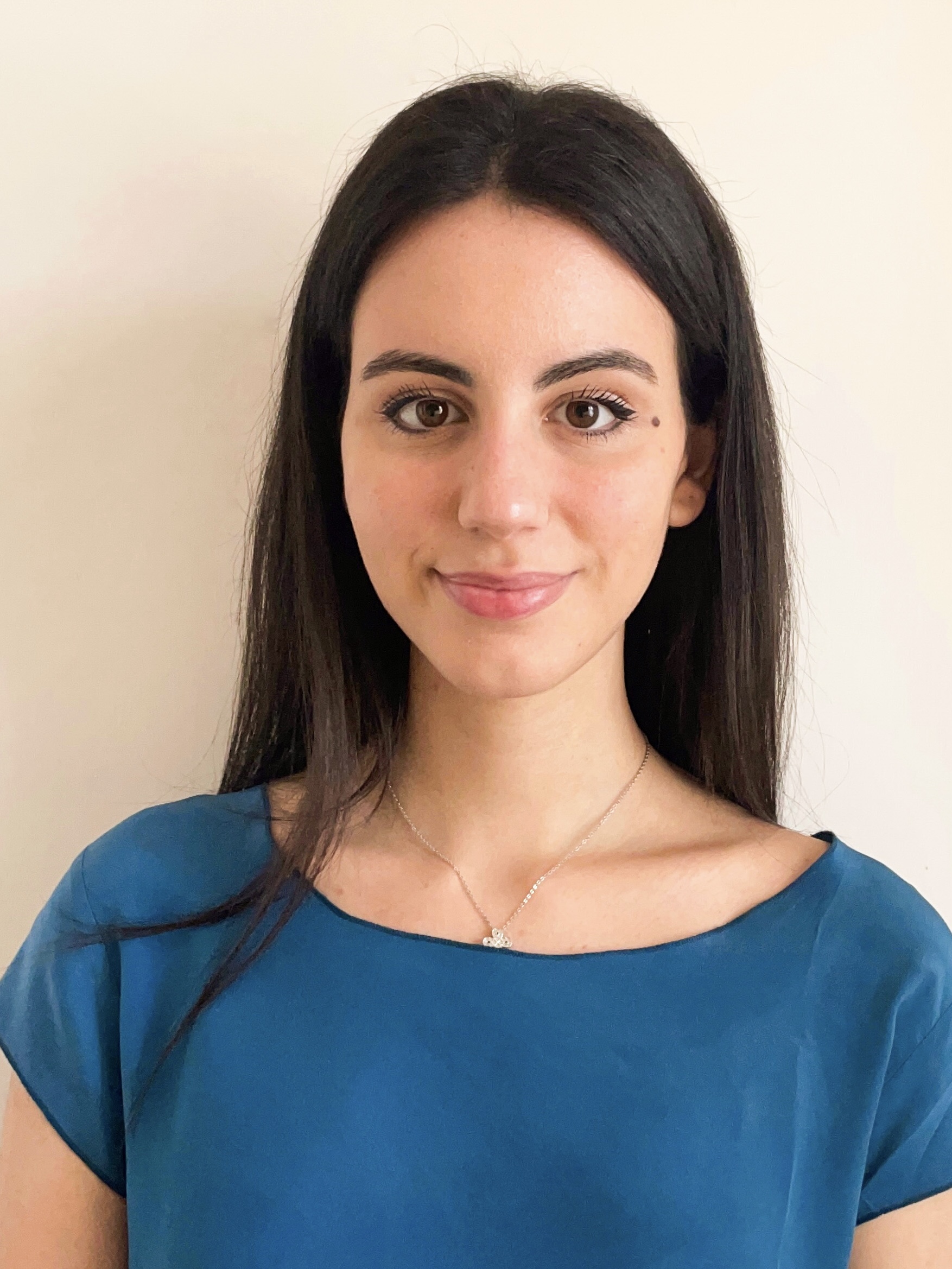
Giulia Ortame
- Scholar
- Italy
- 2024 PhD Astronomy
- Girton College
Giulia Ortame
- Scholar
- Italy
- 2024 PhD Astronomy
- Girton College
My fascination with black holes was sparked when I read ‘The Theory of Everything’ as a 14 year-old girl. Driven by a desire to understand these puzzling and extreme objects, I earned a BSc in Physics at Sapienza University of Rome in 2023. There, I explored key topics in black hole physics, including black hole formation, evolution and emission of gravitational waves. I continued with a MASt in Astrophysics at the University of Cambridge, where my research focused on modeling black hole accretion in dwarf galaxies using cosmological simulations. During my PhD at the Institute of Astronomy, I will investigate the dynamics of supermassive black hole pairs that originate from galaxy mergers. I will develop and run cosmological simulations using supercomputers, introducing elements of machine learning to improve their efficiency and accuracy in making predictions for gravitational-wave missions. I look forward to joining the Gates Cambridge community, as it will give me the chance to learn from and collaborate with other scholars with different expertises and a shared vision of what it means to be a well-rounded researcher. I wish to improve inclusivity and accessibility in STEM disciplines through outreach and mentoring activities.
Previous Education
University of Cambridge Astrophysics 2024
Universita Degli Studi di Roma La Sapienza Physics 2023
Elfadil Osman
- Alumni
- United States
- 2017 CPGS Biochemistry
- Christ's College
Elfadil Osman
- Alumni
- United States
- 2017 CPGS Biochemistry
- Christ's College
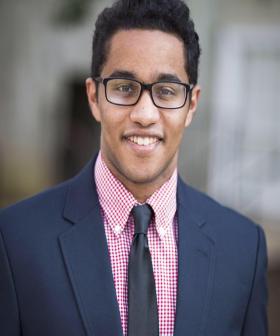
I was born in Riyadh, Saudi Arabia to Sudanese immigrants. The restrictions of Sharia law made life difficult for my family, and early during my childhood, we sought asylum in the United States. It was with this background I long saw myself becoming an agent of social change through the study of Islamic and Constitutional Law and combating Sharia law. It was not until the end of my high school years that I discovered my passion for science and saw how scientific advancements and discovery can also be used to enact change. Furthermore, I came to appreciate how the emergent properties that make life possible are rooted in biology and chemistry, and they can be systematically studied. While an undergraduate at the University of Maryland, I studied tropical infectious agents, primarily focusing on the parasite responsible for malaria. During this time, I became convinced of the transformative social implications of basic science research. Recently, drug resistance to antimalarials is a growing concern. My Ph.D. will be focused on studying mechanisms of gene regulation in the parasite and, through collaboration with other groups, identifying novel antimalarial targets and developing new antimalarials. I intend, through my work at Cambridge, to contribute to the global effort toward the eradication of malaria.
Previous Education
University of Maryland, College Park
Ola Osman
- Alumni
- Canada
- 2019 PhD Multi-disciplinary Gender Studies
- Newnham College
Ola Osman
- Alumni
- Canada
- 2019 PhD Multi-disciplinary Gender Studies
- Newnham College
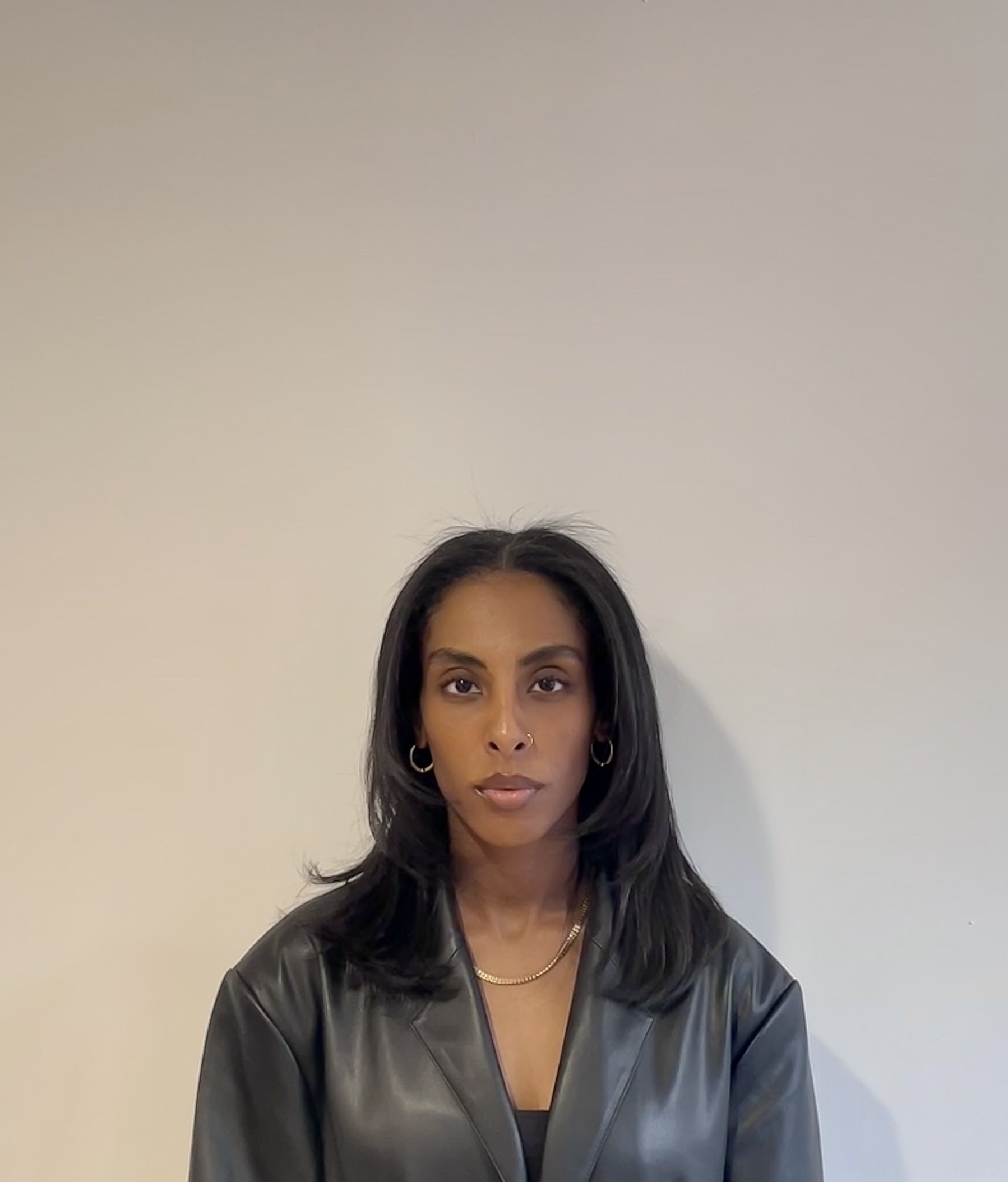
Ola Osman received her bachelor’s degree from the University of Western Ontario’s Department of Women’s Studies and Feminist Research. She has an MSt in Women’s Studies at the University of Oxford as a Clarendon and Prince Sultan Scholarships holder. Her PhD project maps the continuities between racial slavery, its attendant gendered logics and the Liberian civil war.
Previous Education
Oxford University MSt Women's Studies 2019
University of Western Ontario Honours Spec. in Women's Stud. 2018
Sutayut Osornprasop
- Alumni
- Thailand
- 2002 PhD International Studies
- Corpus Christi College
Sutayut Osornprasop
- Alumni
- Thailand
- 2002 PhD International Studies
- Corpus Christi College
Sutayut Osornprasop (Ph.D.) is Human Development Specialist in the Health, Nutrition, Population Global Practice of the World Bank. Based in Bangkok, Sutayut is the Health Cluster Leader for Thailand and a Co-Task Team Leader of the Lao PDR Health Governance and Nutrition Development Project. A social scientist by training, Sutayut is the champion of multi-sectoral and social determinants of health. He is widely known for his leadership in promoting HIV prevention and harm reduction among key affected populations, through projects and analytical work in the Philippines, Malaysia, Thailand, and Vietnam. Sutayut also leads the Bank’s support to the Lao PDR Government to address nutrition challenges multi-sectorally. His leadership and contribution to the post-disaster damage and losses assessment of the health sector following Thailand’s devastating floods in 2011 is well-recognized. He also contributed to the damage and losses assessment of the health sector following Cyclone Nargis in Myanmar in 2008. He has worked on health financing and co-authored public expenditure reviews of the health sector in Thailand and Myanmar. He has also contributed to the efforts to support Palestine on the Universal Health Coverage agenda.
Ian Ostericher
- Alumni
- United States
- 2015 PhD Archaeology
- St John's College
Ian Ostericher
- Alumni
- United States
- 2015 PhD Archaeology
- St John's College
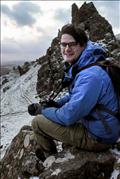
I’m an archaeologist and photographer interested in landscape, the environment and how humans interact with, shape and are shaped by their physical worlds. I have a BA in Anthropology from the University of Washington and an MA in Archaeology from University College Dublin. Currently an MPhil student in Archaeological Research at Cambridge, I specialise in geoarchaeology and study prehistoric land use. My PhD examines landscape stability in the forest-steppe region of northwest Mongolia and the interactions between nomadic pastoralists and the environment over a period of about 4000 years. The aims of this work are to understand past nomadic pastoralist lifeways and how modern pasture management can be at once environmentally and culturally sustainable. Aside from archaeology, I am a photographer, a lover of the outdoors, and am an avid skier, biker and hiker.
Previous Education
University of Washington
University College Dublin
University of Cambridge

Clementina Osti
- Alumni
- Italy
- 2004 PhD Modern European Languages
- St John's College
Clementina Osti
- Alumni
- Italy
- 2004 PhD Modern European Languages
- St John's College
I am focusing my research on major European literary competitions such as the Prix Goncourt, Premio Planeta or Premio Viareggio. I am particularly interested in considering issues of cultural identity and hope to investigate the nature and functioning of the link existing between literary creation, identity constitution and the establishment of aesthetic judgement.
Martin Otero Knott
- Alumni
- Peru
- 2011 PhD History
- St John's College
Martin Otero Knott
- Alumni
- Peru
- 2011 PhD History
- St John's College
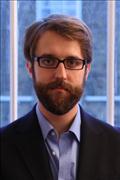
I am very grateful to the Gates Cambridge Trust for their generous financial support of my PhD in Intellectual History. My research centres on eighteenth century debates concerning the sociability of mankind – with a particular focus on questions regarding the foundations of morality and conjectural accounts describing the earliest stages of human development. My intention is to reconstruct this discourse of sociability as a means of reevaluating the philosophical contributions generated by some of the most exciting minds of the Enlightenment. In particular, I will focus on Adam Smith's contribution to these debates by exploring his reading of various 'new systems' of jurisprudence that were devised by continental scholars.

John Ottem
- Alumni
- Norway
- 2010 PhD Pure Mathematics
- St Catharine's College
John Ottem
- Alumni
- Norway
- 2010 PhD Pure Mathematics
- St Catharine's College
I'm doing a PhD in pure mathematics. My research field is algebraic geometry, a subject which deals with higher dimensional spaces defined by polynomial equations. Aside from my studies, I'm on the basketball team and enjoy playing my acoustic guitar.
Previous Education
University of Oslo
Links
Lance Owen
- Alumni
- United States
- 2006 MPhil Musicology
- St John's College
Lance Owen
- Alumni
- United States
- 2006 MPhil Musicology
- St John's College
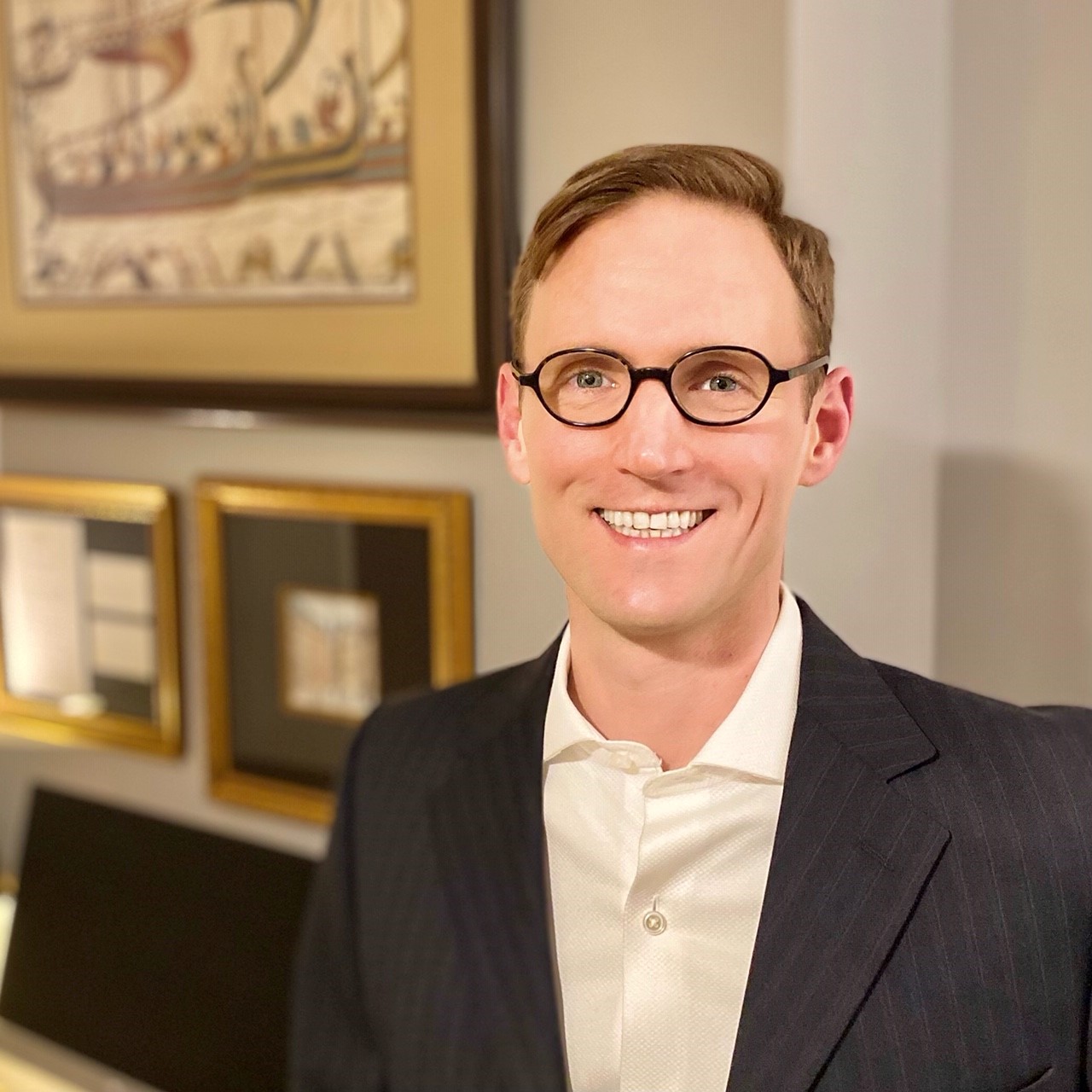
While completing my MPhil in Musicology at Cambridge--during which I completed a dissertation on film music--I unearthed an interest in studying geography. After a couple of years working in university administration and joining the Teach for America program, I completed a PhD in Geography at UC Berkeley, where I studied the history of urban development and city planning. Since graduating in 2016, I have taught global studies, politics, and history at two high schools and spent three years at the Centers for Disease Control and Prevention as a Geospatial Analyst and Project Manger. I now work for Esri, the world's leading GIS company, as the Global Health Portfolio Lead. In this role, I help health organizations large and small harness the power of geospatial technology to solve the world's most pressing public health challenges.
Previous Education
University of Arkansas BA Music 2006

Lawrence Owusu
- Alumni
- Ghana
- 2007 MPhil Computer Speech, Text and Internet Technology
- Clare Hall
Lawrence Owusu
- Alumni
- Ghana
- 2007 MPhil Computer Speech, Text and Internet Technology
- Clare Hall
I worked as a Teaching Assistant at the KNUST Computer Science Department where I organized tutorial sessions for undergraduate courses in C++ and Pascal Programming. Prior to this, I served as Teaching Assistant at the Ghana-India Kofi Annan Centre of Excellence in ICT. During my course, I held several positions including president of a Christian organization. I organized an outreach programme to a village, where we educated the village on health and social issues, distributed aid to the poor and preached the Gospel. I also co-founded the KNUST Linux Club, a thriving organization where free Linux classes are offered to students. My curiosity about Speech Recognition Systems started when I first tried to use Microsoft Word Speech Recognition System. I resolved to study their underlying theories in order to conduct independent research in this field because of its relevance to the growing IT world. After the MPhil, I hope to pursue a PhD in Cambridge and return to Ghana.
Sakurako Oyama
- Alumni
- Japan
- 2017 MPhil Applied Biological Anthropology
- St John's College
Sakurako Oyama
- Alumni
- Japan
- 2017 MPhil Applied Biological Anthropology
- St John's College
Previous Education
Washington University in St. Louis
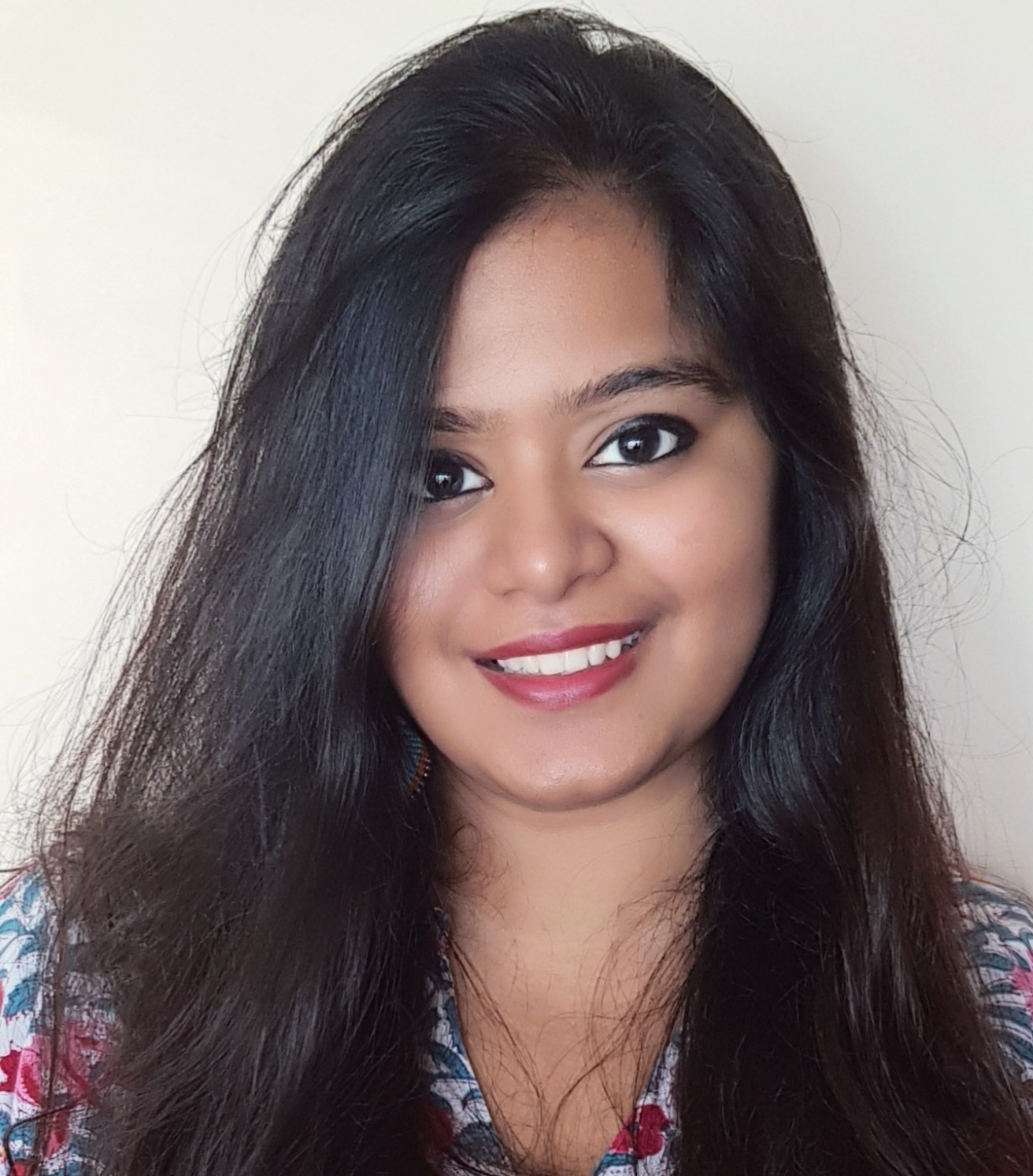
Stuti Pachisia
- Alumni
- India
- 2020 PhD English
- Selwyn College
Stuti Pachisia
- Alumni
- India
- 2020 PhD English
- Selwyn College
I grew up in Kolkata, India and studied for a BA in English at Lady Shri Ram College, Delhi University. Later, I pursued an MA in Comparative Literature at SOAS, University of London. As a student of literature, I grew deeply interested in the subversive potential and the community value of protest poetry. Through my PhD in English at Cambridge, I seek to explore the literary and cultural movements of the protest poem in the postcolonial metropolis. I find this examination increasingly relevant in light of recent worldwide resistance networks, which express international solidarity through the literary text. Through this project, I hope to not only find interventional ways of thinking about the protest poem, but also to find methodologies for making the literature classroom a socially transformative space.(she/her)
Previous Education
School of Oriental and African Studies (SOAS) MA in Comparative Literature (Africa/Asia) 2019
Lady Shri Ram College for Women BA in English 2018
