


Scholars Linda Gichuyia and Adhib Hussain Syed came together to discuss their work to address the urgent issue of urban heating.
Climate action crosses different government sectors from agriculture to the built environment, and each needs to be mobilised differently across a multiactor space while also being aware of the various interests and goals involved, which are varied.
Linda Gichuyia
How do we tackle urban heating? This year’s heatwaves have brought the problem into sharp focus, but it has been building for some time. The World Health Organisation reports that between 2000–2019 studies show approximately 489,000 heat-related deaths occur each year. That number will have risen significantly in the last seven years. So what do we do to mitigate the impact?
Linda Gichuyia [2011] and Adhib Hussain Syed [2025] study different aspects of the problem. Linda did her PhD in Architecture on climate adaptation and decision-support frameworks for temporal overheating risk management in buildings and cities in tropical climates while Adhib, who is also doing a PhD in Architecture, is interested in how data-driven geospatial methods can produce evidence for healthier and more equitable cities, particularly in the context of urban heat risk.
From research to action
They spoke to each other recently about the need to join up research and policy in this area. Linda’s career since Cambridge is an attempt to do just that. After finishing her PhD in 2017, Linda took on a ‘portfolio career’. “I wanted to see how science and research were used in policy and how that informs practice in relation to climate mitigation and adaptation and housing,” she said. “I wanted to understand the implications for urban development, future cities and the future countryside.”
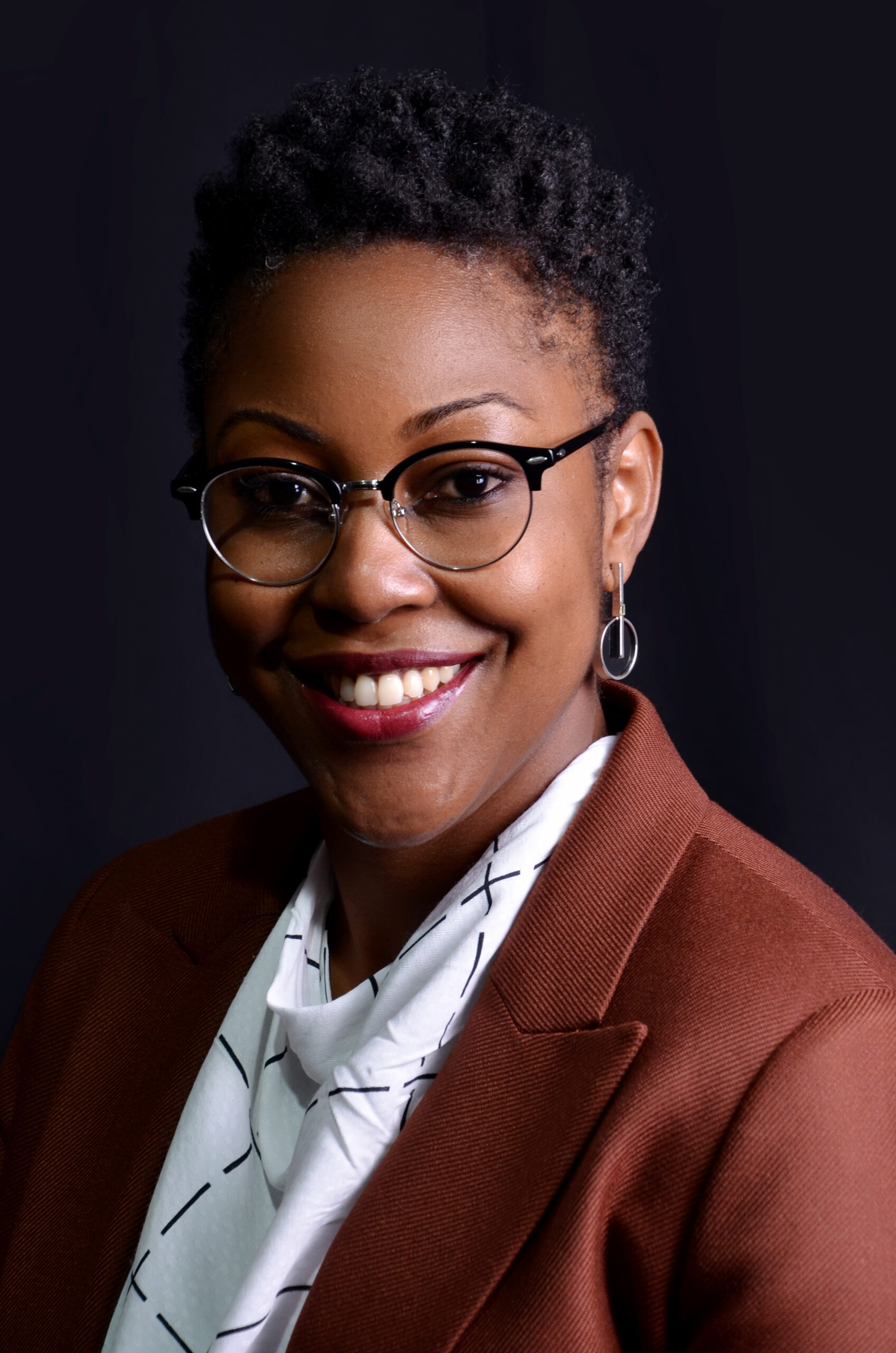
Linda Gichuyia
Linda has been teaching at the University of Nairobi and coordinates a master’s course on environmental design and is a visiting professor at the University College Dublin. She also works as a part-time public servant and consultant shaping national and regional strategies, advising governments and multilateral institutions and leading multi-country programmes across Africa.
Adhib asked Linda how much influence science has on policy and whether it can bring about meaningful change, given the many competing priorities policymakers face. He is completing his PhD which aims to understand how urban conditions interact to shape people’s everyday exposure to heat and their vulnerability. It combines features extracted from satellite imagery using Earth observation foundation models with built-form, street-level, thermal, functional and place-based urban data.
He said: “Rather than treating cities as uniform thermal surfaces, my research focuses on fine-scale urban heterogeneity, lived exposure and the social and spatial conditions that shape vulnerability. I am hoping to model the non-linear ways in which these urban conditions interact to shape urban heat.”
Adhib is also gaining experience of policy issues, working with fellow Gates Cambridge Scholar Ramit Debnath on PRISM (Predictive Risk Intelligence for Social Housing Maintenance), a collaborative project between the University of Cambridge and two local councils: Cambridge City Council and South Cambridgeshire District Council. The aim is to apply machine learning to housing and environmental data to help the councils identify emerging risks in social housing and intervene earlier, before problems escalate into crises for tenants.
Linda said that academics tend to assume that our recommendations and conclusions are easy to take up in the public sphere. “But science is a very small part of policy,” she stated. “Policy is multi-faceted. Our scientific recommendations have to be sieved through politics, existing governance and institutional structures. Climate action crosses different government sectors from agriculture to the built environment, and each needs to be mobilised differently across a multi-actor space while also being aware of the various interests and goals involved, which are varied.”
Adhib raised concerns about how corporate lobbying and billionaire-backed disinformation can obstruct climate action or weaken the measures governments adopt. He argued that governments need to address the inequalities that shape both people’s exposure to heat and their ability to protect themselves.
“How we experience heat depends on both the spaces we occupy and our individual circumstances. Conditions vary between buildings, streets, and neighbourhoods, and even within the same space, people can face different risks. The housing we can afford, the work we do and our access to cooling all shape our exposure and our ability to cope. Older people, disabled people and people whose medication affects their response to heat can face additional risks. Someone who relies on an assistance animal may struggle to go outside when the pavement is too hot for the animal to safely walk on. Policy needs to account for both the conditions people face and the resources they have to protect themselves.”
Linda said the degree of granularity and focus on different experiences, different types of buildings, different neighbourhoods and different stakeholders that Adhib is looking at, using geospatial AI, is vital. “It can help each actor know who should do what, when, where and how,” she said, “and help different actors who use different models, from architects to developers, to communicate better.”
The cost of doing nothing
She added that researchers and consultants need to be better at showing what the cost is of not addressing climate change. She has been working on a multi-acre project which is testing how environmental, social and governance frameworks work in the face of climate threats. The aim is to make ESG climate resilience guidelines statutory rather than just a moral add-on. “My team is creating a checklist for minimum requirements for buildings,” she said, adding that different scenarios are being worked out about the cost of doing this versus the cost of doing nothing. “We are slowly learning about how to be very explicit at targeting who needs to own what when. That should open doors for greater honesty about the cost of managing carbon over time in a tropical climate,” she stated.
Linda is also working with researchers on which areas of cities produce the most CO2 and which areas are most impacted by CO2 pollution. They found that over 90% of housing in Nairobi is rented, meaning public campaigns to encourage solar panel uptake on the grounds of lower energy costs have not worked. Instead, the government needs to manage better how CO2 production and climate risks intersect with tenure structures and landlord-tenant dynamics, she said.
Another issue is that 92% of the grid in Kenya is green, so there is also discussion over whether solar panels are even necessary for buildings already connected to the national grid. Adhib commented that many countries in the Global South are pursuing cleaner energy with far lower historical and per-person emissions than wealthy industrialised countries. Linda added that, as much as Kenya’s power grid is presumed to be green, power cuts remain a problem and this has led to companies bringing in diesel generators as back-ups. That means alternative renewable energy sources are necessary. “We need to understand what works best for each county’s context and adjust global guidelines accordingly,” she said.
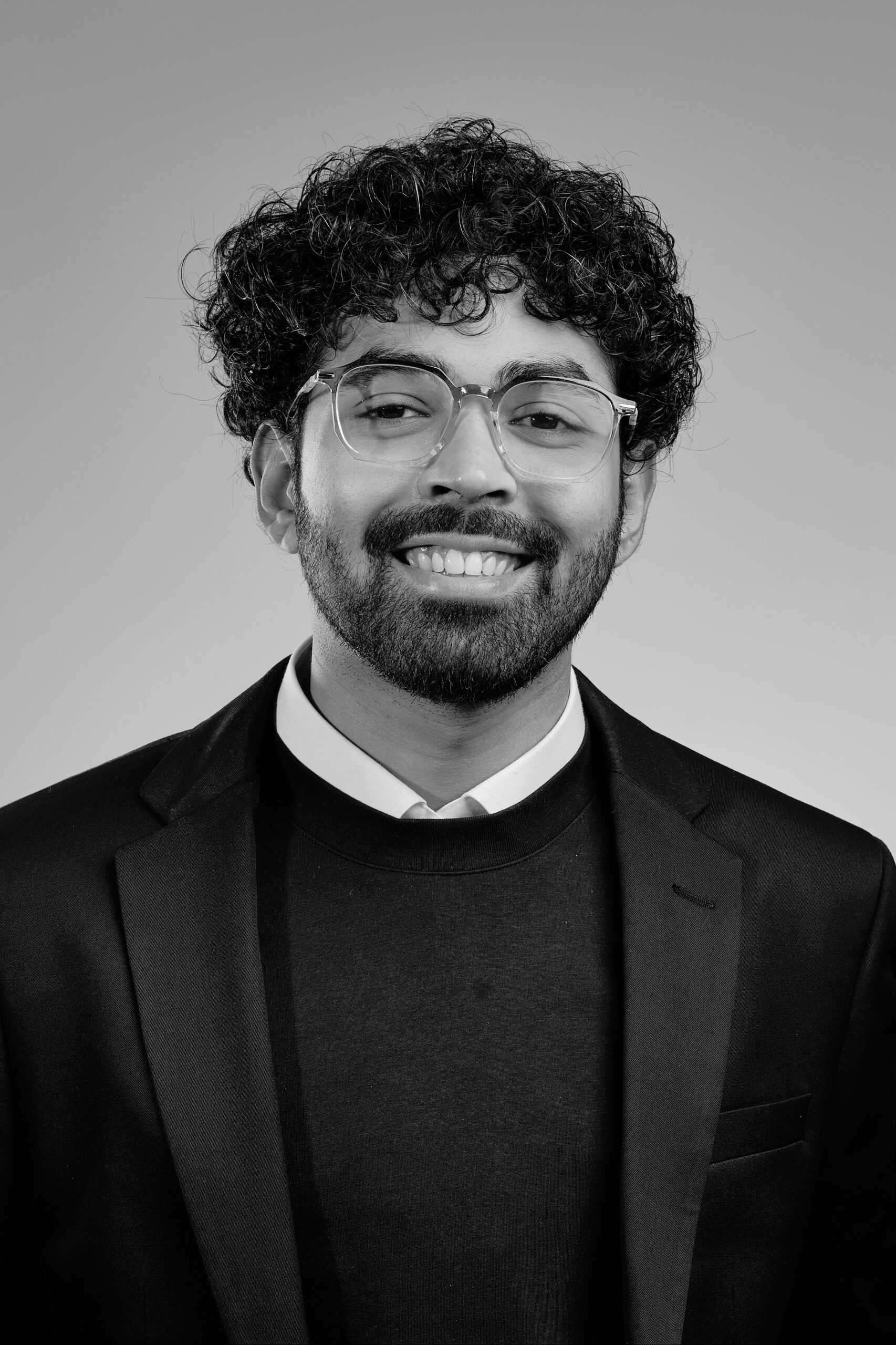
Adhib Hussain Syed
Adhib is using London as the basis for his research, partly because of the wealth of data available. He noted that opportunities for adapting homes vary between settings, with places with more flexible building regulations sometimes making alterations and retrofitting for climate change easier.
Linda spoke about the traditional houses in Kenya’s rural areas which are more adaptable to extensions than those in cities and are deeply embedded in traditional, more environmental ways of life. Some of her students are looking at what can be learned from Indigenous knowledge about housing and space.
The two Scholars spoke about the way globalisation has affected house building in the Global South and how it has imposed an identikit style of housing on city centres which is not adapted to local climate conditions. Linda stated: “If you look at urban areas across the world, they all converge on one typology – the New York/Tokyo model.”
Adhib pointed to traditional courtyard houses in Kerala, describing how their design encouraged air flow and helped homes cope with heat and heavy rainfall. He contrasted this with increasingly standardised cookie-cutter housing, which he associated with efforts to reduce construction costs.
Too hot to live in
The two debated whether urban overheating may force people out of cities because they become too hot to live in. Linda said people will still need access to work-related infrastructure such as the internet and other resources even if they move out of the cities.
But she added that different conditions and traditions exist in different parts of the world and researchers studying overheating risk management need to take note. In East Africa, for instance, there is a strong sense of home and belonging, with Kenya’s 42 tribes all having their home in different parts of the country where they return at weekends. “Every Kenyan has a home by virtue of their community. They cross between urban and rural spaces which is very different from what happens in most Global North countries,” she said. “This straddling between ‘modern life’ in the city and ‘traditional life’ at home in different heat contexts is not captured in the data.
There is also generational change happening in Kenya with Gen X and baby boomers having a much greater sentimental attachment to rural countryside. These older cohorts tend to focus on sustainable agribusiness, eco-housing and cooperative economies. Then there are Millennials and Gen Zs driving the same countryside’s tech-forward identity, investing in remote-work villages, digital farms and leisure ecosystems. As researchers we need to take all of these dynamics into account and shake up the data we are using.”
Linda said these differences made Adhib’s work with diverse sources of urban data all the more relevant. Adhib said: “The datasets describe different aspects of the urban environment and represent them in very different ways. The challenge is developing a model that can extract relevant features from each source, learn how those features relate across datasets and use that combined information to analyse how urban conditions shape heat risk.”
Gates Cambridge
Adhib reflected on how little seems to be changing on the ground compared to all the data amassed that shows what is happening on a global and national level in terms of climate change, and on the responsibility of major fossil-fuel producers and multinational corporations for driving emissions. “For me this is an existential question: what can I do to make a difference? How can my research contribute to wider change when so much depends on the decisions of big corporations and governments?” he asked.
Linda said the beauty of being a Gates Cambridge Scholar is that he has the freedom to figure out how to solve the problem he has set himself and can draw on the energy of other Scholars committed to making a difference, however small that is, because small differences matter. “We are waiting for your datasets in Nairobi,” she said.
“I never thought I would end up working for the government. After I finished my PhD [Linda had a baby in the course of doing her PhD], I wanted to go to my rural home and sleep for a month,” she laughed. She ended up watching tv for two days before finding herself deeply involved in local community meetings.
Two weeks later Linda was developing a vision for a regional government as the Chair of infrastructure and services of the Meru Economic Social Council. “I got to learn about budget cycles and audits, governance instruments and so many other institutional architecture issues and problems that were never in sequence as they are in research,” she said. “There were so many things coming at me all the time. I had to swim through the soup.”
Having done that, she is determined that she can make a difference. She considers herself a knowledge broker now, stating: “Because of working in these three spaces of research, policy and major projects consulting, I now help to provide mechanisms for linking solutions presented by each professional space to one other. That makes me believe that once you have done a PhD at Cambridge – and as a Gates Cambridge scholar – I think you can solve anything.”
*Top photo by Vincent Lin on Unsplash