


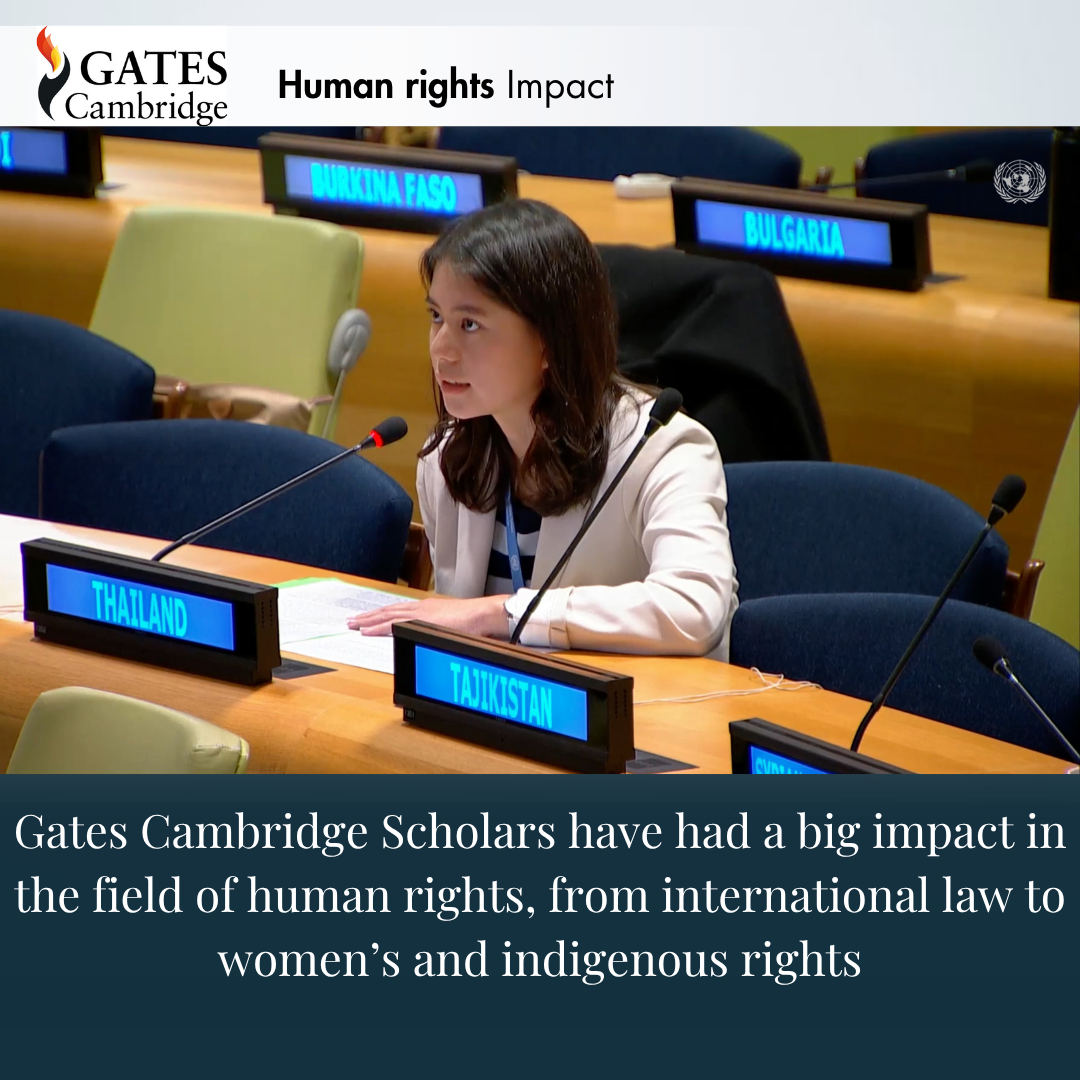
Many Gates Cambridge Scholars have worked in the field of human rights, from international to environmental rights.
Gates Cambridge Scholars have had a big impact in the field of human rights, from international law to women’s and indigenous rights. Many Scholars are involved in some way in the investigation and promotion of human rights as well as theorising and policymaking about human rights.
We look here at just some of the Scholars who are making an impact in areas as diverse as international rights theory and policy to economic, indigenous and labour rights.
International rights theory and practice
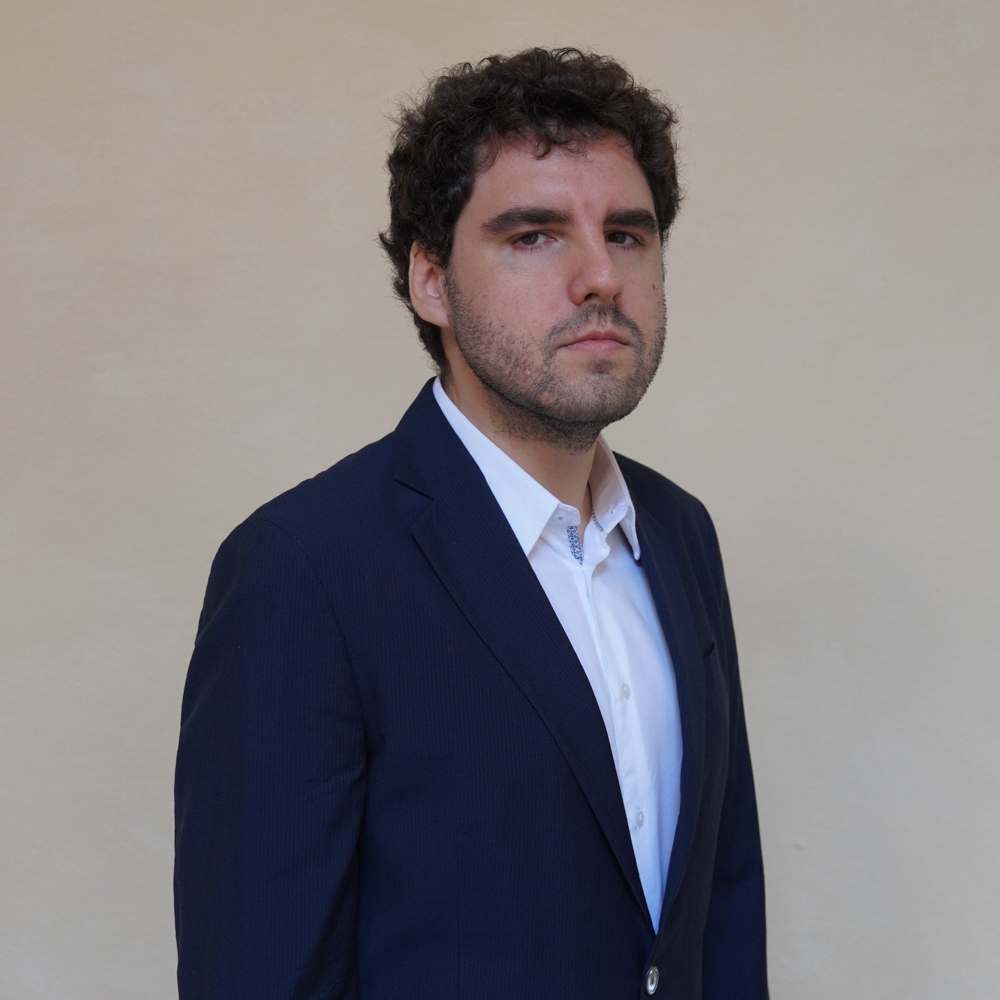 Francisco J. Quintana [2018] is Assistant Professor in Global Law at the University of Edinburgh. He is currently working on two main research agendas. Building on his PhD at Cambridge, he is writing a book that examines the rise of human rights alongside the decline of international law as an ambitious language of world-making, with a focus on Latin America.
In parallel, he studies how emerging powers are reshaping global economic law and governance, and with what distributive consequences, looking at developments such as the push for ‘de-dollarisation’.
Francisco’s articles have appeared in leading journals such as the European Journal of International Law, the American Journal of International Law, and the Journal of International Economic Law. He is also Associate Editor of the European Journal of International Law and an editor of the Latin American and Caribbean Journal of International Law.
At Edinburgh, he focuses on delivering and shaping the new Global Law LLB, designed to prepare students to address global legal challenges, beyond the boundaries of any single legal system. As a lawyer, he has contributed to legal teams before international courts on issues such as climate change, labour rights and crimes against humanity.
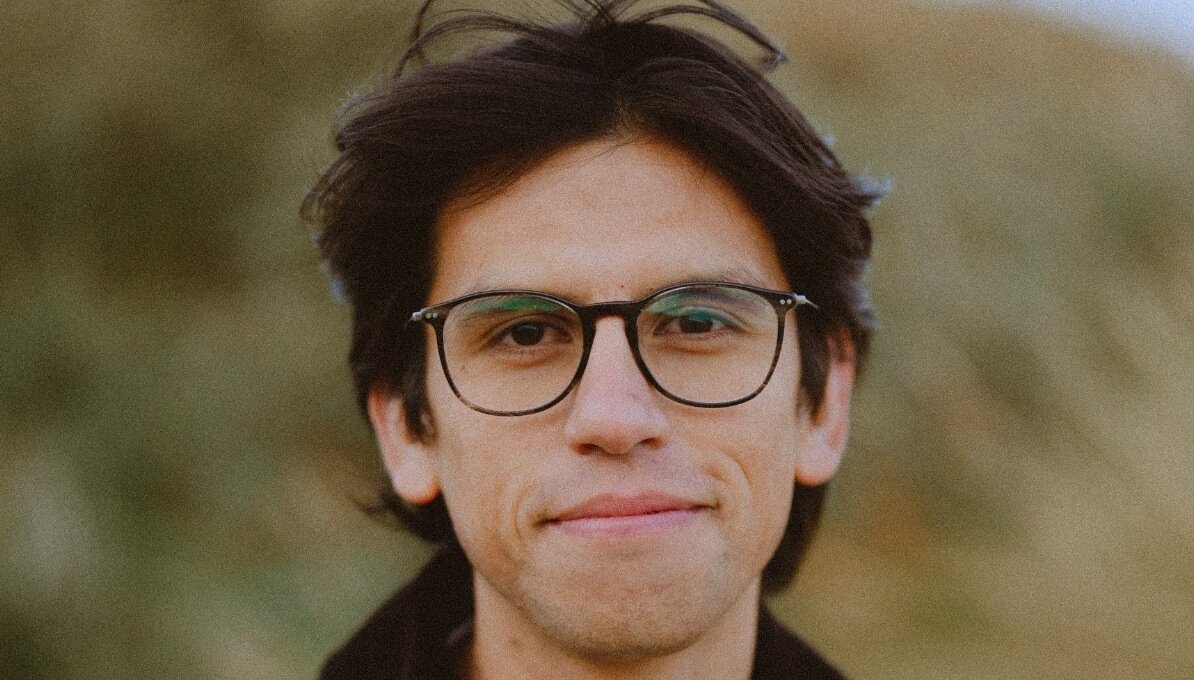 Andrés Ruiz Ojeda [2023] is a current Scholar studying the changes in how Latin American diplomats imagined and spoke about human rights between the 1950s and 1980s, how they used them to navigate changing international orders and how these uses ultimately reflect a shift in rights thinking, from transformational visions about the state to individualistic narratives about welfare and protection.
He is specifically looking at discussions around Inter-American treaties on human rights, particularly economic and social rights, that is, the American Convention on Human Rights and its associated protocols. His dissertation examines the “behind the scenes” discussions of these documents through a series of meetings, from the 1950s to the 1980s, when human rights, including economic and social rights, finally “triumphed”.
“In the early days the discussions treated rights as part of a nation-building project,” says Andrés. “But by the 1980s everything had changed and the discussions envisaged a more individualised version of rights that was not socially transformative. It was a lawyer’s version of political transformation.”
That transformation is embedded in the language used by policymakers. In the 1950s drafts, he says, the language was much more explicit around redistribution and justice. By the 1980s the language was more technocratic and revolved around words such as protection and responsibility. For instance, in the 1950s versions there was a right to have a job. By the 1980s that was replaced with talk of a new individual responsibility to work. “You can see the transformation over the decades in the language and norms,” says Andrés.
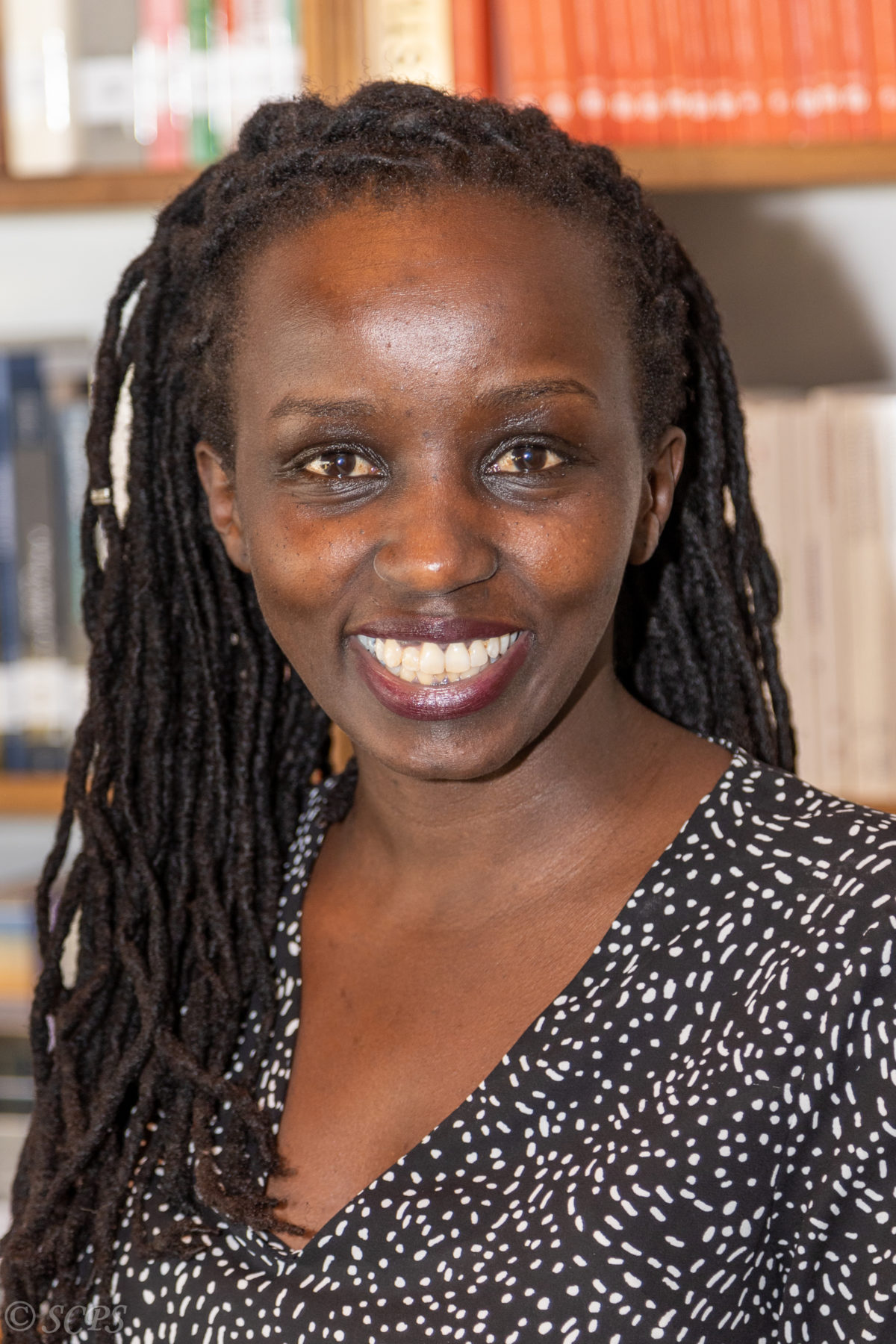 Njoki Wamai [2012] is an assistant professor of International Relations at the United States International University Africa (USIU-A) in Nairobi, where she teaches and researches on human rights, African politics and international development. Her work explores the relationship between international legal institutions, such as the International Criminal Court and local practices of justice in Kenya and other African contexts.
She has held roles in civil society organisations, including the Kenya Human Rights Commission and the Centre for Humanitarian Dialogue. She has contributed to national policy frameworks such as Kenya’s National Action Plan on Women, Peace and Security.
Njoki’s PhD focused on the politics of justice during the transitional period in Kenyan politics after the 2007-2008 post election violence. Njoki won the Bill Gates Sr. Prize in 2016 for her academic work and her leadership in promoting greater diversity in Cambridge, including her role in founding the Black Cantabs project.
Marina Veličković [2017] is a Leverhulme Early Career Fellow. Her project ‘Law as Violence: Transitions Towards Inequality’ explores the role of international organisations and financial institutions in the process of post-socialist transition in Bosnia and Herzegovina. She is particularly interested in the role of discourse in legitimating and (re)producing structures of violence and disenfranchisement.
Marina’s PhD thesis explored how the International Criminal Tribunal for the Former Yugoslavia constructed historical narratives about the causes and contours of the conflict in Bosnia. Before doing her PhD Marina worked as a researcher and consultant for a number of human rights NGOs both in Bosnia and in the UK.
Professor Sarah Nouwen [2005] works on the intersections of law and politics, war and peace, and justice and the rule of law. Building on her experience in diplomacy and peace negotiations, her research focuses on how international law plays out in concrete situations. Her 2013 book Complementarity in the Line of Fire: The Catalysing Effect of the International Criminal Court in Uganda and Sudan explores whether, how and why the complementarity principle in the Rome Statute of the International Criminal Court has had a catalysing effect on the legal systems of Uganda and Sudan. Her current research programme “Peacemaking: What’s Law Got to Do with It” explores the role of international law in peace negotiations.
Meanwhile, Mark Retter [2011] is a Visiting Fellow at the Lauterpacht Centre for International Law. His teaching and research interests lie in public international law, constitutional law and human rights, and in moral, legal and political philosophy. He is currently working on a monograph entitled Human Rights After Virtue. The book will examine the relevance of Alasdair MacIntyre’s human rights scepticism for contemporary moral and legal theory, while taking inspiration from MacIntyre and Jacques Maritain to give an account of the philosophical foundations for moral and legal human rights as grounded in natural law.
Dr Retter is co-editor of International Law and Peace Settlements and the Cambridge Handbook of Natural Law and Human Rights. From 2016 to 2018 he was a Research Associate on the Legal Tools for Peace-Making Project at the Lauterpacht Centre where he helped to develop the award-winning Language of Peace research tool.
Human rights in the digital age
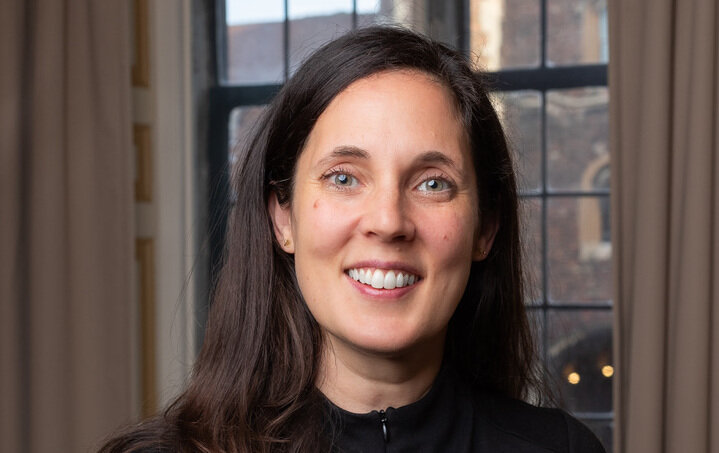 The impact of technology on the human rights agenda is becoming an increasing focus for Scholar research. One Scholar who has led the field in exploring human rights in the digital age is Ella McPherson [2004]. She is Professor of the Sociology of Media and Technology, Co-Director of the Centre of Governance and Human Rights at the University of Cambridge and Deputy Head of Cambridge’s School of the Humanities and Social Sciences. Her research is concerned with symbolic struggles surrounding media and technology in times of transition. This includes human rights fact-finding in the digital age, everyday resistance to Big Tech in the UK and the rise of generative AI in academia.
In 2020-21 Ella was Special Adviser to the House of Lords’ Digital and Communications Committee for their Freedom of Expression Online Inquiry. She has also contributed research on technology and human rights practice as well as on the digitally-mediated freedom of assembly to the United Nations.
Ella spoke recently on a Gates Cambridge panel at the Cambridge Festival about growing concerns regarding the use of generative AI in scholarship and its threat to the core values of academia – learning as doing and the joy of discovery as well as worries about plagiarism and the environment. She compared these concerns with the 19th century Luddite movement which opposed the move to industrialisation, saying Luddite is now used as a pejorative term. In fact, she stated, the Luddites were “really brave people” fighting against a move to push them out of their homes where they had more control over their routines and stripping the joy from what they did, causing alienation and destroying the community nature of their work. Ella said that the type of technology pushed by Big Tech is not inevitable and that that idea should be resisted.
Civil rights
Other scholars have worked on the ground to promote social justice through community groups. They include Carlos Gonzalez Sierra [2015] who, after leaving Cambridge, worked at a non-profit organisation which provides educational programmes and access to social and health services to Latino and other low-income families in Pennsylvania. He is now an Association in Litigation at law firm Skadden, Arps, Slate, Meagher & Flom LLP and Affiliates.
 Derron Wallace [2010] is a cultural sociologist of race, ethnicity and education. He is the Jacob S. Potofsky Chair in Sociology and associate professor of sociology and education at Brandeis University, USA. He is also a research fellow at the University of Manchester. Derron is the author of the book, The Culture Trap: Ethnic Expectations and Unequal Schooling for Black Youth.
Before becoming an assistant professor, Derron worked as a Community Organiser with Citizens UK, as a Special Assistant to the Minister of Education in Rwanda, as a consultant with local educational authorities in London and as a National Director at The Posse Foundation in the USA. His community organising work in Britain on youth safety, immigrant rights and fair housing has been featured in The Guardian, BBC Nightly News, ITV, BBC Radio and American Magazine.
Marie Rose (Katia) Mehu [2012 ] represents defendants and petitioners in the US who are seeking appellate review of their criminal convictions and sentences. Méhu has practiced criminal appellate law for more than 20 years as both an appellate prosecutor and appellate defence counsel. She litigates criminal convictions in direct appeals, collateral/post-conviction relief proceedings and federal habeas corpus.
Kevin Beckford [2011] is the co-founder and a board member of The Hustlers Guild, a non-profit that uses hip hop to expand access and opportunity to Black and Latinx youth in the innovation space. He is also Senior Associate, Partnerships and Engagement at the Pretrial Justice Institute, having previously been an Atlantic Fellow for Racial Equity. From 2014-2016, Kevin worked in the White House Presidential Correspondence Office. He also served as a special advisor to Secretary Julian Castro at the US Department of Housing and Development.
Women and LGBTQ+ rights
Anna Malaika Tubbs [2017] says “my career goal has been to produce work that takes academic discourse and makes it accessible to everyone, especially when it comes to theory concerning women of colour…”
She has published two best-selling books on the history of Black women. Erased: What American patriarchy has hidden from us is described as “the story of the United States from a new perspective: one where the people who shaped this country – who have been oppressed and whose contributions have been denied – are at the centre, reminding us that we can restore what has been strategically kept from us”. It follows on the heels of The Three Mothers, based on her PhD, which celebrates Black motherhood by telling the story of the three women who raised and shaped some of America’s most well-known figures: Martin Luther King Jr, Malcolm X and James Baldwin.
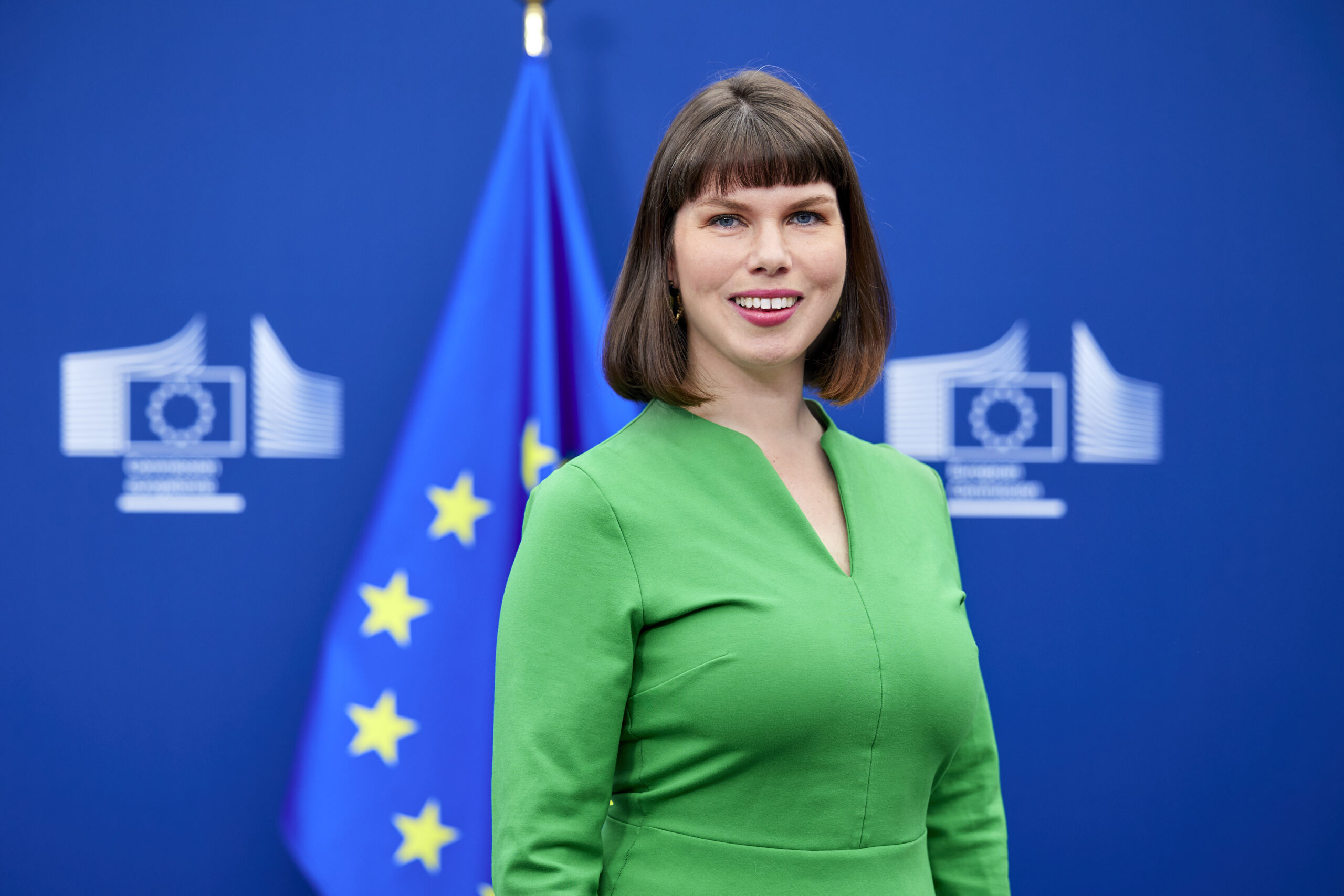
Halliki Voolma
Halliki Voolma [2011] did her PhD in Multi-Disciplinary Gender Studies on intimate partner violence against women with insecure immigration status in England and Sweden. She now works as gender equality advisor to Hadja Lahbib, the European Union’s Commissioner for Equality, Crisis Management and Preparedness where she steers the development and implementation of key EU policy initiatives such as the Gender Equality Strategy and binding legislation such as the Directives on combating violence against women, achieving gender balance on corporate boards and promoting pay transparency to help close the gender pay gap.
Halliki took part in a recent So, now what? podcast episode on how to lead for the longer term in a short-term world. She said: “I think in my decade of experience of EU policy making I’ve seen that sometimes staying the course and preventing regression is progress or is an achievement. It is not always possible to move forward or to move forward fast. But reiterating previous commitments and not moving back is very important and can create space for forward steps and that also takes concrete action. It doesn’t just happen.
“Regression – the slide down – can come easily so holding the fort is a concrete action.”
Sharmila Parmanand [2016] is Assistant Professor in Gender, Development and Globalisation and Associate Academic at the LSE Saw Swee Hock Southeast Asia Centre, co-convenor of the Development Studies Association Gender and Development Study Group, and member of the Editorial Board of the Anti-Trafficking Review.
She is working on her first book Saving Our Sisters: The Politics of Anti-Trafficking and Sex Work in the Philippines, which examines how anti-trafficking invokes the language of development and human rights to entrench border control practices and the gendered policing of precarious workers. She makes the case for an expansive postcolonial reimagining of anti-trafficking, repositioning it as a question of social justice and equity rather than criminalisation.
Her research work spans a nine-country project on migrant sex work and trafficking, a multi-method discourse analysis of policy and public narratives on technology as a solution to modern slavery and a study of the relationships between gender and illiberalism in Asia. She is also part of a research team to develop a gendered analysis of the Duterte dynasty’s political appeal.
In addition, she is co-editing a special issue on Imagining an Alternative Politics of Human Rights for the International Journal of Human Rights with Dr Hasret Cetinkaya and a special issue Gender Justice in Troubled Times for Development in Practice with Dr Mirna Guha and fellow Gates Cambridge Scholar Dr Reetika Subramanian.
Tara Cookson [2011] co-founded the feminist research consultancy Ladysmith which works with a range of partners, including UN Women. Now Canada Research Chair in the School of Public Policy and Global Affairs at the University of British Columbia [UBC], Tara is looking at how data is changing feminist practice. Her research work focuses on care, development and humanitarian aid as well as the gender data gap. She describes herself as “a scholar-activist”, saying: “I see a critical role for academic research in the practice of global development, from policy-making and programme design to finance and philanthropy.”
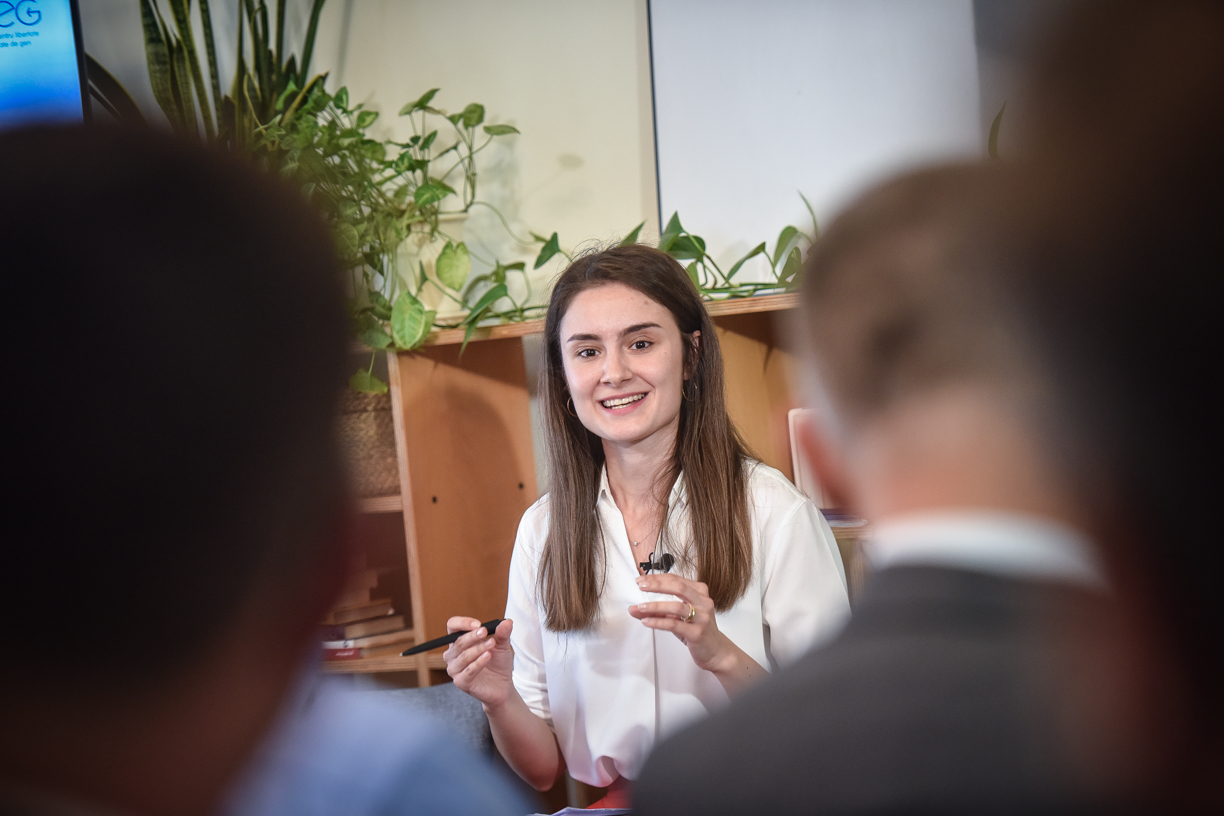 Georgiana Epure [2016] is an Advocacy Advisor at the Center for Reproductive Rights where she focuses on advancing laws and policies that protect and promote reproductive rights as fundamental human rights in Central and Eastern Europe, including safe and legal access to abortion and maternal health. She says that despite progress, there has recently been an increase in legislative efforts to restrict access to abortion services which disproportionately affect marginalised groups, such as women living in poverty, ethnic minorities, women with disabilities and LGBTQ+ people.
Prior to this work, Georgiana led the national campaign for Romania’s ratification of the International Labour Organisation Convention on Violence and Harassment, which was ratified in 2024 and catalysed reforms to improve national anti-harassment laws and policies, and protections for workers.
Waruguru Gaitho’s research explores how Black LBQ womxn in Kenya and South Africa have used legal mobilisation to advance their rights and improve their lives and the impact that legal mobilisation can have on law and society.
Waruguru [2022] focuses on the interplay between law and society, investigating the practical aspects of making human rights work and engineering shifts in social norms and values. She is particularly interested in “how individuals at the nexus of intersecting vulnerabilities navigate systems of oppression and complex power relations to successfully articulate their demands before both the law and society and transform both”.
Eric Cervini is an award-winning author, producer and historian of LGBTQ+ politics. His first book, The Deviant’s War: The Homosexual vs. the United States of America, was a New York Times bestseller and a finalist for the Pulitzer Prize.
Eric [2015] is the Emmy-winning creator and Executive Producer of The Book of Queer, a queer history docu-series boasting the largest all-queer cast in Hollywood history. In March 2024, Cervini launched Allstora, an online book marketplace, and he is currently Allstora’s CEO. On the site, Cervini also hosts Eric’s (Very Gay) Book Club, where he highlights his pick of the best gay literature.
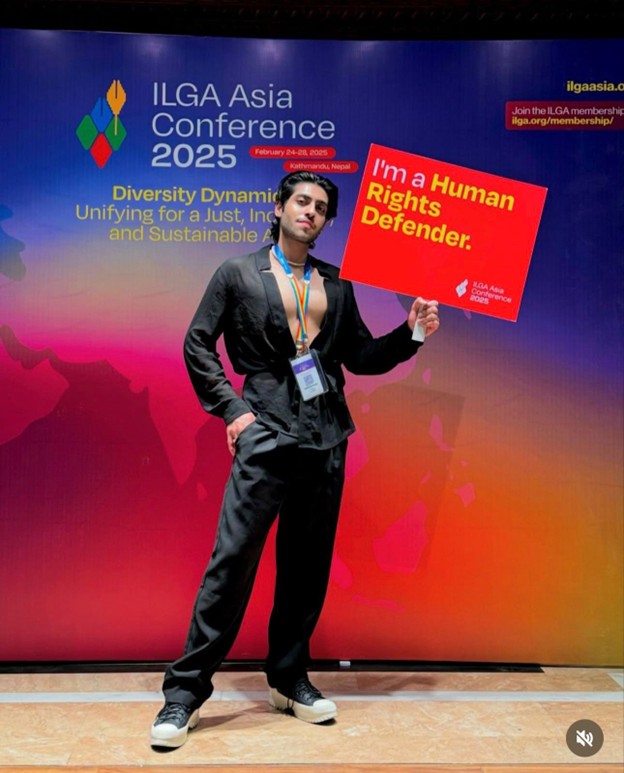 Muaz Chaudhry [2025] is a gender economics researcher from Pakistan and leads an NGO, Gender Rights Watch (GRW), which advocates for the rights of gender minorities worldwide, combats misinformation, raises awareness and provides medical, legal and legislative support for equality and justice.
His PhD research focuses on the exclusion of trans and queer communities from the labour market in South and South East Asia, drawing on a comparative analysis between Thailand and Pakistan.
He says: “My journey has always been about ensuring that marginalised communities don’t endure the same struggles I faced.”
Environmental rights
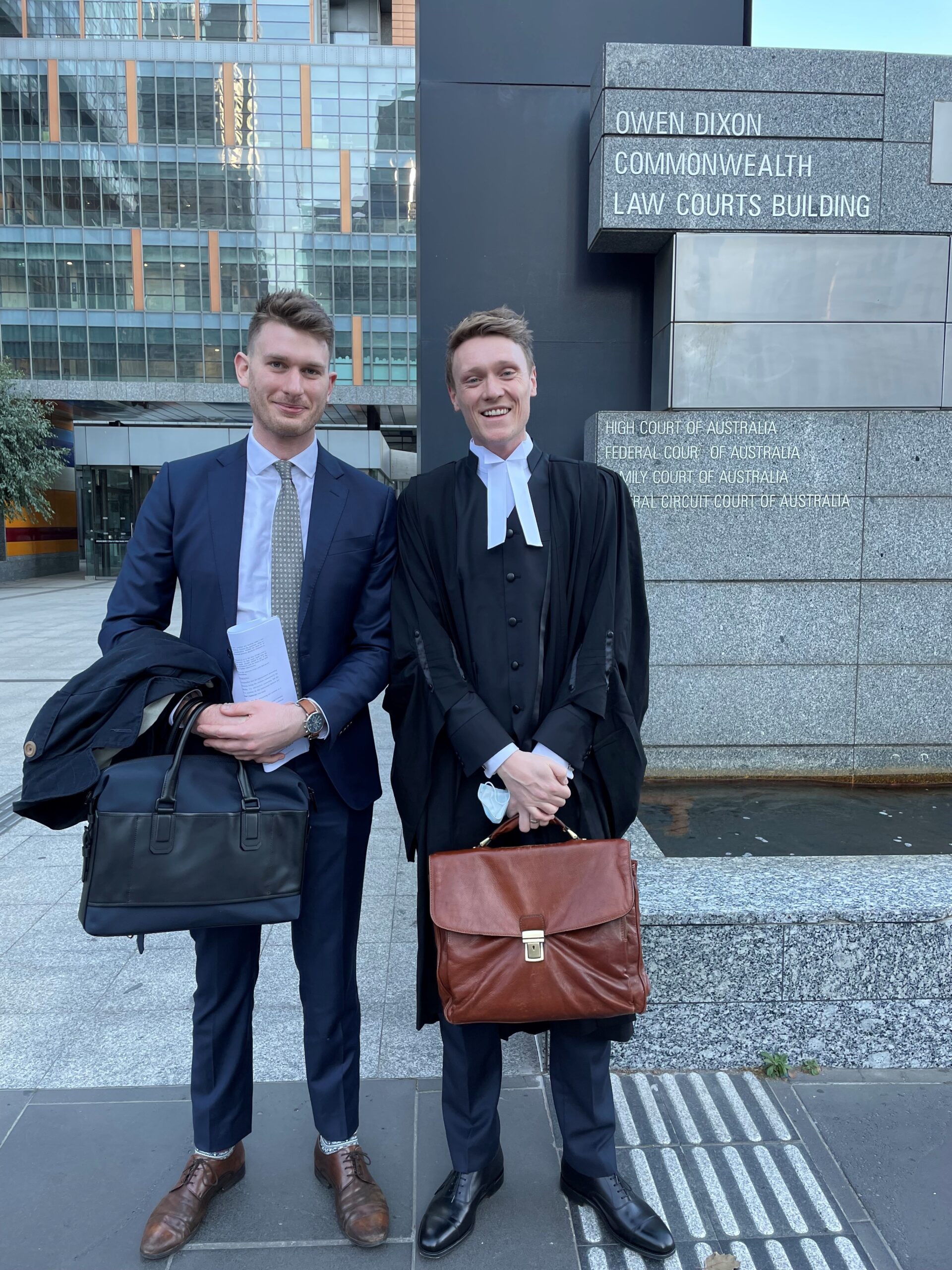 Nick Petrie [2017, pictured right] is a barrister at the Victorian Bar where he practises in public, human rights, commercial and tort law. He has worked on a number of high profile challenges to government action or inaction, including in relation to climate change, the detention of Australian women and children in North-East Syria and Covid-19 quarantine action. Nick also teaches Legal Research in the Melbourne Law School JD programme. He is the co-author of “Annotated Queensland Human Rights Act”.
Panpailin Jantarasombat [2025, pictured top] spent several years working for the Thai government, at the UN and more recently on trade negotiations and legal affairs. Her PhD looks at the lack of clarity in the law when it comes to States’ responsibility for safeguarding future generations. She says there is a lot of reference to future generations at the UN, but no-one is currently held legally accountable in international law . She will also look at what any change in the law to take account of this should look like and how that would best be achieved, seeking more case studies.
Babette Tachibana-Brophy [2018] is Law and Policy Advisor, Ecosystem Governance, at environmental law charity ClientEarth where she works in the Forests and Climate Team, combatting illegal timber, developing community legal capacity and improving forest conservation and management in Liberia.
Children’s rights
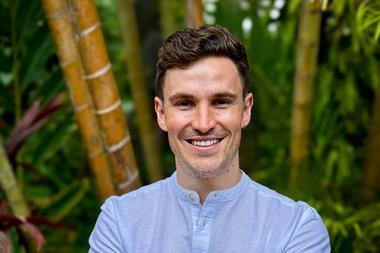 D’Arcy Williams [2019] is a global child health and food systems expert and CEO of Bite Back. A former UNICEF diplomat, he has over a decade of experience in public health, strategic advocacy and youth engagement across +20 countries.
He played a key role in shaping and scaling UNICEF’s global strategy to prevent childhood obesity, with a strong focus on transforming food systems and building youth-led advocacy movements. He spoke at a recent Cambridge Festival panel about his work for Bite Back, saying: “We’re working to shift the public imagination to elevate young people’s stories in a way that shifts attention to the drivers of food injustice – the Big Food corps who are making billions while destroying children’s and planetary health.”
Labour rights
Jennifer Gibson [2001] has years of experience in human rights, having worked for 10 years as Head of Extrajudicial Killings/Staff Attorney at Reprieve. She has recently co-founded Psst.org, a platform where insiders can safely share their stories collectively, having previously been Legal Director of the Signals Network, a whistleblower support organisation. She has also worked as a Lead Researcher at Save the Children UK and as a Law Clerk at the Special Court for Sierra Leone.
Jennifer spoke at a Cambridge Festival panel at Bill Gates Sr. House last year and said: “Accountability relies on a pipeline of information needed for better laws without people having to blow up their lives in the process. If we are going to keep the guardrails on we have to make it easier for people to speak up and feel protected.”
Anna Forringer-Beal [2017] is a postdoctoral researcher at the University of Manchester. As an interdisciplinary researcher, she aims to further our understanding of how governance shapes policy outcomes and the lives of those experiencing labour exploitation. Her research also contributes to ongoing debates on global human movement, histories of empire and border securitisation.
She is also conducting a comparative research project which seeks to understand how different policy frameworks affect policy outcomes for people exiting exploitative labour conditions as well as leading on project management and organising research across six case studies in the UK, Romania, and Belgium.
Indigenous rights
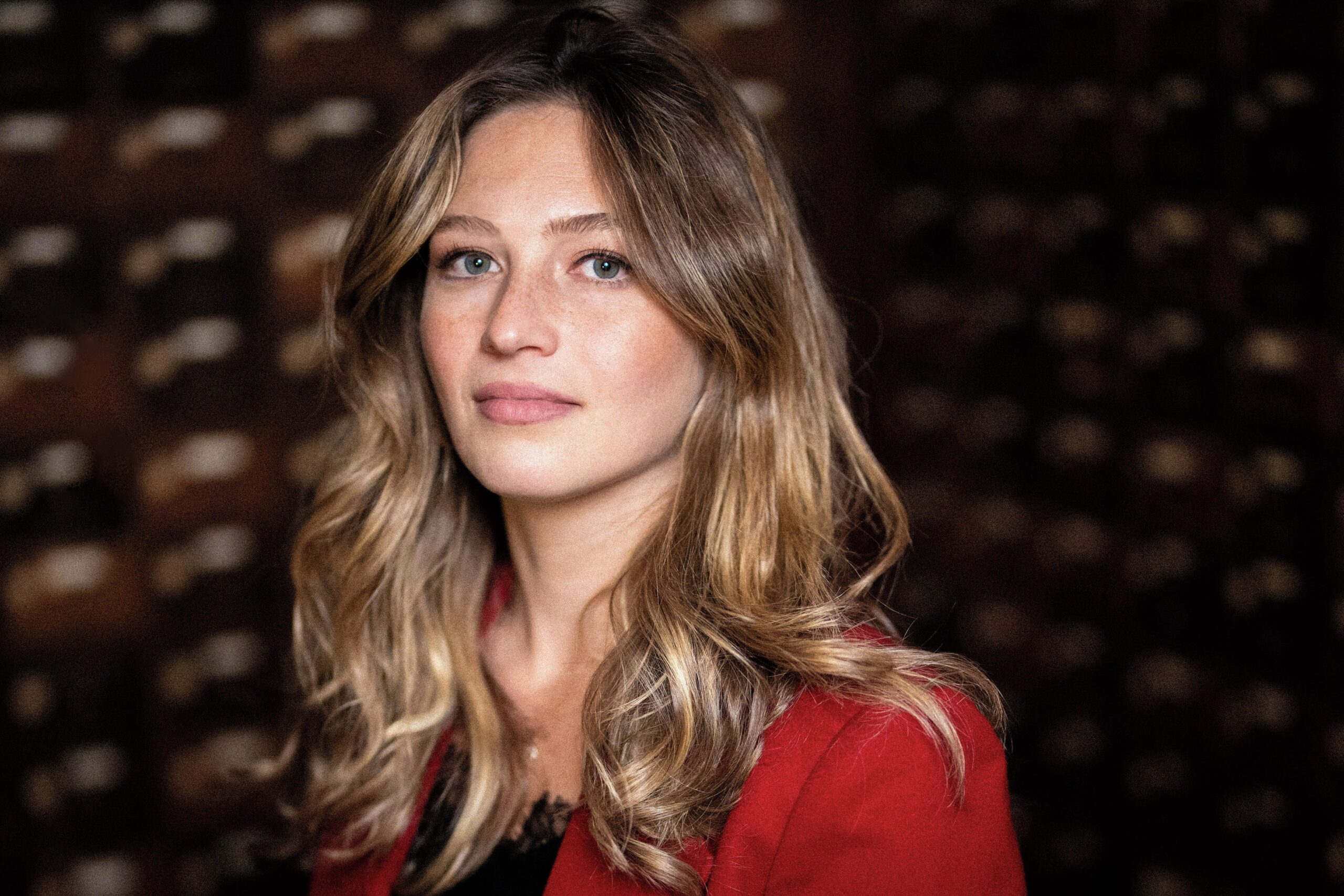 Film-maker Emily Kassie [2016] has explored many aspects of human rights in her documentaries, for example, her multimedia feature on the economic exploitation of the Syrian and West African refugee crises won the Overseas Press Club Award and made her the youngest person to win a National Magazine award. She was named on Forbes 30 under 30 in 2020 and is a 2023 New America fellow.
Her most recent Oscar-nominated film, Sugarcane, is about the long-term impact of systematic abuse on indigenous people in Emily’s home country, Canada. It won several awards, including the US Documentary Directing Award at the Sundance Film Festival. Emily co-directed and co-produced the documentary which exposes a litany of forced family separation and horrendous physical and sexual abuse at a residential school run by the Catholic Church. It catalogues the impact that has on survivors and descendants, including the film’s co-director Julian BraveNoiseCat.
Emily says: “We are just starting to know the truth. We are at the beginning of understanding what happened.”
Chris Tooley [2002] is CEO of Te Puna Ora o Mataatua, a health and social services provider serving the Eastern Bay of Plenty in New Zealand, where his work is based on implementing a fully integrated model that allows social, medical, health, employment provisions into a seamless service delivery approach. Before that, Chris served as chief ministerial advisor for the Maori Affairs portfolio in the New Zealand government.
He says his experience of growing up in the Māori community inspired him to apply to Cambridge to do a PhD on self-determination movements from a more global perspective. “I thought I had to be an academic to understand the world and change it,” he says. “Then I thought I had to be in Parliament to affect change. Now I’m working out in the community and able to see the realities of how change needs to occur in real-time. Everything plays its part and contributes to the overall struggle in different ways. I am fortunate to have been able to have experienced all three sectors and to understand what each brings to the whole bigger picture of how transformation comes about.”
Oscar Espinoza Martin [2024] is an Indigenous archaeologist who is currently investigating the criminalisation of Indigenous and non-Indigenous people for their participation in political manifestations in Peru in 2022-2023 under the authoritarian government of Dina Boluarte. As part of the riots, 62 Peruvian citizens were extrajudicially killed as a result of police and military actions. To grieve the losses of their loved ones, Peruvians built precarious memorial sites across the country, which are under threat by the current government.
Oscar’s research seeks to explore the connections between criminalisation, rooted in “racial” or “ethnic” features, and memorialisation practices under authoritarian regimes in Latin America. He hopes to transform this into a PhD research proposal and a GIS-driven webpage to raise awareness of human rights violations in the region.
Oscar’s MPhil at Cambridge investigated the possibilities (or not) of the decolonisation of the heritage discourse. He says: “As an Indigenous archaeologist, I am concerned about the sociolinguistic implications of applying heritage argot in academic research within Indigenous contexts.” He wants to build horizontal and culturally appropriate bridges between the Eurocentric heritage discourse and Indigenous knowledge and ontologies. His research also explored how archaeological heritage is shaped by fragile nation-states during wartime, drawing on Peru as a case study, and how heritage and trauma were intertwined, representing two sides of the same coin. A chapter of his MPhil dissertation will be published in Oxford’s Handbook of Heritage and Security.
Religious rights
Scholars are also working on religious rights.
Sagnik Dutta [2016] recently published a book which charts a new way of understanding minority rights based on an exploration of the everyday life of Muslim women’s activism in Mumbai. ‘In the Shadow of minority rights’ challenges abstract liberal approaches to minority rights and colonial constructions of the minority and shows how women deploy everyday ideas of ethics and bodily practices to challenge inequality in Muslim family law.
Sagnik is a researcher at the Department of Cultural Studies at Tilburg University in the Netherlands where their research focuses on digitalisation in the Global South and Associate Professor at OP Jindal Global University. They have long been interested in the interaction between minority rights and the law, having spent several years working as a journalist in India covering the Supreme Court and the Muslim women’s reform movement before their PhD.