

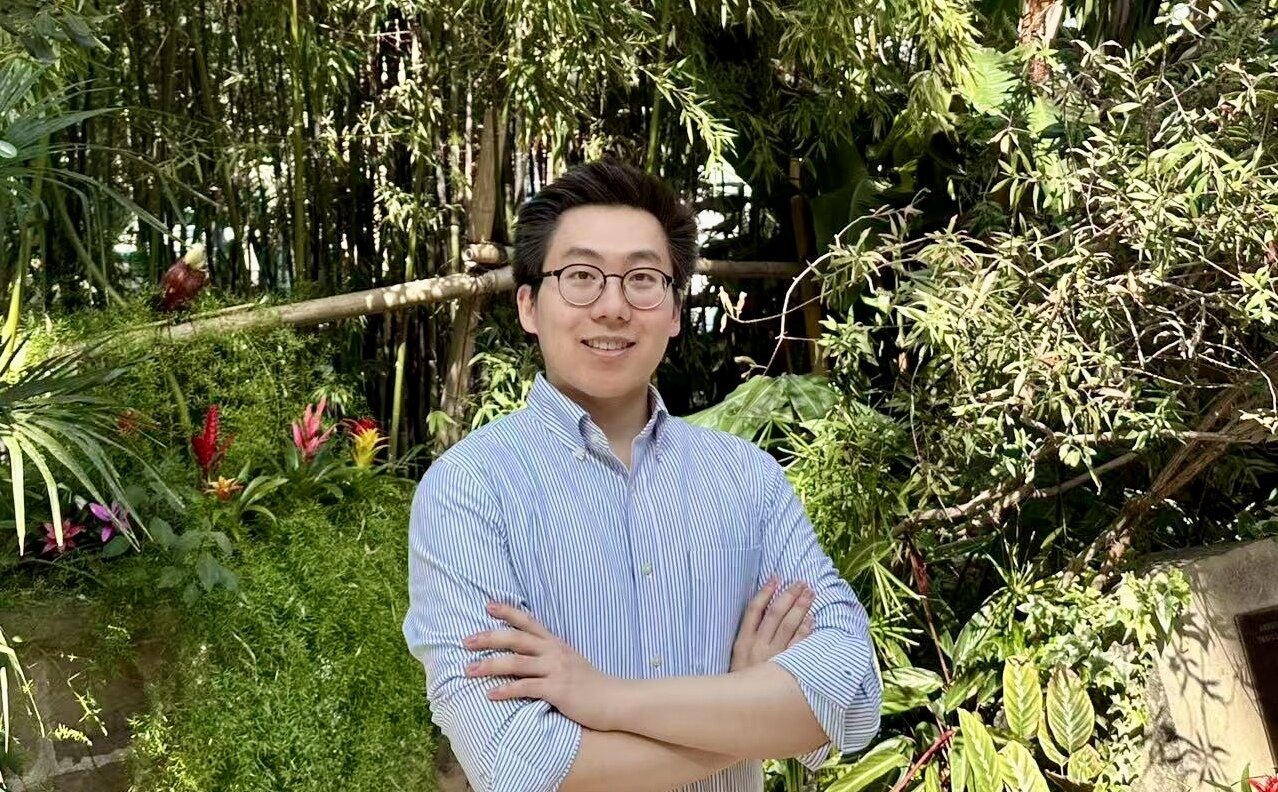
Scholar-Elect John Wang talks about his career to date and his PhD which will explore how to better target drug delivery to tackle antimicrobial drug resistance.
For me, improving people’s lives means developing technologies that make healthcare more effective and accessible. Even small scientific advances can have a large impact if they reach the people who need them. I want to contribute to building tools that give doctors better treatment options and improve patient outcomes.
John Wang
John Wang [2026] believes that the efficiency of a drug treatment is not solely determined by the drug itself, but by how precisely its delivery, targeting and release can be controlled.
He sees drug delivery not just as a biological challenge, but as an engineering problem – one of designing and controlling molecular architecture, interactions and functions at the nanoscale.
Having worked at a nursing home during Covid, he is determined to use his research to make a difference and, with antimicrobial resistance threatening modern medicine, his PhD will focus on engineering programmable drug delivery systems using DNA nanotechnology to target drug-resistant bacteria, such as MRSA strains.
He says: “By improving where and when antimicrobial agents act, this approach aims to enhance efficacy while limiting the non-specific exposure that drives resistance.”
In addition to his research, John is also co-founder of a start-up that aims to reduce the burden on the NHS and lower unnecessary use of antibiotics.
Childhood
John was born in Vienna. His mother worked as a nurse and his father is an entrepreneur. During his childhood, he would often visit his mother’s workplace where he saw first-hand how she cared for patients and supported people during difficult moments. This early exposure initially inspired him to pursue a career in medicine.
He was an avid reader as a young child and loved to play the piano in public places, beginning music school at the age of six. He continued his music classes alongside his other academic studies and Chinese School, and has since performed as a concert pianist at historic venues across Austria, including the Joseph Haydn House in Vienna.
Initially, John wanted to become a surgeon, but his interests gradually shifted. Although his high school education emphasised languages, he excelled in science subjects, especially biology and chemistry. He recalls the encouragement he received from his chemistry teacher, which sparked a deeper interest in the molecular basis of disease. In his final years of secondary school, he undertook his graduation paper on HIV and the immune system. This experience inspired him to take up his undergraduate studies in Natural Sciences, but Covid-19 also played a big part.
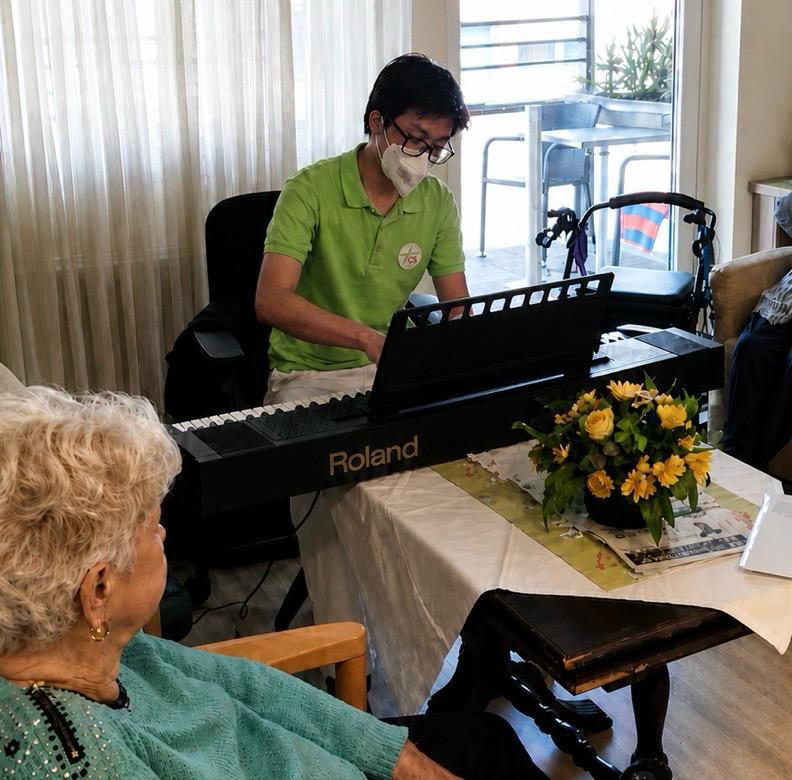 John’s compulsory military service took place after he graduated from high school. He worked in a nursing home as there was a shortage of staff during the pandemic. There, he cared for elderly residents and witnessed first-hand how quickly infections could spread and how limited treatment options affected outcomes and, in some cases, resulted in fatal consequences. He saw the impact of isolation, as many residents were separated from their families during the pandemic.
He also put his musical skills to good use, playing piano to lighten the mood at what was a traumatic time for everyone, both staff and residents. He recalls coming across residents who had died during the night from Covid complications. “That made me realise that I should be working to develop better treatments and diagnostics, giving doctors a larger toolkit to enable patients to have a better chance of survival,” he says.
Undergraduate studies
John moved to the UK to study Natural Sciences at University College London, following his older brother who went into Computer Science in the UK.
Throughout his studies, John explored a range of research environments, exploring everything from fundamental biological questions to more translational approaches. In his first year, he gained research experience in Professor Carl Smythe’s lab at the University of Sheffield, investigating cell-cycle proteins involved in cancer development. Building on this experience, he later joined the Department of Pharmacology at UCL, where he contributed to cystic fibrosis drug screening research under the supervision of Dr Paola Vergani. During this placement he also mentored students from the In2ScienceUK programme, which supports students from underrepresented backgrounds in pursuing higher education and careers in science. He says: “Seeing how engaged and motivated they were was very rewarding. I hope to continue encouraging younger generations to pursue their interests and make a positive impact.”
In his final year, he became interested in antibody-drug conjugates (ADCs), which link a drug to an antibody so it can target cancer cells more precisely while sparing healthy tissue. His thesis, supervised by Professor Vijay Chudasama, who is an expert on ADCs, was selected to represent UCL at the 8th Annual National Conference of the Society of Natural Sciences.
John then worked as an intern for Professor Chudasama in summer 2025 and gained experience in chemical biology, bioconjugation and advanced organic synthesis, contributing to the development of novel ADCs. This helped him to gain a deeper understanding of the impact of molecular design on the specificity and efficacy of therapeutic agents, which led him to focus on improving drug delivery rather than developing new drugs.
 He says that working with Professor Chudasama was an important part of his development as a scientist. “I was given a great deal of trust in the lab, which allowed me to grow in confidence and approach research more independently,” he states.
At UCL John also took part in extracurricular activities. He served as President of the Austrian Society at UCL, which involved putting on many cultural events, such as a Viennese Waltz dance session and a networking event in collaboration with the Austrian Embassy in London. This event brought together students from universities across UK, alongside professionals and embassy representatives, creating opportunities for exchange beyond the university.
Cambridge
John is currently doing a master’s degree in Pharmacology at Cambridge. He is keen to ensure his research has a tangible impact, particularly in addressing complex health challenges such as antimicrobial resistance, which is predicted to kill up to 10 million people annually by 2050. Building on his experience on ADCs and at the nursing home, he is now exploring how DNA nanotechnology and lipid-based carriers such as liposomes can be used to improve drug delivery to drug-resistant bacteria.
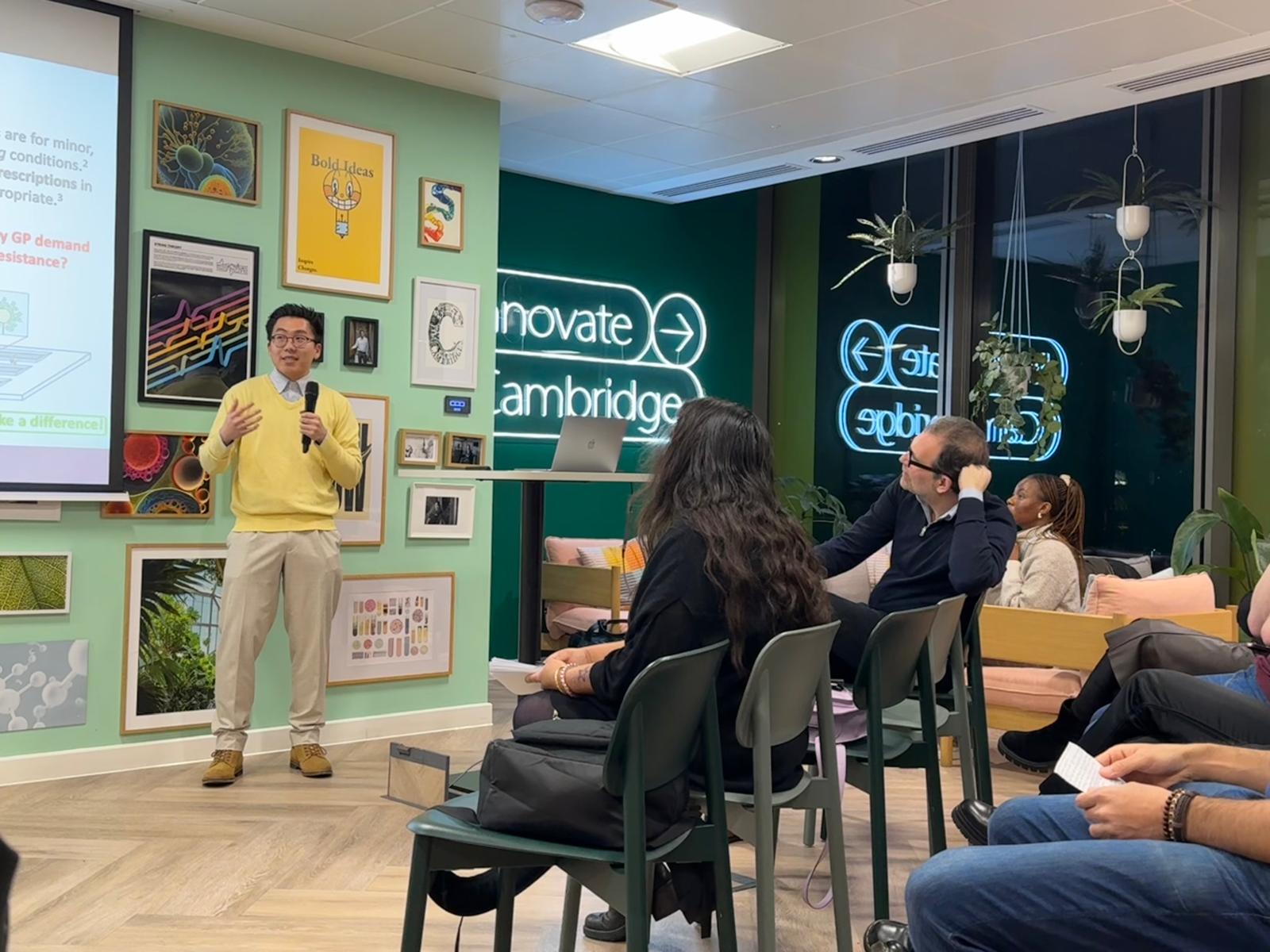 For his PhD, he will take this approach further by designing targeted antimicrobial delivery systems that protect drugs from bacterial resistance mechanisms, enhancing the effect of existing therapies. These systems aim to deliver drugs more precisely, reducing the side effects associated with toxic treatment, such as the unintended elimination of beneficial bacteria. Their modular design also allows them to be adapted to target different types of bacterial infections selectively.
By improving how antimicrobials are delivered, rather than relying solely on the development of new drugs, John’s work aims to provide more sustainable strategies to combat antimicrobial resistance, a growing global health threat.
While he has been at Cambridge, John has been serving on the committee of the Cambridge Synthetic Biology Society, where he contributes to outreach initiatives and helps connect students with an interest in biotechnology and innovation.
He has also co-founded – with his lab colleagues – a start-up through a Milner Therapeutics Institute programme. His group is developing a diagnostic tool to help rapidly distinguish bacterial from viral infections, supporting doctors with more informed treatment decisions. He says he hopes that the product will promote Antimicrobial Stewardship globally, especially in low and middle income countries, by reducing unnecessary antibiotic use and says this should help to ease pressure on healthcare systems such as the NHS.
He is keen to work with the Gates Cambridge network to translate his research into real-world impact. “For me, improving people’s lives means developing technologies that make healthcare more effective and accessible,” he says. “Even small scientific advances can have a large impact if they reach the people who need them. I want to contribute to building tools that give doctors better treatment options and improve patient outcomes.”