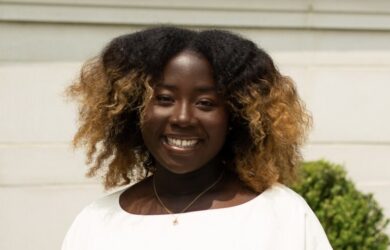


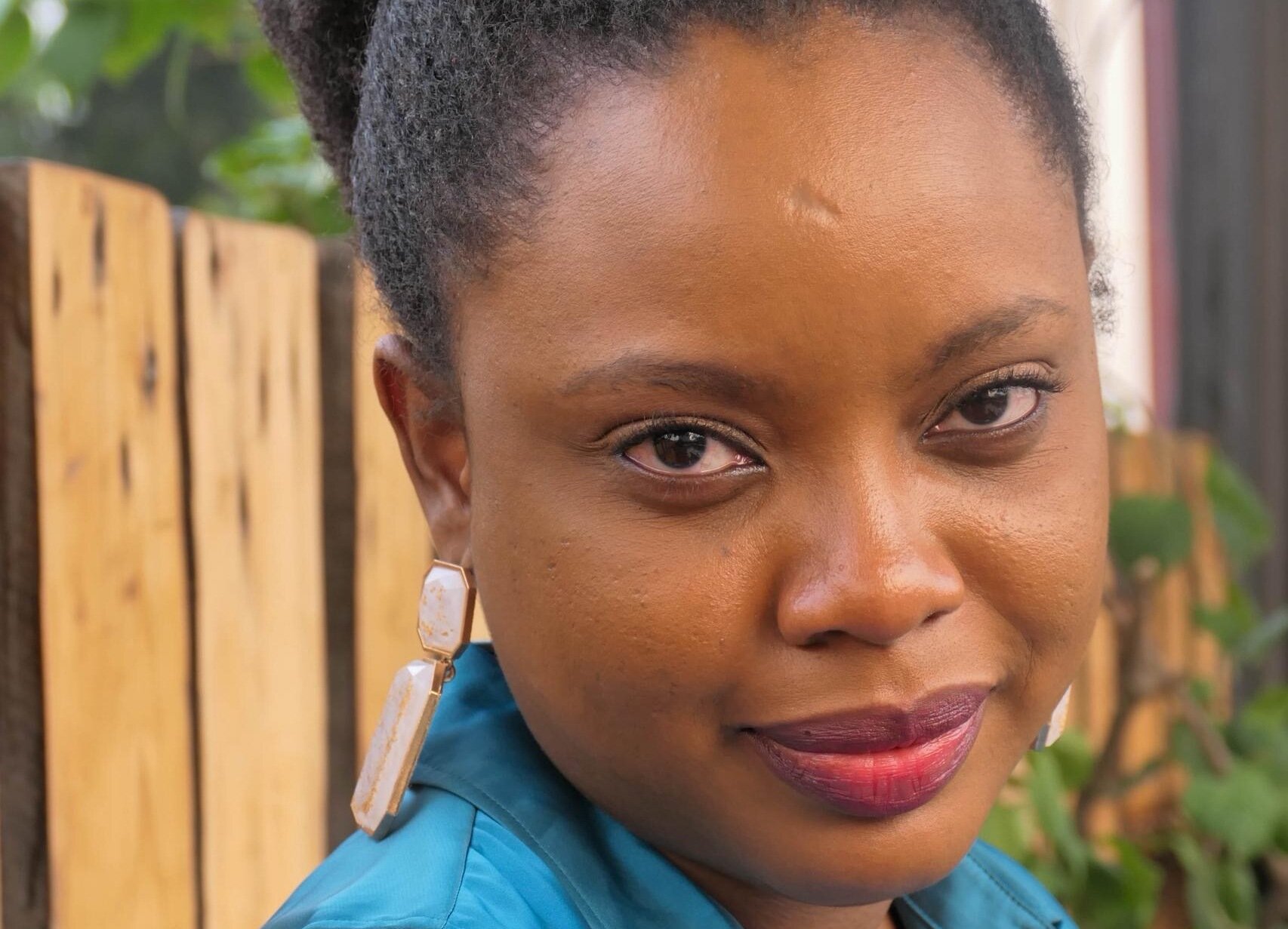
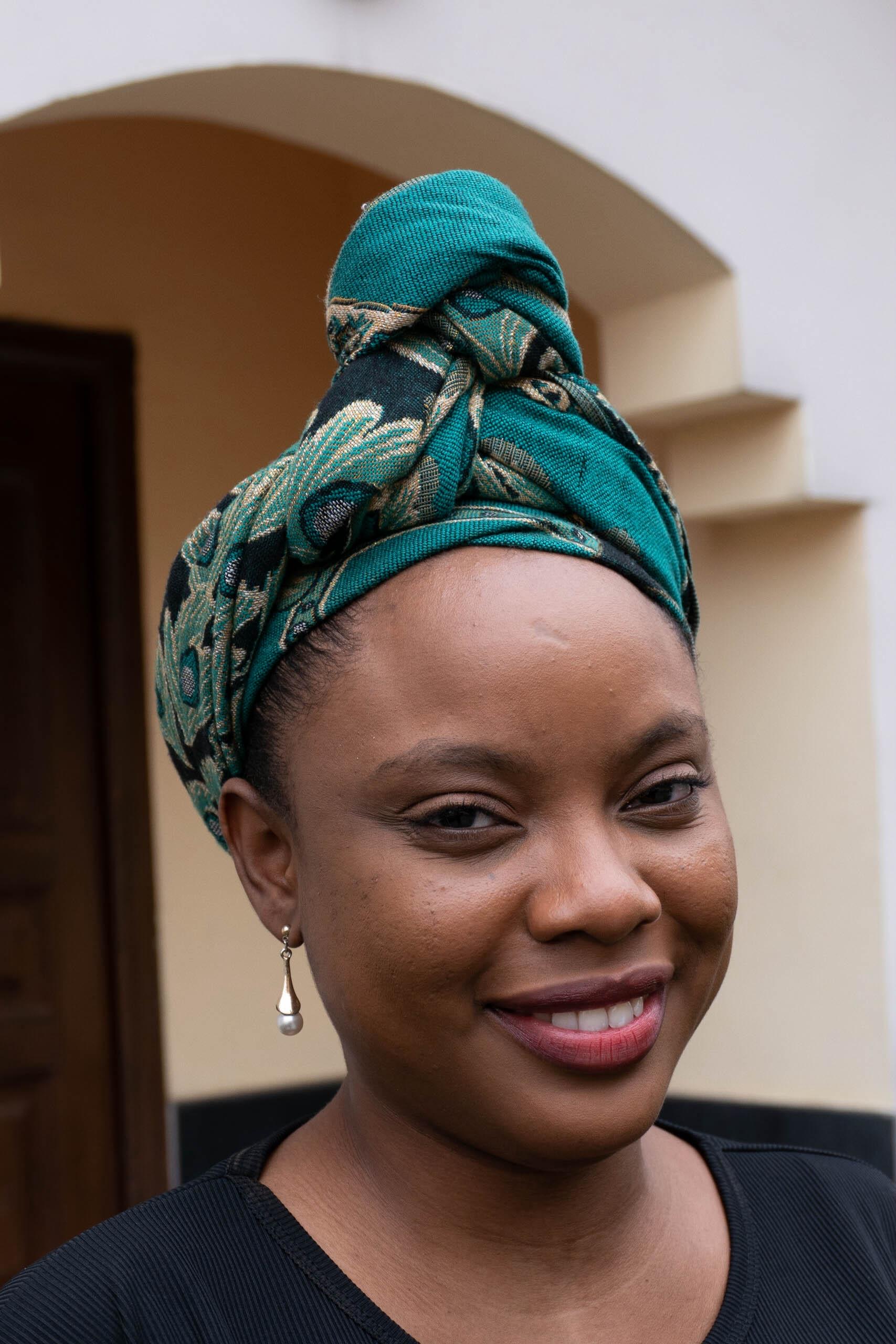
Ayobami Adebayo talks about being a writer and literary judge and about her PhD in Digital Humanities.
The PhD is an incredible opportunity to spend time investigating the impact of digital-born magazines. I have always loved studying and I have missed being in an academic environment.
Ayobami Adebayo
Ayobami Adebayo is a prize-winning novelist and is not only part of an impressive literary couple with husband Emmanuel Iduma, but also a Gates Cambridge partnership. Both she and Emmanuel are doing PhDs in Digital Humanities, having shared their literary journeys since their undergraduate days.
Not only is Ayobami a writer, however, but she has also been a judge for the Booker Prize and a literary editor.
She brings all of this experience to her PhD which will look at online African literary magazines and the networks of discourse and influence they have had in the world.
She says digital-born magazines have opened the doors for many African writers of her generation. “I’ve always been interested in what it means for literature to interface with digitality, especially in the African context,” she says.
Early beginnings in reading and writing
Ayobami [2026] was born in Lagos, but moved to Ilesa before she was one. The family subsequently transferred to the university town of Ife where she spent most of her childhood and went to university. Her late father worked mostly in finance in a corporate setting and her mother is a doctor and professor. Her younger sister is also a doctor.
 Ayobami was an avid reader from an early age. A very quiet child, she describes books as her escape, her safe place. Her parents were both big readers. She says her mother is one of the most voracious readers she knows and borrowed many books from the university library. Many of the conversations at home revolved around books. “It was definitely a reading culture. It was not unusual for a conversation to end with a recommendation to read this or that book about a subject,” she says. She recalls Sunday afternoons spent with the family poring over four newspapers. “Everyone had a favourite columnist,” she says.
At one point Ayobami would regularly visit the mobile British Council library every two weeks. It would pitch up at the university hospital her mother was working at and she says it was so exciting to see what it had to offer. She liked books of all kinds, but recalls The Go Between by L. P. Hartley as having had a formative influence on her. “It was the first book I stayed up to read and I cried when I finished it,” she says.
Ayobami started writing when she began secondary school, having spent a term at another school. Her first school had been part of the university, but was moved over to the government system and the quality of teaching was beginning to decline. After a few months, her parents switched her to a private school where she stayed for the rest of her school career.
Because she started a term late everyone else had made friends already and for the first few weeks Ayobami didn’t know many people. So she started writing in notebooks, sometimes during classes. Initially she wrote poetry. She soon found she loved putting her ‘daydreams’ down on paper. Ayobami enjoyed her school days and took part in the debating group. She saw debate as building a narrative arc between the lead debater and the supporting debater.
As she settled into secondary school Ayobami didn’t necessarily know what she wanted to do, but she was sure about what she didn’t want to do. And that was to be a doctor, engineer or lawyer – the traditional careers in Nigeria. She decided she wanted to study dramatic arts because she wanted to write plays and she refused to change her mind, despite social pressure. Her mother supported her. By the end of secondary school Ayobami was clear that she wanted to spend her life thinking about literature and writing.
University days
She started university at the age of 16. Early on in her four-year course at Obafemi Awolowo University [formerly the University of Ife] she met Emmanuel Iduma, who was to become her husband. They met when they sang together in a pop-up choir, and a mutual friend who was in the choir and was aware of their mutual interest in writing introduced them.
They started reading each other’s work almost immediately. They also organised workshops for aspiring writers across the university. These included masterclasses from visiting speakers. Some of those aspiring writers have gone on to be published authors, like Emmanuel and Ayobami. “The group was a lovely support system. People gave honest feedback which is a great gift for a writer. We all had a second and third eye on our work,” says Ayobami.
At university, she was mainly writing short stories. She and Emmanuel used to submit their writing to competitions and in 2009 she was highly commended in the then Commonwealth Writers’ Prize. “It was my first big sign that I was not totally crazy committing myself to writing,” says Ayobami.
The germination of Stay with me
She graduated in 2008 and did her national youth service in a bank in Lagos for a year. She enjoyed it, but it confirmed her desire to be a writer. It was during this period that she began her first novel, Stay with me, inspired by the writing workshops she attended in Lagos which reminded her of what she really wanted to do with her life.
She had had the story in her mind since her undergraduate days, but sat with it for three years as she did not feel she was ready to write a novel at that point. The story was about a couple having their final argument before the wife moved out. But when she started to write it, Ayobami felt something was missing. It was only during her final year when she decided to take a walk around the university that she pinned down what was missing – the reason for the argument.
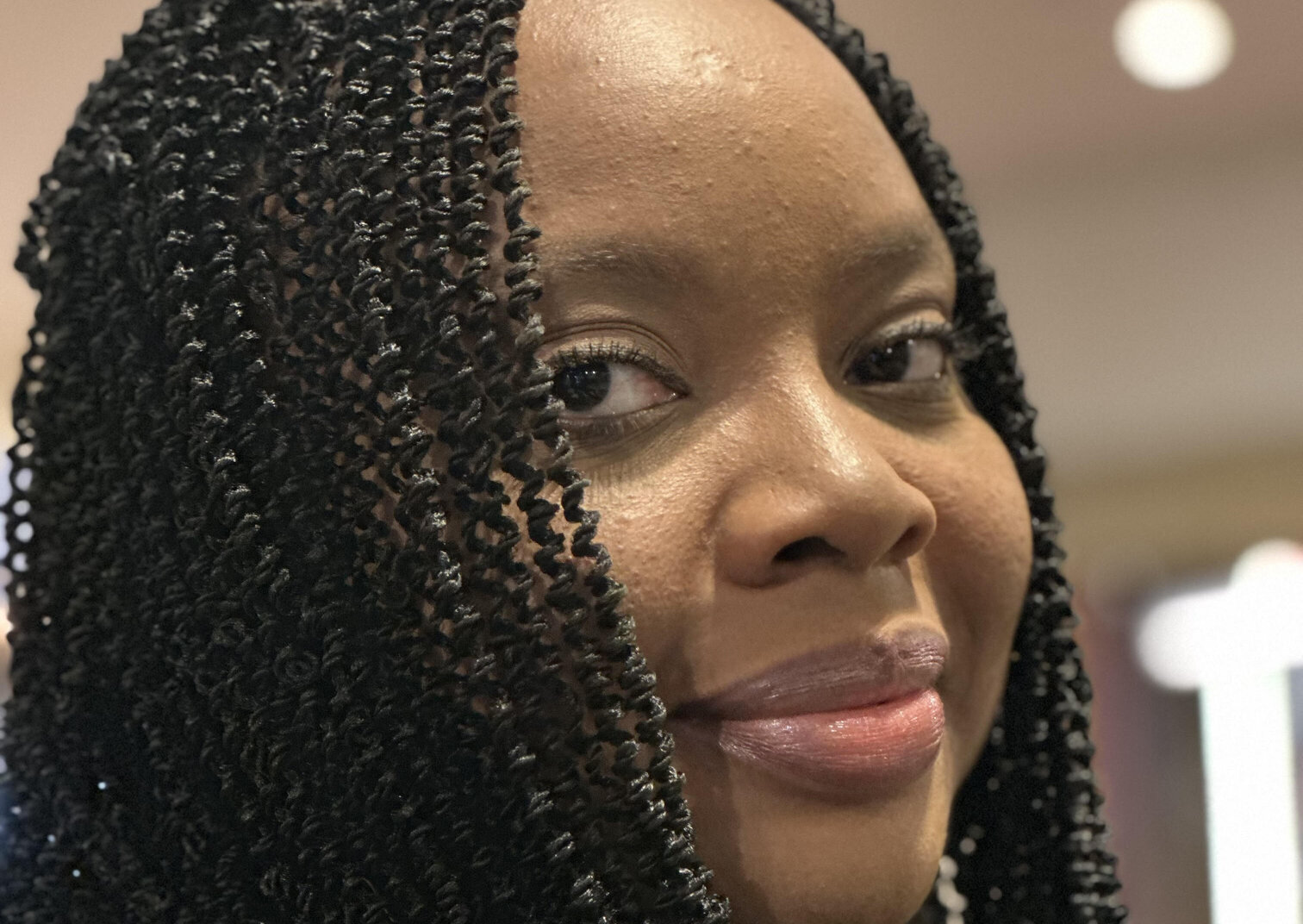 The book centres around a couple who struggle to conceive amid huge societal pressure and, when they eventually do, two of their three children die from sickle cell anaemia. Ayobami had friends who suffered from sickle cell when she was growing up. One died. She recalls going to the family home and being met by an aunt at the door who said that the mother of her friend could not see her. She sat outside the house and recalls thinking about the mother, about the permanence of her loss, about what it means to love a child and lose that child.
Ayobami started her master’s in literature in Ife in 2010 on her return from Lagos. Her second year was spent on research, with a focus on masculinities in US literature about slavery, including Toni Morrison’s Beloved. Ayobami also continued participating in writing workshops and was fiction editor at a literary magazine. In addition, she co-founded a photography project, Tender Photos, with Emmanuel in 2022 which is a platform for African photography and visual storytelling. The project consists of photos and writing inspired by the photos. Ayobami is fiction editor.
All the while, Ayobami was working on her novel, doing various drafts and writing notes on the bus. Following her master’s in Ife, she moved to Norwich to do a master’s in creative writing at the University of East Anglia. By this point her novel was finished, but she kept polishing it. It was shortlisted for the Kwani? Manuscript Project for unpublished fiction.
Ayobami found the Norwich course very useful and the faculty extremely supportive. Having other people cast another eye over her novel also helped as did having a year to think and talk about writing – something she had never had before. She also benefited from UEA’s visiting lecturers, including Margaret Atwood and was in the first cohort of a workshop by Chimamanda Ngozi Adichie.
Ayobami returned to Nigeria in 2014 where she had a job at an Engineering research institute in Ilesa. She had taken study leave from that position to do the UEA course. She kept working on the novel and started trying to find an agent. By the end of 2015 she was signed by Clare Alexander who she had met at UEA. The novel was acquired at the beginning of 2016 – she got her first offer of publication on her birthday.
Literary success
The book came out in 2017 and was very well received. She says she still can’t believe it. She recalls coming to the UK to take part in an event just before publication of the Women’s Prize long list. She didn’t even stay up to find out who was on it. It was her first novel and it had been published less than 48 hours before. But she awoke the next morning to her phone vibrating with the news that she had made the list. She won the 9mobile Prize for Literature and was awarded The Future Awards Africa Prize for Arts and Culture.
Ayobami has since taken part in several writing residencies, including in the US, which gave her the opportunity to work on other novels, including her follow-up novel A Spell of Good Things, which was long listed for the Booker Prize. In the last few years, Ayobami has also been on the judging circuit of major literary prizes, including the Women’s Prize and, last year, the Booker Prize.
She says she generally works on two novels at a time – something almost completed and something new. “I tend to be so involved in those fictional worlds. I can be quite exacting on myself about what deserves to go out into the world. It’s a let-down when it’s coming to an end so I need to have something else I’m working on,” she says.
Ayobami moved back to the UK in late 2021 and had her son months before publication of her second novel in 2023. She has since had another baby nearly a year ago and is also finishing off her next novel before her PhD starts. She is really looking forward to being back at university, having often thought of returning. She says: “The PhD is an incredible opportunity to spend time investigating the impact of digital-born magazines. I have always loved studying and I have missed being in an academic environment.”