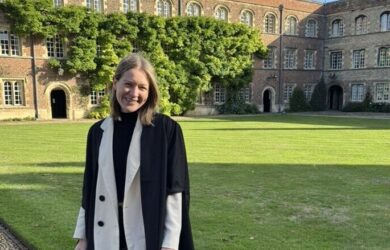



Melisa Basol has been shortlisted for an award for women in science for her research into countering Covid misinformation.
A Gates Cambridge Scholar has been shortlisted for a Women of the Future Award for her research into countering misinformation.
Melisa Basol [2018] was shortlisted for the science category of the UK Awards which recognises “truly remarkable female scientists, forging new ground in research and scientific achievement”. There are 11 other categories and three special awards.
The Women of the Future Awards, founded by author, motivational speaker, food expert and women’s advocate Pinky Lilani in 2006, were conceived to provide a platform for talented women in the UK across a range of sectors and to link potential future women leaders. Their global ambassador is the Countess of Wessex and Cherie Blair QC is its patron.
Earlier in the year Melisa was also named on the Forbes 30 under 30 list for science and healthcare in Europe in recognition of her research on the threats that misinformation poses to society and collaborated during the pandemic with the UK Cabinet Office to create the game ‘Go Viral!’, a social intervention game that uses innoculation theory to help prevent the spread of Covid-19 misinformation. The game, which is backed by UNESCO, the UN and the WHO, has been downloaded over 1.4 million times and in 13 languages.
Of her Forbes 30 under 30 selection, Melisa, who is doing a PhD in Psychology, said: “I am honestly shocked and speechless to be included in the Forbes Under 30 list! As always, no one succeeds alone and I’m incredibly grateful for my brilliant supervisor Sander van der Linden who always encourages and enables his students to shine.”